New Cameras
About the Author
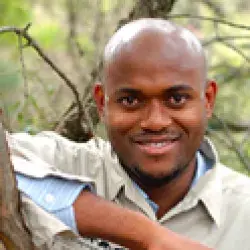
Receiving the 20 brand new cameras is a blessing for us. I am extremely grateful for this. We are finally able to experiment further on the most efficient way to get reliable results from the use of cameras.
In the first part of the survey we relied heavily on what the guides knew about leopard activity in the concession. We then placed cameras in those areas, and later in similar areas. As a result there was a lot of bias in our sampling design. Furthermore, somehow the results from the first survey suggested that there were more males than females in the area. This is highly unlikely as it is well known that a male leopard’s territory should overlap territories belonging to two or three female leopards.
The following may help explain what we have:
1. We left out a lot of gaps in our first trial;
2. By moving the cameras around we created a few discrepancies; and
3. We are dealing with a whole new leopard feature altogether.
The second step in this series of experiments is to place cameras in the form of a grid in a given random area on the concession.
I managed to place the cameras in the form of 5 x 5 grid, which will allow us to see the random movements of the leopards. I placed the cameras at 1 kilometre apart.
[caption id="attachment_552" align="aligncenter" width="300" caption="The red dots are where I placed the new cameras. Click to enlarge."] [/caption]
It requires a lot of walking. It takes two full days to get it all done, but it is enjoyable. We get to see a lot of game along the way mostly giraffe, white rhino, wildebeest, to name a few. We have yet to walk in to a pride of lions and when that happens, I hope to be able to tell you all about it. Who wants to walk with me? In reality though, it is a challenge to get people to join on a daily basis. It can get strenuous and tiring.
Below is the list of people who helped or attempted to help:
Day 1: 9 hours/12 cameras set
Shadrak Nyathi (Kruger Park Field Ranger): Survived the onslaught, mentioned the hours in passing with a smile.
Kim Laxton (Visitor): Brought the wrong shoes and had to quit along the way.
Nakedi Maputla: Overslept, had to apologise for what felt like an eternity and ruined a pair of socks from carrot seed grass.
Day 2: 10 hours/13 cameras set
Shadrak Nyathi, the field ranger from Kruger National Park: Survived, said something about the hours while smiling.
Nakedi Maputla: Ruined a pair of socks from carrot seed grass.
Day 3: Checking cameras; 7 hours/12 cameras checked
Ben Delport, Singita guide: Ruined a pair of socks from carrot seed grass, his last pair, but said he enjoyed it.
Nakedi Maputla: Ruined a pair of socks from…
Lesson learned: Never oversleep
This method should theoretically be much easier to analyse than the biased method we used earlier.
We will leave the cameras in the same area until an apparent asymptote is reached. We will later bait the cameras to see if baiting will have a significant effect on the capture success.