Although a prolific breeder and even a dominant species in some areas, the hartebeest has probably suffered the greatest reduction in range of all African ruminants.

Update on Lion Killings in the Maasai Steppe


02 Mar 2009
6:28 AM UTC
By Kissui

Posted in:
Lions


Comments:
4 Comments »

In my previous blog post, I promised to provide details about the recent human-lion conflict incident in our study area in which a male and a lioness from one of our study prides called Altipiano were speared to death because of predation on livestock.

The incident took place at the end of December 2008, and summed up a total of twelve lions killed in retaliation for livestock predation for 2008. Since this incident, three other incidents have occurred in Jan/Feb 2009 where at least four lions from other prides have fallen victims to retaliatory killing.
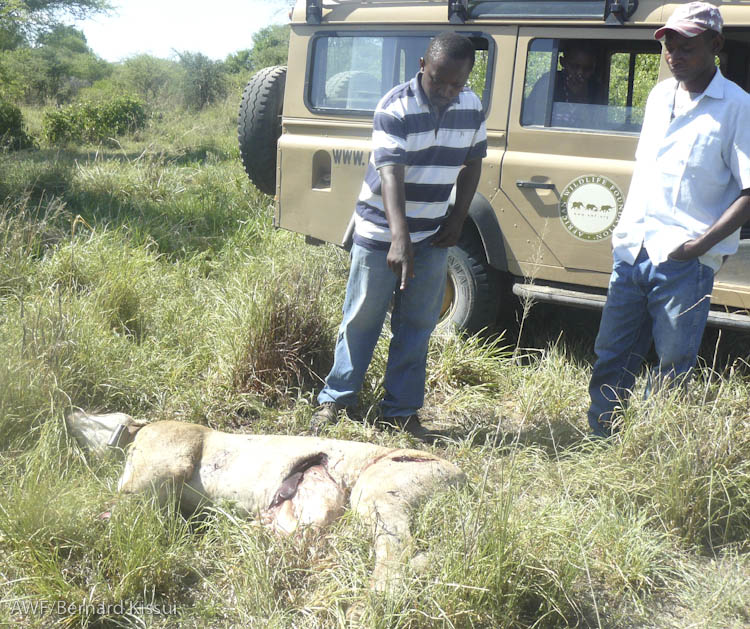
Retaliatory killing took at least 24 lions in 2007. During 2004-2008, at least 149 lions were killed in retaliation for livestock predation in 12 villages that we have consistently surveyed during this period.

Livestock predation and retaliatory killing of predators is a huge conservation challenge in the Maasai Steppe because of the unique dynamic interaction between people and wildlife. Although the wildlife migrates over an area 30,000 sq.km., the core protected areas cover less than 10% of the entire landscape over which the wildlife migrate.

We have regularly surveyed Esilalei, Selela, Loiborsoit, Emboret, Engaruka chini & juu, Oltukai, Minjingu and Makuyuni villages over the past four years to understand the magnitude of human-lion conflicts, its impact and how the conflicts can be mitigated. Other villages being surveyed include Loibo-serit, Lolkisale and Mswakini.

In the wet seasons (i.e. November through May), migratory herbivores from core protected areas spend up to six months in communal land outside protected areas. Lions move in response to herbivore migration. Livestock predation and retaliatory killing is highest in wet season months.

Because the human population is fast growing, lions must now navigate through more and more people and livestock when they leave protected areas. Because lions from protected areas utilize communal land for nearly half a year, the future survival for lions in the ecosystem will depend on successful resolution of conflicts and increased tolerance to carnivores by livestock keepers. Livestock attack events by lions strongly correlate the number of lions killed, suggesting that predation problem exposes lions to increased mortality risk due to retaliatory killing.


4 Responses to “Update on Lion Killings in the Maasai Steppe”

  1. sauwah Says:

    It is sad naturally. and whenever there is a conflict, animals will always end up in the losing end regardless of whose fault it falls under. The root problem and the solution to me is solving the human population problem by the society. As long as the demand by people is ever increasing and the area remains the same, lions and other wild animals will one day be pushed out of life forever.

    For now the lions have you to speak for them to the locals at least. I wish you and the lions much luck.

  2. Kissui Says:

    Sauwah, I totally agree that the burgeoning human population and the demands for space that come with it pose a significant challenge to long-term prospects to the existence of wildlife in many landscapes and especially outside reserves. Perhaps the efforts put forwards to find ways for co-existence should provide some hope for the future of wildlife

  3. Liz Says:

    I understand the Nomadic Ways of the local tribes of the Massai and the surrrounding areas in Kenya by the stories and information told to me by the locals when I visited. Maybe, this way of life can be used in the preservation of the predator nature as well. As we, humans and animals, have the right to live and dwell in the same lands…we as humans can understand and reason where animals can not. Therefore, with the changes of the seasons maybe a happy medium can be talked about and achieved by moving accordingly. If the Lions will move with the heards of natural livestock then maybe the people can move with their kept livestock to another area. Just a thought.

    AWF thank you for your constant fight for the worlds African wildlife!!!

  4. sauwah Says:

    that is a good thought and suggestion. since neither of us live there, we just do not know moving away from the seasonal predators like lions is possible for the livestock owners. Nomadic live now scientists know it is a superior way to caring and owning of livestock. like the migrating herds of wildebeests. their number is so great due to the fact that they are allowed to move about and go to where the grass and water are. thus the land or its resources are never over used by the wildlife.

    the returning of the nomadic way of living is better for all if and only if the local government, the will of the people and the available grazing land and water for the livestock.

Leave a Comment