
What is the genet?
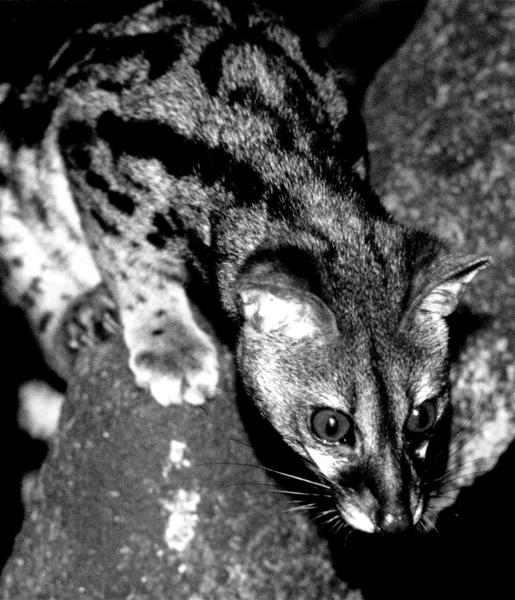
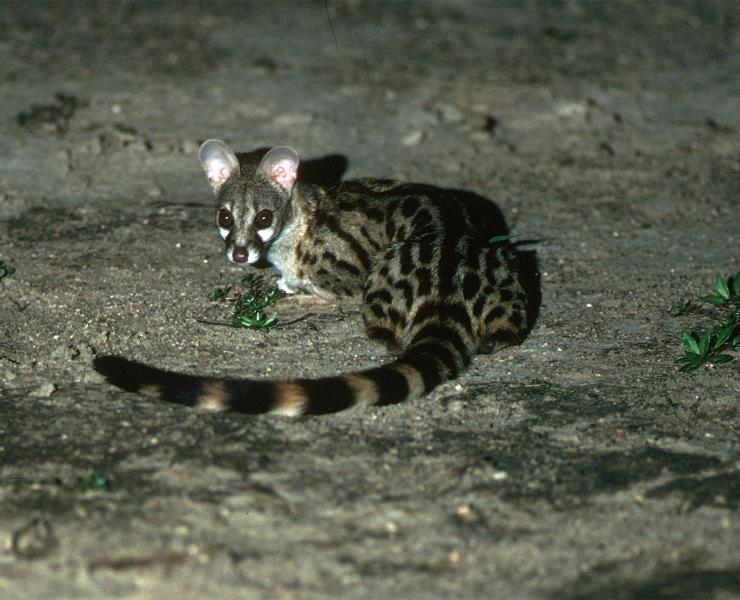
Genets are long, lean carnivores that appear catlike with a tail usually as long as (if not longer than) the body. There are approximately 14 species identified all of which vary in appearance and habitat. The small-spotted genet, found in more arid regions, is recognized by a prominent dorsal crest running from shoulder to tail. Its spots are round and elongated. The forest genet lacks a dorsal crest and has a coat with spaced-out, elongated spots. The large-spotted genet has a smaller dorsal crest than its small-spotted relative and is the most widely distributed of the three species. All species have retractable claws adapted to climbing and catching prey.
Common genet (Genetta genetta), Large-spotted genet (Genetta tigrina), Bourlon’s genet (Genetta bourloni), Forest genet (Genetta servalina), Cape genet (Genetta tigrina), etc.
1 to 3 kilograms (2 to 7 pounds)
40 to 60 centimeters in length, excluding the 40 to 55 centimeter tail. (16 to 24 inches; 15 to 22 inch tail)
About 8 years in the wild; 13 to 34 years in captivity
Various
Omnivorous
About 75 days
Owls, leopards, pythons, honey badgers, humans

Challenges
Genets are hunted as pests.
Due to human population growth and expanding communities, some species have adapted to cultivated areas and human settlements, where they have developed a taste for poultry causing people to kill them in retaliation. Hides and tails have sometimes been found in traditional tribal clothing.
Solutions
Our solutions to protecting the genet:
African Wildlife Foundation works with communities living in close proximity to wildlife to incentivize conservation. In exchange for refraining from retaliatory killing or hunting for bushmeat, communities receive training in sustainable, and more productive, agriculture techniques that lead to enhanced food and economic security and also prevent habitat loss.
AWF has a long history of working with pastoralist communities to improve sustainable livelihoods. In Tanzania and Kenya, AWF, with funding from USAID, launched the Livestock for Livelihoods program. The program aims to eradicate poverty among pastoralist communities, while simultaneously protecting landscapes and wildlife. The revenue reduces pressure on the landscape by reducing the need for farming and charcoal burning, thereby freeing more space for wildlife.
Behaviors
They are resourceful and acrobatic.
They are considered arboreal and climb trees to hunt birds; however, they also spend much time on the ground hunting prey and taking shelter in escarpments and rocky outcrops. They can squeeze their flexible bodies through any opening larger than their heads. They are also nocturnal and stealthy hunters. Much like cats, they kill with a quick bite to the neck.
The genet favors a solitary existence.
All adults are solitary except during periods of courtship or when young genets accompany their mothers. A female may have up to two litters a year with two to four young in each. Kittens are born in a burrow; their eyes and ears are shut at birth and open after about ten days. They receive their first solid food at about six weeks, but they continue to nurse for a few weeks longer.
Genets have a foul method of self-expression.
Similar to the civet, they produce secretions conveying messages about sexual, social, or territorial behavior. When angry, frightened, or injured, they can squirt a foul-smelling substance that deters enemies.
Diet
Genets are opportunistic feeders.
Although classified as a carnivore, they are omnivorous and will eat what is most readily available. This can include small mammals — especially rodents, shrews, and bats — birds and their eggs, frogs, millipedes, centipedes, scorpions, and various fruits.
Habitats
Where do genets live?
They are dispersed throughout Africa and are found across a variety of habitats that have dense vegetation — including woodlands, savannas, forests, and sometimes farmland or near villages — but avoid open habitats. They tend to prefer all types of wooded habitats (deciduous and evergreen) where it is associated with rivers.


