Building Peace Where Conservation Meets Conflict
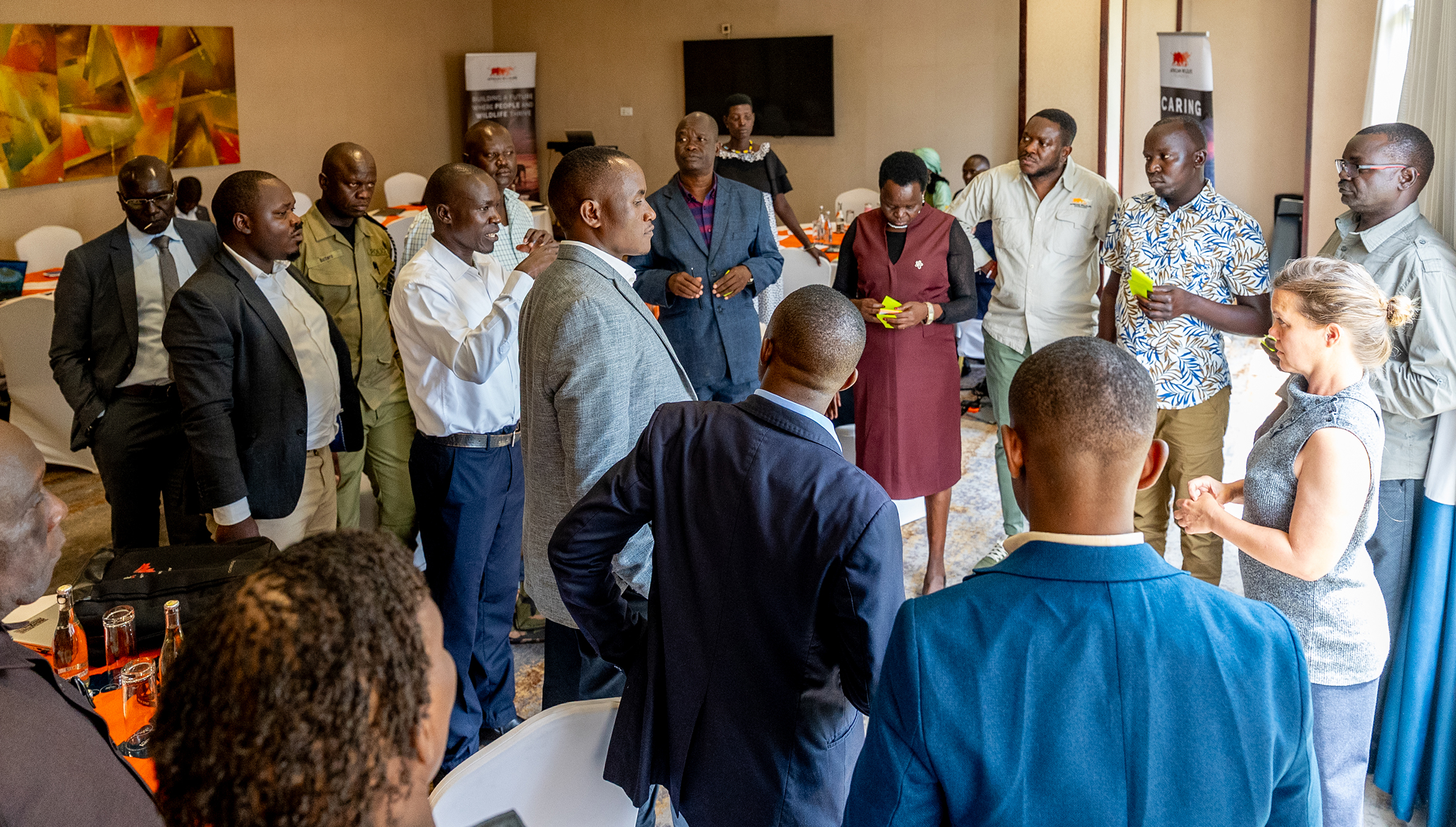
Participants at an AWF-convened workshop in Kampala, Uganda.
Across Africa, some of the continent's most critical conservation landscapes sit at the intersection of conflict. In transboundary areas especially, community grievances, governance gaps, and insecurity don't stop at park boundaries. And yet, conservation practice has been slow to formally name this—let alone address it.
That is beginning to change. Last month in Kampala, protected area directors from Uganda, the DRC, and Cameroon gathered—not to report on wildlife numbers, but to do something less common: talk honestly about conflict and what it takes to manage it.
Convened by the African Wildlife Foundation (AWF) through its African Protected Areas Directors (APAD) program, the workshop brought together nearly 30 participants from government agencies, community organizations, civil society, and regional networks—alongside AWF staff and PeaceNexus Foundation, an organization working with AWF on peace sensitivity in conservation. The APAD platform was designed precisely for moments like this—creating space for peer exchange among protected area leaders navigating these realities daily, generating the kind of South-South learning that changes practice.
From Shared Challenges to Practical Solutions
The most important theme to emerge was both simple and consequential: Conflict sensitivity is not an add-on to conservation—it is central to its success.
The directors in the room brought hard-won experience from some of Africa's most complex landscapes. From Cameroon, Ms. Maha Ngalié, Director of Protected Areas and Wildlife for the Ministry of Forestry and Wildlife, spoke to the urgency of the exchange: "Some of the conflicts we are dealing with in conservation are not yet visible in other countries—but they will be. In Cameroon, we've seen how political conflict can shut down protected areas, but also how working with traditional leaders can turn the situation around. We must not stop here—the process must continue."
From the DRC, a lesson in institutional redesign. Mr. Gabriel Roger Kitengie Matshimba of the ICCN General Directorate described a structural shift that fundamentally changed how conflict is managed in their protected areas: "We realized that conflict cannot be managed effectively if the same institution responsible for conservation is also the one judging complaints. That is why we established an independent grievance mechanism—grounded in community input, supported by legal expertise, and designed to ensure transparency and accountability."
Together, these experiences pointed to a clear set of principles: embed conflict analysis into conservation planning from the outset, strengthen community engagement to build trust, work across borders to align approaches, and adapt management strategies as social and security dynamics evolve.
Conflict-Sensitive Approach

Dodo Moke, AWF Environmental Social Safeguards and Conflict Sensitivity Manager, speaking with participants at the workshop in Kampala.
For Uganda, the workshop came at a critical moment. With growing momentum around landscape-level conservation in Kidepo, there is both an opportunity and a responsibility to ensure interventions are conflict-sensitive from the start.
For Dr. Enyel Eric, Chief Warden of Kidepo Valley National Park, the workshop marked a shift in perspective as much as strategy: "Peace is not something you can point to; it is a process, the ability to manage conflict. After 24 years in conservation, I realize I have been doing this work without fully naming it, sometimes learning the hard way. What I want to see in Kidepo is a future where we can sit face to face, even with those we've been in conflict with, and move forward together."
That reflection—from a senior practitioner with two decades of field experience—speaks to the value of the APAD model. It works not by delivering external expertise, but by creating conditions for leaders to learn from one another.
Conservation Is a People Issue
Many of Africa's most important wildlife landscapes are also sites of overlapping pressures: population growth, climate impacts, resource competition, and fragile governance. A conflict-sensitive approach asks that conservation does no harm, actively contributes to stability, and builds resilient relationships with the communities on whose cooperation it depends.
This is not a departure from conservation's core mission; it is a maturation of it.
Looking Ahead
The Kampala workshop is not an endpoint. As AWF continues to support conflict-sensitive approaches across landscapes in Cameroon, DRC, and Uganda, the emphasis will remain on practical application and peer learning. The APAD program is helping shape a more adaptive, inclusive, and resilient model of conservation.
In Africa's most contested landscapes, protecting nature and sustaining peace are not parallel ambitions; they are the same work.
This workshop was conducted with financial support from the European Union and the Hans Wilsdorf Foundation, with capacity-building support from the PeaceNexus Foundation.