Traditional Rulers Are Helping Shape Conflict-Sensitive Conservation in Faro
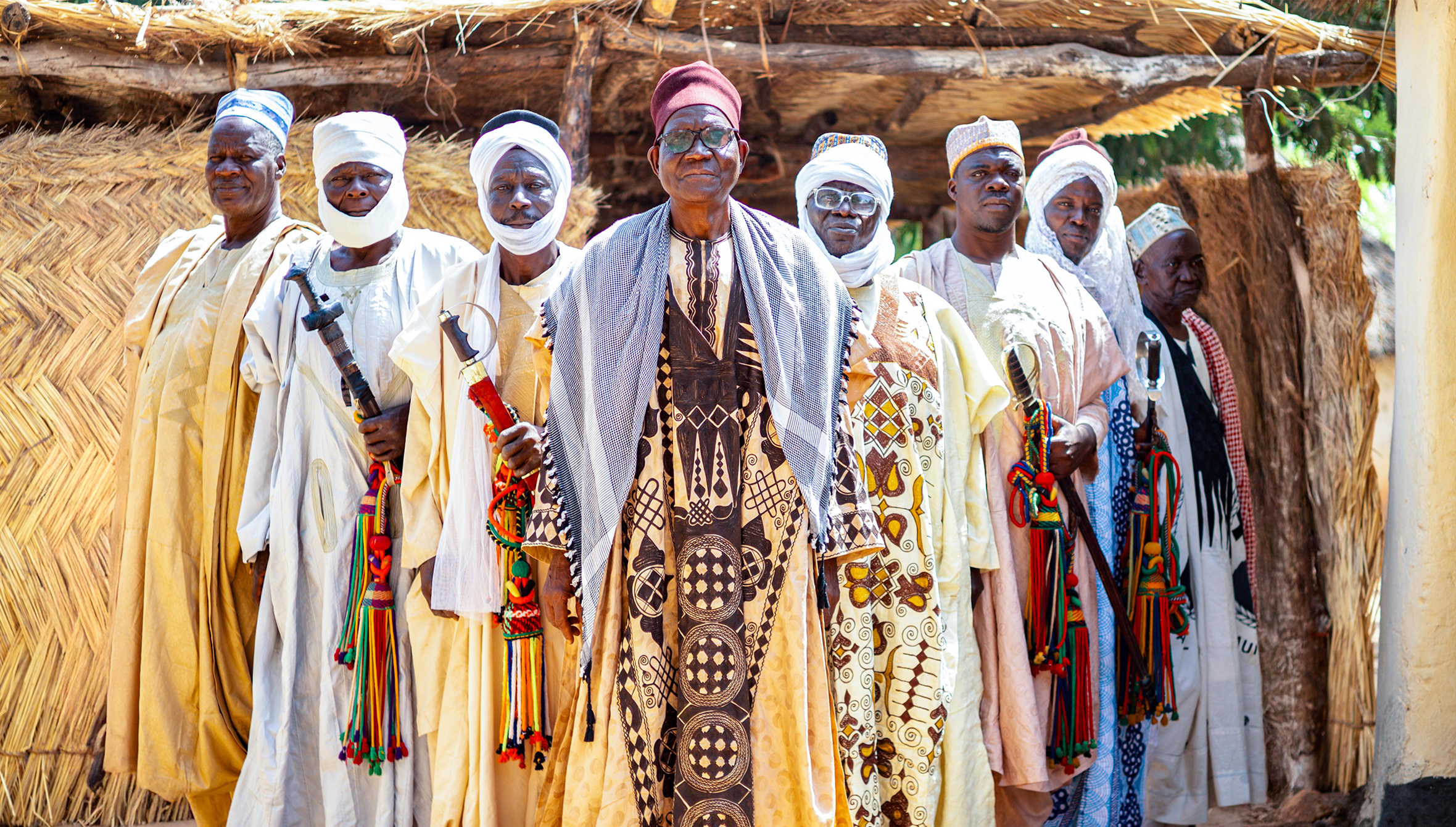
Hayatou Adji, traditional ruler of Voko, stands in front of his palace with members of his council.
Faro National Park in northern Cameroon is a vast conservation landscape where wildlife, water systems, grazing routes, and community life meet. Covering more than 3,000 square kilometers, the park sits at the heart of a region shaped by longstanding systems of local authority and land stewardship.
Around Faro, traditional rulers known as Lamidos continue to play an influential role in guiding how communities relate to land, resolve tensions, and take part in conservation.
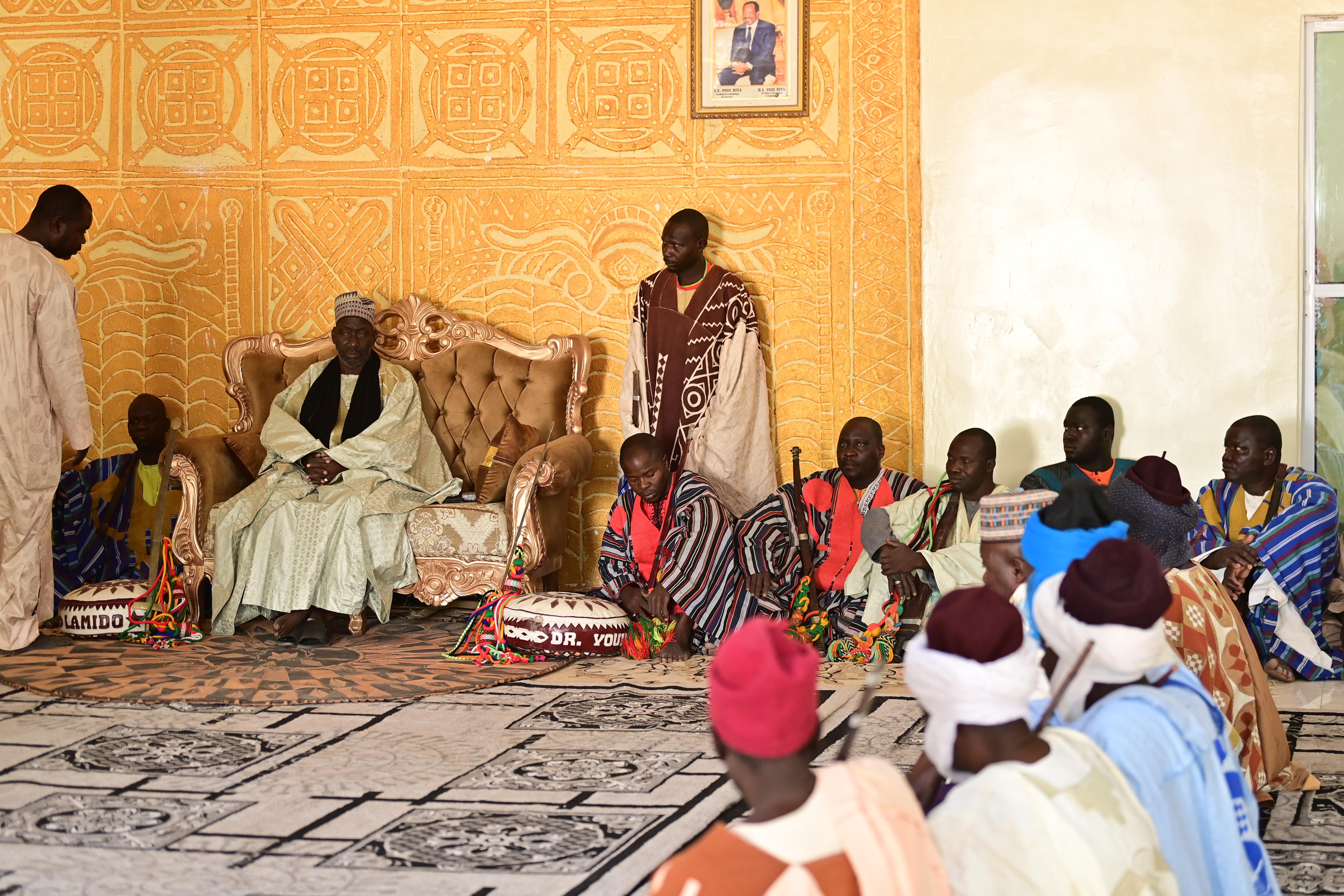
The Lamido of Tchamba, Dr. Youkouda Abdoulaye Koeranga sits in his palace alongside members of his council.
That role matters as conservation around Faro becomes more participatory. Long before the park was formalized under colonial administration, local leaders had their own understanding of stewardship and the value of protecting land and wildlife. For leaders such as Dr. Youkuda Koeranga, Lamido of Tchamba, that history remains central to how communities see conservation today.
“The notion of conservation, for the people of Faro, is a very important notion. We have always been aware of what conservation means in our lives,” he says.
Dr. Youkuda traces that awareness back generations, recalling how Lamido AbouBakary established the protected area under the name Ladde Djoubi before it was later renamed Faro National Park in the 1940s. In his account, conservation in Faro is rooted in local memory and leadership, not simply in external policy.
Dialogue Is Reshaping Conservation in Faro
For years, relations between communities and conservation authorities were strained. Eco-guards were often seen as enforcers rather than partners, and many residents felt that decisions affecting their land and livelihoods were being made without them.
That experience, local leaders say, began to shift when the African Wildlife Foundation (AWF) introduced a stronger emphasis on dialogue. This was done with support from the European Union, the Hans Wilsdorf Foundation, and capacity-building support of PeaceNexus Foundation.
“When AWF came, we had the opportunity to have a dialogue, to discuss with the eco-guards, which was difficult in the past. And when it starts with dialogue, people can meet. There are many things that can happen after,” says Dr. Youkuda.
That change has helped create space for discussion within communities and across conservation landscapes, including connections with Bouba Ndjida and Bénoué National Parks in Cameroon and Nigeria’s Gashaka Gumti National Park.
His Majesty Hayatou Adji, Lamido of Voko, says the change has been visible. Since his enthronement in 2000, he has observed a gradual move away from confrontation toward a more collaborative relationship between communities and those responsible for protecting the park.
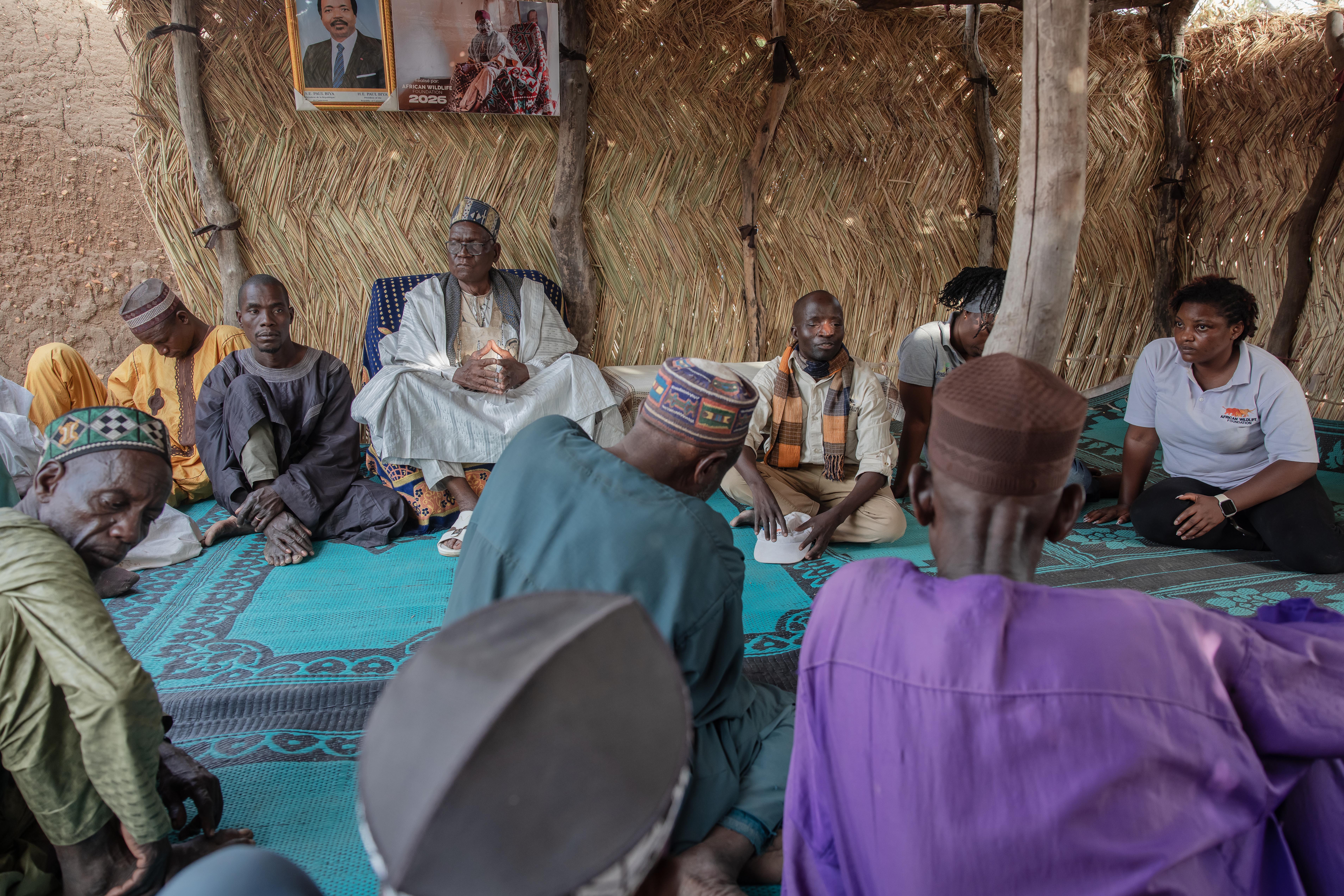
His Majesty Hayatou Adji, Lamido of Voko, discusses conflict sensitive issues with villagers.
“In the past, the eco-guards used to behave as if they were gendarmes… Today, the population itself has understood the benefits of conservation and then the behavior of the eco-guards has changed,” he says.
Complaint management committees have also become part of this transition. By creating a formal channel for grievances, they have helped reduce abuse and improve communication between communities and conservation actors.
“Since the implementation of complaint management, there is no longer abuse… we really observe a peaceful cohabitation,” Lamido Adji explains.
Traditional Leaders Are Helping Manage Transhumance
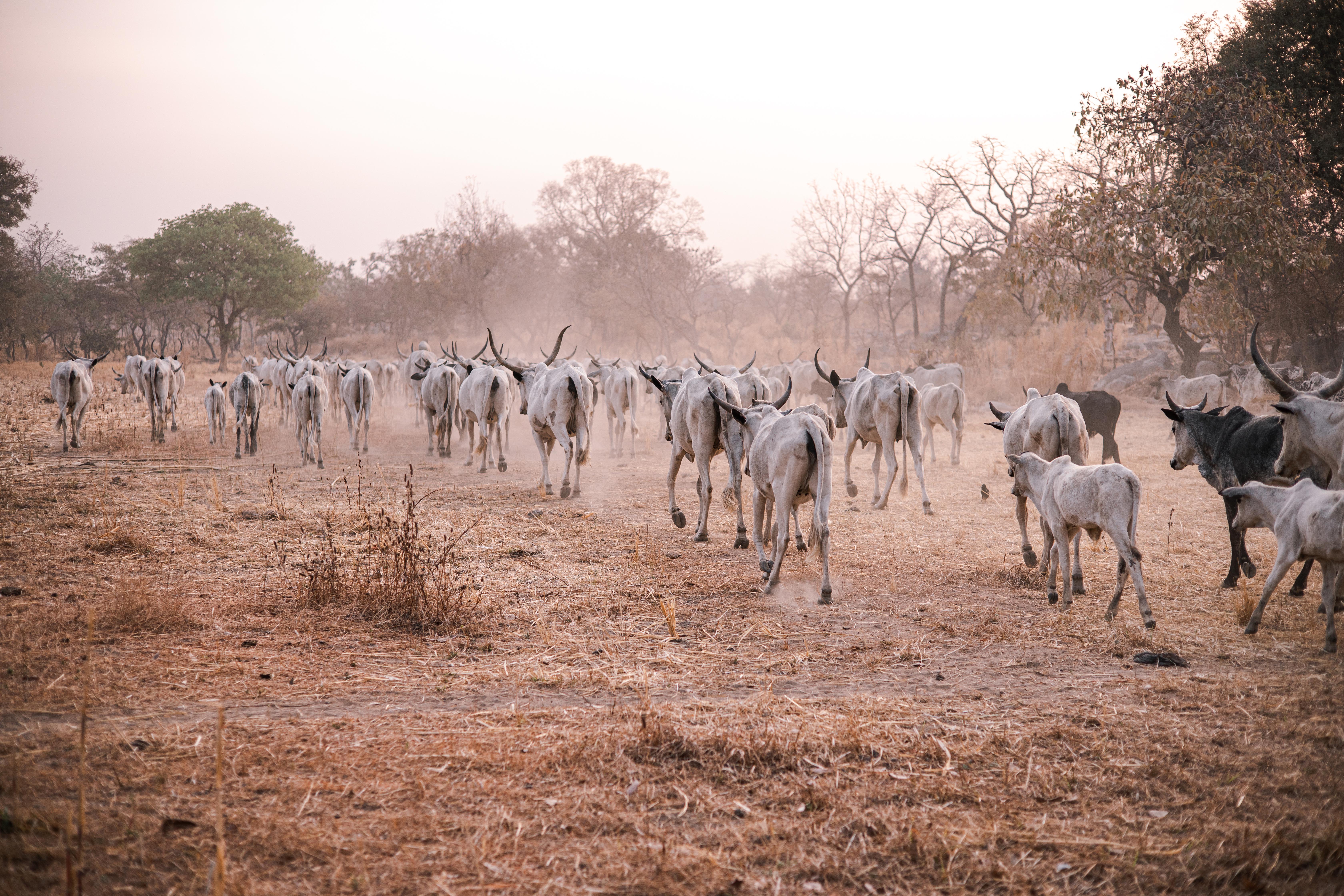
Transhumant herders lead cattle through the arid landscapes of northern Cameroon, where AWF works to manage seasonal migration pressures.
The seasonal movement of livestock remains one of the most sensitive issues around Faro National Park. As herders move in search of water and pasture, pressure can build between pastoralists and farmers, while conservation areas face increased risk of encroachment. In this context, Lamidos play an important mediating role.
They receive transhumant herders, orient them toward recognized routes, and help discourage movement into protected areas. Their position allows them to influence decisions at community level while reducing the likelihood of conflict.
Lamido Adji points to the practical pressures behind these movements and the need for local solutions that respond to them.
“We are around the Faro National Park, the river with its wealth, with its water that does not run dry… If we can also have some water points for livestock, it can limit the infiltration of herders who are forced to enter in the protected areas.”
His remarks reflect a broader reality in Faro: Conservation is more durable when it engages with the everyday needs that shape how land is used.
Conservation and Development Are Advancing Together
For traditional leaders in Faro, conservation is closely tied to development. Protecting ecosystems and improving livelihoods are seen as part of the same effort rather than separate ambitions.
“For me and my community, I think these are things that go hand in hand. We protect and develop at the same time,” says Lamido Adji.
That relationship is becoming more visible through community-based activities supported by AWF, including beekeeping, improved farming practices, and rural resource centers that offer alternatives while easing pressure on natural habitats.
Dr. Youkuda cites the Rural Resource Center in Tchamba as one example of that approach in practice.
“It allows us to have trees that can be used at any time in our homes for reforestation. That’s something great about the relationship between us and AWF,” he says.
As these efforts take root, communities are seeing stronger links between conservation, livelihoods, and local stability. In Faro, traditional rulers are not standing at the margins of conservation. They are helping shape how it works—through dialogue, local legitimacy, and a clearer alignment between protecting nature and supporting community life.