Where We WorkConserving WildlifeProtecting LandEmpowering PeopleEngaging YouAbout AWF

You need to upgrade your Flash Player!

 
Heartland Image

Africa’s highest peak rises in the center of the scenic Kilimanjaro Heartland, surrounded by a variety of ecosystems from wetlands to savanna. Here you’ll find Kenya’s Amboseli National Park, Tanzania’s Kilimanjaro and Arusha National Parks and vast community lands tended by the Maasai people.

Conserving Wildlife

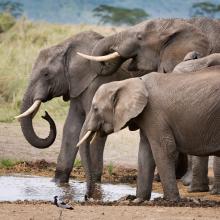
Safeguarding Africa’s best-known elephant population.

AWF solutions in Kilimanjaro:

Protecting Land

Working with local communities to promote conservation and economic development.

AWF solutions in Kilimanjaro:

Empowering People

Empowering local people to manage their wildlife effectively and invite conservation tourism.

AWF solutions in Kilimanjaro:

Engaging You!

You can safeguard the wildlife habitat critical for the survival of elephants and other large mammals. Click on these Solutions to become involved!

AWF solutions in Kilimanjaro:

Learn More Learn More Learn More Learn More
name

Because the Heartlands cover truly vast tracts of public and private land, cooperation by many public and private parties is required for success. Here are some of AWF's partners in the Kilimanjaro Heartland:

  • African Conservation Center (ACC)
  • Amboseli Conflict Resolution Committee (CRC)
  • Amboseli-Tsavo Game Scouts Association (ATGSA)
  • BEADS for Education
  • DGIS - Netherlands
  • Kenya Wildlife Service (KWS)
  • Ker & Downey Safaris
  • Richard Bonham Safaris
  • Taita-Taveta Wildlife Forum
  • USAID / Global Conservation Program (GCP)
More partners >
Resources and Documents

James Kiyiapi, Paul Ntiati, Ben Mwongela, Richard Hatfield, David Williams. A Community Business: Elerai Ranch and Conservation Area, Kenya. Technical Papers, 2005.

Philip Muruthi. African Heartlands: A Science-Based and Pragmatic Approach to Landscape Level Conservation in Africa. Technical Papers, 2005.

Edmund Barrow. Community Conservation Approaches and Experiences From East Africa. Technical Papers, 1993.

M. Northon-Griffiths. Counting Animals. Technical Papers, 1978.

J.J.R. Grimsdell. Ecological Monitoring. Technical Papers, 1978.

Nina Hahn, David Proulx, Philip Muruthi, Susan Alberts and Jeanne Altmann. Gastrointestinal Parasites in Free-ranging Kenyan Baboons (Papio cynocephalus and P. anubis). Technical Papers, 2003.

Philip Muruthi. Human Wildlife Conflict: Lessons Learned From AWF's African Heartlands. Technical Papers, 2005.

Edmund Barrow, Peter Lembuya, Paul Ntiati, Daudi Sumba. Knowledge, Attitudes and Practices Concerning Community Conservation in the Group Ranches Around Amboseli National Park. Technical Papers, 1996.

Kadzo Kangwana. L'Etude des Elephants. Technical Papers, 1996.

John Makilya, Peter Lembuya, Paul Ntiati. Linking Enterprise To Conservation: Examples from Kenya. Technical Papers, 1993.

Lucy Emerton. Maasai Livelihoods, Forest Use Values and Conservation in Oldonyo Orok, Kenya. Technical Papers, 1996.

More Resources & Documents >

Quick Facts

Area: 2,404,721 hectares (9,285 square miles) - slightly smaller than the state of New Hampshire

Key landmarks: Kilimanjaro National Park; Amboseli National Park; Arusha National Park; Mount Kilimanjaro; Lake Natron

Maps: this region | Africa

Staff in this Heartland

Paul Ntiati
Kilimanjaro Heartland Director
Namanga, Kenya


Alfred Kikoti
Elephant Research Scientist
Kilimanjaro Heartland, Tanzania


View more staff >

Kilimanjaro Wildlife

Elephant

Elephants can live in nearly any habitat that has adequate quantities of food and water. Their ideal habitat consists of plentiful grass and browse.


View more Kilimanjaro wildlife >