Where We WorkConserving WildlifeProtecting LandEmpowering PeopleEngaging YouAbout AWF

You need to upgrade your Flash Player!

 
Heartland Image

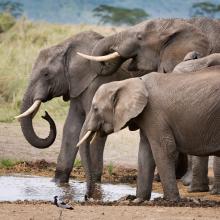
In the vast Kazungula Heartland, river systems gradually give way to a woodland-grassland mosaic with vital wildlife migration corridors. The mighty Zambezi River brings water to a host of African species, including the largest concentration of elephants in Africa, endangered black rhinos and a significant large predator population.

Conserving Wildlife

Understanding predators through research and combating rhino poaching and other human-wildlife conflicts.

AWF solutions in Kazungula:

Protecting Land

Supporting protected areas that keep river systems and migration corridors open to wildlife.

AWF solutions in Kazungula:

Empowering People

Reducing poverty and managing natural resources through community trusts and conservation-based businesses.

AWF solutions in Kazungula:

Engaging You!

You can play a role in the future of Arfrican conservation. Click on these Solutions to become involved!

AWF solutions in Kazungula:

Learn More Learn More Learn More Learn More
name

Because the Heartlands cover truly vast tracts of public and private land, cooperation by many public and private parties is required for success. Here are some of AWF's partners in the Kazungula Heartland:

  • African Development Foundation (ADF)
  • Botswana Dept. of Wildlife and National Parks
  • Elephant Pepper Development Trust
  • European Commission (SUBRAP Program)
  • Integrated Rural Development and Nature Conservation (IRDNC Namibia)
  • Japan Fund for Global Environment (JFGE)
  • Local government authorities in Botswana and Zambia
  • Southern African Trust
  • The Nature Conservancy
  • USAID / Regional Centre for Southern Africa
More partners >
Resources and Documents

Philip Muruthi. African Heartlands: A Science-Based and Pragmatic Approach to Landscape Level Conservation in Africa. Technical Papers, 2005.

Jimmiel Mandima and Henry Mwima. Baseline Fish Biodiversity Surveys: Experiences from the Zambezi River, Southern Africa. Technical Papers, 2005.

African Wildlife Foundation. Community Owned and Run: Case Study of Santawani Lodge, Ngamiland, Botswana. Technical Papers, 2005.

M. Northon-Griffiths. Counting Animals. Technical Papers, 1978.

J.J.R. Grimsdell. Ecological Monitoring. Technical Papers, 1978.

Philip Muruthi. Human Wildlife Conflict: Lessons Learned From AWF's African Heartlands. Technical Papers, 2005.

Kadzo Kangwana. L'Etude des Elephants. Technical Papers, 1996.

Simon Metcalfe. Landscape Conservation and Land Tenure in Zambia: Community Trusts in the Kazungula Heartland. Technical Papers, 2005.

David Western and J.R.R. Grimsdell. Measuring the Distribution of Animals in Relation to the Environment. Technical Papers, 1979.

Kadzo Kangwana. Studying Elephants. Technical Papers, 1996.

Lucy Emerton. The Economics of Tourism and Wildlife Conservation in Africa. Technical Papers, 1997.

More Resources & Documents >

Quick Facts

Area: 9,090,507 hectares (35,099 square miles)

Key landmarks: Zambezi River; Victoria Falls; Chobe National Park; Hwange National Park; Mosi-Oa-Tunya National Park; Zambezi National Park; Chobe/Linyanti/Kwando Wetland System

Maps: this region | Africa

Staff in this Heartland

Nesbert Samu
Kazungula Heartland Director
Livingstone, Zambia


Gosiame Neo-Mahupeleng
Large Carnivore Research Scientist
Kazungula Heartland, Botswana


View more staff >

Kazungula Wildlife

Rhinoceros

Black rhinos have various habitats, but mainly areas with dense, woody vegetation. White rhinos live in savannas with water holes, mud wallows and shade trees.

View more Kazungula wildlife >