
What are West African giraffes?
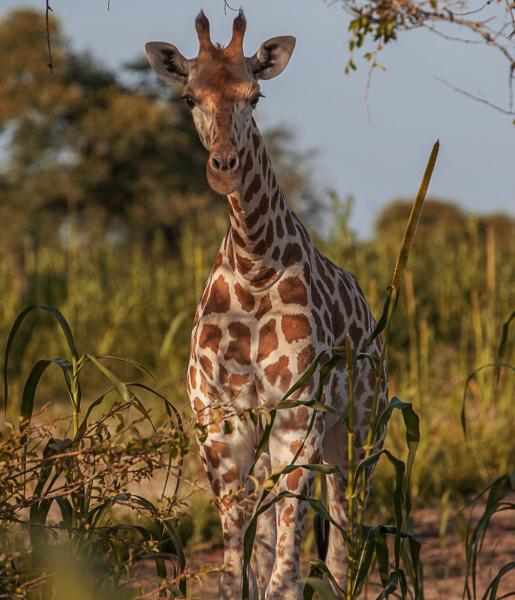
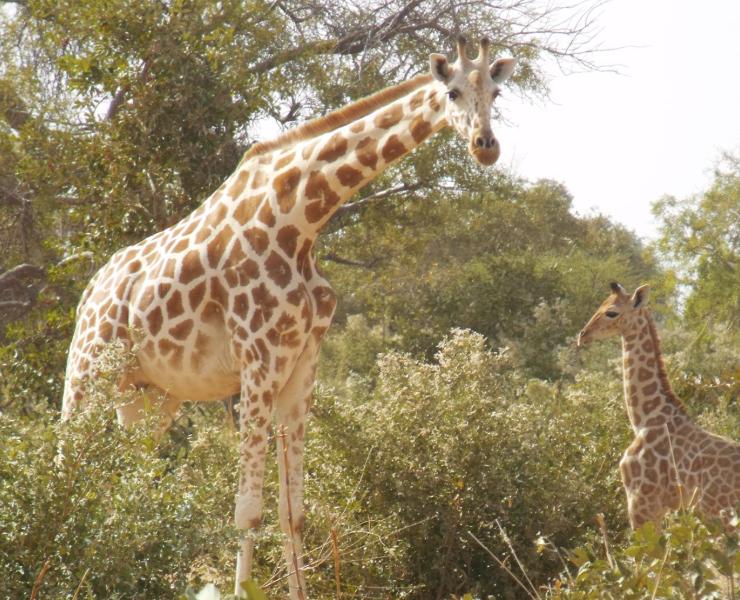
The West African giraffe is a subspecies of giraffe, distinguished from other types by its light, tan-colored spots. Other giraffes have darker markings. It stands almost 6 meters tall (19 feet) and can weigh up to 1,300 kilograms (about 2,800 pounds). Males have thicker horns than females, and are taller. Males often fight for leadership as well as mating rights. Females are responsible for caring for the young.
Giraffa camelopardalis ssp. peralta
Up to 1,300 kilograms (2,800 pounds)
Up to 6 meters tall (19 feet)
Up to 25 years in the wild
Forests to open plains
Herbivorous
15 months
Lions, leopards, hyenas, wild dogs, humans

Challenges
As human numbers go up, West African giraffe numbers go down.
Human population increase has had a severe impact on this species as a whole. As the population increased, humans began living closer to giraffes and cutting down trees, resulting in habitat loss.
Their beauty puts their lives at risk.
They are hunted, often for their tails, which are prized in many African cultures. They are also hunted for their pelt and meat.
Solutions
Our solutions to protecting and conserving the West African giraffe:
AWF established village nurseries to grow seedlings in the most critically deforested habitats in our Regional Parc W landscape.
AWF trained guides from a local community organization, the Association for Valorisation of the Ecotourism, to monitor this subspecies. These guides track them on motorbikes and use GPS units and cameras to follow and identify the giraffes daily. We also funded a census by the Association to Safeguard the Giraffes of Niger.
Behaviors
They are wild.
West African giraffes only exist in the wild. Previously it was thought that there were a number of them in European zoos, but recent genetic tests have shown that what were thought to be West African giraffes were actually a different subspecies called the Kordofan giraffe.
West African giraffes are nomads.
They are nomadic, moving around to find food. If a few are heading in the same direction, then they may form a group.
Diet
They are picky eaters.
West African giraffes feed on a variety of leaves and shoots, but the bulk of their diet is made up of a few species of trees and bushes, with Acacia trees being their utmost favorite.
The West African giraffe isn’t a heavy drinker.
In the wet season they are able to obtain a majority of their water intake through the leaves they consume, and in the drier months, they drink a few times per week — sometimes up to 38 liters at a time.
Habitats
Where do West African giraffes live?
Before World War I, West African giraffes lived throughout the Sahel and Savanna regions of West Africa. However, due to extreme population decrease, they now inhabit only a small part of Niger.


