
What is a ratel?
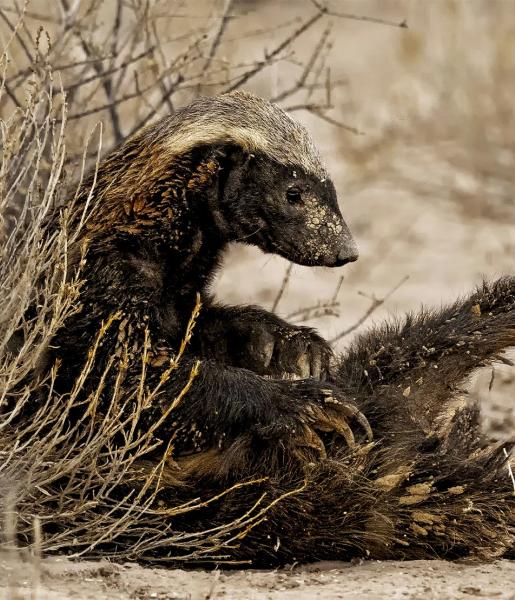
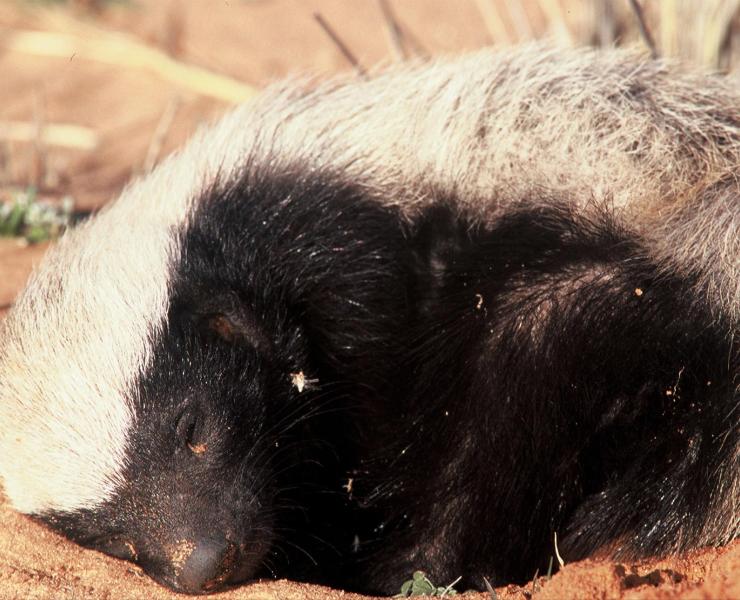
Ratels, also known as honey badgers, are muscular and compact, have a thick skull, a well-developed neck and shoulders, and strong forelegs armed with massive claws for digging. The striking pattern of the black lower body and white upper-body fur extends to the tail. It has internal ears that can be closed to keep out dirt while digging.
Mellivora capensis
8 to 12 kilograms (17-26 pounds)
60 to 70 centimeters in length (23 to 28 inches)
Up to 8 years in the wild; up to 24 years in captivity
Dense forest to open plains
Omnivorous
50 to 70 days
Humans

Challenges
Although they rarely have predators in the wild, ratels are facing increasingly hostile competition from humans.
The old-fashioned honey hunter had a grudging respect for the honey badgers, but modern beekeepers are not prepared to lose large amounts of their produce to them. When they come in close contact with human populations, they tend to steal poultry and small livestock and, as such, become victims of retaliatory killings. They are increasingly poisoned, trapped, snared, shot, and speared.
Solutions
Our solutions to protecting the ratel:
African Wildlife Foundation engages rural communities living in close proximity to wildlife to build schools. In exchange for practicing conservation and refraining from such practices as retaliatory killing, communities receive new, improved schools with conservation curriculums. In Zambia, AWF constructed Lupani School. The new school is an incentive for the Sekute communities’ efforts in wildlife conservation.
AWF identifies and puts in place preventative measures to protect livestock from predation. We work closely with pastoralist communities to meet their needs, which in turn benefits threatened species like the African honey badger. In Tanzania, we built predator-proof enclosures — called bomas — for communities that were in danger of losing livestock to predation. Proactive measures can prevent both livestock and wildlife deaths as well as an economic loss for communities.
Behaviors
The African honey badger leads a solitary existence.
Little is known about ratels’ social lives. They are generally solitary but sometimes go about in pairs, wandering widely. They regularly and liberally apply scent markings to crevices, holes, and the bases of trees. In uninhabited areas, they are diurnal, but in areas near human habitation, they live an almost entirely nocturnal life.
Young ratels are very independent.
One to four young are born in a chamber or burrow lined with grass or leaves. The young probably remain close to the home burrow for a long time, as sightings of adults with small young are rare.
Diet
The ratel has a sweet tooth.
A successful hunter, scavenger, and forager, honey badgers eat a variety of foods, including the young of large mammals, rodents of all sizes, birds, reptiles, amphibians, fish, insects, fruit, and carrion.
They also have a fondness for honey that accounts for their second name —“honey badger.” They have developed an interesting relationship with a small bird called a honeyguide. This bird alerts the ratel by repeatedly calling as the ratel follows, answering its calls with guttural growls until a hive is reached. They then emit smelly, suffocating secretions from their anal glands to fumigate the hive, causing most of the bees to flee and stunning or killing those that remain inside. They bite or claw into the nest and scoops out the honeycomb. When they leave, the bird eats the remaining dead bees, grubs, and pieces of honeycomb.
Habitats
Where do ratels live?
Ratels can tolerate both very wet and very dry habitats — they can be found in moist savannas, semideserts, and montane forests. They have an extensive range that extends through most of sub-Saharan Africa.


