
What is a serval?
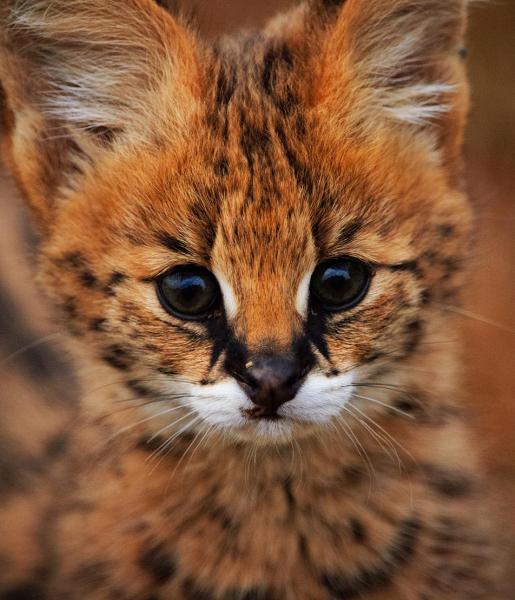
Servals are medium-sized wild cats with tawny, black-spotted coats and long necks and long legs that allow them to see over savanna grasses. They also have large ears and an acute sense of hearing.
Leptailurus serval
9 to 18 kilograms (19 to 40 pounds)
60 centimeters in length (23 inches)
Up to 23 years
Savannas
Carnivorous
65 to 75 days
Hyenas, leopards, hunting dogs

Challenges
Servals are hunted by humans.
These cat's spotted coats are sometimes marketed as young leopards or cheetahs and can attract a hearty price on the black market. This, as well as their tendency to attack poultry, makes them a target for hunters. Consequently, servals are no longer found in heavily populated areas.
Solutions
Our solutions to protecting the serval:
African Wildlife Foundation works with communities who live in close quarters with wildlife and equips scouts with essential tools, such as Global Positioning System (GPS)-monitoring devices and vehicles. As a result, AWF is able to ensure enhanced protection of wildlife in these regions as well as provide additional employment opportunities to local communities.
AWF works with communities living in close proximity to wildlife to incentivize conservation. In exchange for refraining from retaliatory killing or killing for products, like fur, communities receive training in sustainable, and more productive, agriculture techniques that lead to enhanced food and economic security.
Behaviors
They lead a solitary existence.
Servals come together in pairs only for a few days when the female is in heat.
Servals are single mothers.
Kittens, born in litters of two to four, are difficult to observe, as the mother hides them well and frequently changes the hiding place. Because the female raises the litter alone, she has to hunt frequently to feed them. When the young are large enough to hunt, the mother drives the males out. Young females remain somewhat longer, but when they become sexually mature, they too leave to establish their territories.
Diet
Servals enjoy a diverse diet.
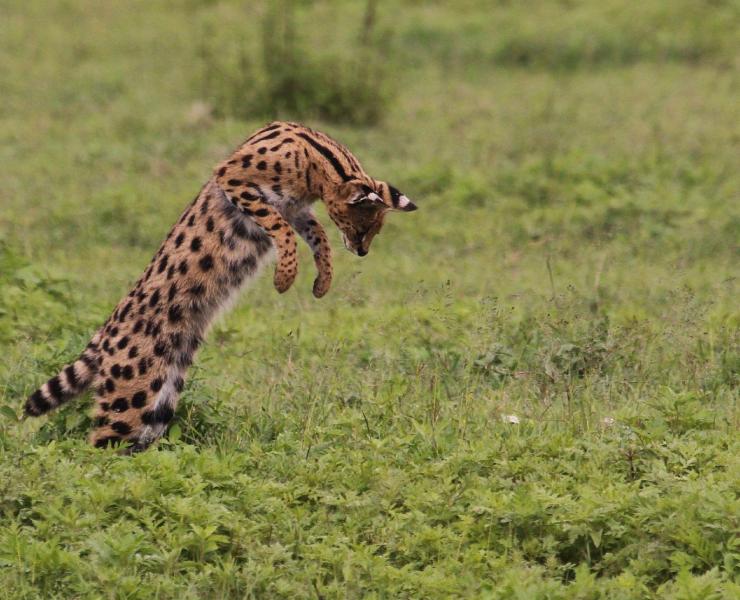
Servals eat a great variety of prey, including rodents, birds, reptiles, frogs, and insects. They catch much of their prey by leaping high into the air and pouncing. They have also been seen using their long forelimbs to reach into burrows or to hook fish out of the water. They are quite successful hunters and seldom eat carrion.
Habitats
Where do servals live?
Servals are common on savannas where there is plenty of water. They prefer areas of bush, tall grass, and dry reed beds near streams, but they are also found in high-altitude moorlands and bamboo thickets. They are found in most parts of Africa, with the exception of Central Equatorial Africa, the very Southern part of the continent, and the Sahara region.


