
What is the African hare?
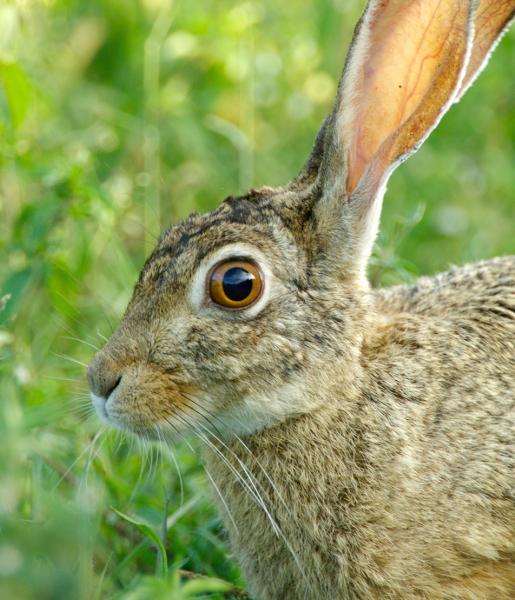
This nocturnal savanna mammal is covered in coarse, thick fur, and measures about 50 centimeters (20 inches). It has a short tail and strong hind feet that measure about 17 centimeters (4 inches). The African hare, like the closely related cape hare (or desert hare), has mobile ears that are as long if not sometimes longer than their bodies. Helping it to cut and nip at vegetation are two pairs of chisel-shaped incisors, which display a distinctive groove pattern that sets it apart from the cape hare.
Least Threatened
Lepus victoriae
1 to 3 kilograms (3 to 7 pounds)
40 to 58 centimeters long (16 to 23 inches)
A high of 12.5 years recorded
Scrubby grasslands within wooded savannas
Herbivorous
25 to 50 days
Humans, carnivorous birds, snakes

Challenges
Humans prey on the African hare.
The hare has been hunted for centuries, not only for its meat and fur but also just for sport.
African hare habitat is rapidly declining.
Human settlement, ranching, and fencing of land results in loss of the African hare’s habitat.
Solutions
Our solutions to protecting the African hare:
In Zambia, AWF rebuilt Lupani School in exchange for the Sekute community’s participation in wildlife conservation. By working with rural communities, living in close proximity to wildlife, to incentivize conservation and weave it into primary school education, we are providing tangible benefits to wildlife conservation.
African Wildlife Foundation engages communities living near wildlife to create sustainable practices for agricultural and settlement growth by providing training on best practices and incentivizing conservation agriculture when appropriate. This helps increase agricultural and economic productivity and allows communities to rely less on hunting their local wildlife and exhausting populations.
Behaviors
African hares prefer the nighttime.
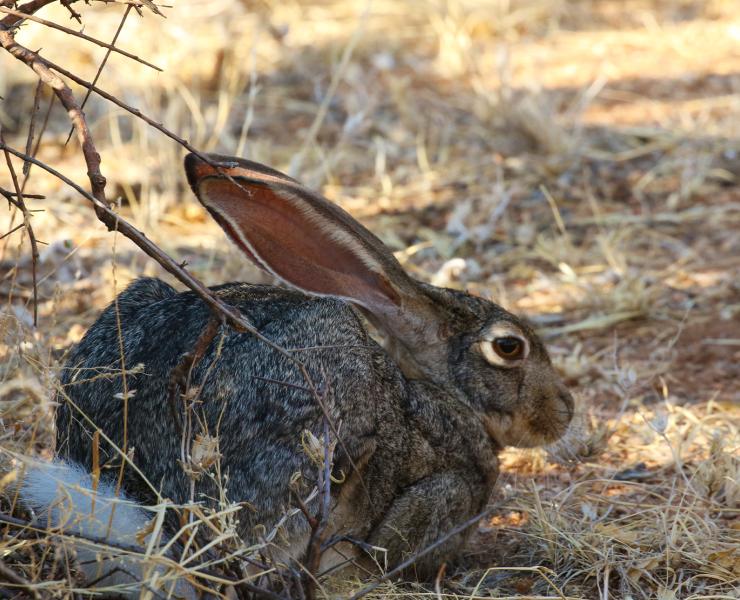
They spend most of the day lying in a “form”—a depression in the ground or under bushes. Hares do not dig burrows as rabbits do. Instead, they tend to use dens or burrow already made by warthogs or aardvark.
Females do not spend much time with their young.
The female African hare gives birth to one or two young at a time, which are born fully haired and with open eyes. The mother only spends a short amount of time each day suckling the young; the rest of the time they hide in forms trying to avoid the attention of predators. Female hares can reabsorb an embryo if there is a problem with the pregnancy or when food is scarce.
Hares run away when threatened.
To protect themselves, African hares rely on camouflage, speed, and their extremely sensitive senses of hearing and smell. If an enemy is near, then the hare will freeze and crouch low to the ground. If danger continues to approach, then the hare may pop into the air and dash away in a zigzag pattern. They will give a shrill scream if in peril but are otherwise mostly silent.
Diet
Sometimes, the African hare eats their droppings.
Hares eat leaves, buds, roots, berries, fungi, bark, and twigs. They eat their food twice. Like rabbits, hares produce two types of droppings. At night after they eat, their droppings consist of undigested plant matter, which they will re-ingest for maximum nutrient gain. During the day, their droppings contain no nutrients and are hard, dry, and pellet-like and are not re-ingested.
Habitats
Where do African hares live?
African hares are found throughout Africa in grasslands and wooded savannas. This habitat is found in the savannas of northwest and the sub-Saharan regions of Africa.


