
What is a waterbuck?
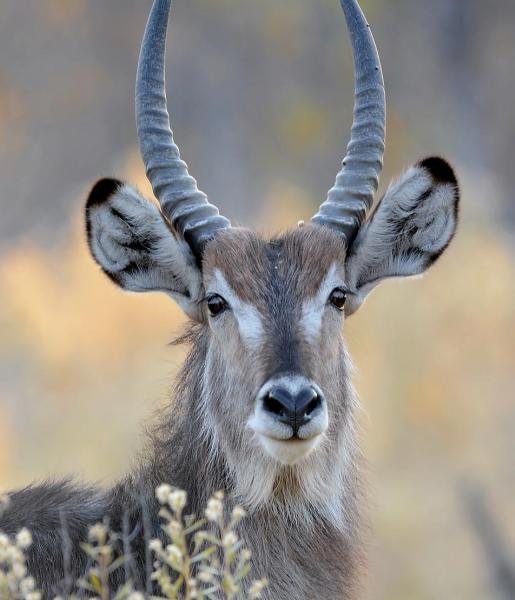
These antelopes are large, robust animals; males are generally about 25 percent larger than the females. They have large, rounded ears and white patches above the eyes, around the nose and mouth, and on the throat. Only the males have horns, which are prominently ringed and as long as 100 centimeters (40 inches). The horns are widely spaced and curve gracefully back and up. They are sometimes used with lethal results when males fight one another over territories.
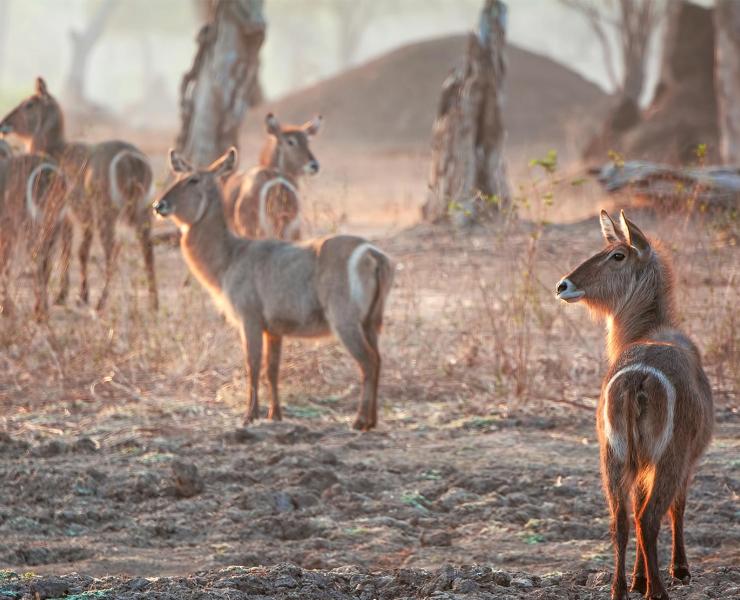
They have a shaggy brown-gray coat that emits a smelly, oily secretion thought to be for waterproofing. In East Africa, two types occur: the common waterbuck and the defassa waterbuck, distinguished only by the white pattern on the rump. The common waterbuck has a conspicuous white ring encircling a dark rump, while the defassa has wide white patches on either side of the rump.
Waterbuck (Kobus ellipsiprymnus); Common waterbuck (Kobus ellipsiprymnus ssp.ellipsiprymnus); Defassa waterbuck (Kobus ellipsiprymnus ssp. defassa)
160 to 300 kilograms (350 to 660 pounds)
120 to 136 centimeters at the shoulder (about 50 inches)
Up to 18 years
Savanna grasslands, riverine forests, woodlands
About 9 months

Challenges
Waterbucks are losing their homes.
Habitat loss and fragmentation are the biggest threats facing these antelopes. As people construct new roads, build settlements, and expand agriculture, they are infringing on wildlife habitats.
Solutions
Our solutions to protect the waterbuck:
AWF works with governments and communities to designate wildlife corridors — large swaths of land that waterbucks can use to from one park, or country, to another. Corridors link protected areas and allow wildlife to follow rains or travel to their calving grounds.
African Wildlife Foundation knows that the success of tourism in Africa depends on its majestic wildlife. We bring communities together with private investors to construct conservation tourism lodges like The Sanctuary at Ol Lentille in Kenya. The lodge provides sustainable income for the community, and the 20,000-acre conservancy is a safe home to a variety of wildlife.
Behaviors
Waterbucks do not have many close relationships.
Calves are generally born throughout the year, although breeding becomes more seasonal in some areas, after which a single young is born. The mother hides her young for about three weeks, returning three to four times a day to suckle it. Each suckling session lasts only about five minutes, during which time the mother cleans the calf so that no odor is left to attract predators. Even so, there is a high rate of calf mortality.
Although the calves begin to eat grass when they are young, they are nursed for as long as six to eight months of age. After weaning, they begin to wander off, and young males often form all-male groups near the occupied territories, while the young females stay in their mother's group. The waterbuck does not reach adult weight until about 3-1/2 years old. Females mate again soon after bearing young (within two to five weeks).
The two species often interbreed.
If the defessa and common waterbucks have bordering ranges, then they often interbreed; as a result, some scientists consider the two groups as a single species.
Diet
Waterbucks eat leftovers.
They are more water-dependent than domestic cattle and must remain close to a water source. However, this habitat furnishes these antelopes with a year-round source of food. Mainly grazers, they consume types of coarse grass seldom eaten by other grazing animals and occasionally browse leaves from certain trees and bushes. They feed in the mornings and at night and rest and ruminate the remainder of the time.
Habitats
Where do waterbucks live?
As its name would indicate, the waterbuck inhabits areas that are close to water in savanna grasslands, gallery forests, and riverine woodlands south of the Sahara. Such habitats not only provide sustenance but long grasses and watery places in which to hide from predators.


