From Partnership to Ownership: Government Expands Bole Canine Unit Infrastructure
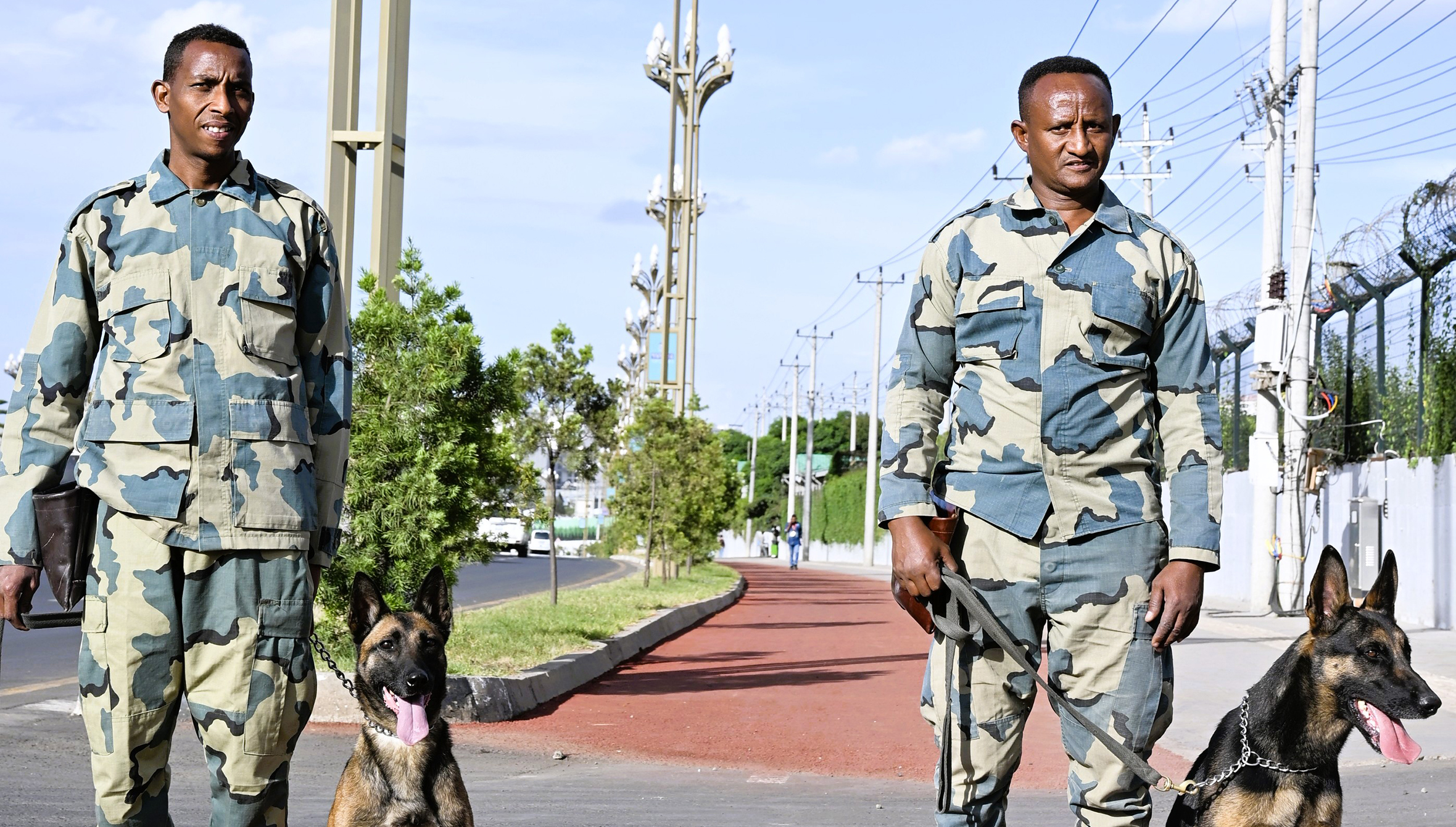
A counter wildlife trafficking canine team in Ethiopia.
General Inquiries
Tel:+254 711 063 000
Ngong Road, Karen, P.O. Box 310
00502 Nairobi, Kenya
The Ethiopian Canine Unit at Bole International Airport (BIA), established by the African Wildlife Foundation (AWF) and Ethiopian Wildlife Conservation Authority (EWCA), has reached an important milestone. Just one year after becoming operational, EWCA secured government funding to expand the facility, demonstrating a strong national commitment to sustaining and strengthening wildlife law enforcement efforts in Ethiopia. The expansion includes additional blocks of accommodation, restrooms and kitchen, sanitation works and assigned well-trained canines to enable operations.
AWF financed and provided technical assistance for the first phase of the specialized wildlife detection canine unit infrastructure development, including kennels, handlers’ residences, utility facilities, and other essential components, as well as trained detection dogs that enabled the unit to become fully operational. Since its establishment, the canine unit has significantly enhanced Ethiopia’s ability to detect and intercept illegal wildlife products and other prohibited items. According to the 2025 report, the canine team searched 512 flights, 529 cargo flights, performed 44,900 luggage searches, and achieved 15 finds, including the interception of 1,661 kg of ivory. Its success has highlighted the effectiveness of canine detection as a frontline law enforcement tool and contributed to broader efforts to combat wildlife crime, including deterrence at both national and regional levels.
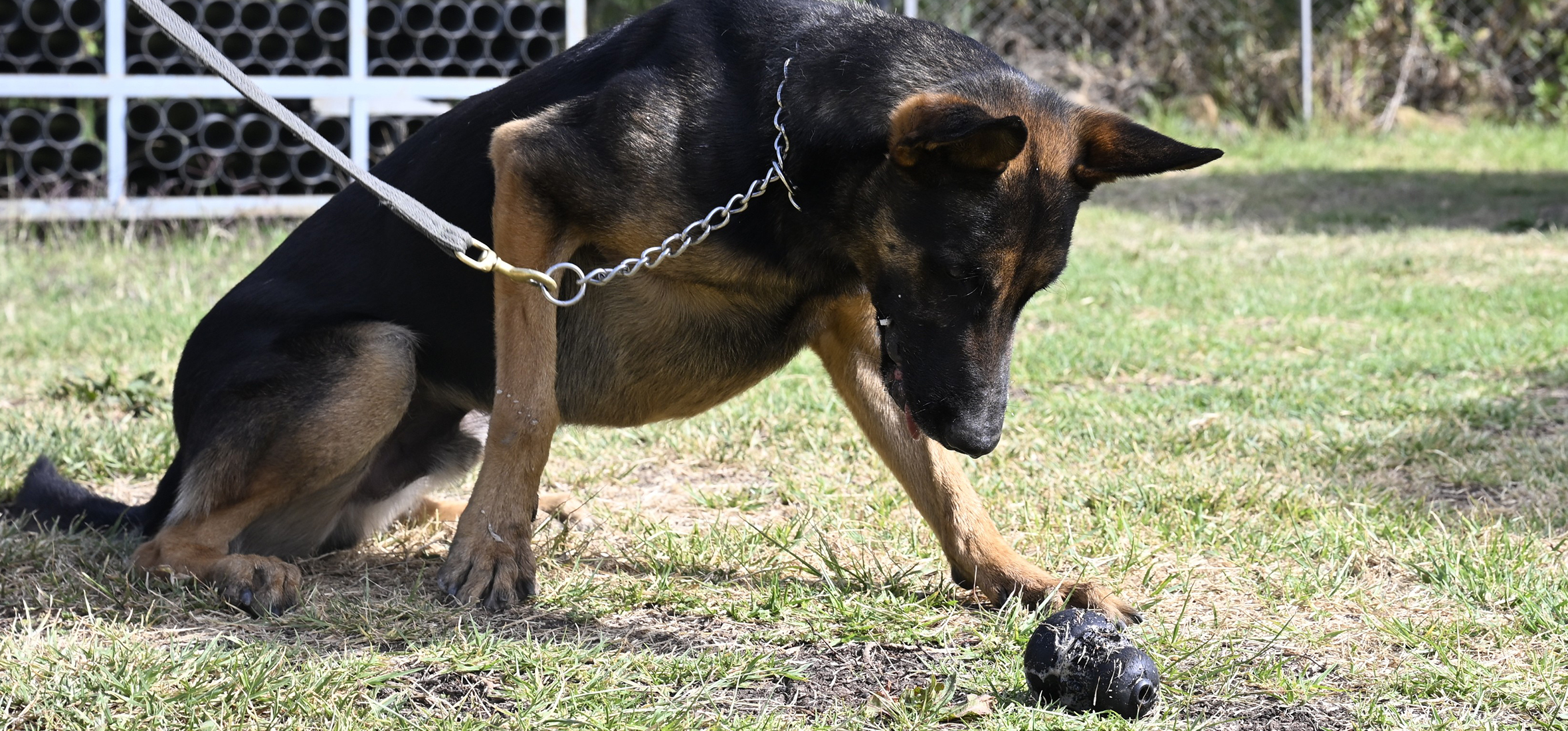
A detection dog during training.
Building on these achievements, the Government of Ethiopia, through EWCA, has now invested its own resources in the second phase of infrastructure expansion. This includes an additional two blocks of accommodation, two restrooms, and kitchen and sanitation work to connect this phase of construction with the first phase infrastructure. This government-led investment reflects the sustainability of AWF’s initial support and demonstrates how strategic partnerships can foster long-term ownership, strengthen institutions, and deliver lasting conservation impact. The continued growth of the Bole Canine Unit stands as a strong example of what can be achieved through shared commitment to wildlife protection and law enforcement.
The expansion also reflects national authorities' confidence in the canine program and its contribution to strengthening security and combating wildlife trafficking. By allocating its own resources, the Government of Ethiopia is ensuring that the unit remains operational, effective, and capable of responding to emerging conservation and security challenges. Thus, success is further supplemented by Wildlife Judicial and Prosecutorial Assistance Training (WJPAT), another counter wildlife trafficking imitative to build capacity of law enforcement stakeholders. As the facility continues to grow and build the capacity of stakeholders through WJPAT, the Bole Canine Unit serves as a model of sustainable conservation investment, in which initial donor support successfully transitions to national ownership, creating long-term benefits for wildlife and people.