Kenya
Despite government efforts to improve natural resource management, Kenya is losing biodiversity and seeing an increase in unsustainable land use. We work with partners at all levels, from local to national, to advance biodiversity conservation and improve the well-being of communities.
Our multi-faceted approach includes working with wildlife authorities to:
- Strengthen eco-monitoring and data collection
- Support land-use planning and other activities that reduce human-wildlife conflict
- Bolster counter-trafficking efforts, including anti-poaching rapid response
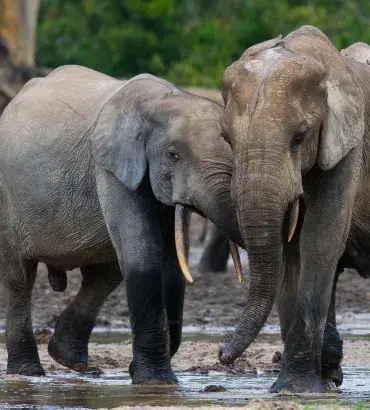
Our current landscape-level efforts in Kenya are concentrated in the Tsavo-Mkomazi Landscape, one of Africa’s largest continuous wildlife areas and home to more than a third of Kenya’s elephants. Our policy engagement takes place at the county and national level.
Amboseli's Next Chapter: Navigating the Crossroads Between Conservation and Development
AWF in Action
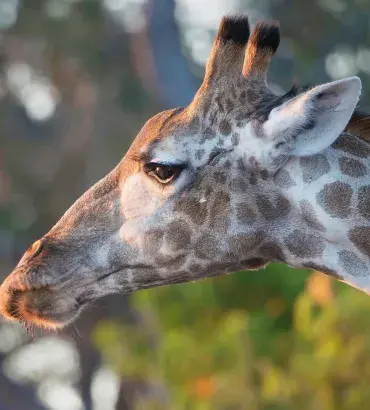
Implementing a Holistic Giraffe Conservation Strategy
Long-term giraffe conservation requires working in large landscapes that span many different kinds of land use. One such landscape is the Tsavo-Mkomazi transboundary area, which straddles Kenya and Tanzania. In one of the Maasai giraffe’s last strongholds, we are implementing a science-based conservation action plan to support giraffe populations and benefit communities.

Countering Habitat Degradation
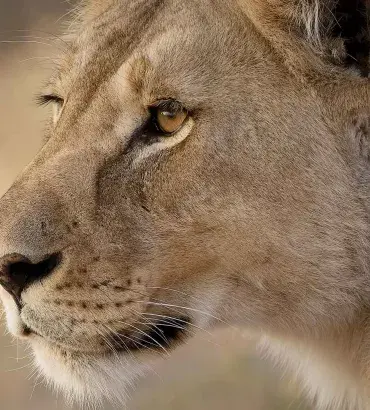
The demand for firewood, agricultural land, and pasture for livestock threatens biodiversity in the unique cross-border Tsavo-Mkomazi landscape, which includes densely forested hills and rangelands. We deploy many different strategies, including working with community conservancies and group ranches to restore forests and rangelands that are home to elephants, lions, buffalo, leopards, wild dogs, and other species.

Expanding Community Conservancies in Kenya
We pioneered the community conservancy model in East Africa and have continued to support community conservancies across our landscapes. In Kenya, we helped to establish the LUMO Conservancy, which provided a model for two ranches to become certified to operate as conservancies.

Taking Our Expertise to the Courts
We work with Kenyan government partners to help ensure wildlife crime is appropriately prosecuted. Our efforts include an innovative court-monitoring program in the Tsavo landscape, in which we provide logistical and technical support to often overburdened prosecutors, preventing wildlife cases from slipping through the cracks.

We work with the people of Kenya for wildlife. Our strategic, implementing, and funding partners include:


Wildlife We Are Protecting