Nyamabande's First Rubber Harvest: Growing Livelihoods Through Conservation
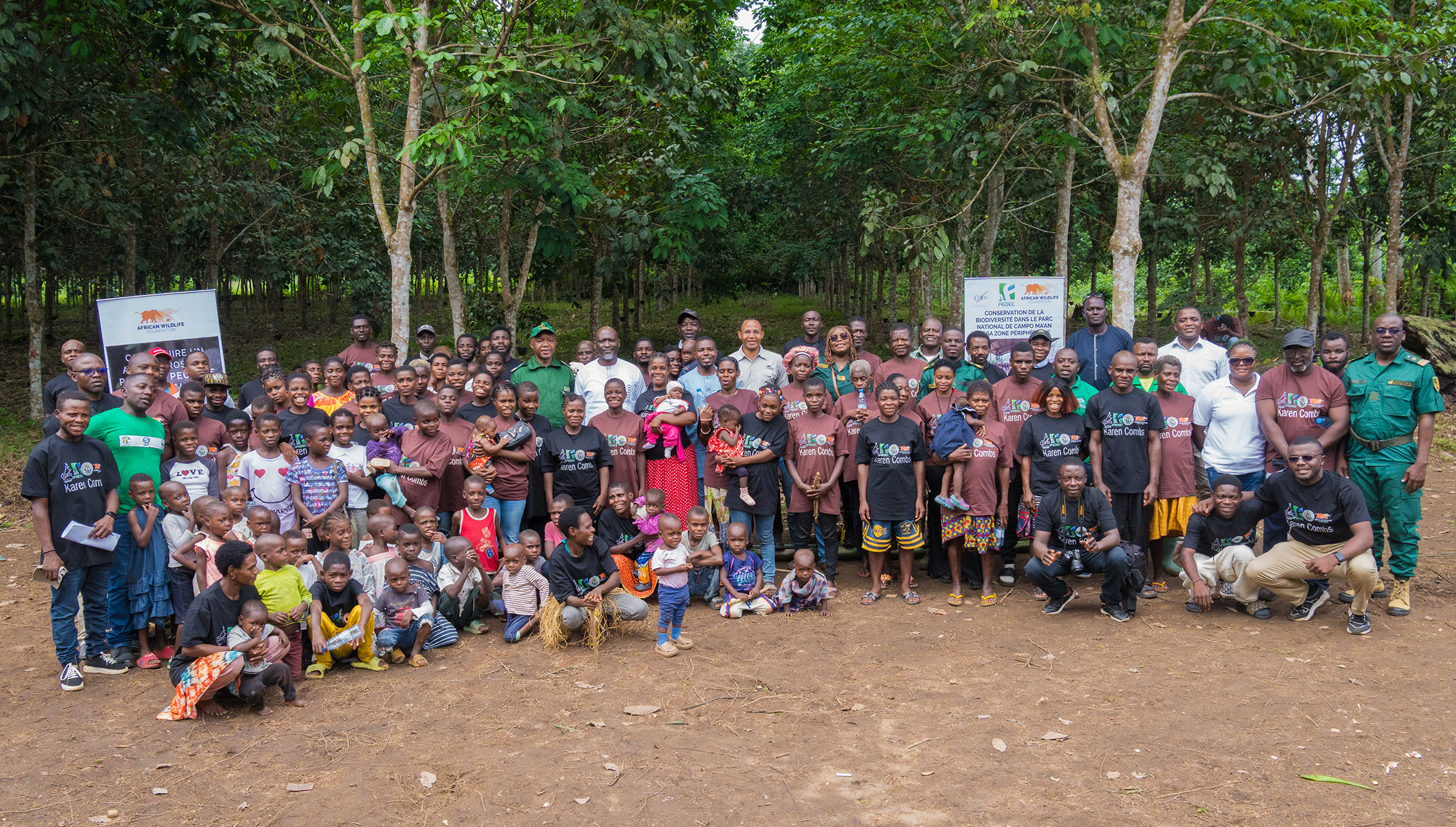
The Indigenous community of Nyamabande in Cameroon's Campo Ma'an landscape.
For the people of Nyamabande, June 2026 marked more than the first collection of latex from their rubber trees. It marked the beginning of a new chapter, one where conservation and economic opportunity are working hand in hand.
Six years after establishing community-owned rubber plantations, families are now earning income from their first harvest, creating a sustainable livelihood that is expected to benefit the community for the next three decades.
Supported by COTCO through FEDEC, contributions from Karen Combs, and technical guidance from the African Wildlife Foundation (AWF), the initiative demonstrates how conservation investments can help communities build lasting economic resilience while reducing pressure on protected areas.
Harvesting New Opportunities
"This rubber farm shows that our community is willing to work," says Ndongo Jean Daniel, a community leader in Nyamabande.
"It not only gives us income, but also dignity. For years, we were seen only as harvesters of the forest. Now we are producers, and this opens the door to jobs for our youth." He adds

Ndongo Jean Daniel stands in the community rubber farm preparing a tree for latex harvest. © Vanilla Boi Studios
For many families, particularly the Indigenous Bagyeli community, relocation from areas within Campo Ma'an National Park brought significant changes to their way of life. Livelihoods that had long depended on forest resources became increasingly uncertain, creating the need for sustainable economic alternatives.
Working closely with the community, AWF supported the establishment of rubber plantations that would provide long-term income while reducing reliance on forest resources and strengthening stewardship of the protected landscape.
Today, latex can be tapped throughout the production season and collected every 24 to 48 hours, providing a reliable source of income rather than seasonal earnings.
Building Sustainable Livelihoods
Beyond generating income, rubber production is creating new opportunities for families to invest in education, healthcare, and household wellbeing.
"The first harvest is a turning point," says Lydie Nguesse, AWF's Community Development Assistant based in Campo Ma'an.
"When communities are given tools and support, they can build sustainable livelihoods that reduce pressure on protected areas. Nyamabande's success shows that conservation can empower people," she says.
Through AWF's partnership with HEVECAM (The Cameroon Rubber Company), the community now has access to a formal market for its latex. This direct relationship provides greater market security while enabling community members to participate in an established value chain without giving up ownership of their land.

Partnerships that benefit communities are a sustainable way to protect forests like Campo Ma’an. © Vanilla Boi Studios
For Nyamabande, the project represents more than an economic opportunity. It demonstrates that conservation can create practical, long-term livelihood solutions that strengthen both communities and landscapes.
Partnerships Driving Conservation
The success of the project reflects years of collaboration between community members and conservation partners.
COTCO, through FEDEC, provided funding to establish the plantations, while Karen Combs contributed resources that supported the initiative during its development. AWF worked alongside the community, providing technical guidance to ensure the plantations were managed sustainably and remained aligned with community priorities.
Together, these partnerships have helped transform a long-term conservation investment into a reliable source of income that will continue benefiting the community for decades.
Looking Ahead
With plantations expected to remain productive for up to 30 years, Nyamabande has established an economic foundation that supports both people and nature.
"This project reflects AWF's commitment to integrating community livelihoods into conservation across the Campo Ma'an landscape," says Jacques Massussi, AWF's Campo Landscape Manager.

Building a future for generations where people and nature can coexist positively. © Vanilla Boi Studios
AWF's partnership with HEVECAM also offers a model that can be replicated elsewhere, demonstrating how conservation organizations, communities, and the private sector can work together to strengthen local economies without expanding pressure on protected forests.
For the Bagyeli and Bantu families of Nyamabande, the first harvest is only the beginning. Steady income will enable families to plan for the future, create opportunities for young people closer to home, and strengthen a community that has transformed challenge into opportunity.
Nyamabande's first rubber harvest is more than a milestone in agricultural production. It is a reminder that when communities are equipped with sustainable livelihood opportunities and trusted as partners in conservation, they become some of the strongest stewards of the landscapes they call home.