Africa Day: From Kidepo's Streams to Conservation Leadership
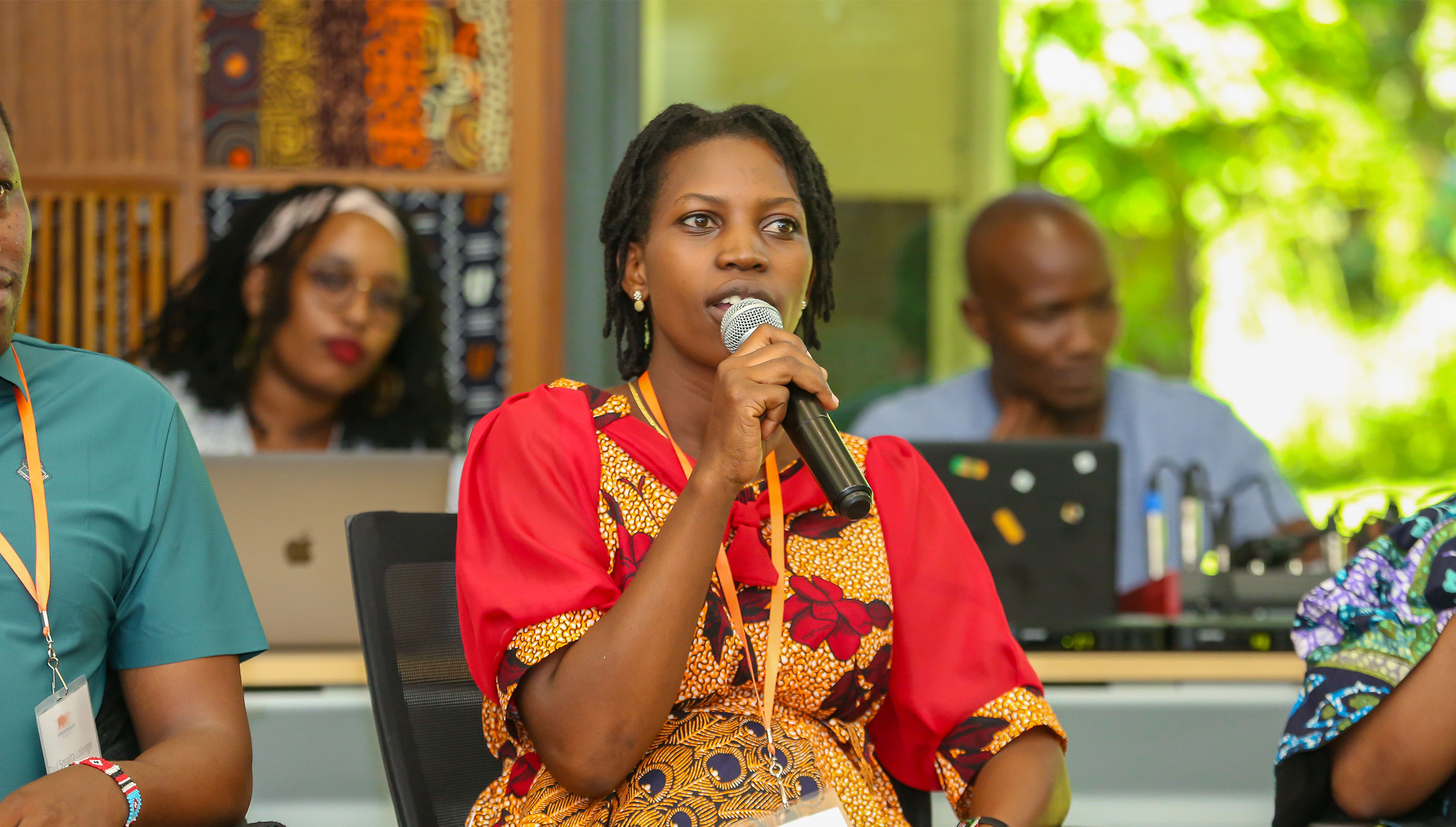
Maraika Amabile speaking during the 2024 AWF-Wall Leadership and Management Fellowship.
As a child in Kaabong District, Maraika Amabile ran through the tall grass of Uganda's Kidepo landscape, jumping over clear streams and moving through a place where wildlife was part of daily life. Bird calls filled the air. Antelopes crossed open ground. Ostriches, giraffes, and the occasional leopard moved through the landscape, while distant lion roars marked a place shared with other life.
That childhood landscape shaped her first sense of belonging and taught her to notice change.
Over time, the streams she had leapt across began to dry. Trees along the roads thinned. Bushes near farms were cleared. More land opened for cultivation. Charcoal burning and firewood selling became sources of income. As pressure increased, wildlife became less visible. The lion roars faded. Human-wildlife conflict grew more frequent.
For Maraika, conservation stemmed from memory, loss, and attention.
"I was drawn to wildlife from a young age and very attentive to environmental shifts. I observed loss before I had the technical language to describe it. Over time, I began to understand those changes more clearly, and that is what shaped my purpose," she says.
Her path, however, was not immediate. Maraika first hoped to study medicine, a future that would have placed her in the work of healing people. Financial constraints and circumstances redirected her towards environmental management. What may have seemed like a detour became another kind of healing: helping restore the relationship between communities, wildlife, and the land that sustains both.
After completing her primary and secondary education in Kidepo, she pursued a Bachelor of Science in Environmental Management at Kampala International University then returned home to apply her knowledge of the landscape that raised her.
Her early work kept her close to community realities. She worked as a community mobilizer with World Vision and later in nutrition programming under the Aridland Development Programme. "These roles grounded me in the realities facing communities across the Karamoja region, where food insecurity, drought, and fragile livelihoods are closely tied to environmental conditions."
Through this work, Maraika saw how conservation, food systems, climate pressure, land use, and livelihoods sit inside the same story.
On Africa Day, stories like Maraika’s reflect a growing movement across the continent, where young African conservation leaders are helping communities protect wildlife while strengthening local livelihoods. From community scouts to grassroots leadership and locally led conservancies, Africa’s youth are increasingly shaping conservation solutions grounded in lived experience, resilience, and a deep connection to the landscapes they call home.
From Community Work to Conservation Leadership
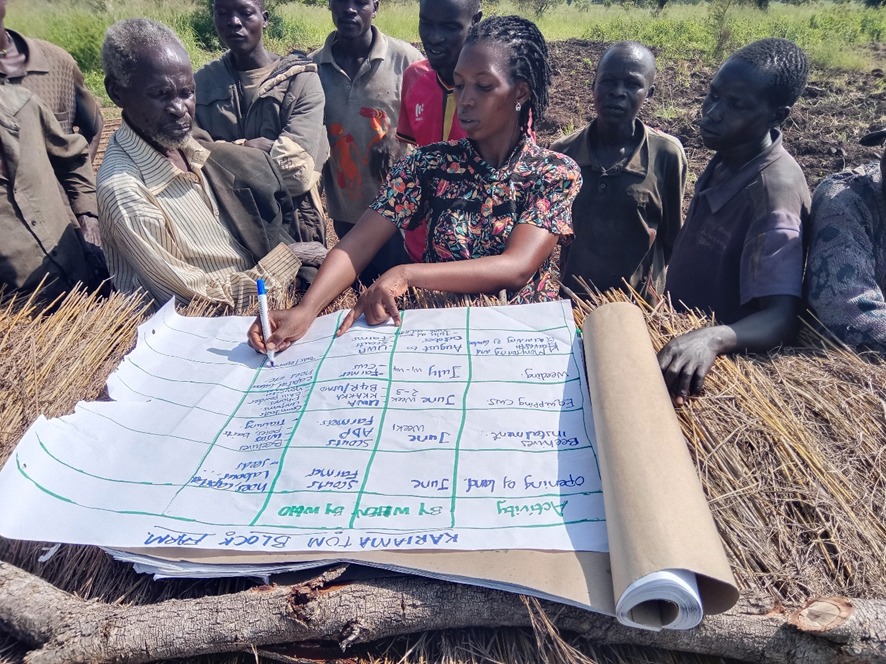
Maraika Amabile supporting community farmers and scouts in Kakwanga Sub-County to develop block farm action plans.
In 2022, she became Programs Manager at KKAKKA Community Wildlife Association, where she focuses on community systems that support coexistence between people and wildlife. Her work includes leadership development, partnership building, conservation programming, and practical responses to human-wildlife conflict.
A central part of this work is supporting community wildlife scouts. "With support from the African Wildlife Foundation (AWF), I have been able to facilitate the training and coordination of community wildlife scouts who play a critical role in helping communities respond to human-wildlife conflict and reduce losses. Across the landscape, we work with a network of more than 550 scouts working across multiple districts."
The scouts are often first responders when wildlife enters farms or settlements. Maraika has also helped strengthen their coordination, leadership roles, and accountability systems.
“In areas where conflict can escalate quickly, structured and trusted local systems are critical," she says.
Her work extends into local governance, supporting leadership and financial management training, so conservation decisions sit within systems communities' trust.
In 2024, Maraika was selected for the AWF-Wall Leadership and Management Fellowship, joining young conservation leaders from across Africa. The fellowship sharpened her leadership and expanded her view of locally led conservation.
"Through the fellowship, I expanded my exposure to different conservation models and strengthened my ability to engage a wide range of stakeholders, from community groups to institutional and private sector partners,” she adds. “It also reinforced my confidence and leadership identity, enabling me to translate learning into action within my own landscape."
One outcome has been her support for the establishment of Lomut Conservancy on the eastern side of Kidepo Valley National Park. Through stronger coordination and partnerships, the conservancy is beginning to show how community-led conservation can generate value for households while protecting ecosystems.
Maraika also used the fellowship to examine gaps in stakeholder coordination and how siloed efforts affect human-wildlife conflict response, resource mobilization, and long-term sustainability.
Leading Conservation in Complex Landscapes
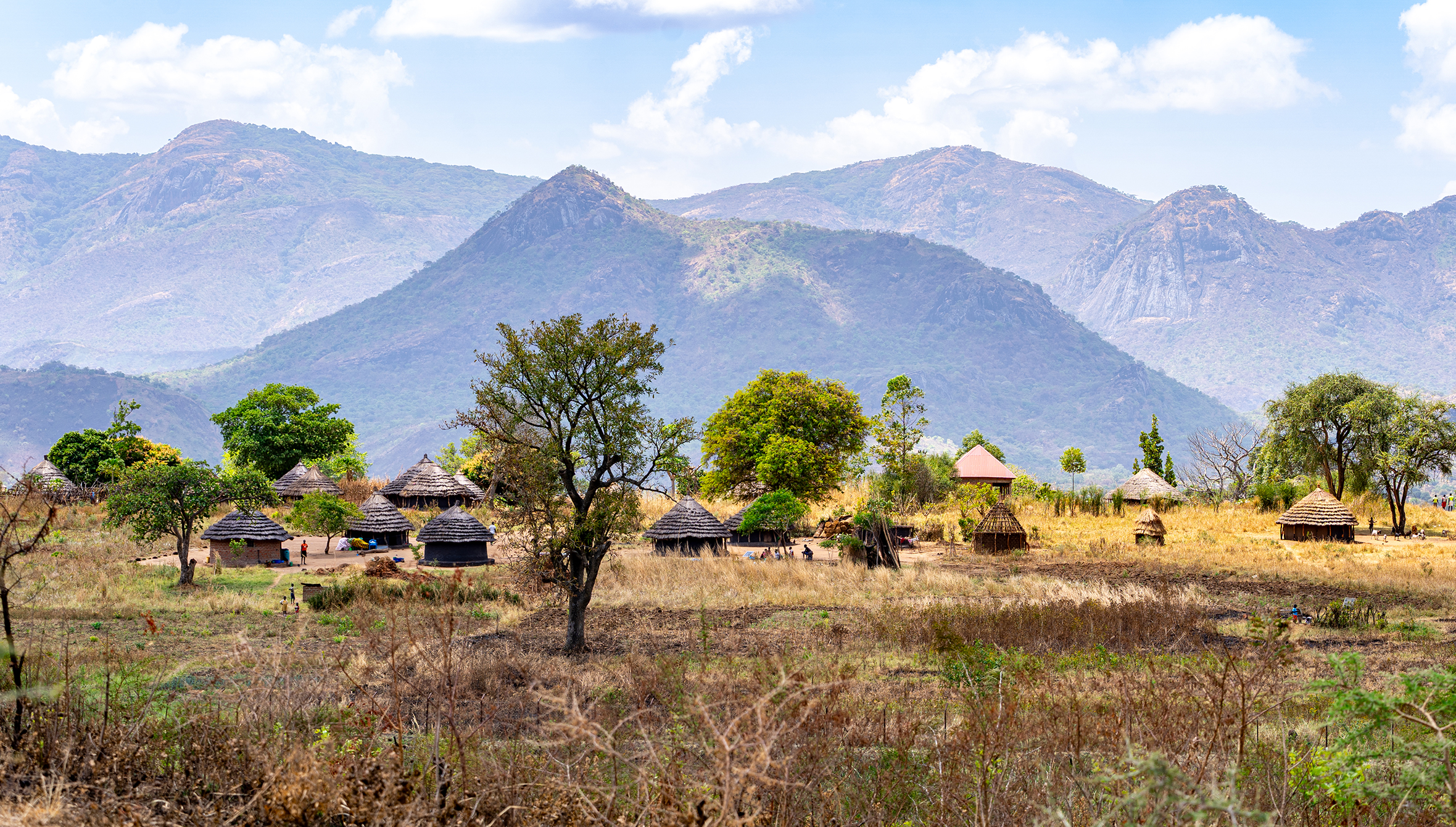
Kidepo Landscape, Uganda.
Today, Maraika leads in spaces where conservation is not always easy to defend, especially where the costs of living with wildlife are immediate. She also navigates leadership spaces where being young and female can affect how her voice is received. Her response is steady: build trust, strengthen local systems, and keep solutions close to community needs.
Looking ahead, she sees a Kidepo where communities coexist with wildlife because conservation contributes to their wellbeing. She sees strong local leadership, functional conservancies, and partnerships that sustain people and ecosystems together.
Maraika’s journey also reflects a wider shift taking place across Africa, where young people are stepping into leadership roles in conservation, climate resilience, and community development. Their work is helping redefine conservation not as a distant agenda, but as a practical pathway toward coexistence, local empowerment, and long-term sustainability.