An African Youth Perspective: What SBSTTA Taught Me About Africa’s Conservation Future

AWF Communications Officer Manda Nfor at the meeting of the Subsidiary Body on Scientific, Technical and Technological Advice.
I arrived at my first meeting of the Subsidiary Body on Scientific, Technical and Technological Advice (SBSTTA) as an African Wildlife Foundation Policy Fellow carrying a fair amount of skepticism and admittedly, more questions than expectations.
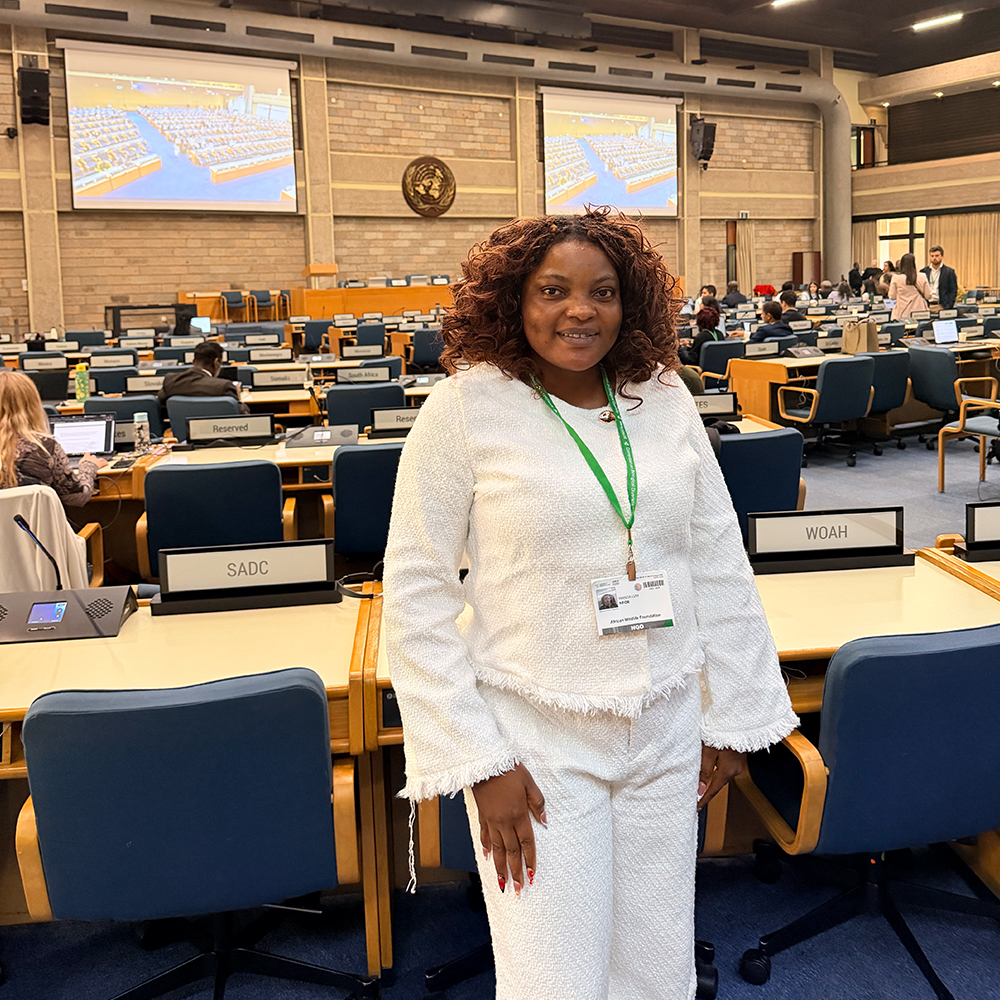
Manda Nfor at the United Nations Office at Nairobi attending her first biodiversity policy meeting.
My first victory had little to do with international biodiversity policy; it was finding the right room. For the first 30 minutes, I navigated the United Nations complex in Nairobi with a coffee in hand trying not to look as lost as I felt. Eventually, I found the plenary hall, took my seat, and began listening.
What happened next changed how I understood conservation policy.
If you have never heard of SBSTTA, think of it as the scientific and technical engine room of the Convention on Biological Diversity (CBD). While the high-level political moments of a Conference of Parties (COP) often receive the most attention, SBSTTA is where much of the technical substance behind those decisions is examined. Scientists, technical experts and government representatives consider evidence, methodologies, indicators and implementation approaches that can ultimately inform global biodiversity commitments.
It may not always make dramatic headlines but sitting in those discussions made one thing clear to me—the future of conservation is being shaped long before a final political agreement is announced—and for Africa, that process matters enormously.
From Global Commitments to African Landscapes
Biodiversity policy operates through a chain of global, regional and national commitments. At the global level, the Kunming-Montreal Global Biodiversity Framework (KMGBF) provides the overarching direction, with 23 targets intended to halt and reverse biodiversity loss.
Those commitments do not exist in isolation; they intersect with Africa's own development and conservation priorities, including Agenda 2063: The Africa We Want, the African Union's biodiversity agenda, and commitments such as the Gaborone Declaration on Sustainability in Africa.
Eventually, however, global commitments have to become national priorities. That is where National Biodiversity Strategies and Action Plans, or NBSAPs, come in. They are the mechanisms through which countries translate international biodiversity commitments into national strategies, priorities, and actions.
Many African countries are still working to update and align their NBSAPs with the KMGBF. Capacity constraints, limited financing, competing development priorities and gaps in biodiversity data can all slow implementations. This creates a familiar problem: international ambition can move faster than national delivery.
That is why my experience at SBSTTA was so important. It made me see that the negotiations are not an end to themselves; they are part of a much longer journey.
A target agreed internationally should influence a national budget, a protected-area strategy, a restoration program, a community conservation initiative, a land-use decision, or a local livelihood.
Africa Is Not Simply an Implementing Region
Listening to the technical discussions as an African conservation professional also challenged another assumption—that Africa is primarily a recipient of global conservation policy.
We are not. Africa is home to some of the world's most important remaining wildlife populations, ecosystems, and biodiversity. That means Africa has a direct stake in how biodiversity is defined, measured, financed, and governed.
This is why strong African participation in international biodiversity negotiations matters. Through alliances such as the African Group of Negotiators, countries have an opportunity to build common positions around shared priorities and ensure that the continent's realities are reflected in global decisions.
Science Cannot Be an Afterthought
One of my biggest lessons from SBSTTA was a renewed appreciation for the role of science in policy. Science provides evidence against which ambition should be tested. It helps us understand what is changing, why it is changing, and which interventions are most likely to work.
For Africa, that means strengthening the connection between scientific knowledge and conservation decision-making. We need biodiversity monitoring systems that can support national planning. We need research institutions that are connected to policymakers and practitioners. We need better use of Indigenous and local knowledge alongside scientific evidence. And we need conservation decisions that are informed by what is actually happening in landscapes, rather than relying solely on assumptions developed far from them.
Young Africans Are Not Waiting for the Future
Perhaps what inspired me most during the meetings was seeing young people actively participate in the process. Through the Global Youth Biodiversity Network, young representatives were not simply sitting at the back of the room as symbolic observers; they were making clear, technically informed interventions and engaging directly with the substance of the negotiations.
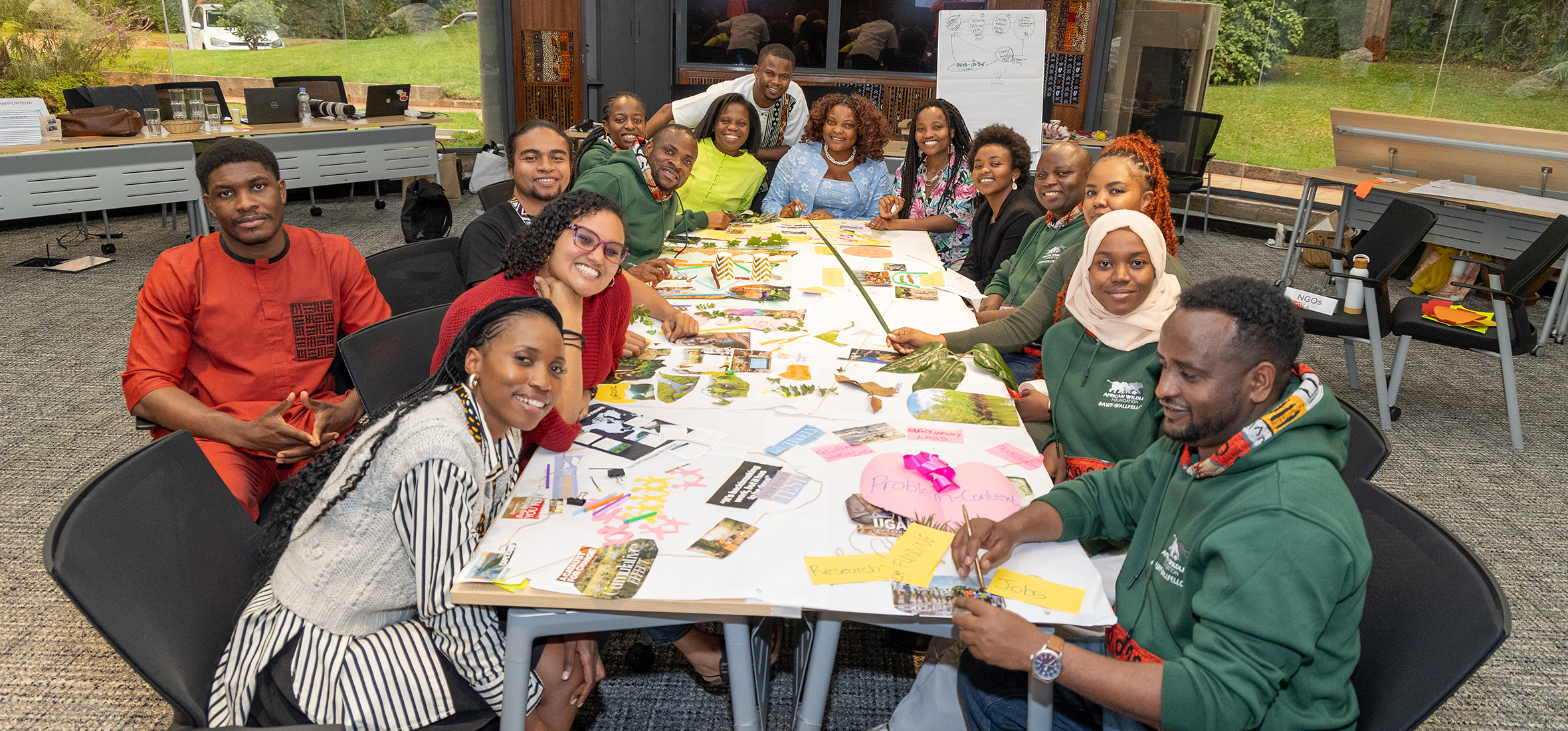
Manda Nfor with AWF-Wall Policy fellows after a creative demonstration of CBD COP procedure at AWF's headquarters in Nairobi, Kenya.
What was even more significant was seeing government representatives engage with those interventions, support youth statements, and in some cases, incorporate youth perspectives into official party positions.
Young Africans are not simply the future beneficiaries of biodiversity policy; we are already stakeholders in the decisions being made today. The youth engagement I witnessed at SBSTTA gave me reason to believe that this shift is already happening. But it needs to become the norm rather than the exception.
What Happens After the Negotiations?
I left SBSTTA thinking differently about my own country's NBSAP and, more broadly, about my role as a conservation policy fellow. I see a direct line between the scientific discussions taking place in international forums and the decisions that will eventually affect African landscapes.
That realization also changes what it means to work in conservation. Our responsibility cannot end with understanding international commitments. We have to ask what those commitments mean for the communities, ecosystems, and wildlife populations they are intended to protect.
The Future of African Conservation Is Being Negotiated Now
I entered my first SBSTTA meeting wondering what these highly technical discussions could possibly mean beyond the walls of the United Nations complex.
I left understanding that they mean almost everything. It will be determined by whether we can close the distance between global ambition and local implementation.
And it requires young Africans to move from being invited into conservation spaces to having genuine influence within them.