Beyond the Gorilla: What Does Conservation Success Look Like in Rwanda?
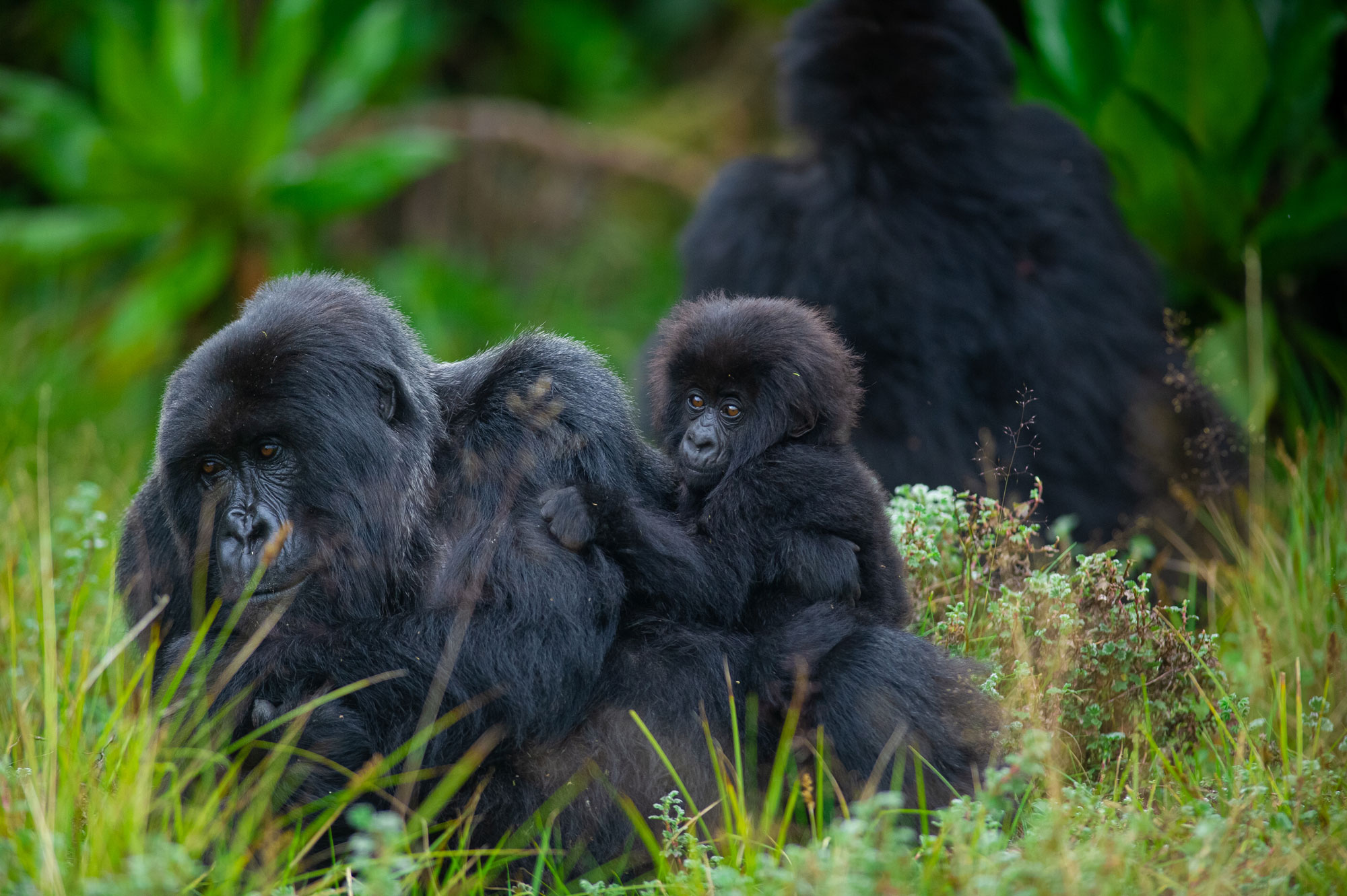
Young mountain gorillas in Volcanoes National Park, Musanze, Rwanda.
The mountain gorilla is one of conservation’s great success stories. The species population has grown from fewer than 300 in the 1980s to over 1,060 according to the 2018 census. Today, Rwanda is part of a broader landscape where mountain gorilla numbers continue to recover. But that success has created a different conservation challenge: a growing population of gorillas requires more habitat, yet the amount of space available to them remains limited.
That evolution is reflected in AWF’s Rwanda Program Report 2020–2025, which documents five years of work ranging from the expansion and restoration of Volcanoes National Park (VNP) to community enterprise, horticulture, tourism, land-use planning and sustainable conservation finance.
Each year, that work comes into focus at Kwita Izina, when Rwanda turns the world's attention back to its mountain gorillas. Inspired by the Rwandan tradition of naming a baby soon after birth, the ceremony has grown into a global celebration of conservation and Rwanda’s commitment to protecting one of the world’s most iconic species. For AWF, the story behind the celebration goes well beyond the naming of individual gorillas.
As Rwanda prepares to celebrate another generation of mountain gorillas through Kwita Izina, we sat down with Patrick Nsabimana, AWF’s Country Coordinator for Rwanda, to discuss how conservation in Rwanda has changed, what that shift has meant for local communities, why their livelihoods are central to the gorillas’ future, and what Rwanda’s next chapter could mean for conservation across Africa.
Looking back at the last 10 years of AWF's work in Rwanda, how has the conservation story here evolved from protecting individual species to taking a more integrated approach to people, wildlife and landscapes?
PATRICK: The biggest shift has been moving from protecting a species to managing an entire landscape. Mountain gorillas are a remarkable conservation success, growing from an estimated 200–300 in the 1970s to more than 1,000 today. But that success has also sharpened the challenge: with Volcanoes National Park having lost 53% of its original size to human settlement, protecting gorillas now means securing habitat while creating opportunities for the people who share that landscape.
That is why our work now brings together four priorities: restoring habitat, diversifying livelihoods, integrated land-use planning, and sustainable financing. In 2024, the Volcanoes National Park conservation and development master plan was completed through a participatory process. It is a clear expression of that shift: from protecting a boundary to building a sustainable system around it.
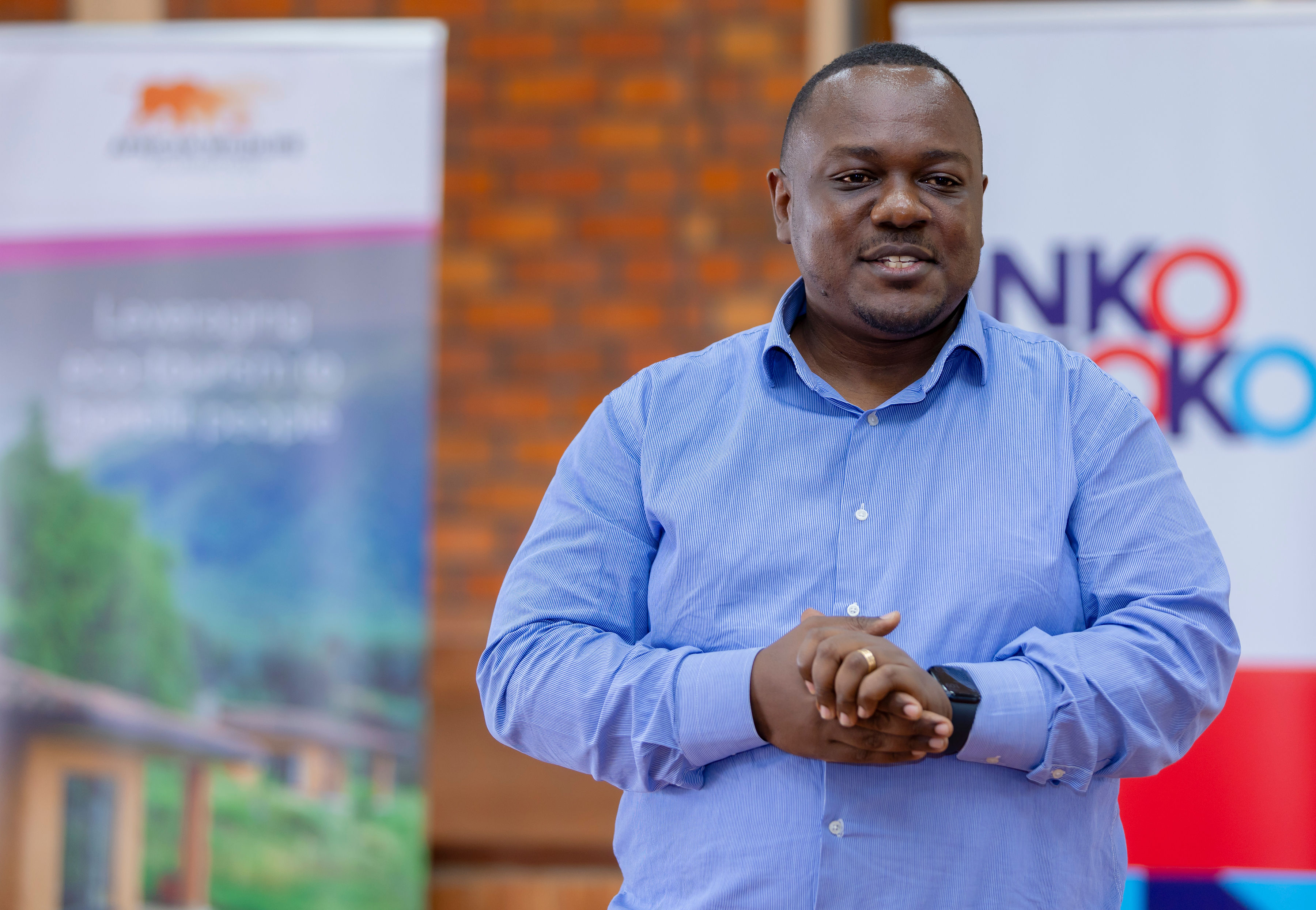
Patrick Nsabimana, AWF Rwanda Country Coordinator.
A major part of AWF’s work has been expanding and restoring habitat around Volcanoes National Park. What have you learned about balancing wildlife needs with economic opportunities for local communities?
PATRICK: We’ve learned that the two have to happen together. We’ve acquired 142.4 hectares through negotiated agreements: 92.4 hectares for park expansion and 50 hectares for relocation—with compensation and resettlement support.
But compensation alone isn’t enough. Communities living alongside the park face real losses from human-wildlife conflict, so we’ve paired habitat expansion with livelihood support. Through our Business Incubation Program with Inkomoko, we’ve trained 132 entrepreneurs, 63% of them women. The principle is simple: If communities are being asked to make space for conservation, they need a genuine pathway to better livelihoods.
Why is economic opportunity so central to conservation, and what does that success look like?
PATRICK: Economic opportunity is the foundation of lasting conservation. Communities around Volcanoes National Park depend heavily on agriculture and bear many of the costs of living alongside wildlife. If they don't share in conservation's benefits, it won't succeed. Creating viable economic alternatives turns communities into partners in protecting the landscape.
To date, we've supported 32 businesses with RWF 21.1 million ($14,350), and trained 160 farmers through the Horticulture Hub, which generated RWF 5.5 million ($3,730) from its first harvest and created more than 40 jobs for communities around the VNP.
But success is also about who benefits and who leads. Women make up 63% of our business incubation cohort and 72% of Horticulture Hub trainees. For me, that's the real measure of impact: conservation creating not just income, but opportunity, leadership, and dignity for the most vulnerable members of the community.
Partnerships are central to conservation in Rwanda. What makes them have a real impact?
PATRICK: The strongest partnerships are built around a shared evidence base, clear roles, and a collective understanding of what success looks like. At AWF, we’ve been intentional about ensuring that partners are working from the same information, that we know who leads on what, and that we coordinate closely rather than duplicating efforts.
We see this in our partnerships across Rwanda. With the TUI Wildlife Programme, supported by the TUI Care Foundation, we are combining conservation science, technology, and community engagement to strengthen biodiversity monitoring in Volcanoes National Park. With EcoPlanet Bamboo Rwanda, the focus has been ecological restoration, while Inkomoko brings specific expertise in business incubation and enterprise development. And with partners such as Red Rocks Initiative, we draw on their local expertise and connection to communities and tourism.
What makes these partnerships work is recognizing that no one organization has all the answers. We need to be clear about who leads where, who supports, and where we need to come together, and we need communities involved in shaping the solutions, not simply receiving them. Ultimately, trust, accountability, coordination, and a shared evidence base are what turn partnerships into real conservation impact.
How can Rwanda build a stronger foundation for conservation financing?
PATRICK: We cannot build long-term conservation on a single revenue stream. Gorilla tourism is critical, but the pandemic showed the vulnerability of relying too heavily on one activity.
Our focus now is diversification: bringing together public and private philanthropic capital. We’re targeting at least $10 million in sustainable financing by 2030, supported by a conservation investment blueprint that turns conservation priorities into investable opportunities.
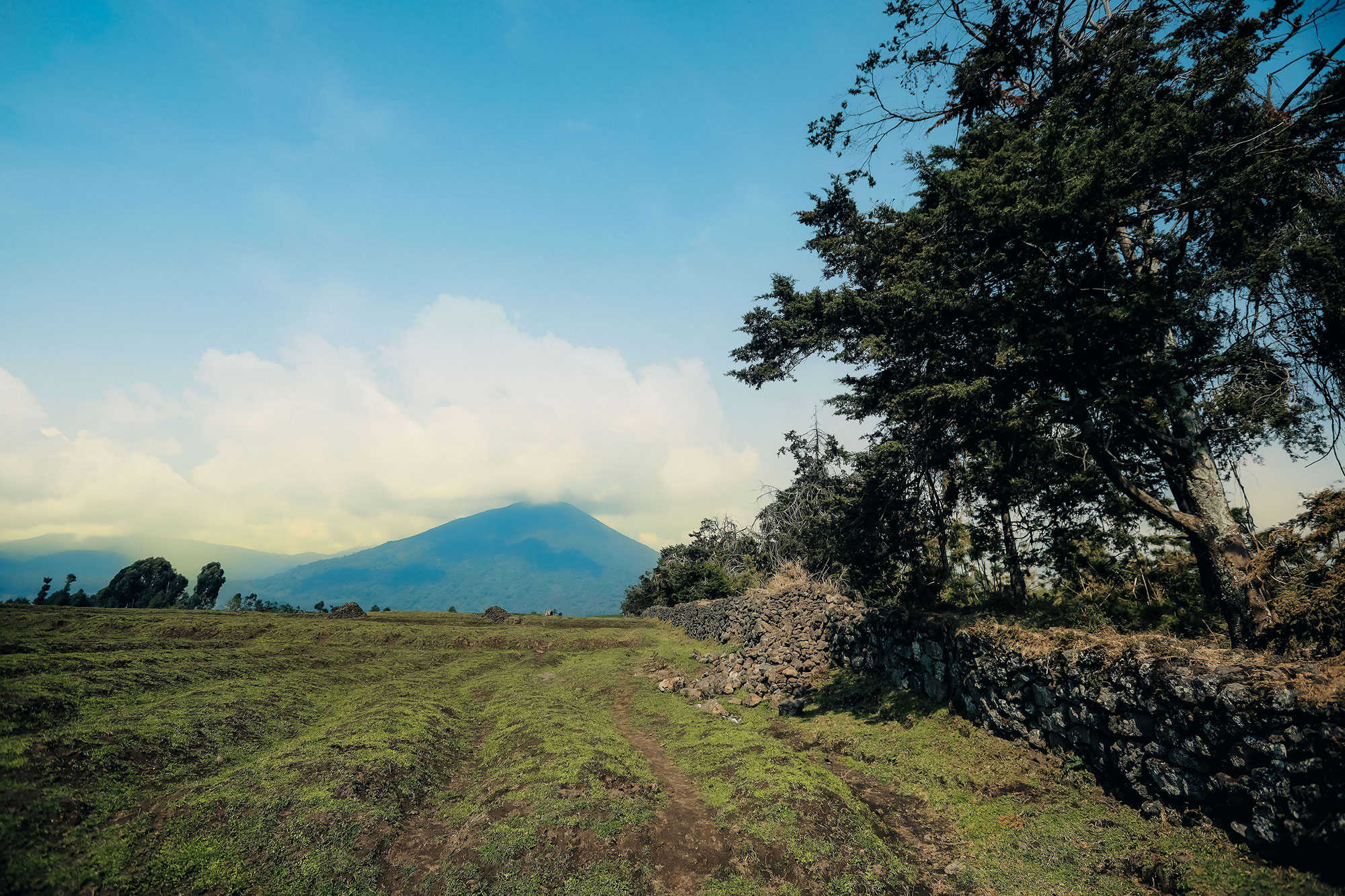
Volcanoes National Park in Musanze, Rwanda, a vital habitat for the mountain gorillas.
As conservation succeeds, how do you balance the needs of people, wildlife and development?
PATRICK: We don't see them as competing priorities. They are interconnected, and sustainable conservation must address all three. That means putting communities at the centre, backed by strong environmental and social safeguards. In a landscape as densely populated as Rwanda, conservation that excludes people simply isn't sustainable.
What can other African countries learn from Rwanda’s conservation model?
PATRICK: Other African countries do not need to copy Rwanda’s model, but they can learn from it: use evidence to guide decisions, make communities a key priority, connect conservation to livelihoods, and build sustainable financing from the outset.
Rwanda shows what this can look like through community-led conservation, restoration of degraded landscapes, conservation-linked enterprise, and tourism that contributes to local economies. Other countries can adapt these principles to their own landscapes and priorities. The bigger lesson is to move from isolated projects to integrated, locally owned and financially sustainable conservation landscapes where people, nature and economies can thrive together.
Looking ahead, what is AWF focused on for the next chapter of conservation in Rwanda?
PATRICK: The next chapter is about building on what we have learned and making conservation more resilient. We want to continue securing and restoring habitat, strengthening livelihoods around Volcanoes National Park, and ensuring communities have a meaningful role in shaping the future of the landscape. Ultimately, we want Rwanda to demonstrate what conservation can look like when wildlife, communities and development are planned together - and when those gains can be sustained.