Beyond the Gorillas: Celebrating Kwita Izina and Building a Future for Conservation
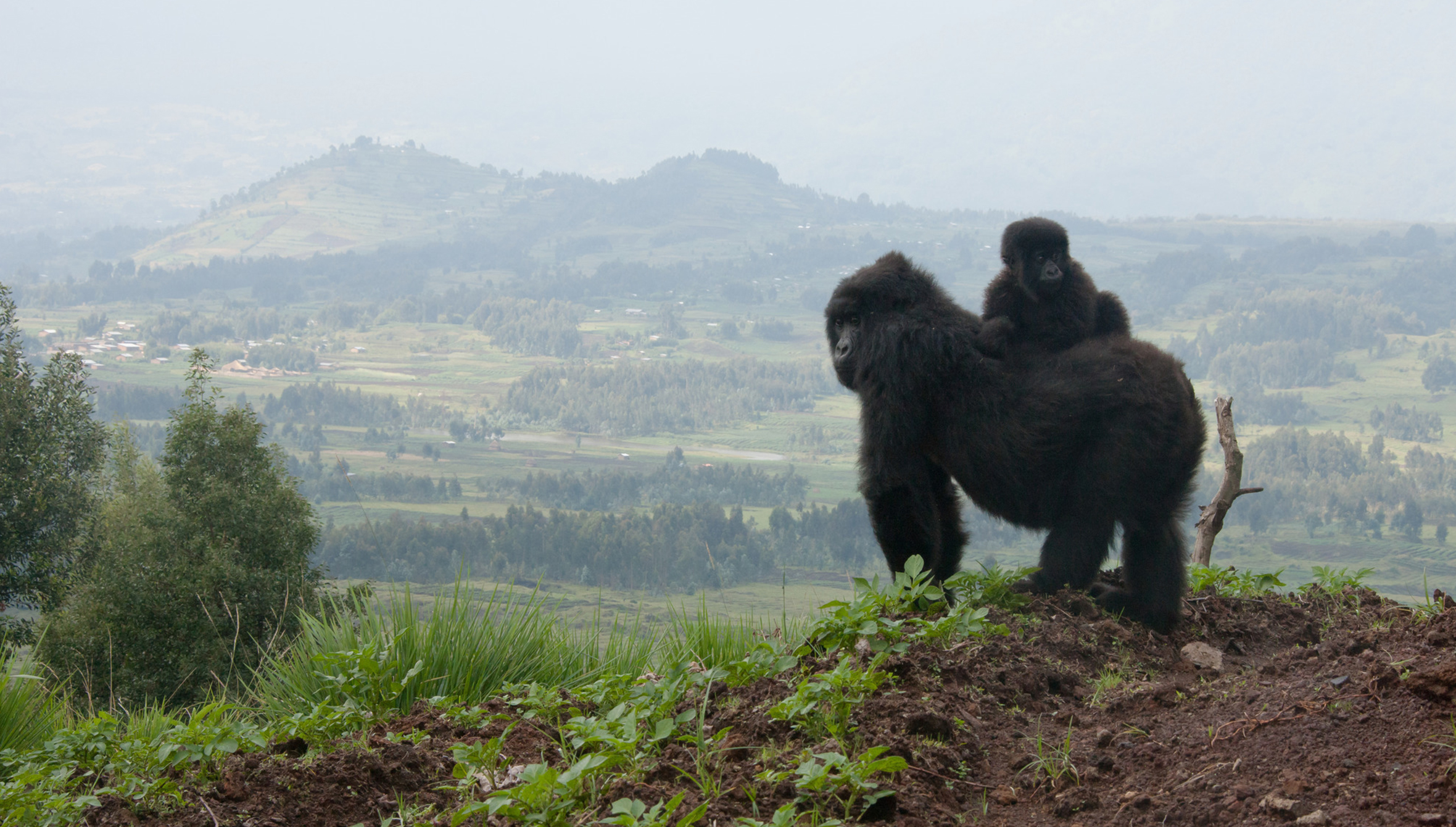
A mountain gorilla with her child in Volcanoes National Park, Rwanda. © McDonald Wildlife Photography, Inc.
Every year, the world’s attention turns to the misty slopes of the Virunga Mountains for a uniquely Rwandan celebration: Kwita Izina, the naming of newborn mountain gorillas. The ceremony is powerful because a name does more than identify. It creates recognition, connection, and a sense of belonging. Drawing on Rwanda's centuries-old tradition of naming children in the presence of family and community, Kwita Izina has become one of the country's most visible conservation events
But the significance of Kwita Izina extends far beyond the ceremony itself. It is a celebration of what conservation has achieved, and a reminder that this progress must now be sustained through long-term protection, stronger community partnerships, and continued investment in the ecosystems that support mountain gorillas. For decades, mountain gorillas faced a precarious future. Habitat loss, poaching, human pressure, and other threats pushed the species towards the edge. Through sustained protection, scientific research, tourism, government leadership, and community engagement, their numbers have recovered remarkably. By 2018, the mountain gorilla population across the Virunga Massif and Bwindi had surpassed 1,000 in the wild for the first time since monitoring began.
That is a conservation success worth celebrating. But success brings new responsibility. As the gorilla population grows, so does the need for habitat. Volcanoes National Park has already lost 53% of its original size, while the surrounding region is one of the most densely populated areas on the continent. The resulting pressure is felt on both sides of the park boundary: gorillas need space and food, while families need land, livelihoods and economic opportunities. Crop raiding and human-wildlife conflict are therefore not simply wildlife-management issues; they are development issues.
This is where the story of Kwita Izina becomes part of a much wider conservation story. The future of conservation in Rwanda will depend on how well the whole landscape is managed, bringing together habitat restoration, sustainable agriculture, enterprise development, tourism, infrastructure, climate resilience, and community wellbeing. Gorillas, people, and the ecosystems they share are all part of that same story.
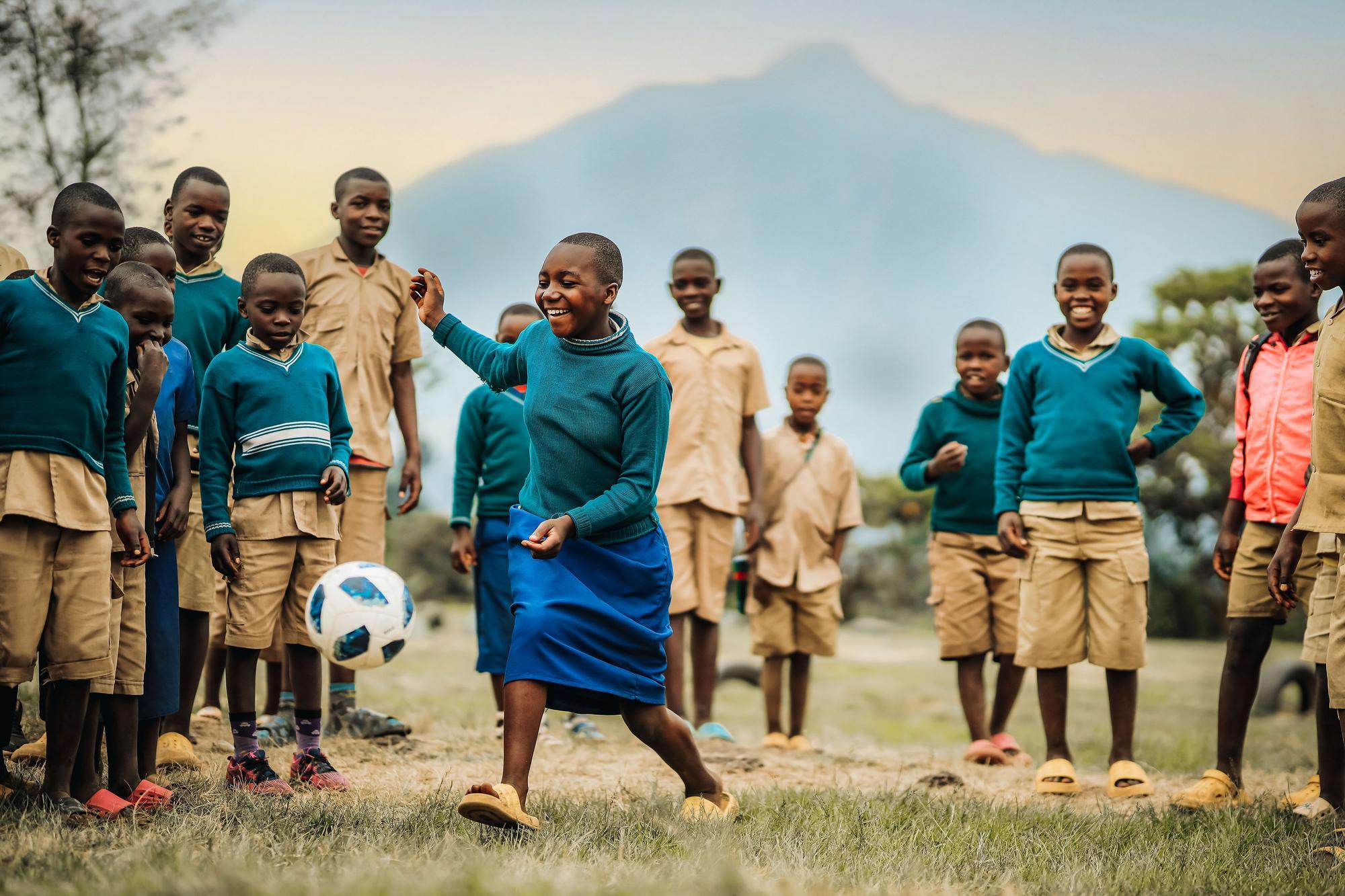
Children in the Virungas landscape, Rwanda.
There are already signs of what that future can look like. In the Volcanoes landscape, 27 hectares of degraded land have been restored with more than 28,000 indigenous plants. Mountain gorillas are already using the restored habitat, demonstrating that ecological restoration can translate directly into conservation impact. But restoring forests alone is not enough. Effective conservation is increasingly intertwined with the economic opportunities available to people living alongside protected areas: enterprises that reduce pressure on natural resources while generating income, farmers moving towards higher-value and climate-smart agriculture, and new opportunities for women and young people. In this model, communities are not simply beneficiaries of conservation, but an integral part of the landscape and essential partners in protecting its natural capital.
One example is the Volcanoes Community Association Horticulture Hub. Launched in 2025, the initiative trained 160 farmers, 72% of them women, and generated RWF 5.5 million from its first harvest, with 20% of profits reinvested in community development.
This is the larger conservation equation at work: restored land and restored livelihoods, reinforcing each other. Healthy ecosystems and healthy communities are not competing against objectives; they are fundamentally intertwined.
This also changes the conversation around financing. For donors and development partners, the question is not just how to fund the protection of an endangered species. The more ambitious question is how to invest in landscapes where biodiversity protection, climate resilience, and economic development reinforce one another.
Conservation as a Development Opportunity
The conservation investment blueprint for the Volcanoes landscape is precisely designed around this idea. It translates long-term landscape planning into investment opportunities spanning conservation, tourism, agriculture and settlement services, creating a pathway for public, private, and philanthropic capital to contribute to a shared development vision.
This is important not only for Rwanda, but for Africa. Across the continent, conservation has sometimes been framed as a choice between protecting nature and meeting human development needs. Rwanda's experience offers a different proposition: nature can be part of the development solution.
Mountain gorillas have become a symbol of that possibility. They represent the value of protecting biodiversity, but they also demonstrate the economic and social potential of natural capital when conservation is embedded in national development.
The challenge now is to build on that success. By 2030, the ambition is to restore 1,000 hectares of critical habitat, empower 500 households through sustainable livelihoods, increase household incomes, and mobilize $10 million in sustainable financing for the landscape. These ambitions point to a future in which conservation is not dependent on a single species, a single source of funding or a single sector.
That is why Kwita Izina matters. The ceremony gives a name to a newborn gorilla. But every name also carries a question about the future: what kind of world will this animal inherit?
The answer cannot be measured only by the number of gorillas protected. It will be measured by whether forests return, whether communities prosper, and whether young people can find opportunity without degrading their natural heritage. It will be measured by whether conservation can attract long-term investment, and whether people and wildlife can share an increasingly pressured landscape.
Ultimately, the most important thing about Kwita Izina is not simply that Rwanda continues to name its gorillas. It is that, year after year, the ceremony gives us an opportunity to name and invest in a bigger vision: a future where wildlife thrives, communities prosper and Africa's natural capital becomes a foundation for inclusive, resilient and sustainable development.