Beyond Passion: Four Young Africans Redefining Conservation Leadership
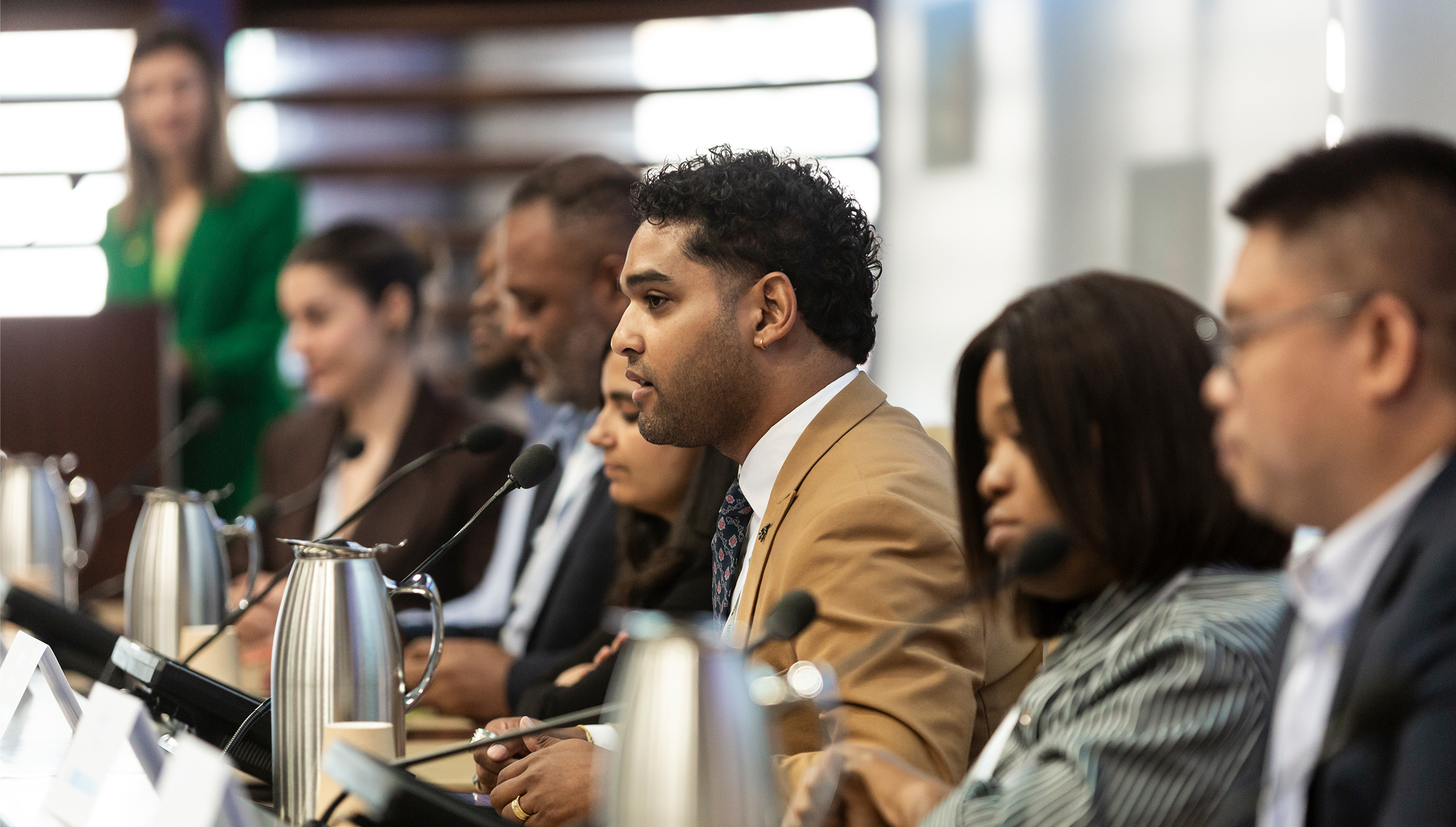
Jody Frank Brown, Environmental Officer at the Western Cape Government Climate Change Directorate.
For Maissa Louhichi, conservation begins by translating marine science into biodiversity policy in Tunisia. Jody Frank Brown is helping reshape climate governance across South Africa's Western Cape. In Benin, Dramani Ramdan is making the case for protecting one of the planet's most overlooked kingdoms of life, fungi. Meanwhile, in Nigeria, Esther Chibueyin Fagbo is bringing together government, businesses, financial institutions, civil society, and informal waste workers to transform how a nation tackles plastic pollution.
At first glance, their work could not be more different.
Yet these four young leaders are united by a common purpose. They represent a generation proving that conservation is no longer defined solely by fieldwork or scientific discovery. It increasingly depends on people who can influence policy, build partnerships, communicate across sectors, and lead change in complex systems.
That is precisely why World Youth Skills Day matters.
Across Africa, young people are stepping into leadership at a time when the continent faces unprecedented environmental challenges, from biodiversity loss and climate change to pollution and ecosystem degradation. Addressing these challenges requires more than technical expertise; it demands leaders who can connect science with policy, communities with institutions, and local action with continental ambition.
This belief lies at the heart of the AWF-Wall Youth Leadership Program. The fellowship was created to equip emerging African conservation leaders with the practical leadership, policy, and management skills needed to transform ideas into measurable impact.
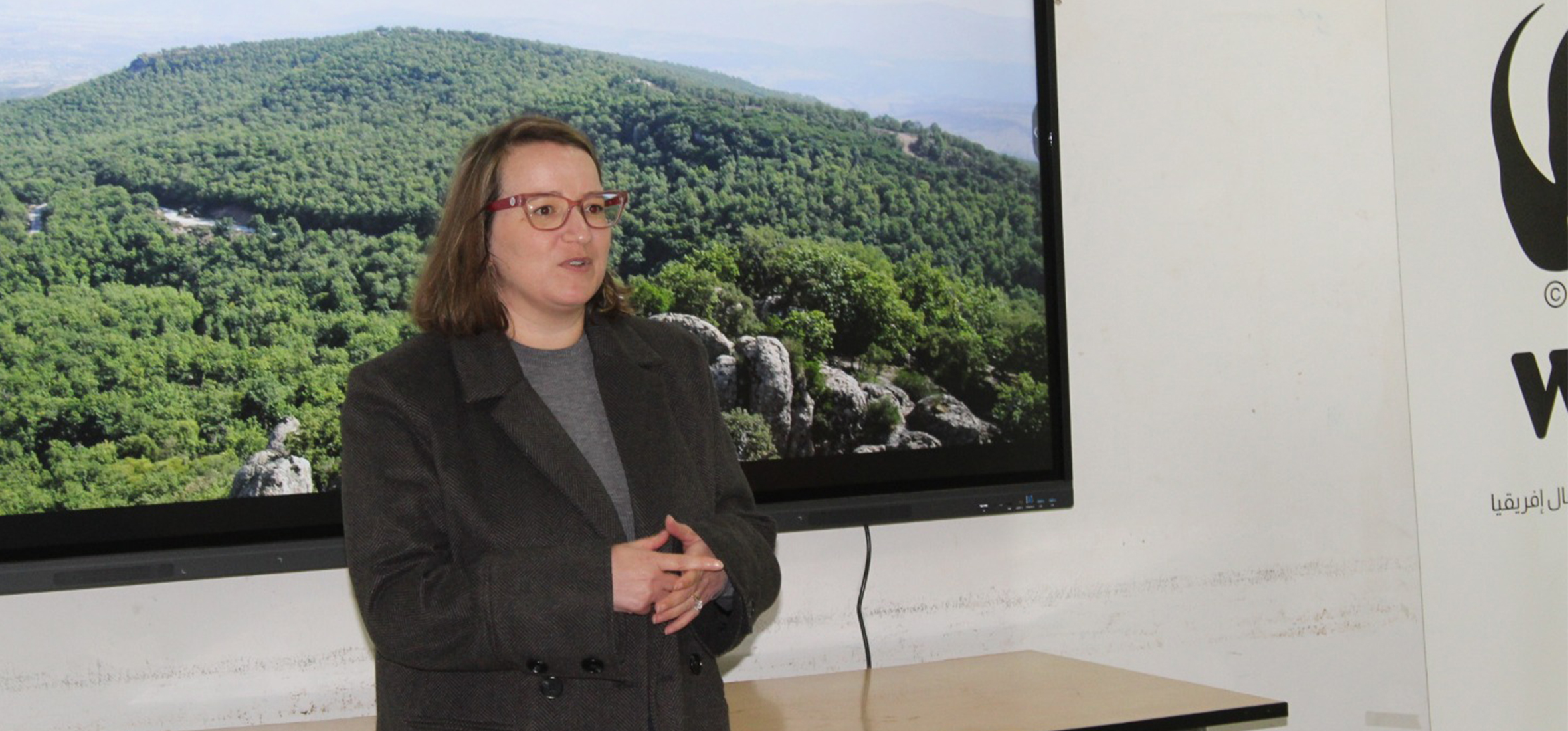
Maissa Louhichi established the Global Youth Biodiversity Network in Tunisia.
For Maissa, a fisheries engineer researching sea turtle bycatch, the fellowship expanded her perspective beyond science. Understanding the architecture of global biodiversity governance and learning how policy is shaped gave her the confidence to bridge the gap between research and decision-making. Recognizing that many young Tunisians shared her passion for conservation but lacked access to policy spaces, she established the Global Youth Biodiversity Network (GYBN) Tunisia. Today, the network is creating opportunities for young people to engage meaningfully in biodiversity governance and contribute to national conservation conversations.
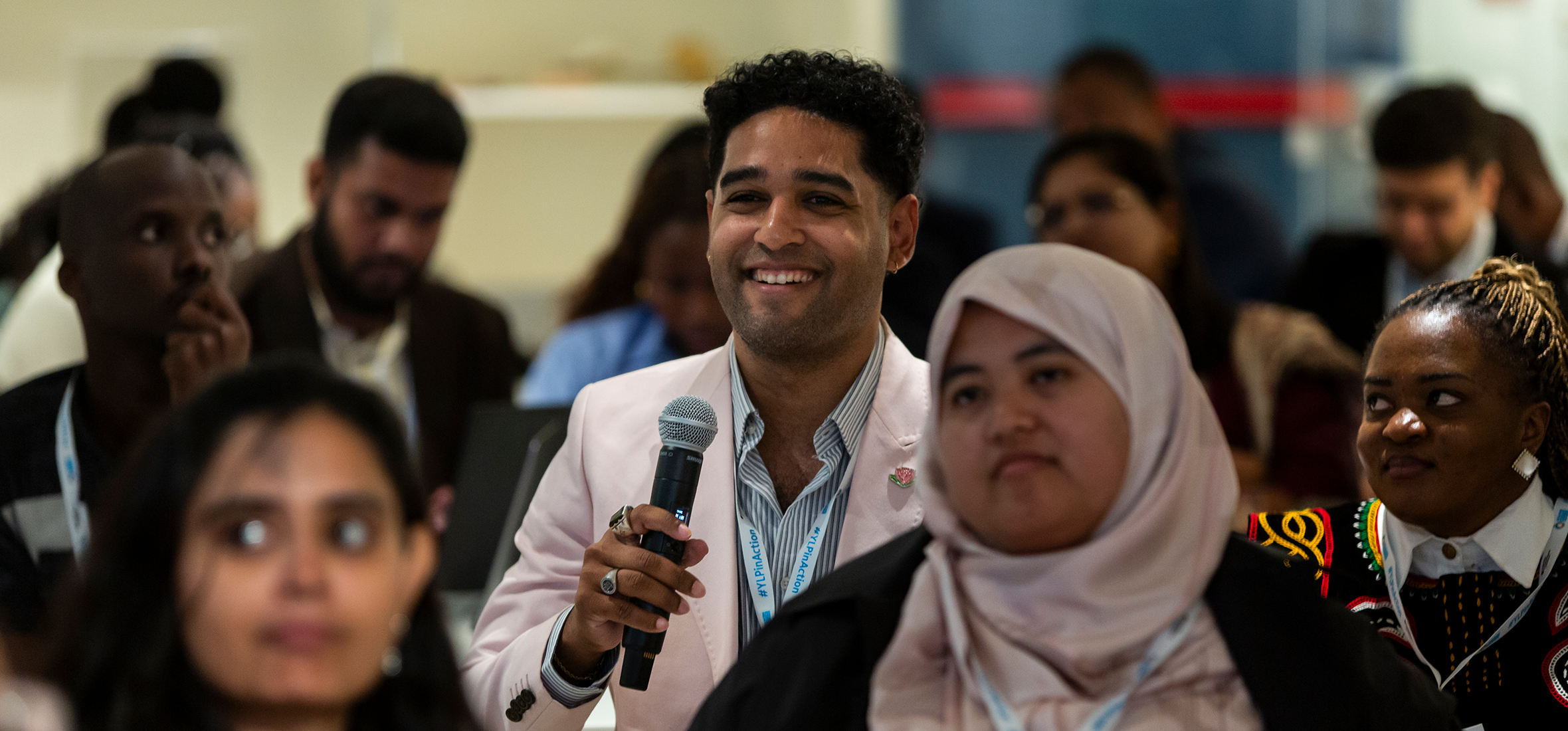
Jody Frank Brown of South Africa understands that meaningful climate action depends on people working together.
Jody's experience illustrates a different dimension of leadership. Working as a Climate Change Specialist in South Africa's Western Cape Province, he quickly realized that successful climate action is less about launching new initiatives than it is about helping people work together.
Through the fellowship, Jody embraced systems thinking and design thinking—approaches that transformed how he engages government institutions, communities, and stakeholders. Rather than viewing climate action as the responsibility of a single department, he now focuses on building shared ownership across sectors, ensuring environmental solutions become embedded within broader systems of governance and service delivery.
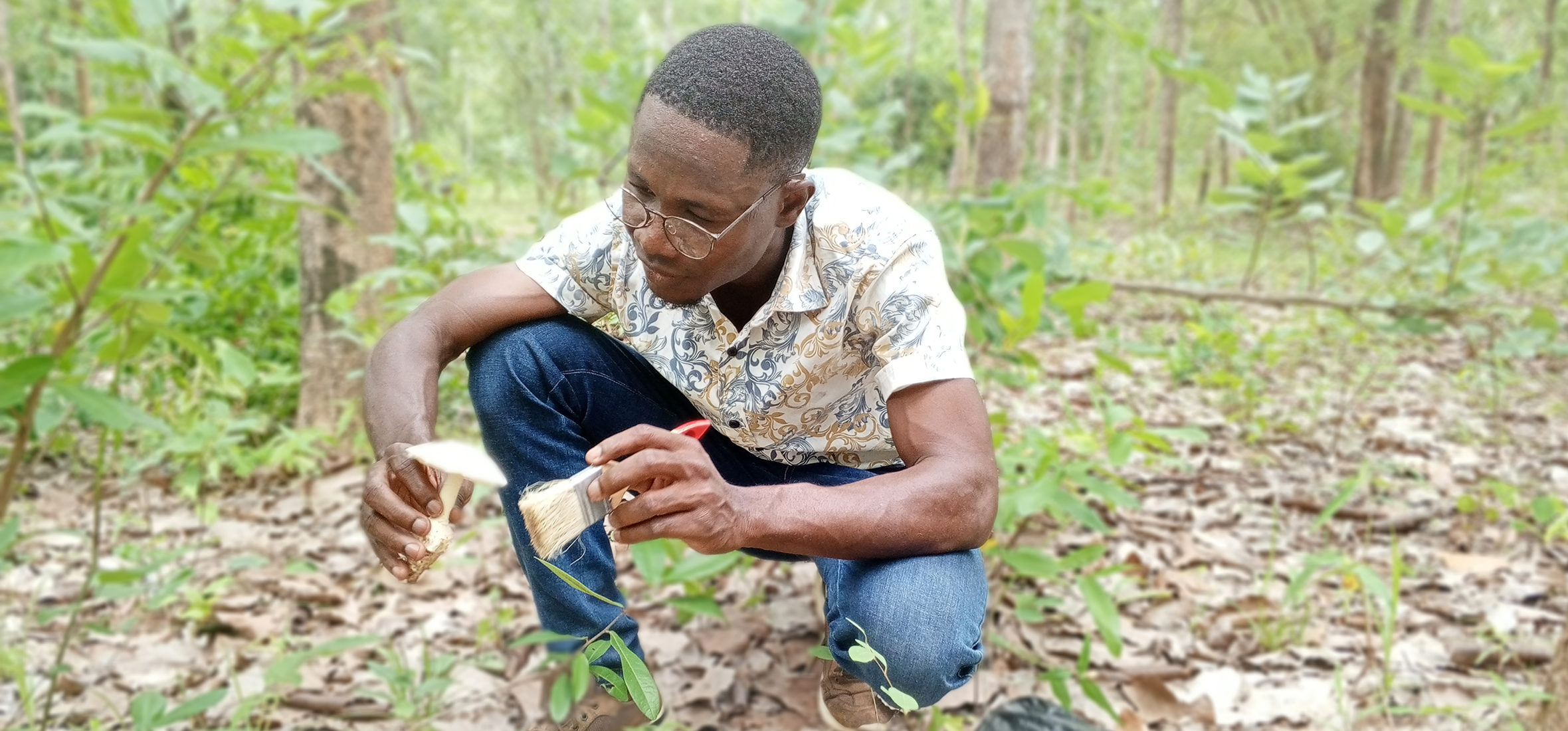
Dramani Ramdan of Benin has studied the importance of fungi in the ecosystem.
In Dramani’s case, leadership meant championing a cause that has long been overlooked. Despite the essential role fungi play in maintaining healthy ecosystems, they rarely feature in conservation policy. The fellowship strengthened his ability to translate scientific evidence into compelling policy advocacy, enabling him to engage governments, conservation practitioners, and local communities around the importance of fungal conservation.
His work has since contributed to revisions of Benin's National Biodiversity Strategy and Action Plan, the development of the Cotonou Declaration on Fungal Conservation, and ongoing efforts to establish the country's first protected area dedicated specifically to fungi.

Esther Chibueyin Fagbo, Manager of Nigeria's National Plastic Action Partnership.
Esther's journey demonstrates what happens when leadership moves beyond awareness into systems transformation. Having worked alongside informal waste pickers, she understood that plastic pollution is not simply an environmental issue—it is equally about livelihoods, public health, and economic opportunity. The fellowship challenged her to think beyond individual projects and instead focus on building the partnerships and institutions needed for lasting change.
Today, as Manager of Nigeria's National Plastic Action Partnership, Esther convenes government agencies, industry, development partners, researchers, youth organizations, and the informal waste sector to advance a more inclusive circular economy. Leading Nigeria's first National Plastics Summit, which brought together more than 400 stakeholders, she underscored the power of collaboration in addressing one of the country's most pressing environmental challenges.
While their work spans different countries and conservation priorities, the four fellows reached remarkably similar conclusions: Conservation succeeds when people are empowered to lead together. Technical knowledge remains essential, but lasting impact depends equally on communication, collaboration, systems thinking, policy literacy, and the ability to bring diverse voices around a shared vision.
These are not simply professional skills; they are leadership skills. They also reflect an important evolution in African conservation, where success is increasingly measured not only by healthier ecosystems, but also by stronger institutions, more inclusive decision-making, and communities equipped to shape their own environmental futures.
Perhaps the most inspiring aspect of these stories is that none of these leaders began with a clear roadmap. Maissa started as a marine scientist. Jody's foundation was climate planning. Dramani pursued a field few considered a conservation priority. Esther's journey began with something far simpler: a school essay competition on climate change that sparked a lifelong commitment to protecting the environment.
On this World Youth Skills Day, their journeys remind us that investing in young people is not about preparing them to lead someday. It is about recognizing that they are already shaping Africa's conservation future today.
Africa's wildlife and landscapes will always remain at the heart of conservation. But the future of those landscapes will increasingly depend on leaders like Maissa Louhichi, Jody Frank Brown, Dramani Ramdan, and Esther Chibueyin Fagbo—young Africans who are proving that the most powerful tool for protecting nature is not simply knowledge, but the ability to turn that knowledge into collective action.