Business of Conservation Conference Makes the Case for Africa’s Wildlife Economy
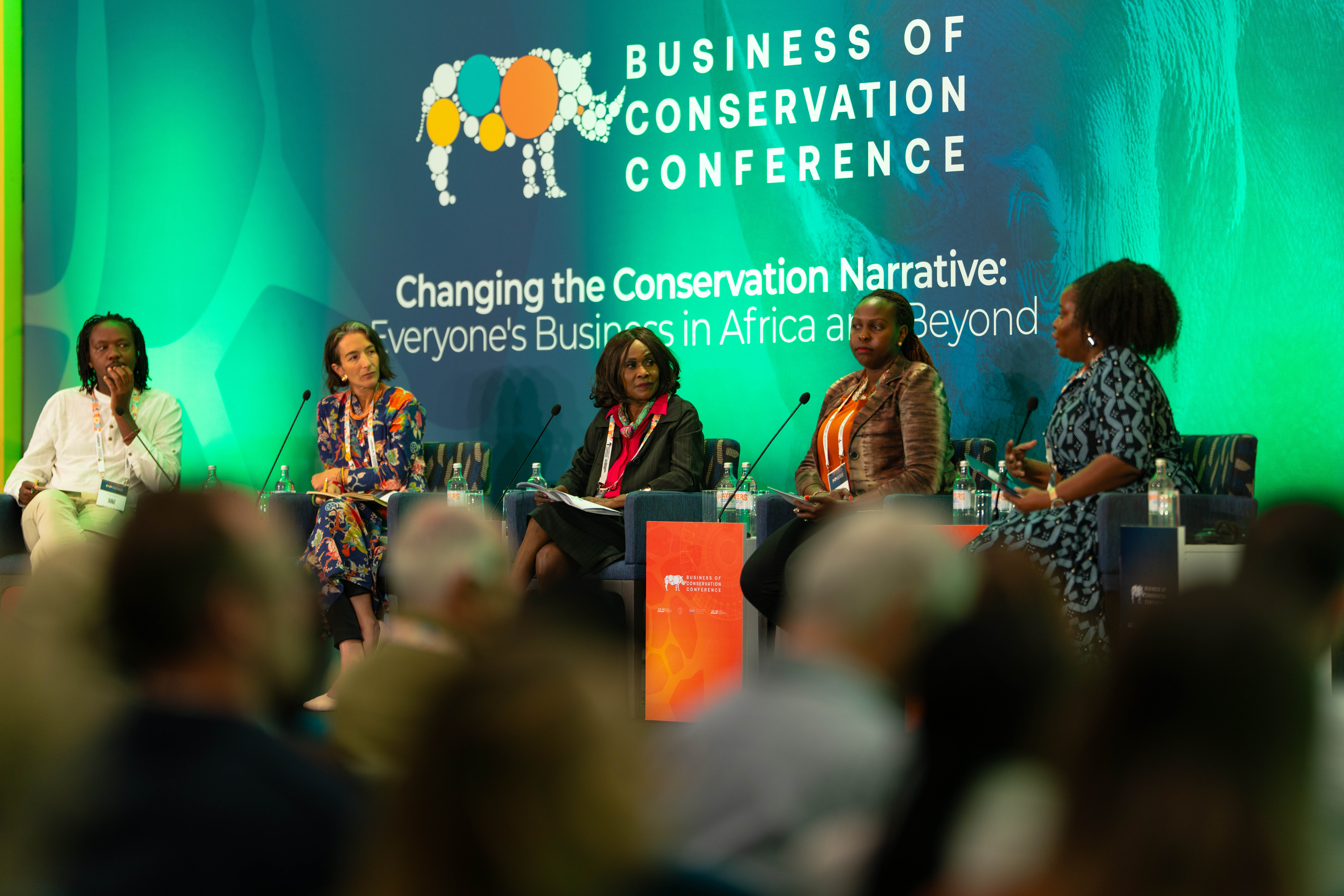
Panelists of the chat: Investing in the Nature and Climate Economy: From Theory to Practice – Developing viable, scalable solutions that meet investor requirements.
At the Business of Conservation Conference 2026 in Nairobi, leaders across conservation, finance, and youth networks explored how Africa can build a wildlife economy rooted in community leadership, credible investment, and practical action.
Africa’s wildlife supports millions of livelihoods and sustains some of the world’s most important ecosystems. Yet turning that natural wealth into lasting economic opportunity remains one of the continent’s biggest challenges.
That question took center stage in Nairobi from March 4–7 during the conference, hosted by the African Leadership University School of Wildlife Conservation (ALU). The gathering brought together policymakers, investors, conservation practitioners, entrepreneurs, and youth leaders to explore how Africa can build a stronger wildlife economy.
For AWF, the conversations echoed a long-standing belief: Conservation succeeds when it creates real value for the people who live with wildlife every day. Across Africa’s landscapes, communities are balancing conservation with the realities of livelihoods, land use, and economic opportunity.
Conservation and Development Must Move Together
Throughout the conference, speakers returned to a shared theme: Conservation and development cannot be treated as competing priorities. For conservation to endure, it must support jobs, strengthen local economies, and deliver benefits that communities can see and feel.
That perspective reflects a growing shift across the continent. Conservation is increasingly viewed not only as an environmental priority, but also as an economic opportunity—one that can support tourism, sustainable enterprises, and nature-based livelihoods.
But participants were clear that this opportunity will only succeed if communities remain at the center. Africa’s wildlife economy will not be built in conference halls alone. It will be built in the landscapes where people live alongside wildlife, manage land and natural resources, and weigh conservation against everyday economic pressures.
If Africa is to unlock the full value of its wildlife and wild lands, the people closest to those landscapes must be partners in shaping conservation policy, governance, and investment.
Africa’s Youth Are Redefining Conservation Leadership
Another strong message from the conference was the role of young Africans in shaping the future of conservation. A dedicated session focused on how emerging leaders are bringing new ideas, technologies, and entrepreneurial approaches to conservation challenges.
For AWF, investing in youth leadership is central to building a sustainable wildlife economy. “The biodiversity and climate crisis requires a whole-of-society approach—everyone must take action,” said Simangele Msweli, Associate Director for Conservation Education and Youth Leadership at AWF.
Africa is the world’s youngest continent, and the wildlife economy being imagined today will ultimately be led and shaped by young Africans. “If conservation is to remain relevant, it must be legible to them not only as a moral cause, but also as a space for innovation, enterprise, policy influence, and dignified work,” Msweli said.
Turning Ideas into Investable Wildlife Economies
While the conference emphasized dialogue, it also focused strongly on implementation. Participants repeatedly highlighted the need for stronger data, better tools, and clearer investment pathways to help scale conservation solutions.
During the conference, AWF collaborated with ALU to introduce the Wildlife Economies Decision and Investment Support Toolkit—a platform designed to help governments, development partners, investors, and conservation practitioners better plan and finance wildlife economy initiatives.
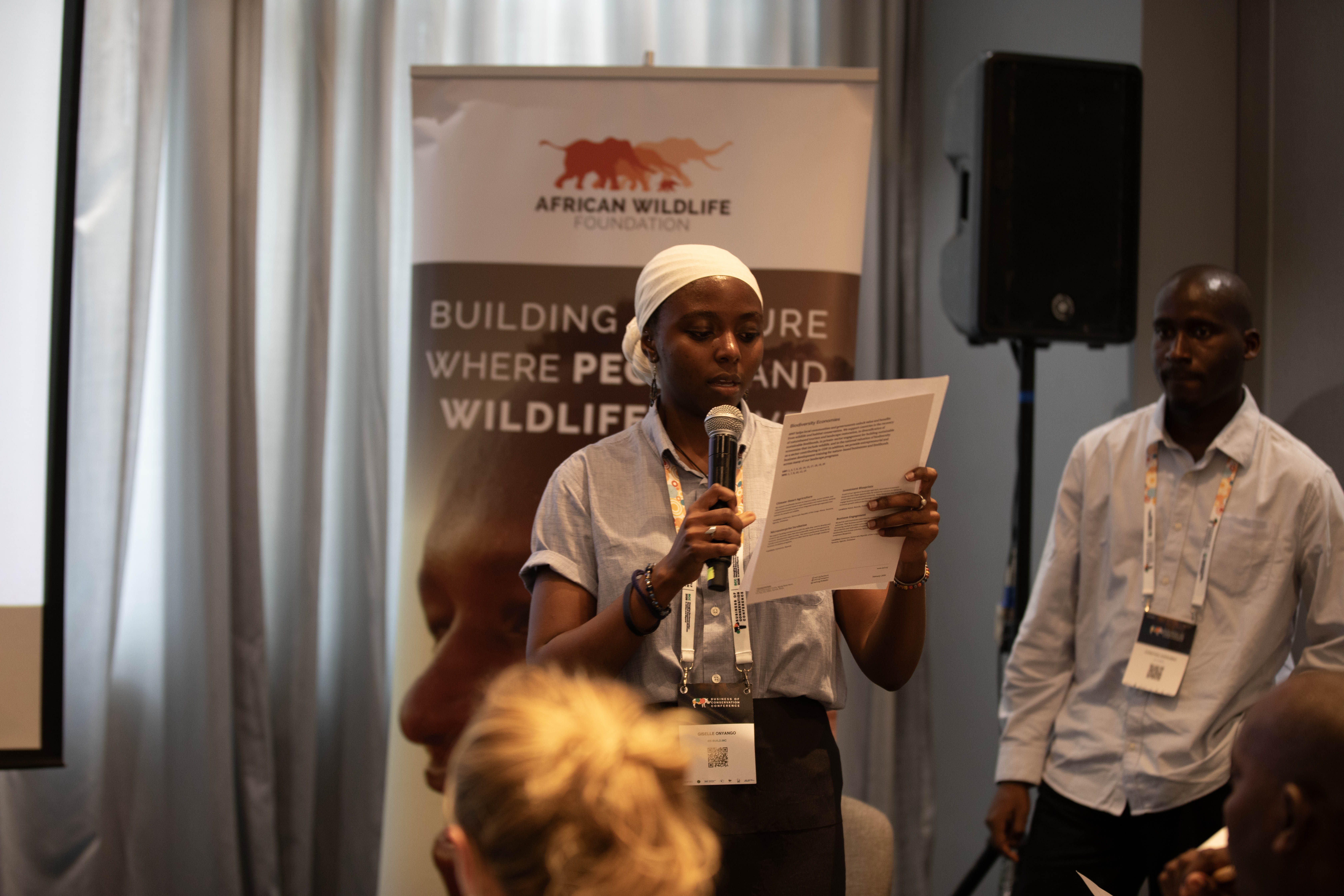
Giselle Onyango, ALU alumna, engaging at the Parallel Session: AWF & ALU SOWC - Decision and investment support toolkit for assessing and developing wildlife economies.
“Africa’s wildlife economies can become engines of sustainable growth if we invest intentionally, manage them strategically, and ground decisions in evidence,” said Edwin Tambara, Director of Global Leadership at AWF.
The toolkit helps decision-makers better understand the economic value of wildlife landscapes by bringing together ecological, social, and financial data. By translating natural capital into clearer economic insights, the platform aims to support stronger policy decisions and attract investment into conservation.
From Conversation to Action
The discussions in Nairobi made one thing clear: Africa does not lack ideas for strengthening conservation. Across the continent, communities, entrepreneurs, governments, and conservation organizations are already experimenting with models that link wildlife protection to economic opportunity.
What is needed now are stronger partnerships, better data, and sustained investment to scale what works.
With Africa’s wildlife landscapes under growing pressure from climate change, population growth, and competing land uses, the stakes are high. But the conversations at the Business of Conservation Conference also showed that the building blocks of a thriving wildlife economy are already taking shape.
With the right leadership, investment, and community engagement, Africa’s wildlife can remain not only a global conservation priority, but also a foundation for sustainable growth and opportunity across the continent.