From Challenge to Opportunity: Pig Farming as a Sustainable Livelihood in Kenya’s Wildlife-Rich Tsavo Landscape
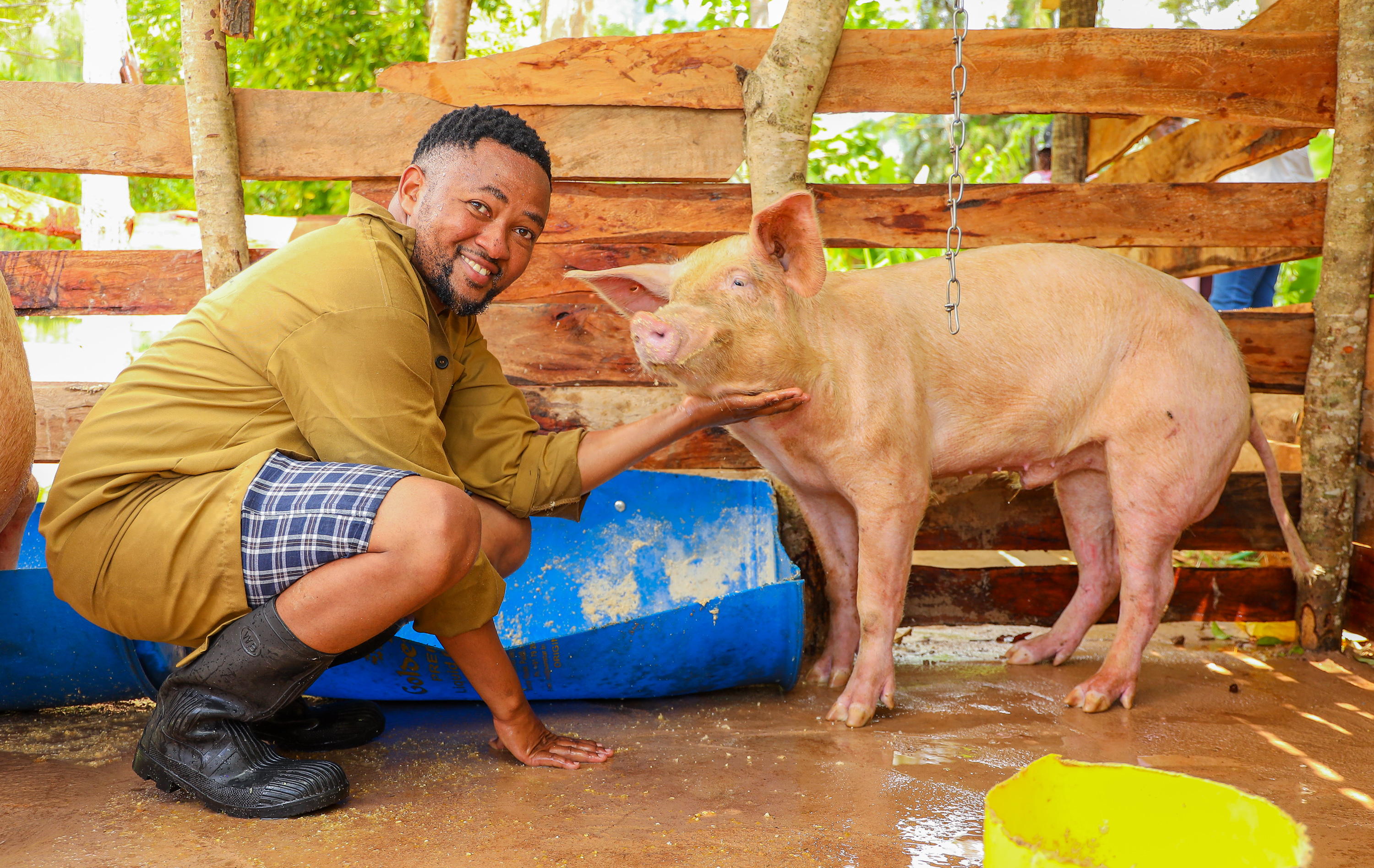
Hedlam Toli posing for a photo with his pig.
In Mwatate Sub-County, Kenya where households navigate farming with the pressures of a changing climate and limited income options, Hedlam Toli observed a troubling shift of young people turning to charcoal burning and bushmeat hunting in search of quick cash.
Over time, these activities significantly undermined wildlife and the ecosystems that communities rely on. For Hedlam, this reality sparked a determination to find practical, sustainable livelihood options; however, the task often felt daunting.
Hedlam’s drive to support his community builds on years of experience in livestock management. For the past seven years, he has served as an Assistant Livestock Production Officer in Taita Taveta County, working across Maungu and Kasigau in Voi Sub-County and extending support to his hometown in Mwatate Sub-County.
He currently supports over 200 livestock farmers, advising on improved breeds, animal health, and market linkages, while remaining actively engaged in farming himself. Over time, the work has sharpened his ambitions to help more farmers succeed with climate-resilient enterprises that can compete with, and ultimately, replace destructive coping strategies.
Inside the TUI Wildlife Programme Pig Farming Initiative in the Tsavo Landscape
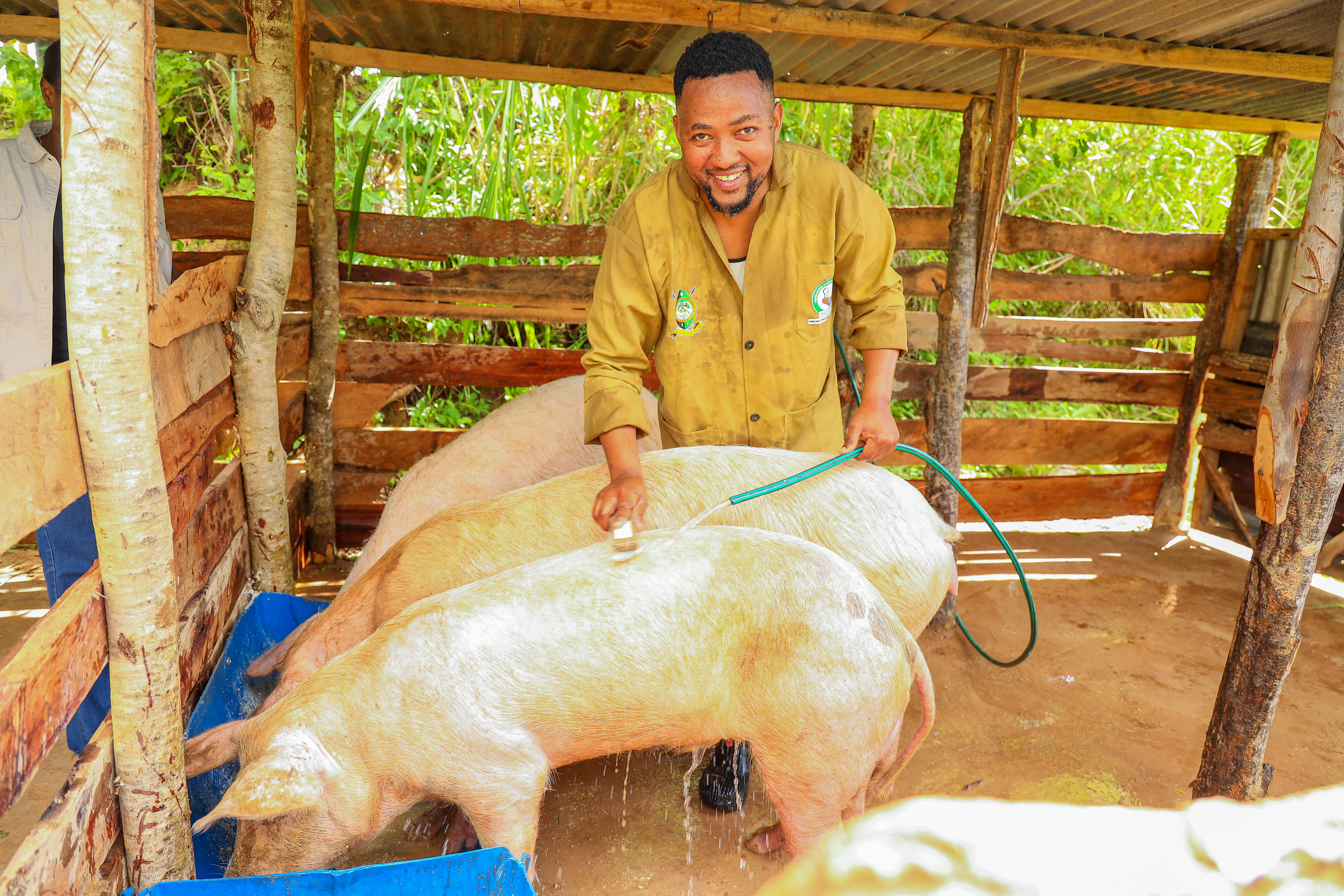
Hedlam Toli grooming his pigs.
In March 2025, Toli’s nexus of personal ambition found a clear pathway when the TUI Wildlife Programme introduced a pig farming initiative—implemented by the African Wildlife Foundation—in his region, aimed at improving livelihoods and providing alternative protein sources.
As one of seven flagship farmers selected for the initiative, Hedlam noted, “In my region, pig farming is uncommon and often seen as an enterprise for the affluent; however, being selected gave me a responsibility and a chance to show young people that farming can provide sustainable income and be a viable alternative to destructive activities.”
To set the farmers up for success, the project focused on building skills and confidence by facilitating a benchmarking visit to a successful pig farming enterprise in the region, exposing them to proper feeding practices, pig housing standards, water management, and overall animal care.
Following this, in May 2025, Hedlam built a pig shed at his home and was provided with three pigs to kickstart his journey. He was also supplied with necessary inputs, such as animal feeds, enabling him to take full ownership of the enterprise and apply the skills he had learned.
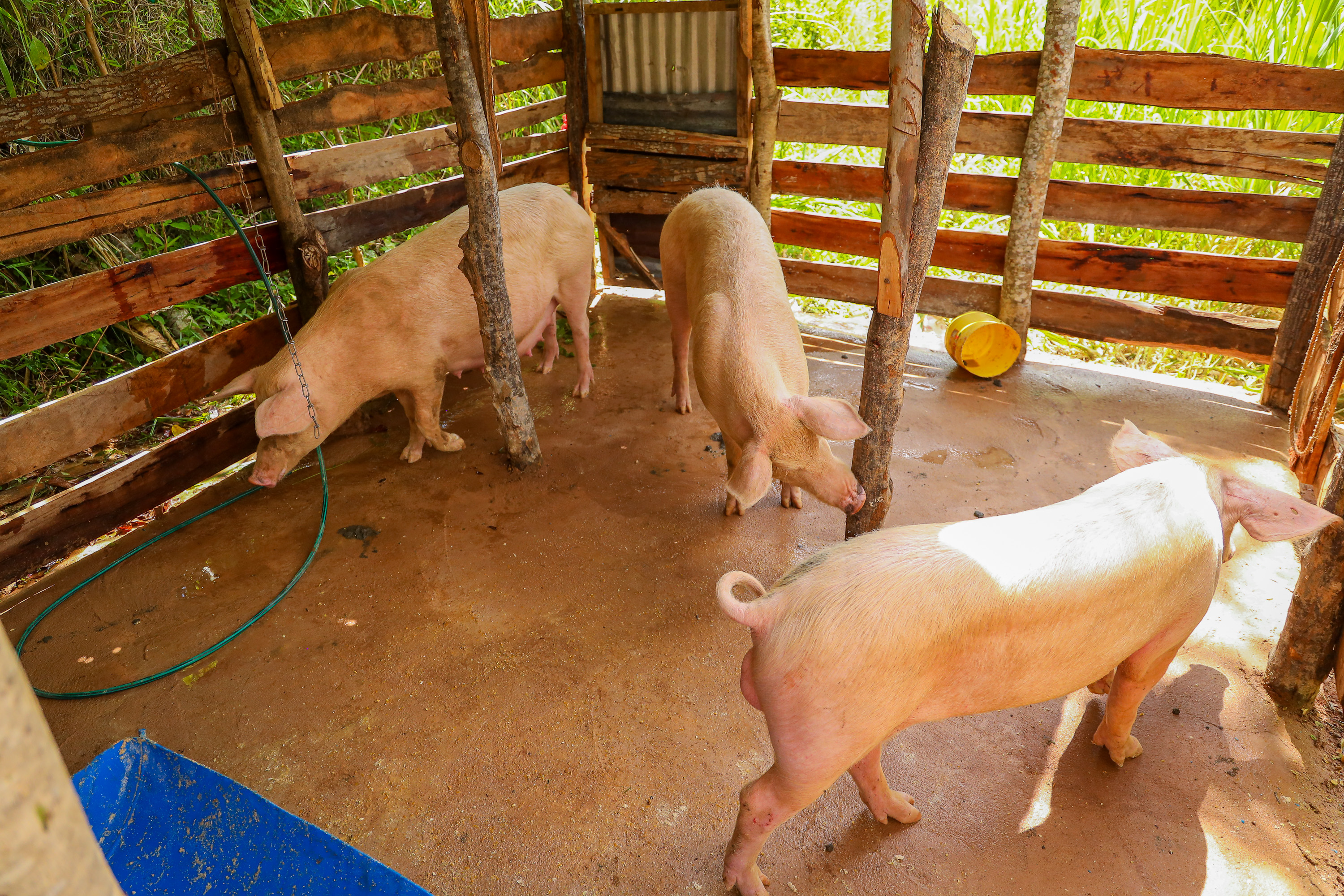
Pigs provided through the TUI Wildlife Programme in Kenya.
“The market for pigs is readily available in my area, and I’m pleased that one of my pigs has already given birth to 13 piglets… With piglets selling for around 10,000 KSh each, and a mature pig weighing 220 kg fetching 500 KSh per kilogram, I can earn up to 230,000 KSh (approximately 1,530 USD) from a single cycle, ” Hedlam says.
Notably, Toli states that maintaining the pigs is manageable, involving routine feeding, grooming and deworming, and is far less hectic than other farming activities—especially as climate variability continues to affect crop and livestock production. Also, with a short gestation period of about three months, three weeks, and three days, pigs reproduce quickly, allowing farmers to expand their herds and increase income within a relatively short timeframe.
“By linking pig farming to my daily work, I envision a growing network of pig farmer groups, greater participation in table banking due to its profitability, and the chance to share my knowledge with young people interested in venturing into the enterprise,” Hedlam reflects on how the initiative complements his work. “For me, pig farming represents more than a livelihood; it is a practical, climate-resilient pathway that strengthens communities while reinforcing conservation outcomes."
Beyond income generation, the initiative aims to reduce pressure on natural resources linked to bushmeat hunting and charcoal production, offering communities a viable, sustainable alternative.
About the TUI Wildlife Programme in Kenya
The pig farming initiative is part of a broader effort supported by the TUI Care Foundation and led by the African Wildlife Foundation (AWF), in collaboration with the Taita Taveta Wildlife Conservancies Association (TTWCA). The three-year project, titled “Creating Value for Wildlife and People in the Tsavo Landscape,” is strengthening communities across Taita Taveta County by enhancing farming systems to boost food security and well-being, improving water infrastructure for wildlife, livestock, and households, and equipping local communities to diversify tourism products and generate revenue through a tourism circuit. By integrating conservation with sustainable livelihoods, the project provides practical pathways for communities to build resilience and protect their natural resources.