Faro National Park Records Its Highest Hippo Count in More Than a Decade
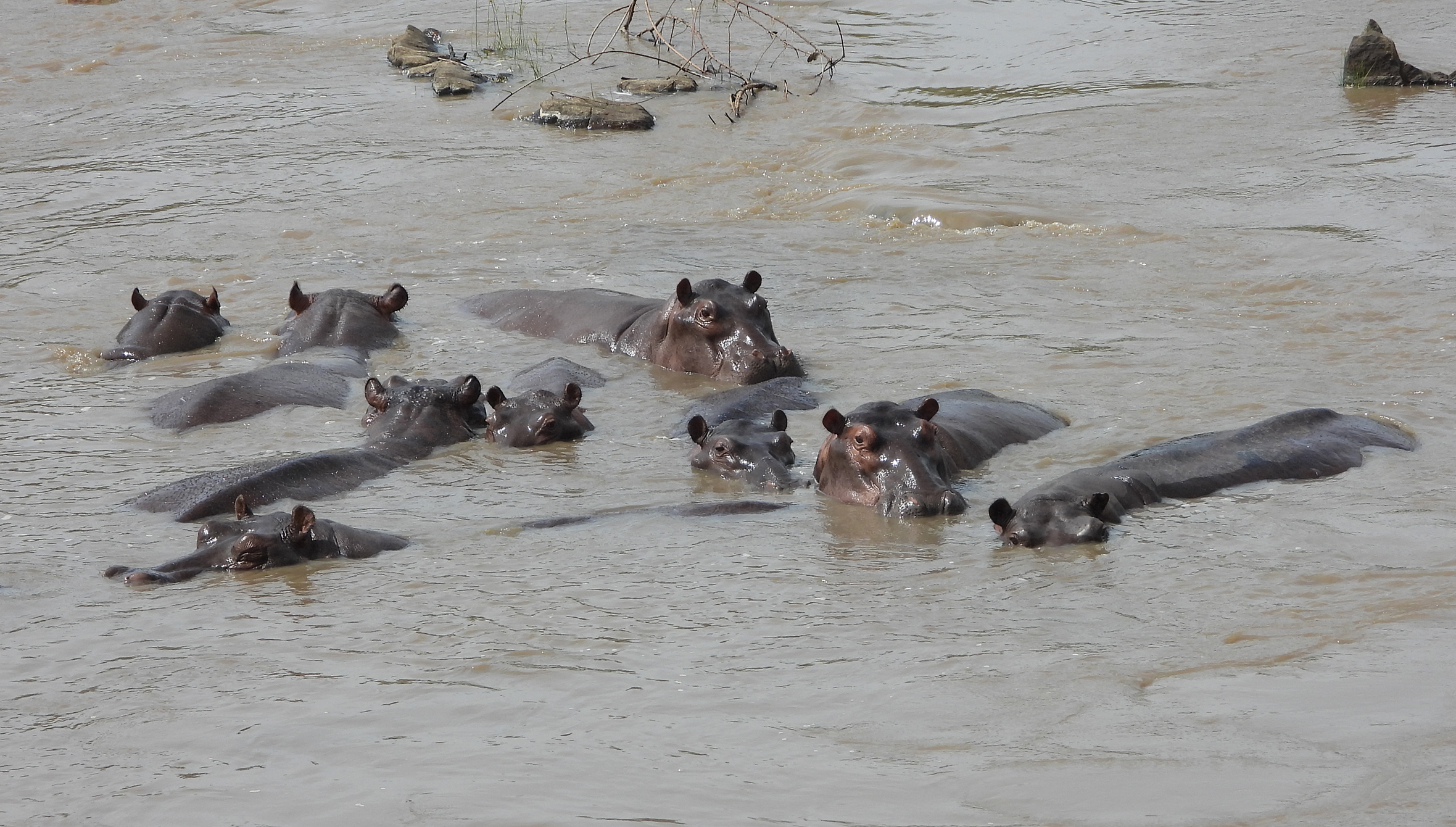
A pod of hippos in Faro National Park, Cameroon. © AWF
Hippopotamuses serve as vital ecosystem engineers within Cameroon’s freshwater habitats since they provide nutrient exchange between land and water systems. As a semi-aquatic herbivore they spend most of their time partially submerged in river pools and move inland to graze on terrestrial grasses at night. Protecting strong hippo populations in places like Faro National Park is key to safeguarding biodiversity, clean water, and ecological balance.
In 2026, the Faro hippo population count recorded its highest hippopotamus count in over a decade. The result is particularly significant because the hippo population had fallen to its lowest recorded level just two years earlier. This increase is an encouraging sign of recovery and highlights the importance of continued conservation efforts and community involvement in protecting the species and its habitat.
Between May 25 and June 3, 2026, AWF's ecological monitoring team, working alongside Cameroon's Ministry of Forestry and Wildlife (MINFOF), recorded 1,017 hippopotamuses across 26 viable pools in Faro National Park. The hippo population count was conducted as teams observed and counted individuals in each pool during the hours when hippos are most visible and least likely to be double counted, ensuring the figure is comparable to past years.
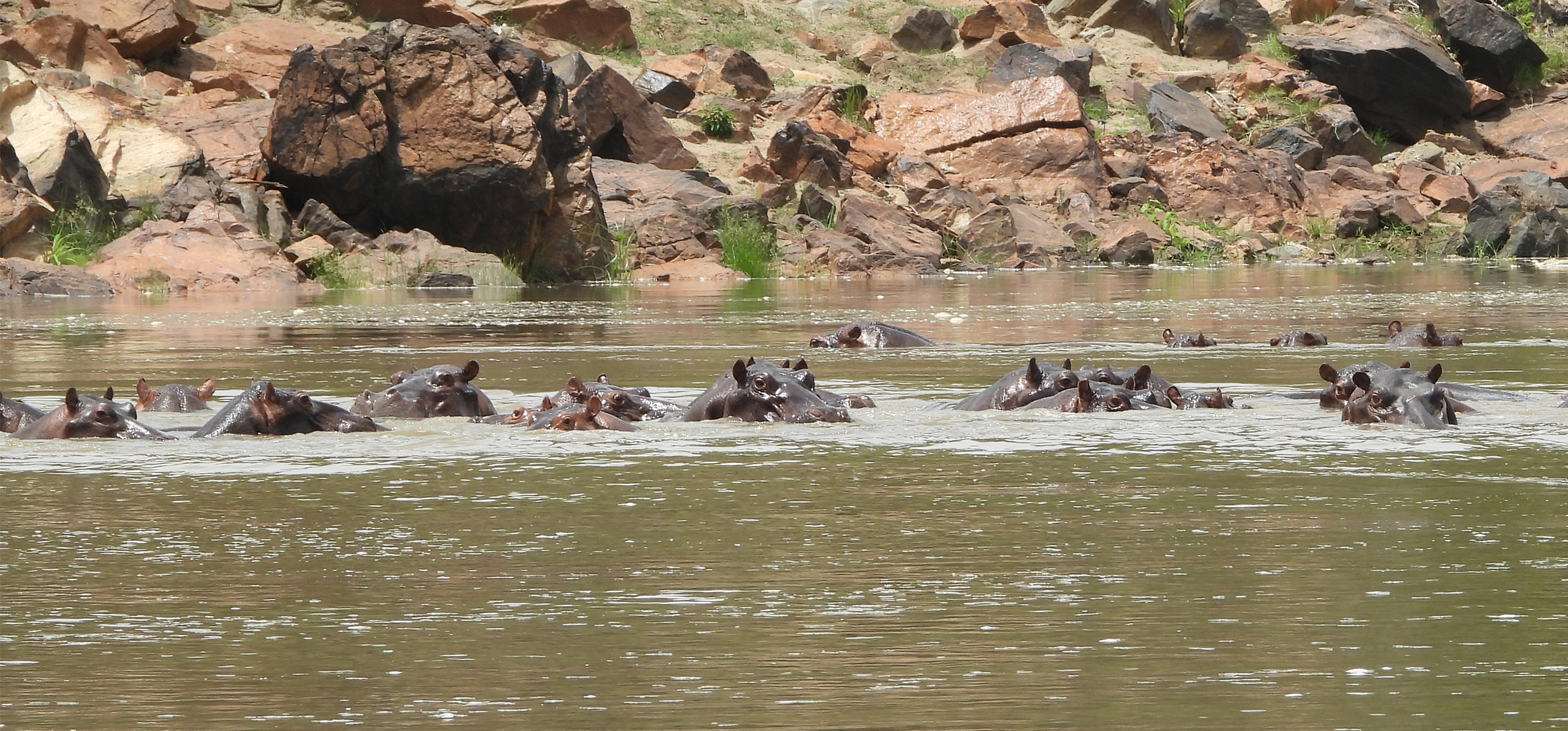
Hippos group together in one of the natural pools in Faro National Park. © AWF
Previous counts recorded 899 individuals in 2018 and 923 in 2021. However, in 2024 the population fell to 508 hippos. This decline was associated with increased poaching pressure and the movement of hippos out of the park's protected pools into buffer zones and the waters of nearby villages. By 2026 the population doubled to 1017 confirming Faro as one of Cameroon's most important strongholds for hippos.
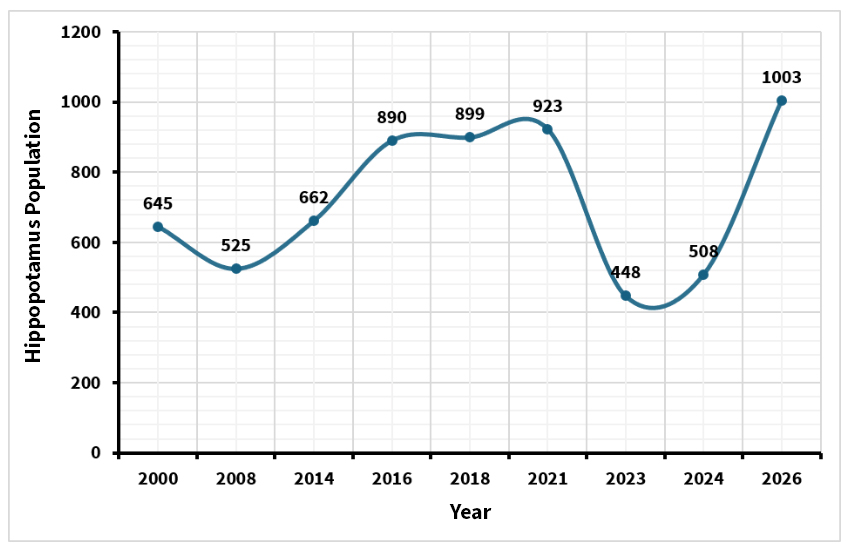
Hippo populations in Faro have declined and recovered over the years. A new hippo population count, following community sensitisation, sheds light on the reasons behind these changes.
"The 2024 figure was a warning, but it also told us something useful," said Anthony Agbor, AWF Landscape Director. "The hippos had not disappeared. Many had moved beyond the parks' protected pools, which placed them in direct contact with the communities living around the park. That is not a challenge monitoring alone can solve. It requires working with communities directly and finding ways for people and wildlife to share the landscape.”
Bringing Communities into the Effort
Before the hippo population count began, AWF teams engaged communities and traditional leaders across 11 chiefdoms bordering Faro National Park, creating space to discuss the challenges surrounding the movements of hippos beyond the park. Over several weeks, AWF field teams met with chiefs, farmers, and fishers to understand where hippos had settled, why they had moved there, and what is needed to support their return to the protected park. The engagement was designed around open dialogue and practical cooperation. Community members shared their knowledge about hippos' movements. Many individuals that had previously viewed hippos primarily as a source of crop damage and risk to water access began to take an active role in monitoring.
"We did not enter those communities to explain regulations," Agbor said. "Traditional leaders often knew the location of hippo populations more precisely than our own field data. Once it was clear that AWF was committed to helping communities coexist with these animals, and not only monitoring them, but the conversation also shifted toward cooperation."
The result was a measurable reduction in human pressure around the park's pools, stronger local stewardship, and a marked decrease in human-wildlife conflict incidents in the months leading up to the hippo population count. For AWF, the outcome was a confirmation of an organisational principle that has guided our work across Africa for decades: durable conservation results depend on the people who live alongside wildlife. Funded by the European Union, the mission formed part of AWF's ongoing ecological monitoring programme in the Faro landscape. Its objective was to establish a reliable, current population figure for hippos in the park, supporting evidence-based management decisions going forward, including future patrol planning, buffer zone management, and continued community outreach.
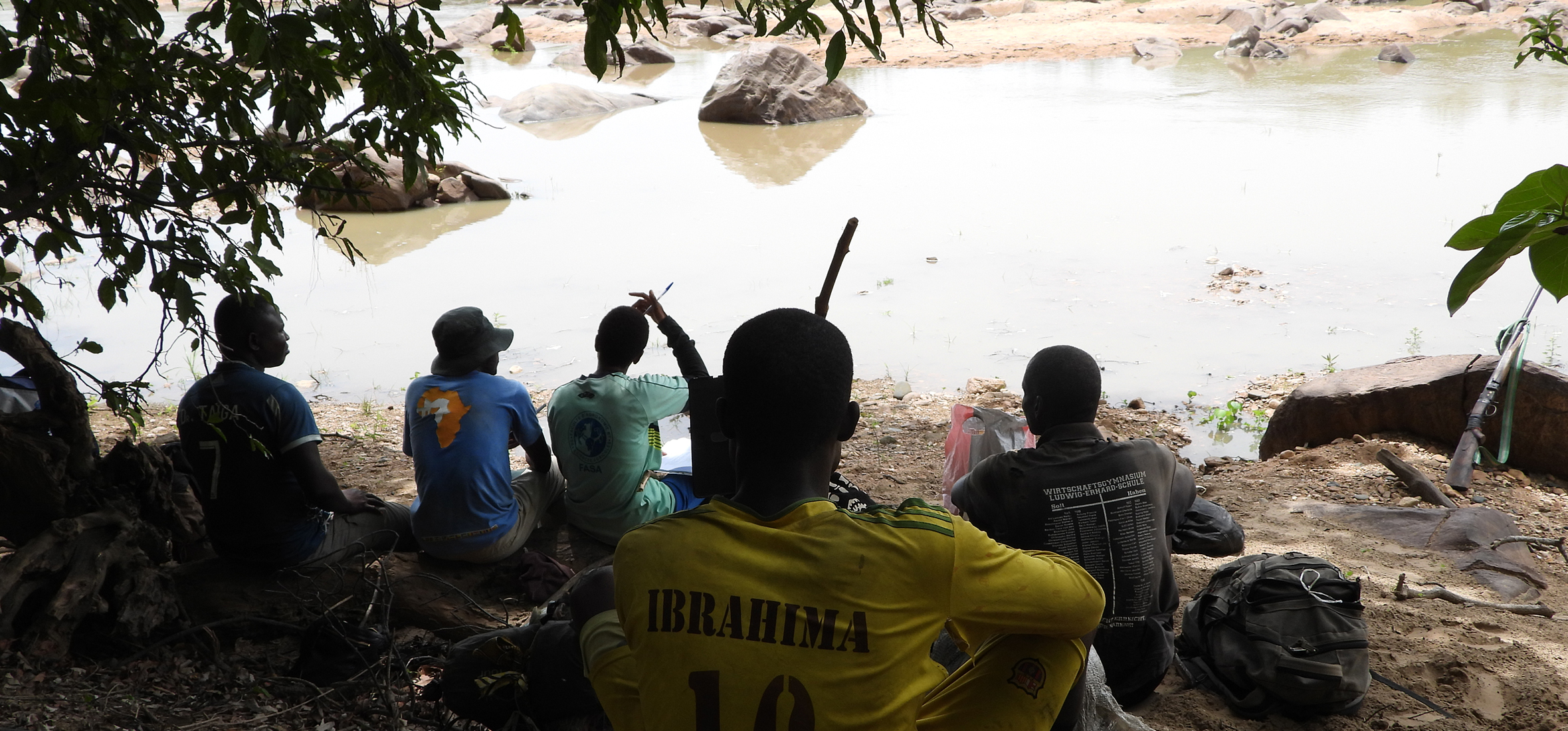
Community members in Faro gather along a riverbank to monitor and protect local hippopotamus populations—a powerful reminder that lasting wildlife conservation starts at the local level. © AWF
The partnership model behind the hippo population count, brought together MINFOF's regulatory authority and field presence with AWF's ecological monitoring capacity and community relationships with communities around the park reflecting an approach AWF has applied across its landscapes in Cameroon, including Dja and Campo Ma'an. It is a model built on the premise that neither enforcement alone nor community goodwill alone is sufficient. Reliable data identifies where problems are emerging, while sustained community relationships determine whether that data can be acted on.
"A thousand hippos in Faro is a significant result, but it is not guaranteed to hold," Agbor said. "What helped bring these animals back can just as easily be reversed if community engagement is not sustained. The count itself is the easy part. Maintaining the relationships that made it possible is the work that continues."
Securing the Gains
The 2026 hippo population count demonstrates that ecological monitoring and community engagement are most effective when they work together. Today, Faro’s hippos have recovered significantly from their sharp decline in 2024, and they are bringing balance back to the ecosystem they call home.
AWF and MINFOF will continue to track hippo populations in Faro National Park in the years ahead, working partners chiefdoms to consolidate the gains achieved this year and reduce the risk of renewed decline. Continued support from partners, alongside sustained engagement with the communities bordering the park.