How Maldini dos Santos Is Advancing Seabird Conservation in Cabo Verde
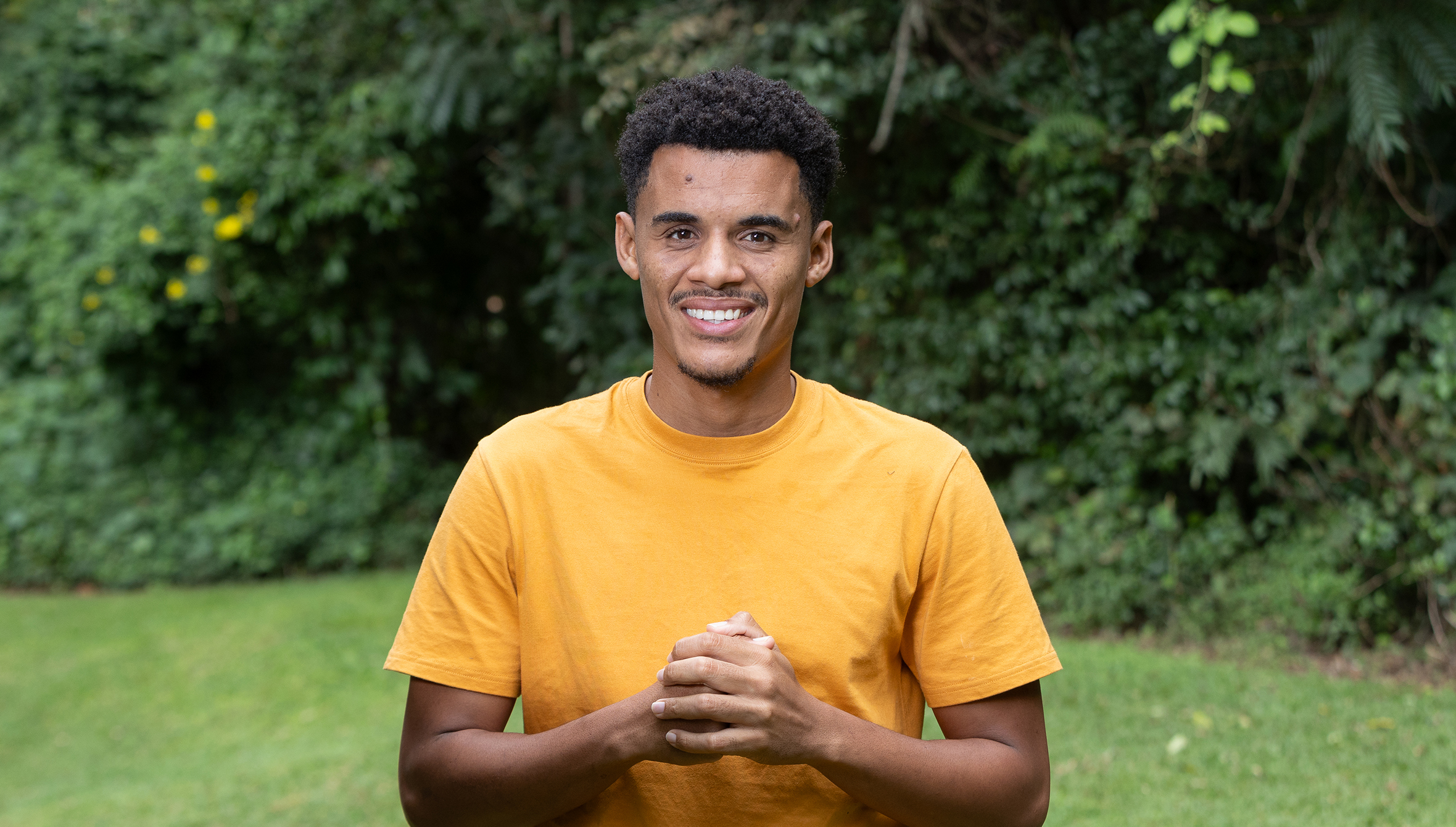
Maldini dos Santos, an AWF-Wall fellow helping to protect biodiversity in Cabo Verde.
For Maldini dos Santos, conservation did not begin with a career plan. It began with a simple fascination with nature that has blossomed into a calling for protecting Cabo Verde’s islands, coastlines, and communities.
“When I was young, I always liked nature,” he recalls. “I didn’t know much about conservation at that time, but as I grew up, I realized it was something I wanted to be part of.”
Today, he works across seabird conservation, ecosystem restoration, and community engagement. As an AWF-Wall Leadership and Management Fellow, he is turning field knowledge into lasting impact.
Maldini’s first experience came through Cabo Verde’s oldest conservation initiative, a sea turtle project established in the 1990s. “I began as a volunteer,” he says. “My first experience was at the Turtle Conservation in 2016.”
On nesting beaches, he patrolled shorelines, monitored sea turtles, collected data, and protected nesting females and their habitats. He later helped rehabilitate coastal dunes damaged by sand extraction. The dunes provide turtle nesting habitat and protect communities from flooding and storm surges.
“It was an important area not only for sea turtles but also for local communities,” he says. “If you lose those dunes, the impacts can be dangerous in the future.”
Communities as Conservation Partners
That lesson shaped his approach: Conservation works best when local people are partners and knowledge holders.
“Local communities know a lot about the species and habitats around them,” he says. “Some of that knowledge is not documented, but it is very important.”
In Cabo Verde, recovering sea turtle populations have also created ecotourism, jobs, and alternative livelihoods. “Local communities are the ones who benefit most from the protection of these species and habitats,” he says. “That is why it is important to involve them.”
Over the past five years, Maldini has focused on seabird conservation, helping protect Cabo Verde’s vulnerable bird populations. Seabirds move nutrients from the ocean to coastal habitats. “They bring nutrients from the sea to these islands,” he explains. “Those nutrients help support plants and other life in those habitats.”
They also help small-scale fishers locate productive fishing grounds. “When fishers see large groups of seabirds gathering over the water, they know there are fish there,” he says. “Without those birds, it would be much more difficult.”
Science, Technology, and Action
Maldini’s team uses GPS loggers, geolocation technology, camera traps, and colony monitoring to understand seabird behavior and threats.
“Camera traps help us understand what happens when we are not there,” he says. “There are many hours of the day when we cannot see what is happening in a colony, and that information can be very important.”
GPS tracking matters because much of a seabird’s life happens at sea. “With GPS technology, we can learn where the birds go when they leave the colony,” he explains. “That information helps us know areas that may need protection.” The data has supported national planning, important bird areas, and future marine protected areas.
When Maldini entered seabird conservation, poaching threatened several colonies. His team responded with school outreach, exhibitions, fisher engagement, television, and public campaigns. “People needed to understand why these birds are important and why we have to protect them,” he says.
With monitoring and colony protection, this approach has helped reduce poaching and increase public awareness.
Training the Next Generation
Maldini is also strengthening capacity among conservation practitioners.
“I’m currently supporting the development of a certification training program for conservation guards and coordinators working in sea turtle conservation across the country’s islands,” he says.
For years, many practitioners learned only on the job. “Most people learn by doing,” he says. “Sometimes that can take months or years.” Structured training can accelerate learning and keep knowledge moving across generations.
Earlier this year, Cabo Verde approved a National Action Plan for the Conservation of Seabirds. “It gives you hope,” he says. “It shows that the work we have been doing is making a difference.”
The AWF-Wall Leadership and Management Fellowship is helping him build on that momentum. “I saw how much my colleagues had grown through the fellowship,” he says. “Personally, I did not have much experience in leadership, but I knew it was something I needed.”
“Now I have many ideas that I want to implement in my country and in the projects I coordinate,” he says.
For Maldini, fellowships help African conservation professionals influence decisions and tell their own conservation stories. “These fellowships help shape voices,” he says. “They prepare young professionals to speak about the conservation work happening in Africa and why it matters.”
His message to young African conservation professionals is direct: “Be more engaged. Volunteer more. Conservation helps you connect with nature and understand how much we depend on biodiversity and healthy ecosystems.”
Maldini’s journey shows how science, community stewardship, and leadership can protect Cabo Verde’s biodiversity.