How Rights-Based Conservation Is Changing Central Africa
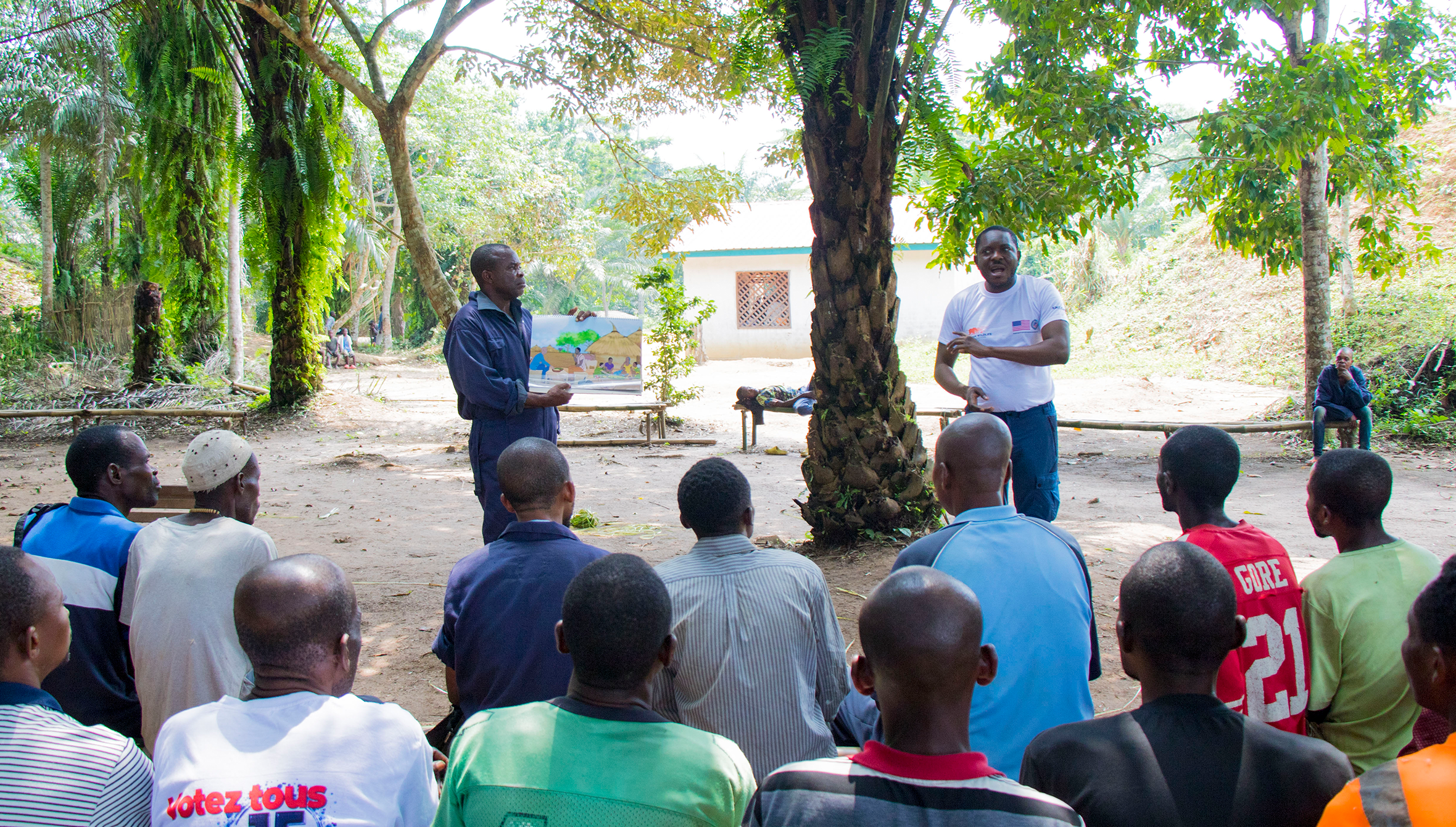
Dodo Moke, AWF Senior Social Safeguards Officer, discusses rights-based conservation with community members in Ilima, DRC.
In Faro, northern Cameroon, the sound of approaching rangers once sent people running—some slipping behind market stalls, others retreating into their homes. The presence of conservation authorities did not signal protection; it signaled fear.
Hundreds of kilometers away, near Cameroon’s Dja Faunal Reserve, Samuel Mempong watched a different consequence of the same problem unfold. In his Baka community, people were overexploiting the forest that was tied to their lives and identity. It was not because they did not care about the landscape. It was because conservation had long felt distant, imposed, and closed to dialogue.
These are two different places, but they reflect the same history of exclusion. Through AWF’s Rights-Based Conservation Approach (RBCA), communities in both landscapes are beginning to engage in conservation differently—not as something done to them, but as something they have a stake in shaping. At the center of that shift is a simple but powerful idea: People need ways to be heard and systems that respect their rights.
In Faro, Dialogue Is Changing the Relationship with Conservation
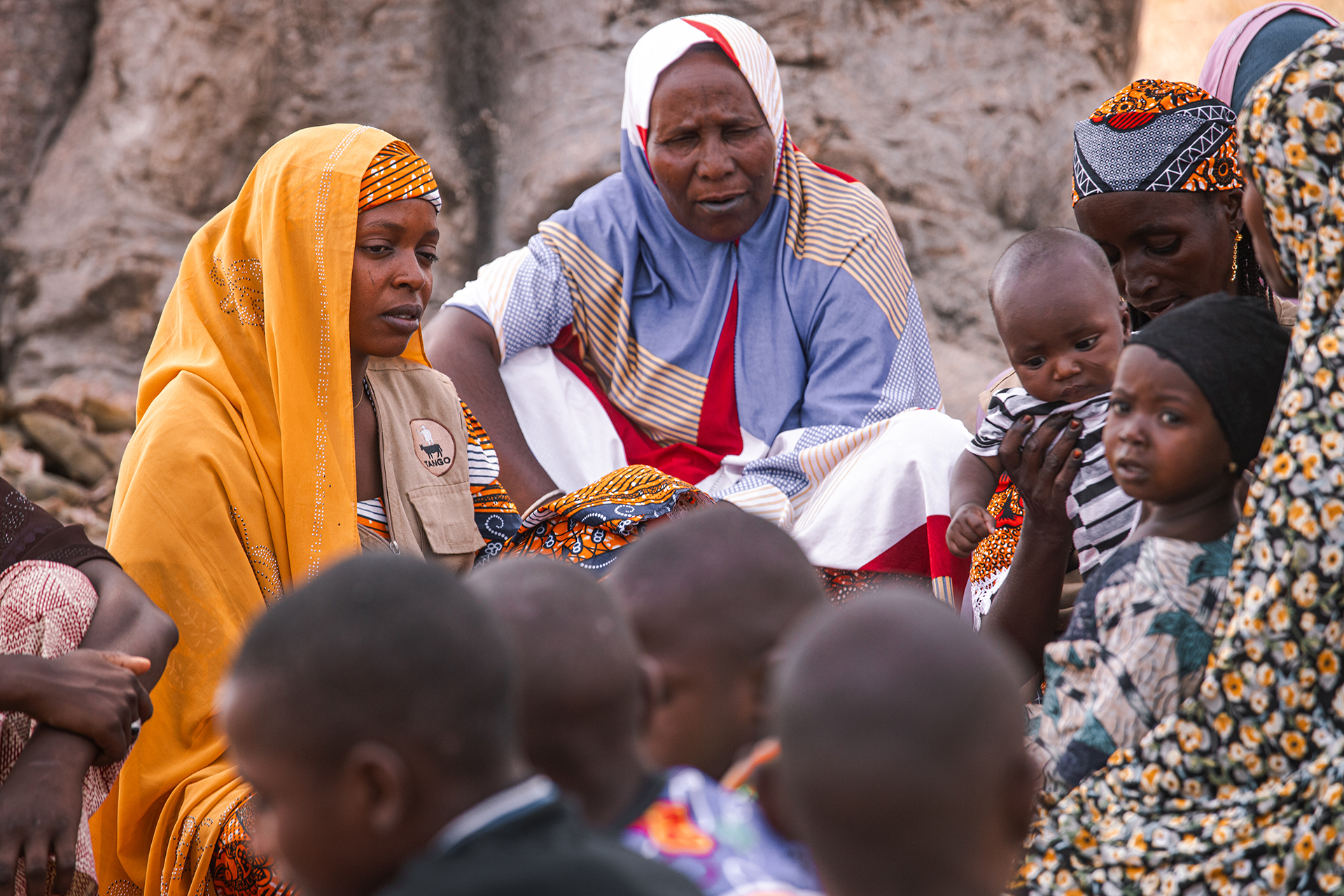
Oumma Djaoudji shares information about the importance of conservation with women in the Faro landscape.
For communities around Faro, protected areas had long felt like boundaries drawn around their livelihoods. Oumma Djaoudji remembers that period clearly.
“People used to run and hide when they heard that rangers were around. We hadn’t yet understood the purpose of conservation, and no one connected it to our rights,” Oumma Djaoudji says.
AWF helped address that gap by training local community members, including Oumma, as members of TANGO, a group that sensitizes neighboring communities to park boundaries, human rights, and rights-based conservation principles.
“When I first started working in my community, things looked very different. People saw protected areas as barriers to their daily survival, not as treasures to preserve,” she says. “But then something changed.”
That change did not come through enforcement alone. It came through sustained community engagement and the promotion of a grievance mechanism that provided a channel for people to raise concerns about conservation policies and actions.
“With TANGO’s continuous advocacy for a grievance mechanism—a simple way for people to be heard when they have concerns about conservation policies—people began to understand not just the importance of protected spaces, but their own rights and the real benefits these areas could bring to our lives,” Oumma says.
The result has been a gradual but important shift in how conservation is understood. Where fear once defined the relationship between communities and rangers, dialogue is beginning to replace suspicion.
In Dja, Indigenous Communities Are Reclaiming Their Place
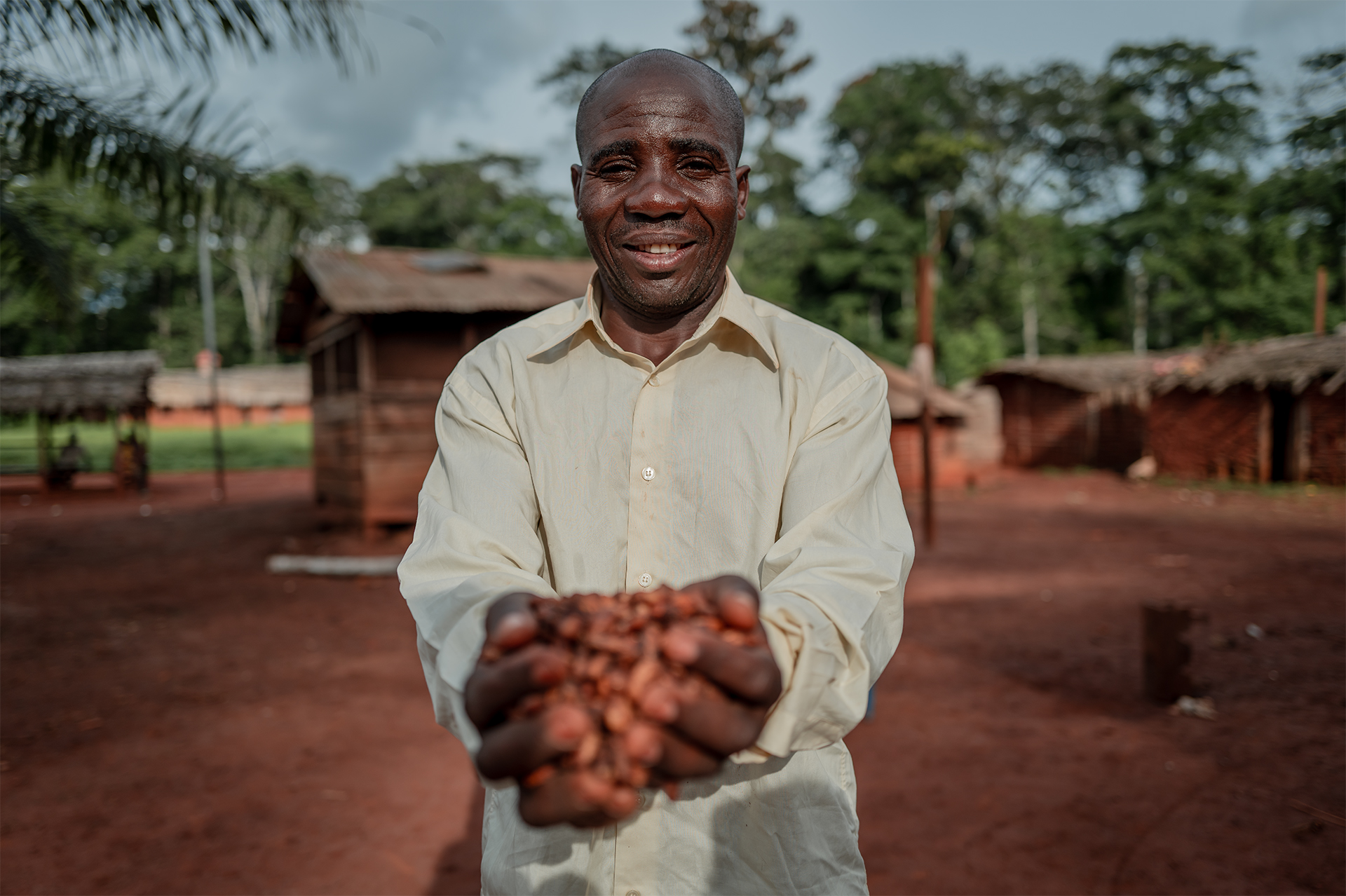
Samuel Mempong, an Indigenous villager living near Dja Faunal Reserve, Cameroon.
In Bifolone village, Samuel Mempong describes a community that had also grown distant from conservation. Without any real channel for engagement, frustration had hardened into silent resistance, and overexploitation became one of the few available responses.
That, too, is changing.
“My community now thinks about conservation itself. Where people once saw it as something imposed from outside, they now understand it as something that can benefit our children and grandchildren,” says Samuel, a youth leader within the Baka community.
What is changing in Dja is not only attitude; it is also the structure of participation. Under the RBCA, Indigenous authority is treated as a legitimate part of conservation governance. AWF does not work around communities such as Samuel’s; it works with and through them.
That distinction matters. It recognizes that communities are not simply affected by conservation outcomes. They also hold knowledge, authority, and responsibility that are essential to making conservation work.
From Conflict to Partnership
One of the clearest signs of progress under the RBCA has been the changing relationship between communities and eco-guards.
“Where once eco-guards were seen as enemies, they’re now understood as partners in protecting the environment. This didn’t happen overnight—it took countless conversations, patient explaining, and practical problem-solving,” says Norbert Sonne, AWF’s Cameroon Country Director.
That shift captures a broader lesson from the approach. Rights-based conservation is not only about reducing harm. It is about building the conditions for trust. When communities understand their rights, know where to raise concerns, and see that conservation institutions are prepared to listen, the relationship changes. Conservation becomes more credible, and with that credibility comes stronger local ownership.
Building Systems That Make Rights Real
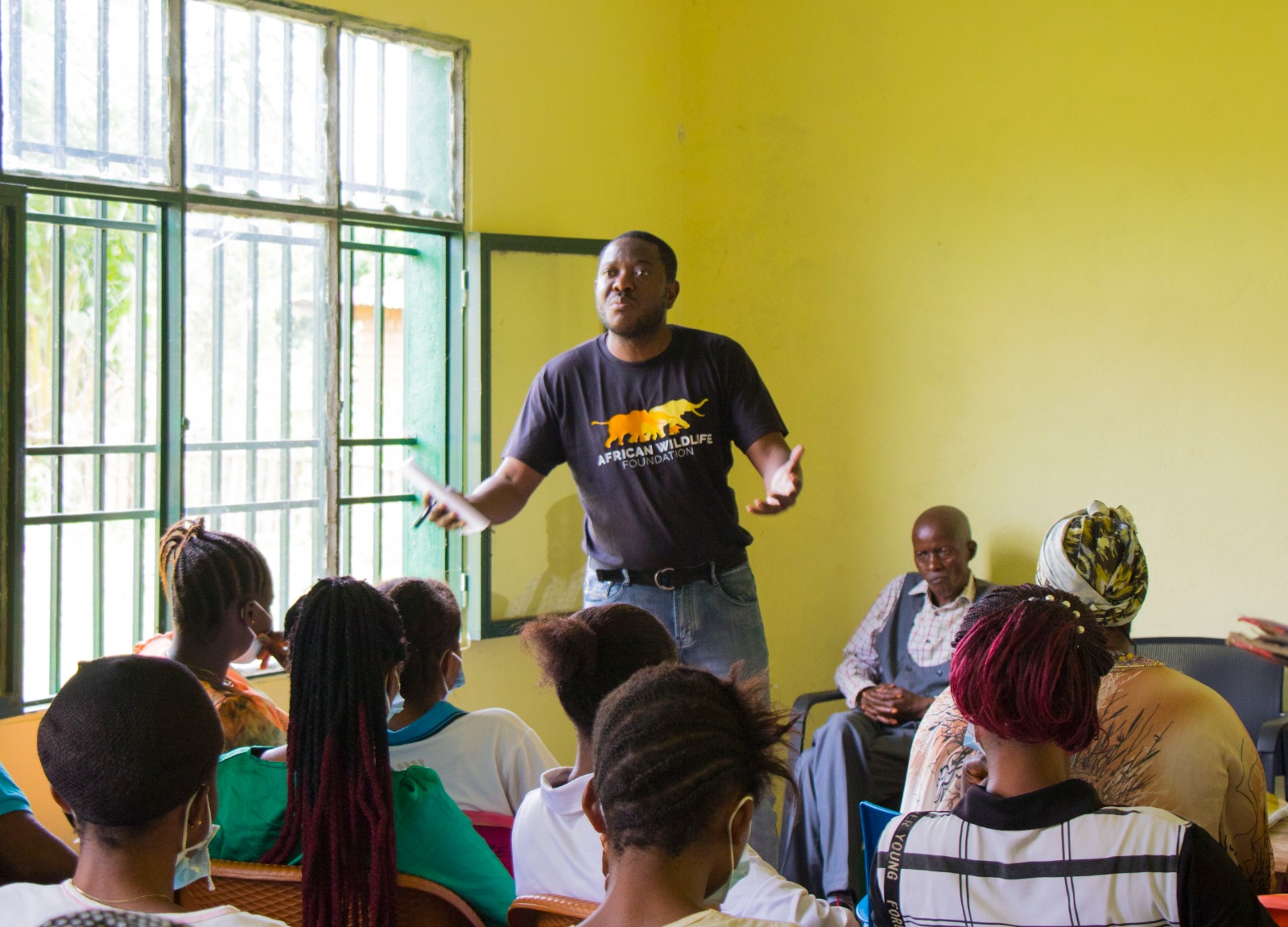
Dodo Moke meeting with local women in Boonia, Maringa-Lopori-Wamba landscape.
This transformation extends beyond Cameroon. Across the Congo Basin, AWF and its partners are working to translate principles into practice.
In 2020, the Democratic Republic of Congo’s Institut Congolais pour la Conservation de la Nature (ICCN) created a Human Rights Unit, formally recognizing that conservation and human dignity are inseparable.
AWF partnered with ICCN to make that commitment meaningful at the community level through dialogue platforms, joint committees, local radio, and a Complaint Management Mechanism (CMM) that provides safe channels for people to raise concerns and seek redress.
“Our self-assessment made one point clear: For conservation to be sustainable, it must be just. It must respect, protect, and promote human rights, regardless of ethnicity, gender, age, or social class,” says Dodo Moke, AWF Senior Social Safeguards Officer.
In the Bili-Uélé landscape, the impact of that system is already visible in everyday life. Julienne Nambaka, president of a local women’s association, has seen the difference firsthand.
“I used to sell goods to eco-guards on credit. When I asked for payment, they’d say, ‘I’m military, you can’t touch me.’ I’d let it go to avoid trouble. But since the complaint mechanism was introduced, they have come to repay. They know that if I file a complaint, they’ll face disciplinary action,” she says.
Transparency is a key part of that process. Communities are now informed about project activities, budgets, and results, making it easier for them to track conservation investments and understand that these efforts are not the sole property of distant institutions.
The approach is also reaching groups that have often been excluded from conservation spaces. In the DRC, seasonal migratory livestock herders and customary leaders, once treated mainly as threats, are now engaged through Free, Prior, and Informed Consent (FPIC) processes and serve on complaint committees.
“Being appointed president of the restricted committee for the complaint mechanism in Bili-Uélé is an honor. It affirms my customary authority and my legitimacy in biodiversity preservation. Now, everyone knows their sphere of authority, and no one oversteps another’s role,” says Souley Yense, a traditional leader in Bili-Uélé, DRC.
When People Are Heard, Conservation Becomes Stronger
Today, Oumma no longer describes a landscape defined by panic when rangers arrive. Samuel speaks of a forest his community sees differently—not as an external imposition, but as part of a future they are helping shape for the next generation.