The Hunter, the Farmer, and the Forest: Jean Daniel's New Legacy in Campo Ma'an
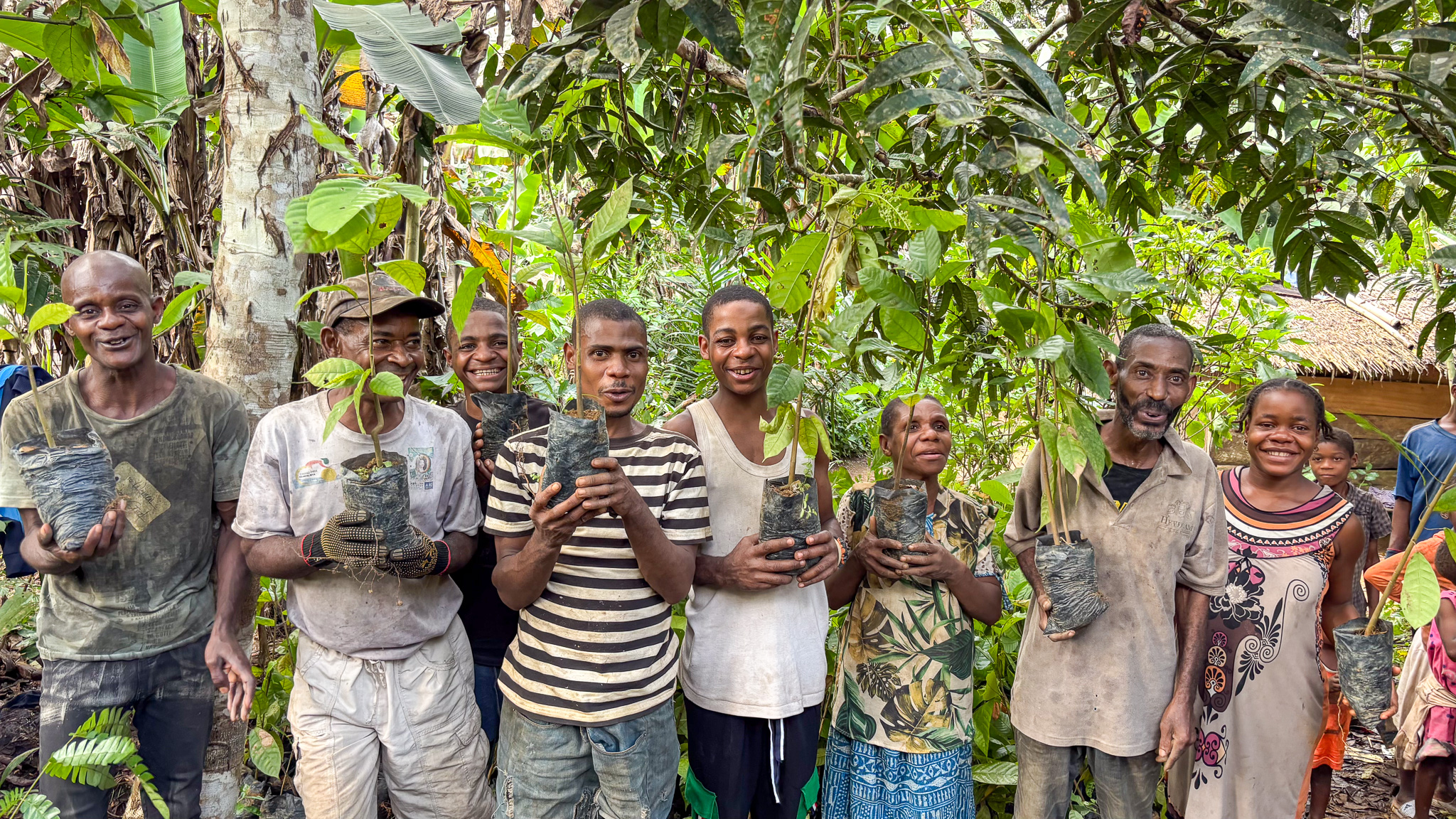
Bagyeli Indigenous community members holding cocoa plants received from AWF through FEDEC funding for planting in their farms alongside their rubber plantations.
Jean Daniel Ndongo grew up in Nyamabande, a Bagyeli village bordering Cameroon’s Campo Ma’an National Park, where the forest shaped identity, income, and daily life.
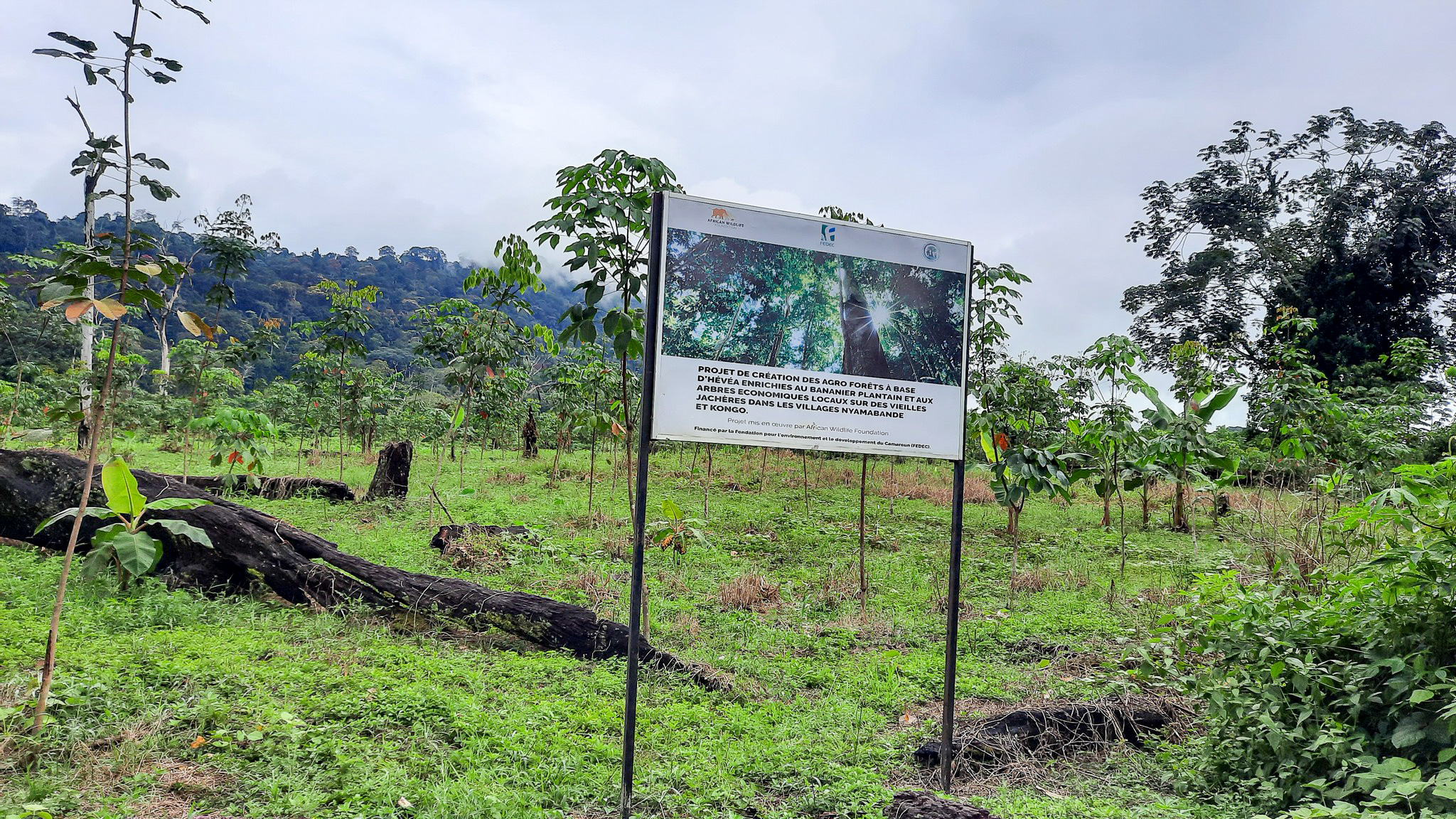
Rubber Plantation in Nyamabande Village, South Cameroon.
Like many men in his community, he learned to track wildlife from his father, and for years he crossed into the park to hunt, sometimes vanishing for weeks.
For Jean Daniel, hunting was the main source of livelihood. It was the only profession he knew, the only way to feed the people he loved. He became a ghost in Campo Ma’an National Park, often disappearing for a month at a time, busy poaching in the park.
“My village used to be in the park many years ago. So, I know every part of the park. There were times I would spend more than 30 days inside the park," Jean Daniel recalls. “We hunted because that’s all we knew. My father taught me how to track animals and how to survive. It was our tradition.”
In 2020, however, a compelling new path can bend even the most deeply rooted traditions. In 2016, Jean Daniel experienced a significant shift when the African Wildlife Foundation (AWF) and Cameroon's Ministry of Forestry and Wildlife (MINFOF) introduced a bold vision for a community conservation partnership. The goal was to reduce pressure on the park and create dignified, sustainable livelihoods for Indigenous families.
With funding from the Foundation for Environment and Development in Cameroon (FEDEC) and support from COTCO, AWF teamed up with Hévéa Cameroun SA (HEVECAM) to introduce rubber cultivation and diversified food crops as viable alternatives to poaching.
The pilot began across 9.1 hectares in Nyamabande, Nkongo, and Nkolmelen. Equally important as the acreage was the approach: training, inputs, and day‑to‑day coaching that respected local knowledge and ensured community ownership. Jean was one of the first to enroll, trading a hunter’s hunger for a farmer’s patience.
AWF and HEVECAM technicians trained participating households in soil health, nursery management, spacing, and intercropping, pairing rubber saplings with staples such as plantain, cassava, cocoyam, maize, groundnuts, and cocoa. The design provides short‑term food security and income while the rubber matures.
“Farming opened my eyes,” Jean Daniel says. “Now I can feed my family, including my grandchildren. I no longer need to go into the forest to hunt. I have something I can build on.”
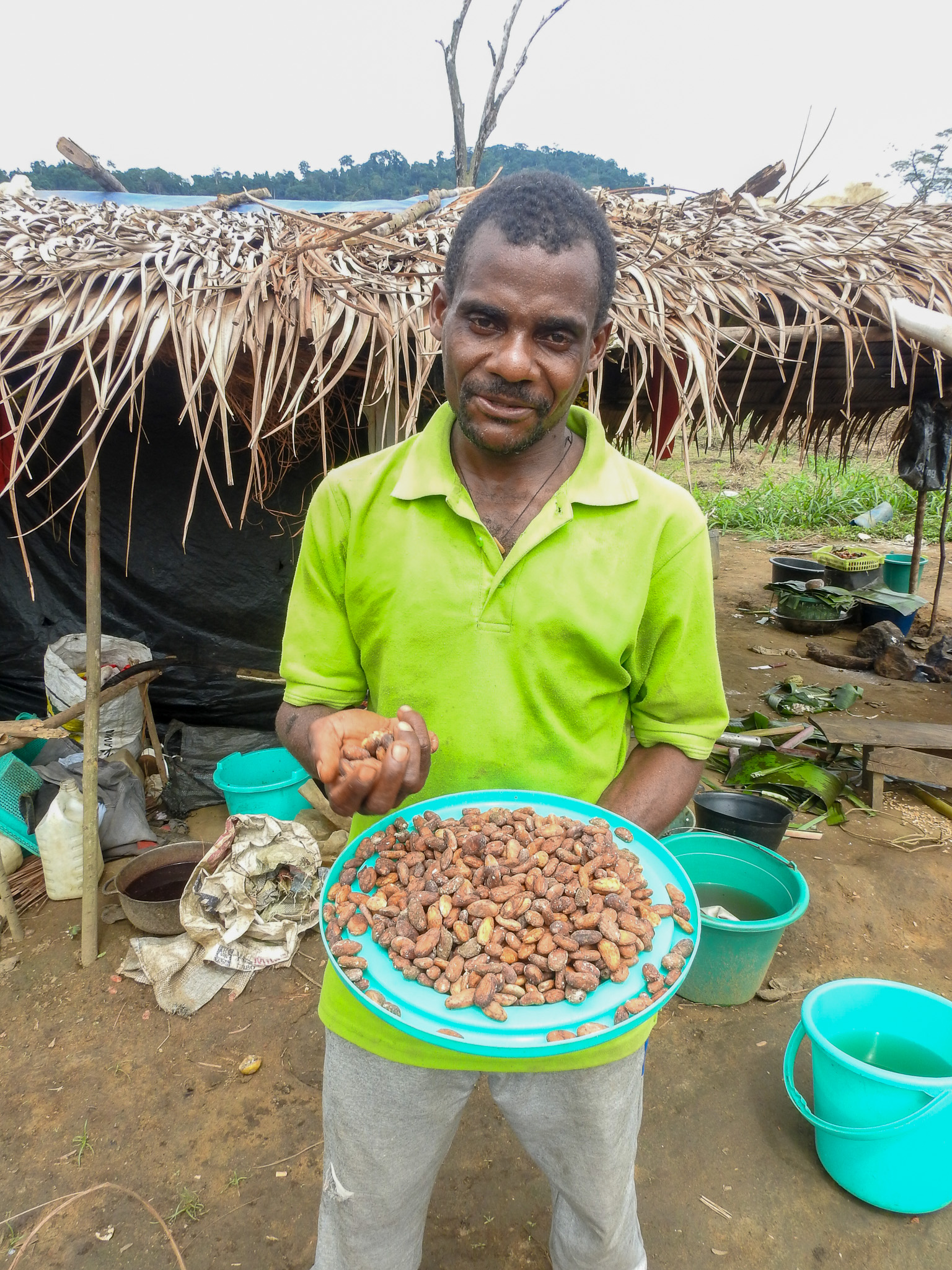
Jean Daniel stands in front of his home holding cocoa beans from his cocoa farm's first harvest.
The shift is visible on his piece of land. Broad plantain leaves cast shade over cassava, cocoyam, and groundnuts, improving the soil. Young rubber trees provide a cushion for the days ahead. What began as an economic alternative is fast becoming a community identity rooted in stewardship.
AWF’s model hinges on participation at every step—from land preparation to planting and seasonal maintenance—so families see themselves as co‑authors of change. That ownership builds pride, reduces the incentive to enter the park illegally, and anchors conservation in everyday livelihoods.
AWF's efforts extended beyond the rubber industry. To ensure immediate food security, plantain suckers, cassava cuttings, maize, cocoyam, and groundnut seeds were distributed in local communities around the park. These efforts are all part of a larger mission: to dramatically reduce human pressure on the precious Campo Ma’an National Park, a protected area vital for endangered species and global biodiversity.
“The rubber project is more than farming,” says Lydie Nguesse, AWF Community Liaison. “It’s about restoring dignity, creating sustainable livelihoods, and helping communities reclaim their role as guardians of the forest. We hope this model will empower families for generations.”
Campo Ma’an National Park is home to elephants, gorillas, and other threatened species. As alternative income sources grow, community members make fewer hunting incursions.
“We’re already seeing signs of recovery,” conservation expert Jacques Massusi says. “Elephant and gorilla populations are stabilizing. Juvenile sightings of these and other species are increasing. This increase is a strong indicator of a healthier ecosystem and is a result of reduced human pressure and stronger community engagement."
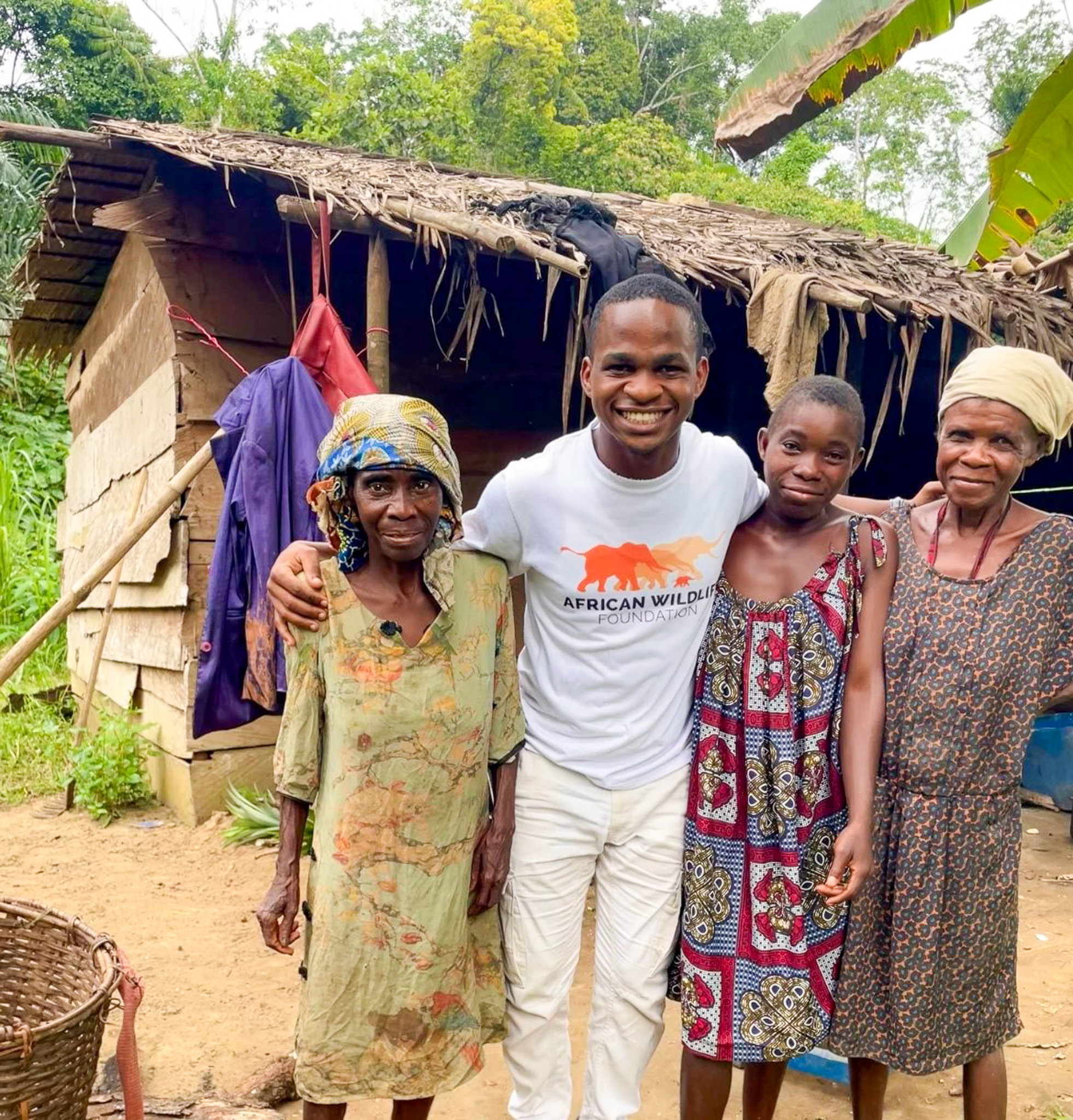
Yann Avoto (center), AWF Biomonitoring assistant based in Campo stands alongside Indigenous Bagyeli women.
Rubber trees typically reach tapping age in about six years. With many plots established in 2020, AWF is helping farmers organize cooperatives ahead of the first harvests, which are expected around April 2026. Cooperatives will pool volume, improve quality control, and strengthen bargaining power with buyers like HEVECAM—key steps to ensuring a fair share of value returns to households. In parallel, diversified food and cocoa crops continue to meet daily needs.
FEDEC’s support under the Chad–Cameroon Pipeline Environmental Management Plan connects conservation goals with community development, while MINFOF’s leadership aligns the work with national biodiversity priorities. HEVECAM's involvement helps farmers gain knowledge about farming and access to markets, showing how working together across different sectors can create lasting opportunities in rural areas.
For Jean Daniel, the legacy he passes to his grandchildren is changing—from bushmeat to agroforestry, from uncertainty to planned harvests. He still knows every path in the forest, but he now walks it as a neighbor and protector.
"Now I can feed my family," he says. "I have something I can build on."
His story mirrors a broader shift around Campo Ma'an. People and wildlife both stand a chance when communities receive tools, training, and fair markets.