"It Starts With Me” - How Youth in Rwanda Are Restoring Forests and Rebuilding Climate Resilience
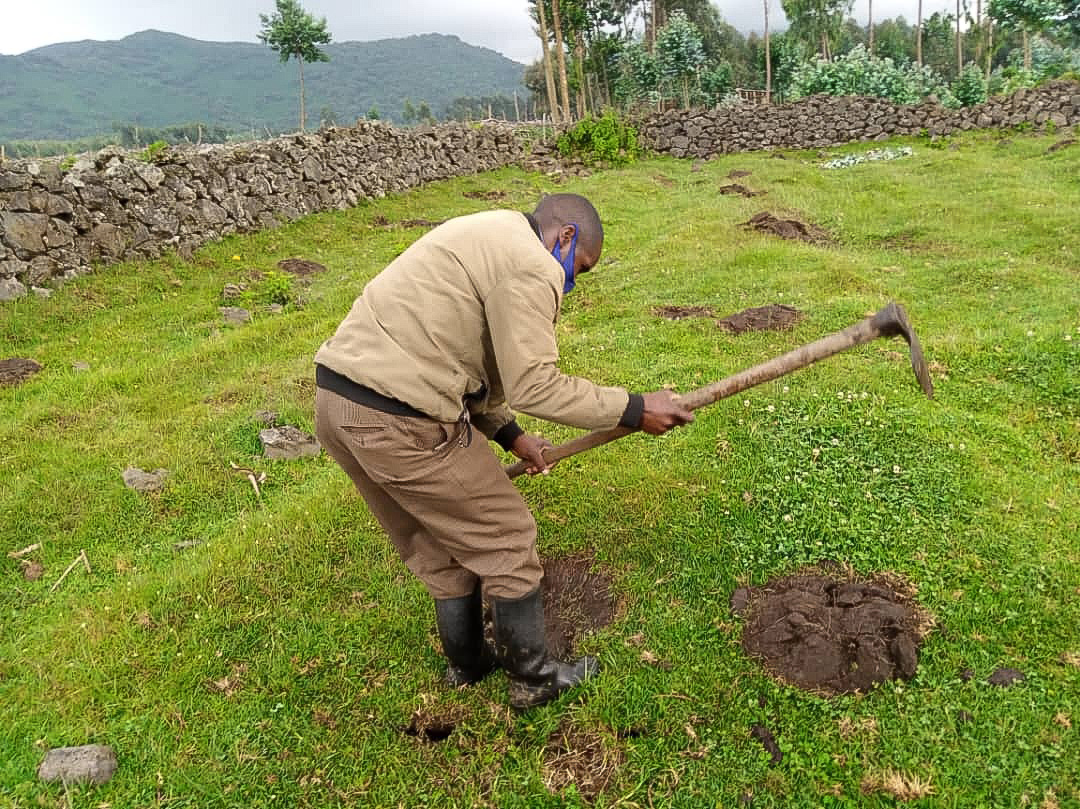
Hitimana Fideli preparing planting holes in Volcanoes National Park, supporting bamboo restoration and ecosystem recovery.
Volcanoes National Park, where endangered mountain gorillas roam through dense forests of bamboo, climate restoration is taking root not only in the soil, but in the people who call this landscape home.
For Hitimana Fideli, a youth volunteer from Kinigi Sector in Musanze District, environmental conservation was once something distant—a responsibility for experts, institutions, or people far away from his village. Today, after four years of participating in bamboo restoration activities around Volcanoes National Park, he sees it differently.
“I used to believe that climate protection wasn’t my responsibility. However, after training on the importance of the park, I came to realize that everything that needs to be done starts with me right here in Kinigi, without looking elsewhere.”
That realization has transformed Fideli from a local caretaker into a committed environmental steward and Community Eco-Guard, helping restore one of Rwanda’s most important ecosystems through the planting and nurturing of indigenous African alpine bamboo (Yushania alpina).
His story reflects a growing movement across Rwanda, where local communities, especially youth, are increasingly becoming central players in climate action and ecological restoration.
Restoring More Than a Forest
The restoration work around Volcanoes National Park forms part of broader efforts led by the African Wildlife Foundation in partnership with the Rwanda Development Board (RDB) and EcoPlanet Bamboo Rwanda to rehabilitate degraded land adjacent to the park.
Their shared goal goes beyond tree planting. It is about rebuilding a resilient ecosystem that supports biodiversity, strengthens climate adaptation, and safeguards the future of communities whose livelihoods are closely tied to conservation and tourism.
At the center of these efforts is Yushania alpina, the only indigenous bamboo species found in Volcanoes National Park and a critical food source for mountain gorillas, golden monkeys, and other wildlife species.
For Fideli, caring for the bamboo became deeply personal.
“I didn’t do any other work; that was my sole responsibility. I took care of the trees, watering them and ensuring I knew their needs. I managed their care in the garden. When it was time to prune, I consulted with my partners, and together we executed everything very well, all in the spirit of environmentalism.”
What began as volunteer work gradually evolved into knowledge, purpose, and community leadership.
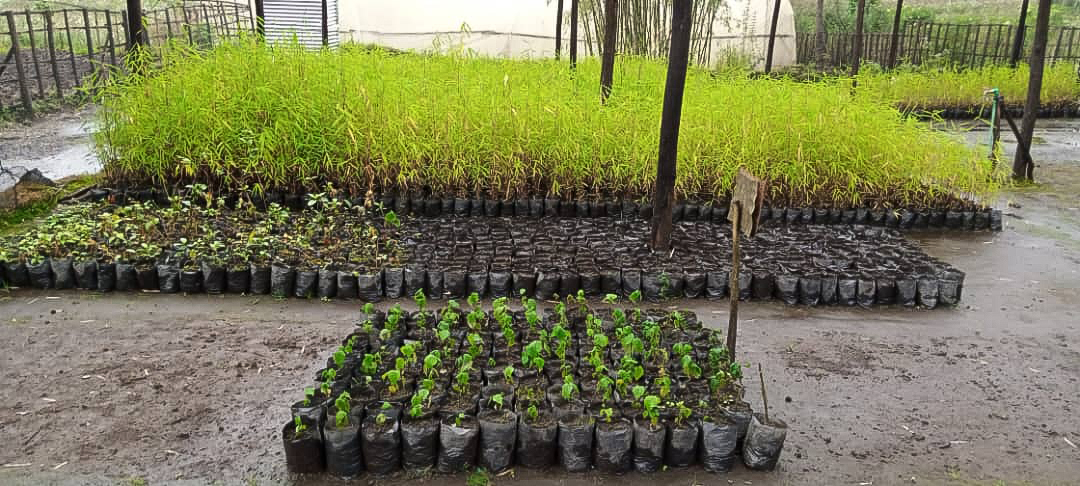
The bamboo nursery bed in Volcanoes National Park, nurturing young plants for ecosystem restoration.
Youth at the Frontline of Climate Action
Across Africa, climate conversations often focus on policies, financing, and global commitments. But in Kinigi, climate action looks different. It looks like young people preparing nurseries, watering fragile bamboo shoots, protecting restored land, and learning how ecosystems function.
Fideli says one of the greatest benefits was not financial but educational.
“Although I did not study formally, the knowledge I gained through these activities would have been costly if I had to pay for it. However, since I was volunteering, it was free of charge.”
That experience has since enabled him to support others in similar restoration activities, creating a ripple effect of environmental awareness and practical conservation skills within the community.
His journey demonstrates how locally led restoration initiatives can empower youth not only as beneficiaries of conservation projects but as long-term custodians of natural resources.
This community-centered approach aligns strongly with the global vision behind World Environment Day 2026, which calls for practical, inclusive solutions that build a more sustainable and climate-resilient future.
Conservation That Supports Communities
The bamboo restoration initiative has also created employment and learning opportunities for local residents living near Volcanoes National Park. Community members have been involved in nursery preparation, transplanting, maintenance, and restoration activities, helping strengthen the relationship between conservation and livelihoods.
For communities surrounding the park, protecting biodiversity is not an abstract concept. It is closely linked to tourism revenue, local development, and environmental stability.
Fideli understands this connection clearly.
“These trees are favored by various animals, including gorillas, golden monkeys, buffaloes, and others. Since these animals rely on these trees for food, it is crucial to conserve them.”
He adds, “Protecting these trees is essential because these animals play a significant role in our survival and contribute to our country’s foreign exchange earnings.”
In Rwanda, where conservation has become deeply intertwined with national development and sustainable tourism, restoration work around Volcanoes National Park illustrates how environmental protection can simultaneously support climate resilience, biodiversity conservation, and economic opportunity.
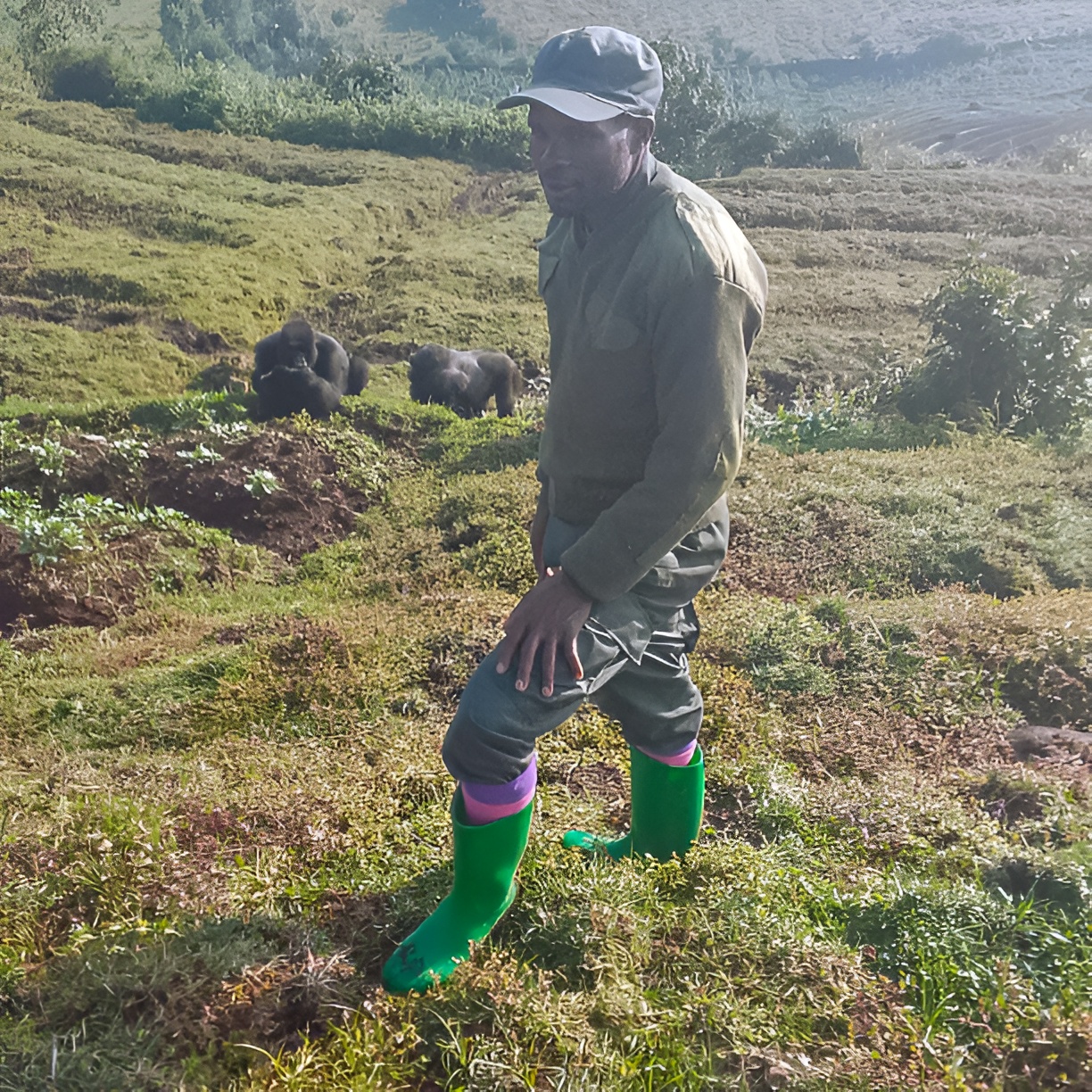
Hitimana Fideli, a Community Eco-Guard in Kinigi, contributing to climate resilience efforts around Volcanoes National Park through hands-on conservation work.
A Local Story With Global Meaning
As the world faces rising temperatures, biodiversity loss, and increasing environmental pressures, stories like Fideli’s offer an important reminder: meaningful climate action often begins at the community level.
What is happening in Kinigi is more than a local restoration initiative. It is part of a wider global effort to rebuild ecosystems through collaboration between conservation organizations, government institutions, private sector partners, and local communities.
By combining ecological restoration with community participation, partners including the African Wildlife Foundation, Rwanda Development Board, and EcoPlanet Bamboo Rwanda are helping demonstrate what long-term environmental resilience can look like in practice.
And for youth like Fideli, the lesson is simple but powerful: Climate restoration does not begin somewhere else; it begins where people choose to take responsibility for the environment around them.
In the bamboo nurseries and restored landscapes surrounding Volcanoes National Park, that future is already growing.