Jedida Mesi’s Story: Youth-Led Greenhouse Farming Strengthens Food Security in Taita Taveta
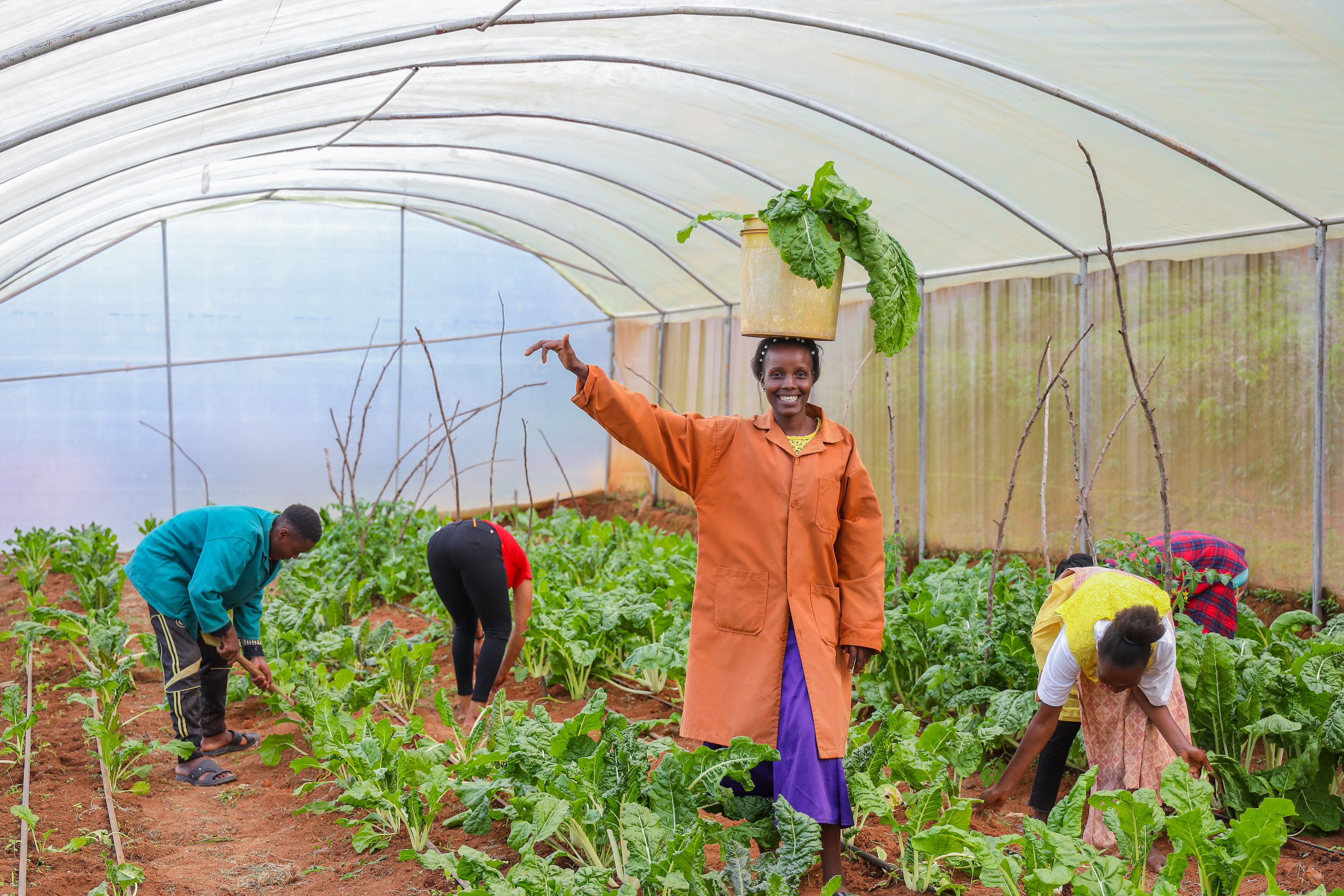
Jedida Mesi and the Mwavunyu Chakiloli Youth Group harvest fresh vegetables from their climate-smart greenhouse.
In Mwatate, Taita Taveta County, Kenya, prolonged droughts and environmental degradation are reshaping livelihoods. Reduced water access and declining soil moisture are some of the factors making farming increasingly uncertain for communities.
For Jedida Mesi, Secretary of the Mwavunyu Chakiloli Youth Group, that uncertainty is not theoretical. It is the difference between crops that fail and produce that reaches local households.
So, when the African Wildlife Foundation (AWF)—with support from the TUI Care Foundation—supported the group in late 2024 to establish a greenhouse, Jedida described it as a practical shift from coping to planning.
“This has made a big difference for us, helping our crops survive the dry seasons, and the initiative also provided quality seeds, drip irrigation kits, and a water tank to support our work,” she says.
A Youth Group Built on Conservation and Livelihoods
The Mwavunyu Chakiloli Youth Group was founded in 2008, at a time when youth petty crime was on the rise in the area. It began as an effort to bring together young people who lacked productive opportunities, but it quickly evolved into a movement focused on restoring the environment while building sustainable livelihoods.
Members organized around the link between environmental degradation, water scarcity, and food insecurity. Their first major initiative was a tree nursery, producing seedlings later planted in catchment areas, schools, and churches. Over time, the nursery also became a modest income-generating activity, with seedlings sold to support group operations.
As activities expanded, some members aged out of the youth bracket, yet the group remained active. It currently comprises 12 active youth, with former members continuing to provide mentorship and support. The group later introduced beekeeping, table banking, and small-scale farming, occasionally strengthened through partner support, including the Taita Taveta County Government and the Kenya Forestry Research Institute, among others.
When Climate Change Made Farming Unreliable
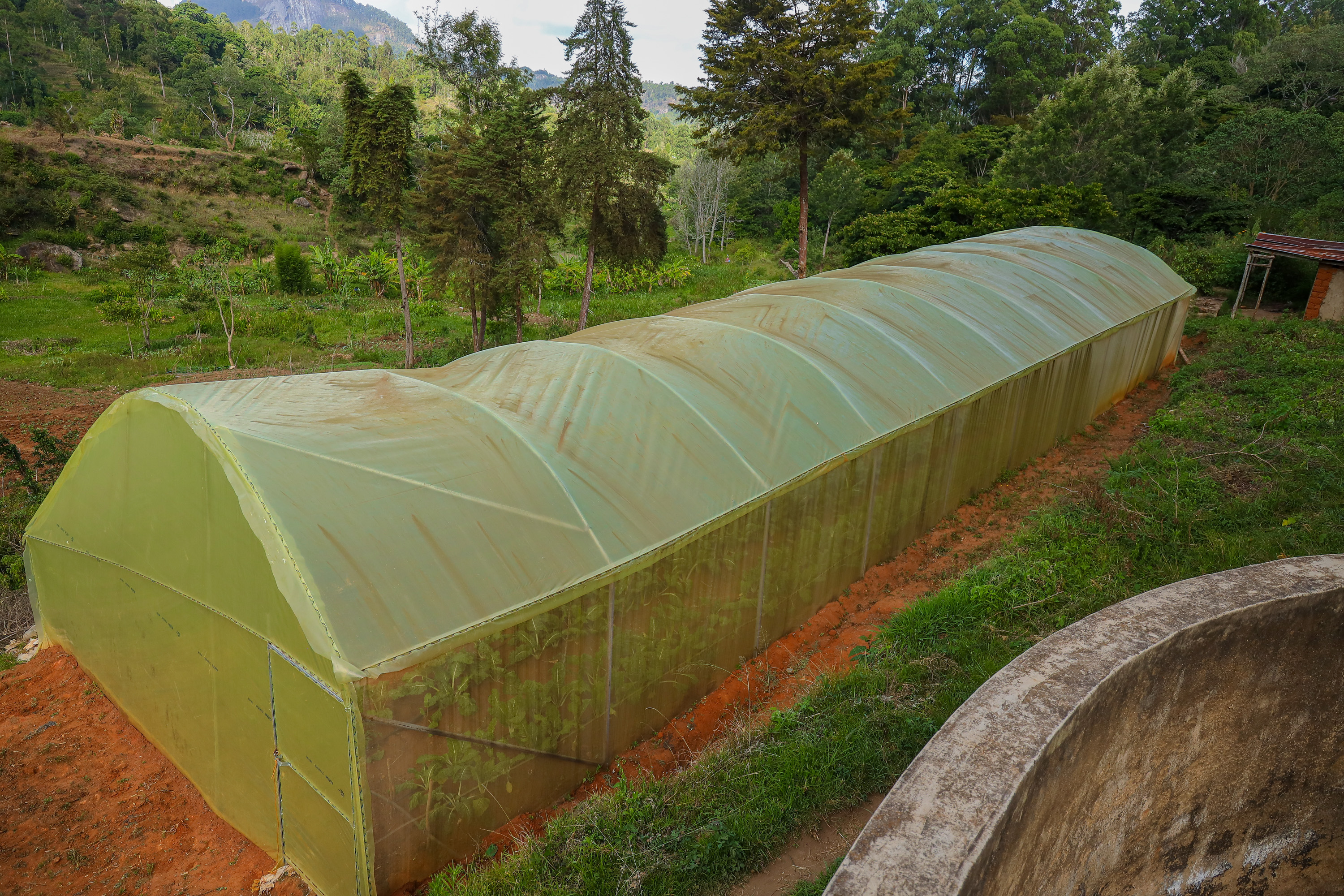
The Mwavunyu Chakiloli Youth Group greenhouse.
Farming became the group’s most financially dependable initiative—until climate change made crop production unreliable. Erratic rainfall, prolonged dry spells, and poor soil moisture reduced yields. Meanwhile, the Mwasoko River, their primary water source, was drying up and being over-extracted, limiting agricultural potential and placing additional strain on the surrounding ecosystem.
Against that backdrop, the greenhouse was introduced to strengthen climate resilience, improve food security, and reduce pressure on the river while keeping youth engaged in conservation-linked livelihoods.
What the Greenhouse Changed: Yields, Income, and Table Banking
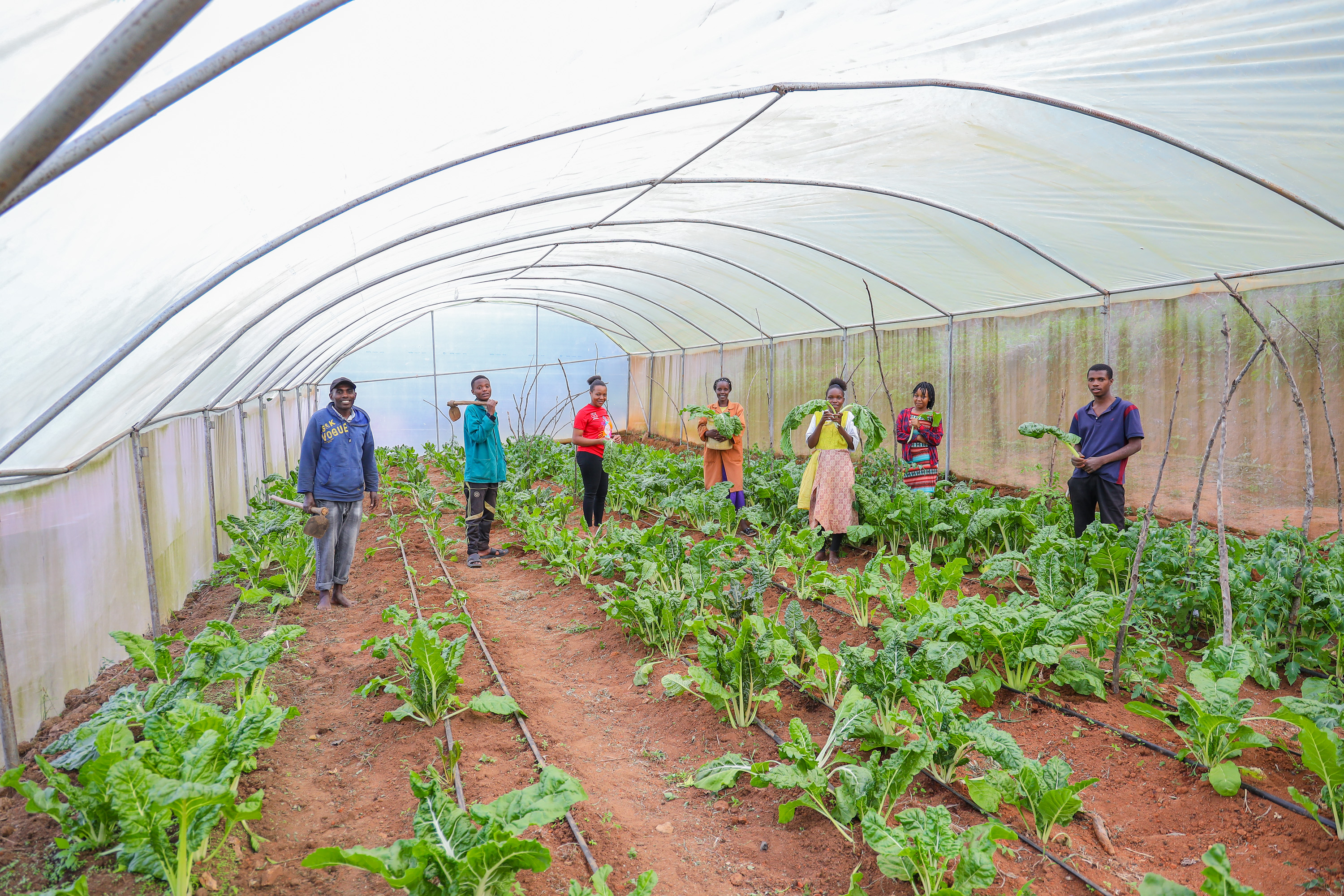
Mwavunyu Chakiloli Youth Group in their greenhouse following a successful crop-growing period.
By protecting crops from extreme heat and improving soil moisture retention, the greenhouse improved productivity. The youth successfully grew tomatoes and spinach, and tomato sales generated Ksh 80,000 (approximately USD 620), a major milestone for the group.
With strong demand from local markets and community members, they are now able to harvest and sell produce more reliably, improving access to fresh vegetables while generating steadier income.
Improved earnings also strengthened the group’s financial systems. Table banking contributions increased from Ksh 10,000–15,000 (USD 116) to Ksh 20,000–30,000 (USD 232), strengthening emergency support for members and reinforcing unity. Year-round production has kept the youth active in the market even when crops are out of season.
The benefits extend beyond the group. Members sell produce at affordable prices to the community, and group members also receive seeds and support with land preparation for their own household farms.
For Jedida personally, the increased table banking contributions opened new opportunities. She was able to take a loan to purchase salon products, supporting her passion for hair braiding. “I mostly do house calls for clients, but I am soon opening my own salon,” she shares.
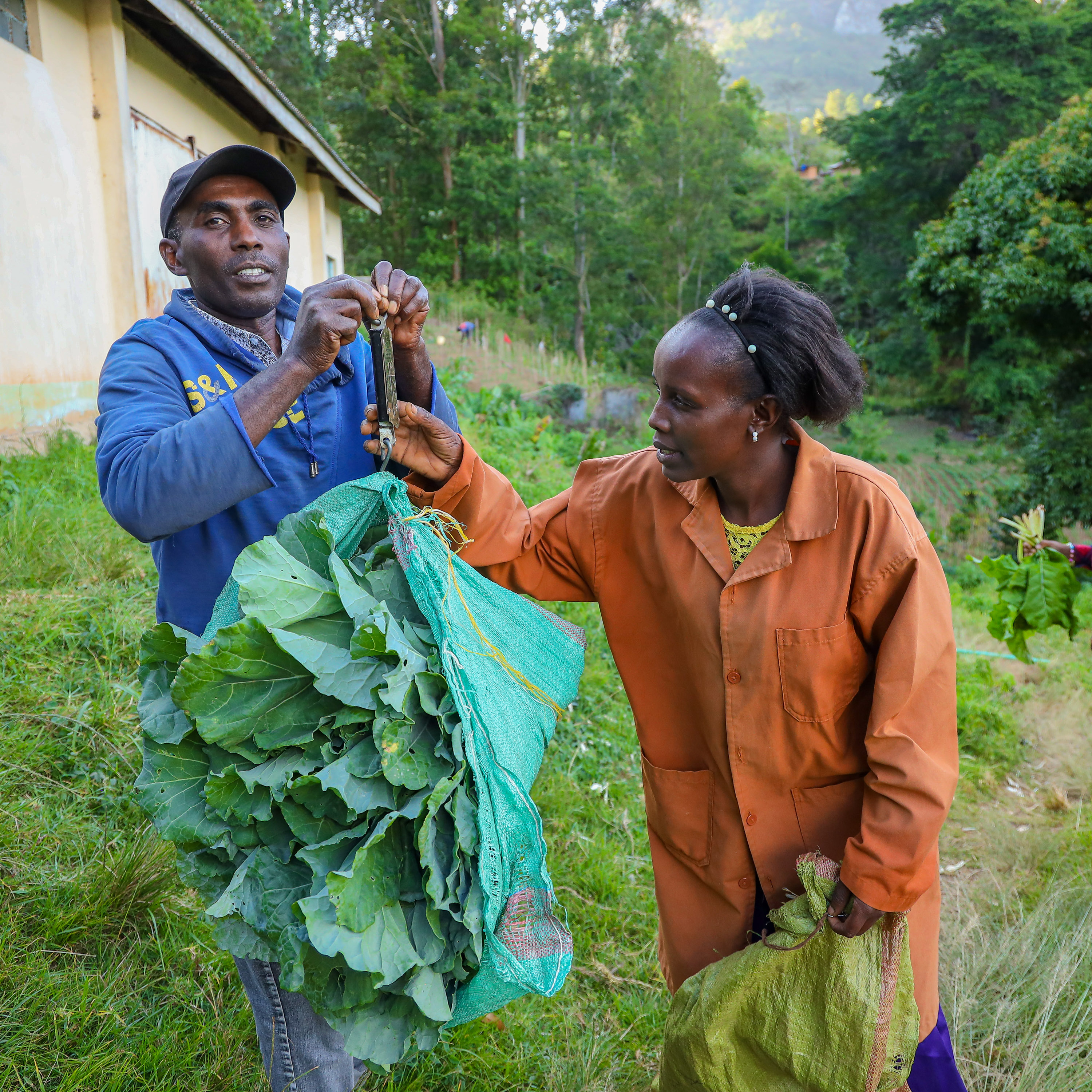
Jedida Mesi weighs produce before selling to a community member.
Looking ahead, Jedida says the group aims to create employment opportunities for more youth, establish a grocery store to serve underserved areas, expand crop production through additional greenhouses, and continue environmental restoration efforts. Central to this vision is protecting the Mwasoko River, ensuring it continues to support communities and ecosystems downstream. Through continued tree planting, water source protection, and climate-smart enterprises, the group is showing how youth-led action can turn environmental challenges into pathways for sustainable development.
About the TUI Wildlife Programme in Kenya
The greenhouse farming initiative is part of a broader effort supported by the TUI Care Foundation and led by AWF, in collaboration with the Taita Taveta Wildlife Conservancies Association (TTWCA).
The three-year project, titled “Creating Value for Wildlife and People in the Tsavo Landscape,” is strengthening communities across Taita Taveta County by enhancing farming systems to boost food security and well-being, improving water infrastructure for wildlife, livestock, and households, as well as equipping local communities to diversify tourism products and generate revenue through a tourism circuit.
By integrating conservation with sustainable livelihoods, the project provides practical pathways for communities to build resilience and protect their natural resources.