Meet Umuhoza Aline: The Quiet Strength Protecting Rwanda’s Wild Frontlines
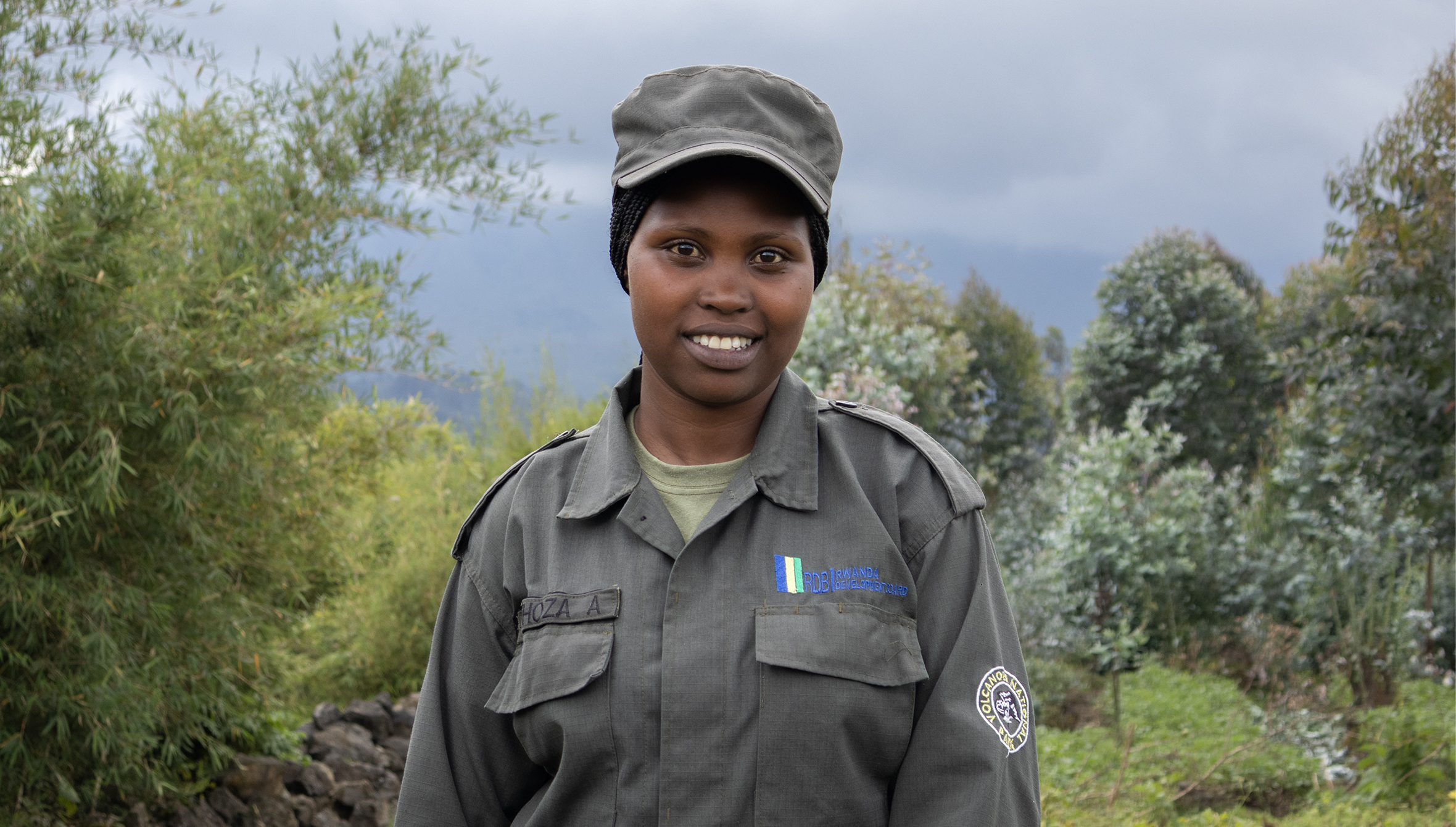
Meet Umuhoza Aline, a Community Eco-Guard serving in Rwanda’s Volcanoes landscape.
Every morning at 6:00 a.m., Umuhoza Aline arrives at the edge of Volcanoes National Park in Kinigi, Rwanda, where the forest meets surrounding communities, and every day begins with uncertainty. Before patrols formally start, she is already observing the landscape, reading signs of wildlife movement, sharing early field observations, and preparing for situations that cannot be predicted.
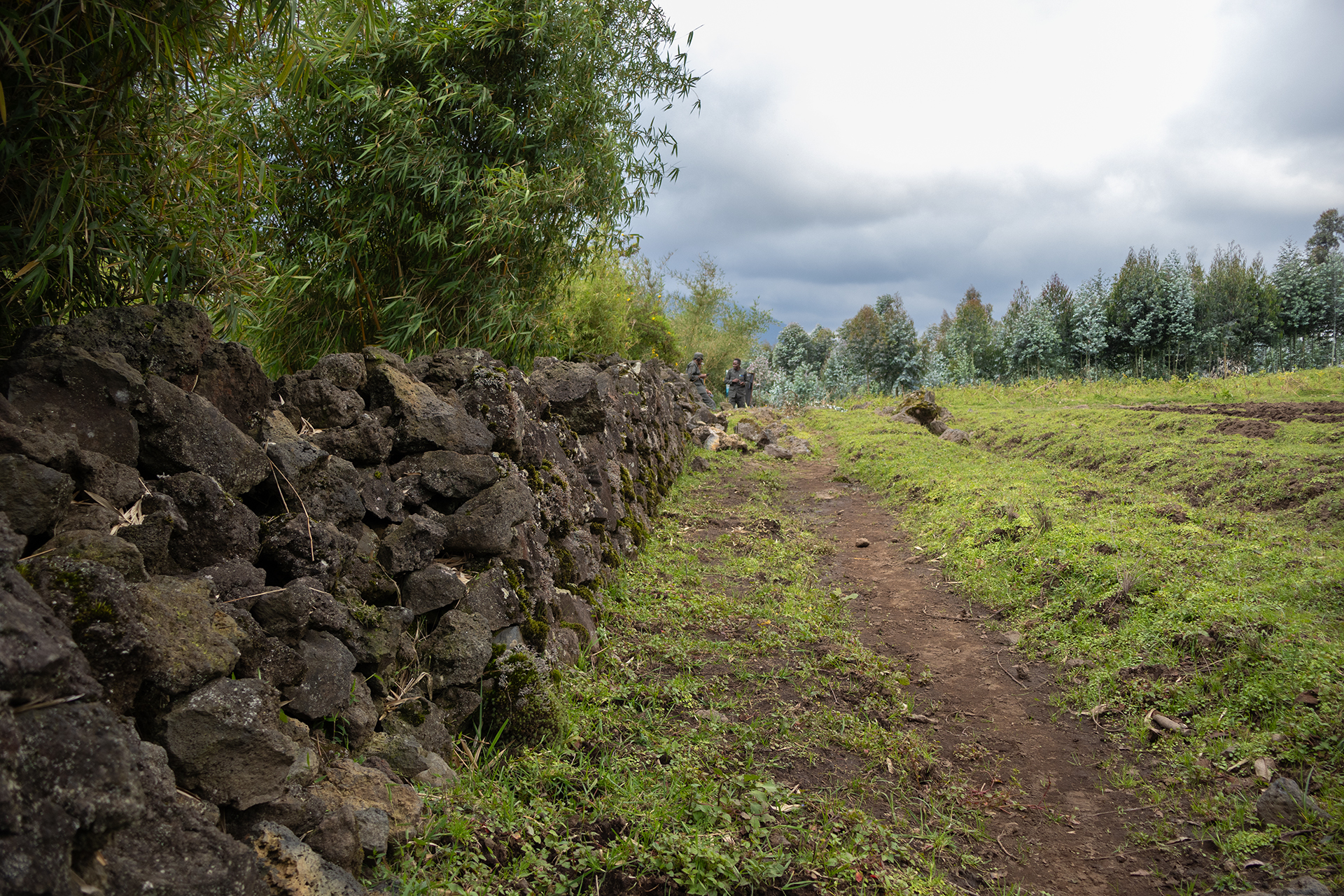
The boundary wall of Volcanoes National Park, marking and protecting one of Rwanda’s most vital conservation landscapes.
Her role as a Community Eco-Guard is defined not by routine, but by decisive action in critical moments. “What I find most challenging is when animals leave the park, especially during busy hours when not all rangers are immediately available. We step in quickly and carefully guide them back, ensuring safety for both wildlife and nearby communities,” she explains. In such moments, speed, judgment, and coordination matter as much as physical presence.
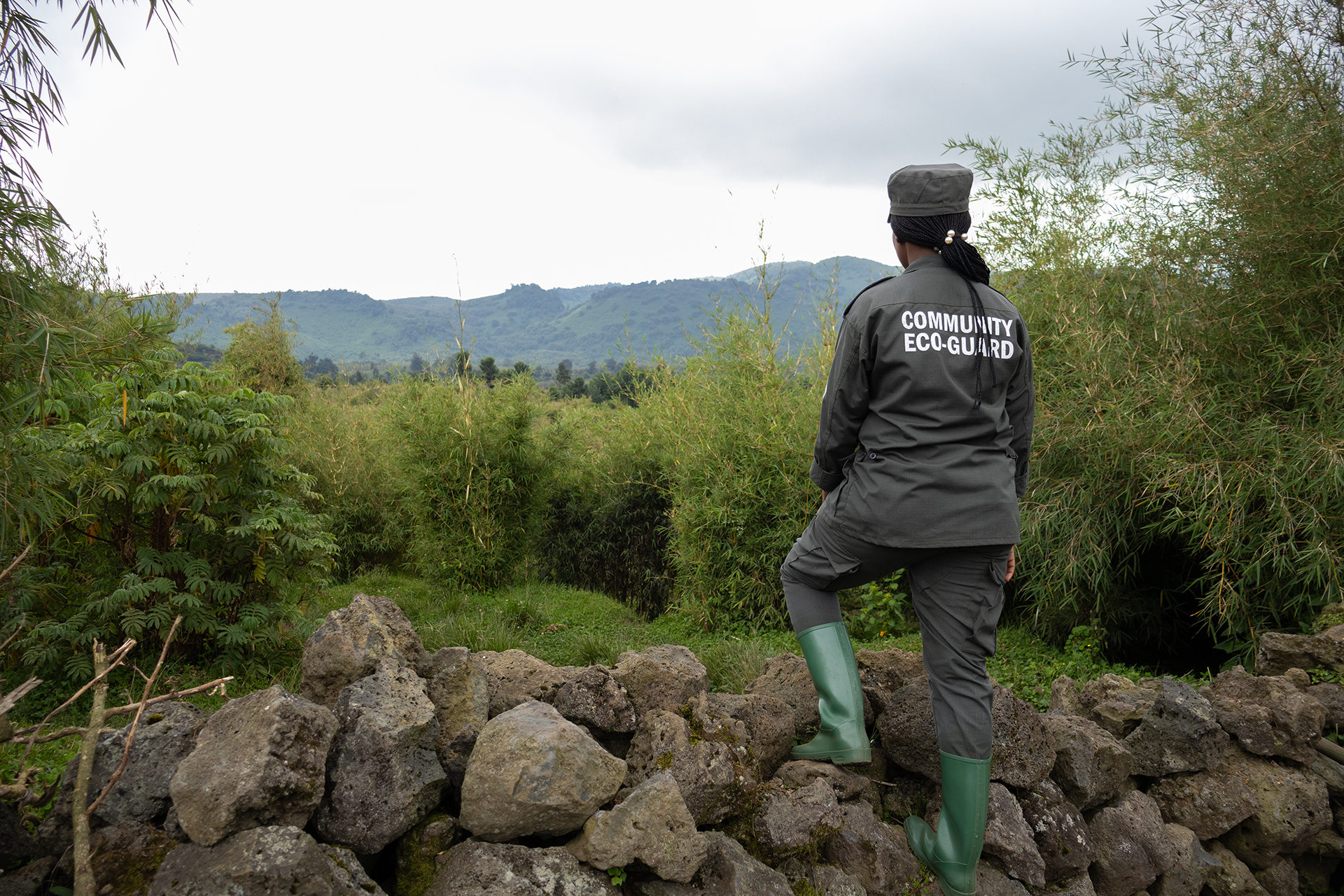
Umuhoza Aline on duty at the Volcanoes National Park boundary.
Aline also operates at the frontline of anti-poaching efforts where risk is constant and decisions carry real consequences. On one occasion, she encountered a poacher and acted immediately to secure the situation before escalation. On another, after tracking a suspect over several days, she and her team chose a coordinated approach with security agencies instead of immediate confrontation, ensuring both safety and due process.
Not all interventions involve force or strategy; some require improvisation. She recalls a night when gorillas moved outside the park around 8:00 p.m. With no specialized equipment, the team used phone flashlights to guide them safely back into the forest. “We did everything we could, and they calmly returned,” she says.
Her effectiveness is strengthened by deep knowledge of terrain and community dynamics, allowing her to anticipate risks and prevent conflict before it occurs. Over time, she has seen a reduction in poaching and illegal activities—a change she attributes to consistent field presence and teamwork.
“What makes me most proud is seeing how our efforts are protecting and restoring the park. Being entrusted with this uniform means responsibility and hope for future generations,” she reflects.
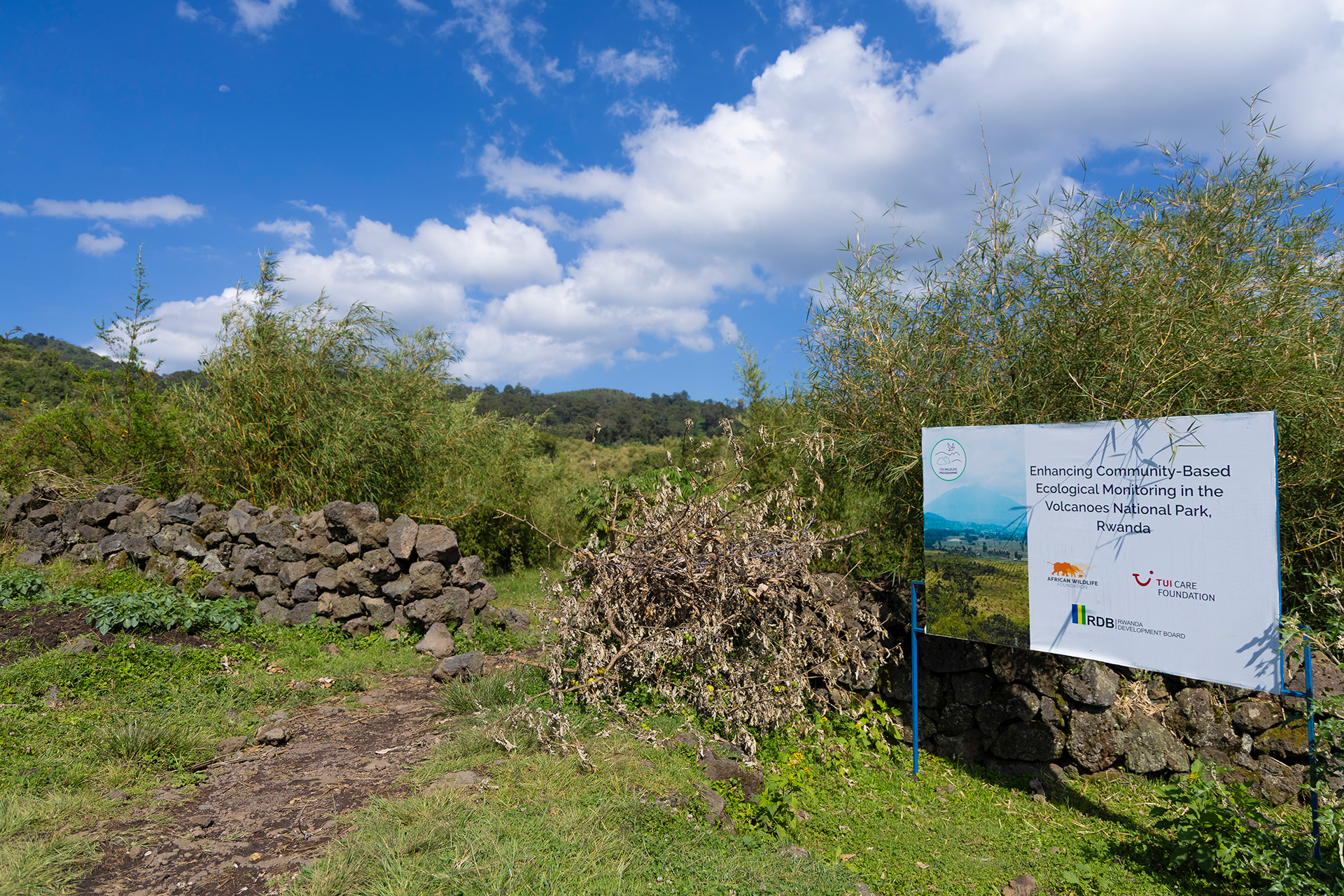
Project signage installed within the Volcanoes National Park landscape, marking ongoing conservation efforts in the area.
Her work is supported through the TUI Wildlife Programme, funded by the TUI Care Foundation and implemented by the African Wildlife Foundation (AWF) in partnership with the Rwanda Development Board (RDB), strengthening conservation capacity across the Volcanoes National Park landscape.