Nsembe Balombo’s Journey: Investing in Communities to Build Resilience and Protect Ecosystems in the DRC
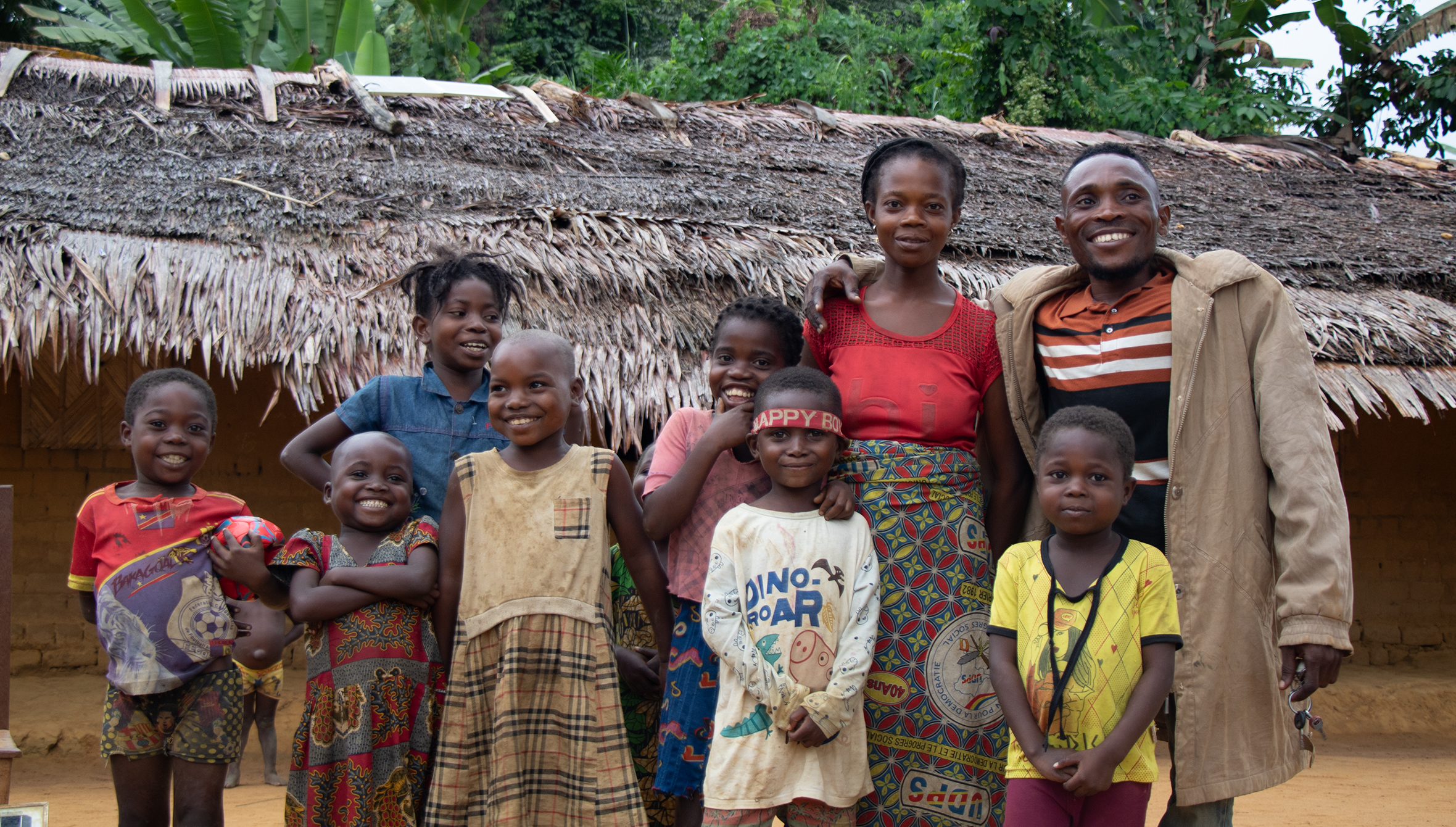
Nsembe Balombo Guy with his family and nephews in front of his home, a symbol of newfound stability and empowerment.
In the Maringa-Lopori-Wamba landscape of the Democratic Republic of the Congo, communities and the ecosystems are closely linked. This biodiverse landscape supports a rich variety of wildlife while providing essential resources and livelihoods for the people who call it home.
For generations, communities living within this landscape have depended on the forest for their daily needs. However, limited economic opportunities have often made it challenging for households to build stable livelihoods while reducing pressure on the natural resources that sustain them.
It is within this landscape that the story of Nsembe Balombo unfolds—a story of opportunity, resilience, and how investing in people can create lasting change.
From a Small Business to a Growing Opportunity
Every month, Nsembe travels by motorcycle from Ilima village to Boende and Bumba to purchase goods for his business. Carefully secured onto his bike are sacks of food items, clothing, and pharmaceuticals—products that now provide a more reliable source of income for his family.
But this journey represents a transformation.
Three years ago, Nsembe, a 35-year-old father of five, was running a small trading business with limited capital and uncertain returns. Like many households in the area, he was searching for ways to build a more secure future.
A turning point came in May 2023, when the African Wildlife Foundation (AWF) launched a micro-grant program supporting 80 households in the landscape. The initiative aimed to create sustainable economic opportunities, strengthen community resilience, and reduce pressure on natural resources.
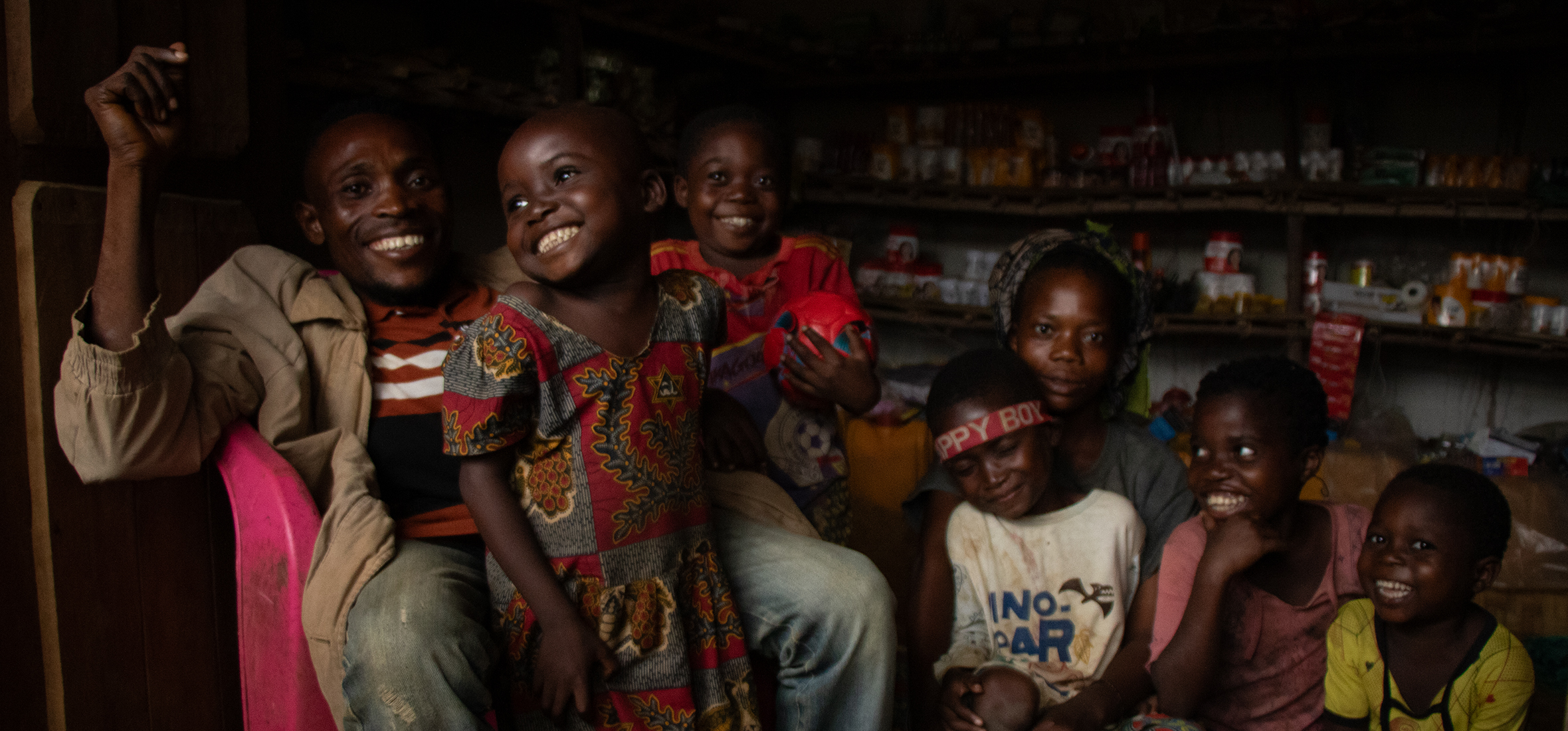
Nsembe Balombo Guy in his shop, surrounded by the joyful smiles of his family in Ilima village.
Nsembe was among the beneficiaries. Together with two other community members, he received financial support alongside training in business management, planning, and decision-making.
“Before, I was just getting by. Today, I have a solid business and a clear future thanks to AWF,” he says.
Building a Sustainable Livelihood
With new skills and support, Nsembe began transforming his business.
He started purchasing goods in bulk from Bumba and Boende, creating regular supply cycles once or twice a month, and expanding the range of products he sells. Over time, his small trading business became a more structured and reliable enterprise.
Three years later, his capital increased fivefold. His business is now stable and diversified, and his income is more predictable.
The impact extends beyond his business. His family now has regular meals, access to healthcare, and improved opportunities for his children, with four of them attending school.
For Nsembe, the lesson is simple: “Spending helps you survive today. Diversifying helps you build a future.”
A Wider Transformation Across Communities
Nsembe’s story reflects a broader shift taking place across the Maringa-Lopori-Wamba landscape.
Through similar livelihood support, other community members have strengthened their businesses and improved their families’ wellbeing.
Yango Bonsonga Thithi, 42, a father of 10, has tripled his capital through a fuel business that supports mobility in a region where motorcycles are often the only reliable means of transport.
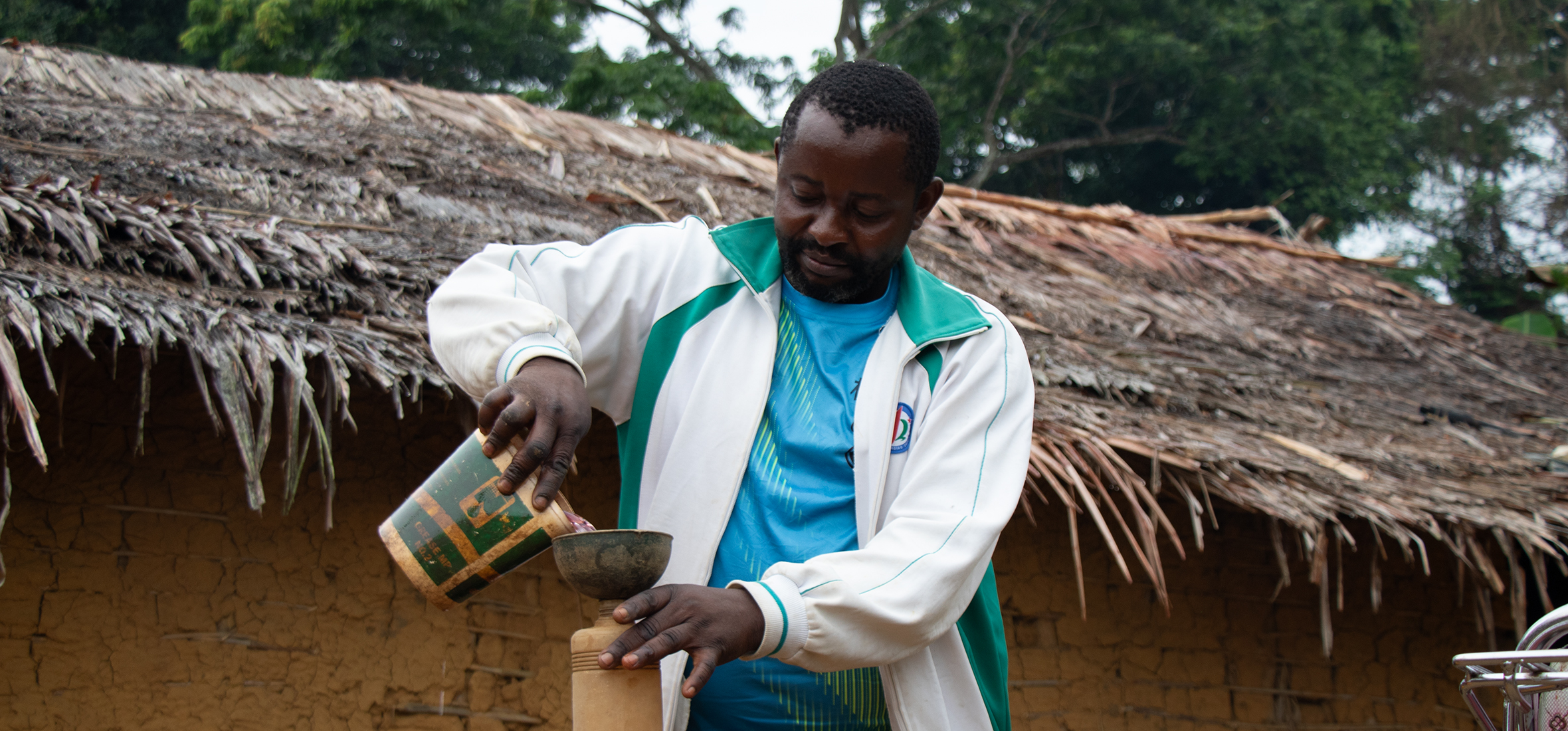
Yango Bonsonga Thithi carefully measures fuel for a customer.
Bokeso Ekongo Marceline, 63, has doubled her capital through a small business that enables her to support her sister and her sister’s children.
Bokumbe Lokuli Clément, 37, a father of 12, now meets healthcare and education costs for his family through his pharmaceutical trading activity.
Together, their stories reflect a shared transformation of stronger livelihoods, greater stability, and renewed hope.
As Marceline explains, “Before, everything we earned slipped away. Today, even with little, we can save and build for tomorrow.”
When Communities Thrive, Conservation Thrives
When sustainable economic opportunities are limited, reliance on activities such as hunting and unsustainable resource use can increase pressure on biodiversity and ecosystems.
However, when communities have stronger livelihoods, they are better positioned to become active stewards of the landscapes they depend on. As Julien Nkono, Landscape Manager, explains, “Conservation does not start with wildlife. It starts with people.”
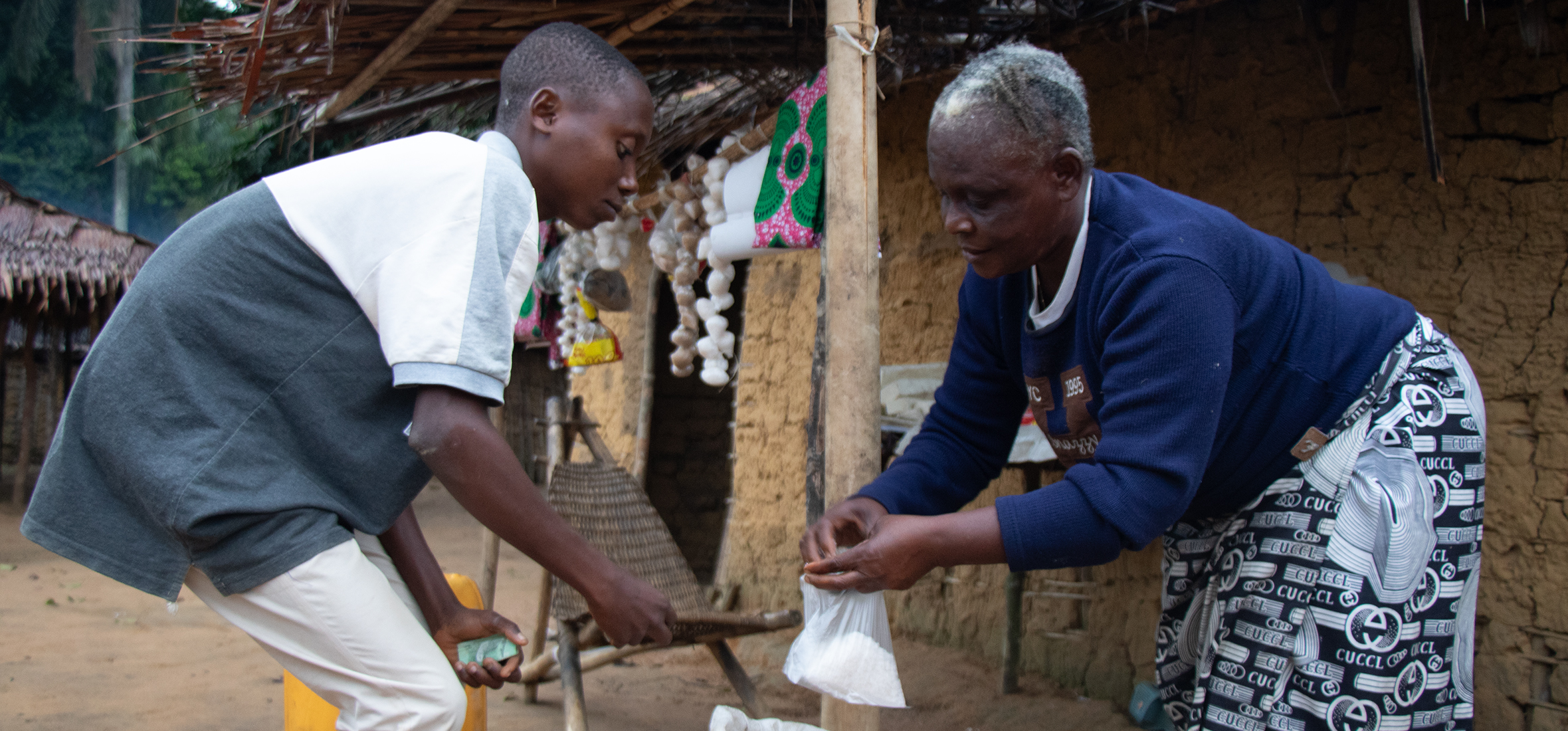
Bokeso Ekongo Marceline, a beneficiary, makes a final sale of salt to a customer before nightfall.
Although the micro-grants—approximately US $300 shared among three beneficiaries—may appear modest, their impact extends far beyond financial support. They are helping families build resilience, strengthening community-led conservation efforts, and contributing to the protection of critical ecosystems.
Today, every journey Nsembe makes by motorcycle to Boende or Bumba represents more than a business trip; it represents a future built on opportunity, resilience, and the belief that when communities thrive, conservation thrives too.