Nyamabande’s Forest Guardians: Women Keeping Indigenous Wisdom Alive
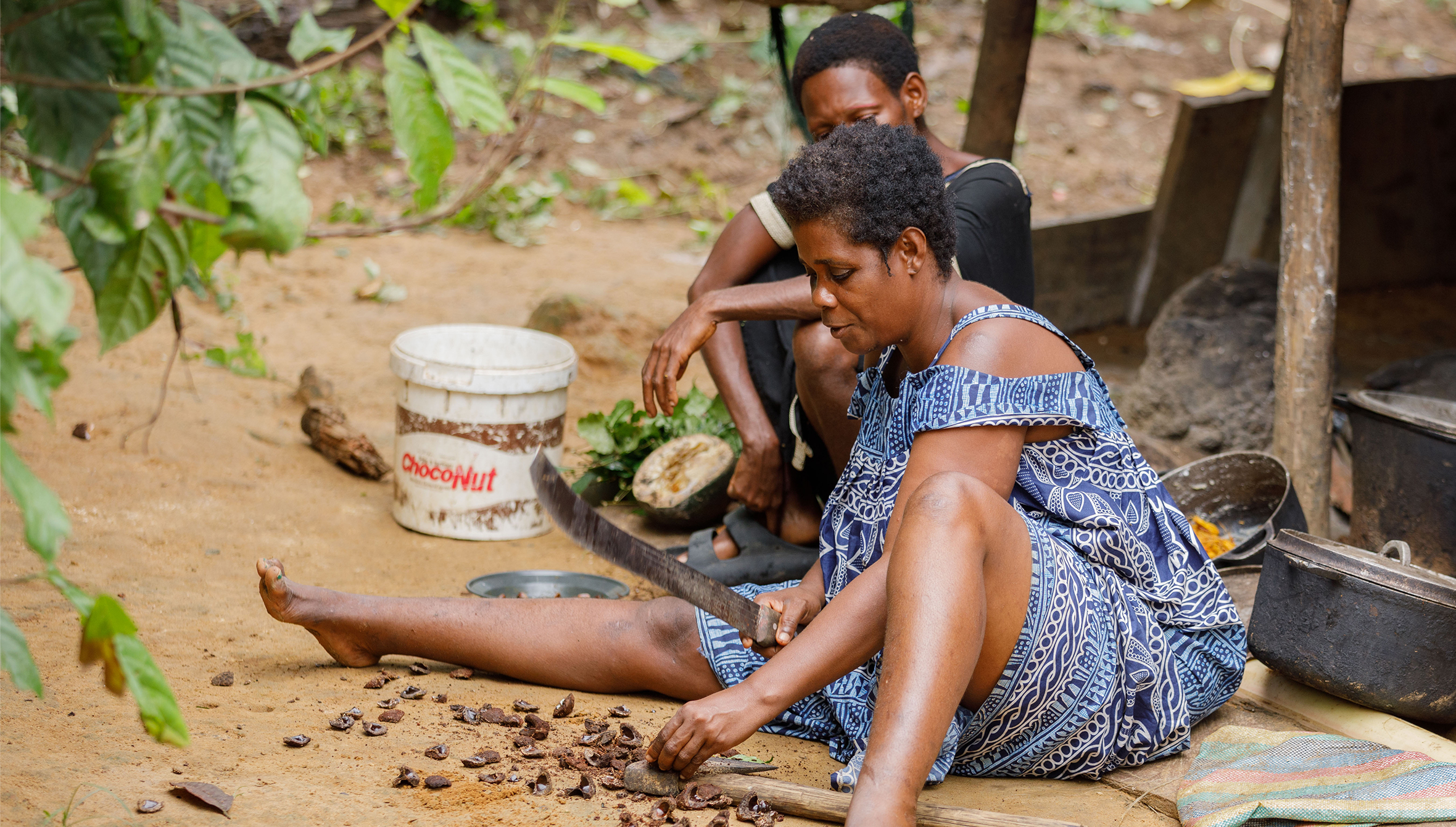
The forest serves as a source of food and medicine to the Indigenous community in Nyamabande, Campo Ma'an landscape, South Cameroon. © Vanilla Boi Studios
For Mama Antoinette, the forest has always been more than a source of livelihood. It provides food, medicine, household materials, and knowledge that has long sustained Bagyeli families in Nyamabande, a riparian community bordering Campo Ma'an National Park in Cameroon's South Region.
Today, she and her daughter, Mvasia Caroline, are ensuring that this knowledge continues to shape the next generation. Their story reflects a lesson the African Wildlife Foundation (AWF) continues to see across its conservation landscapes: protecting forests also means protecting the knowledge of the people who have lived alongside them for generations.
A Forest-Based Way of Life
"Everything we use comes from the forest," says Mama Antoinette.
Like many Bagyeli women, she relies on forest resources to make baskets from rattan, brooms from raffia palm fiber, and fishing nets woven from forest vines. These everyday household items are crafted using techniques passed down through generations, with each material harvested carefully to ensure the forest continues to provide for future generations.
For the Bagyeli, one of Cameroon's Indigenous communities, the forest remains central to daily life. Beyond providing food and household materials, it offers medicinal plants, income opportunities, and a deep cultural connection that continues to shape community life.
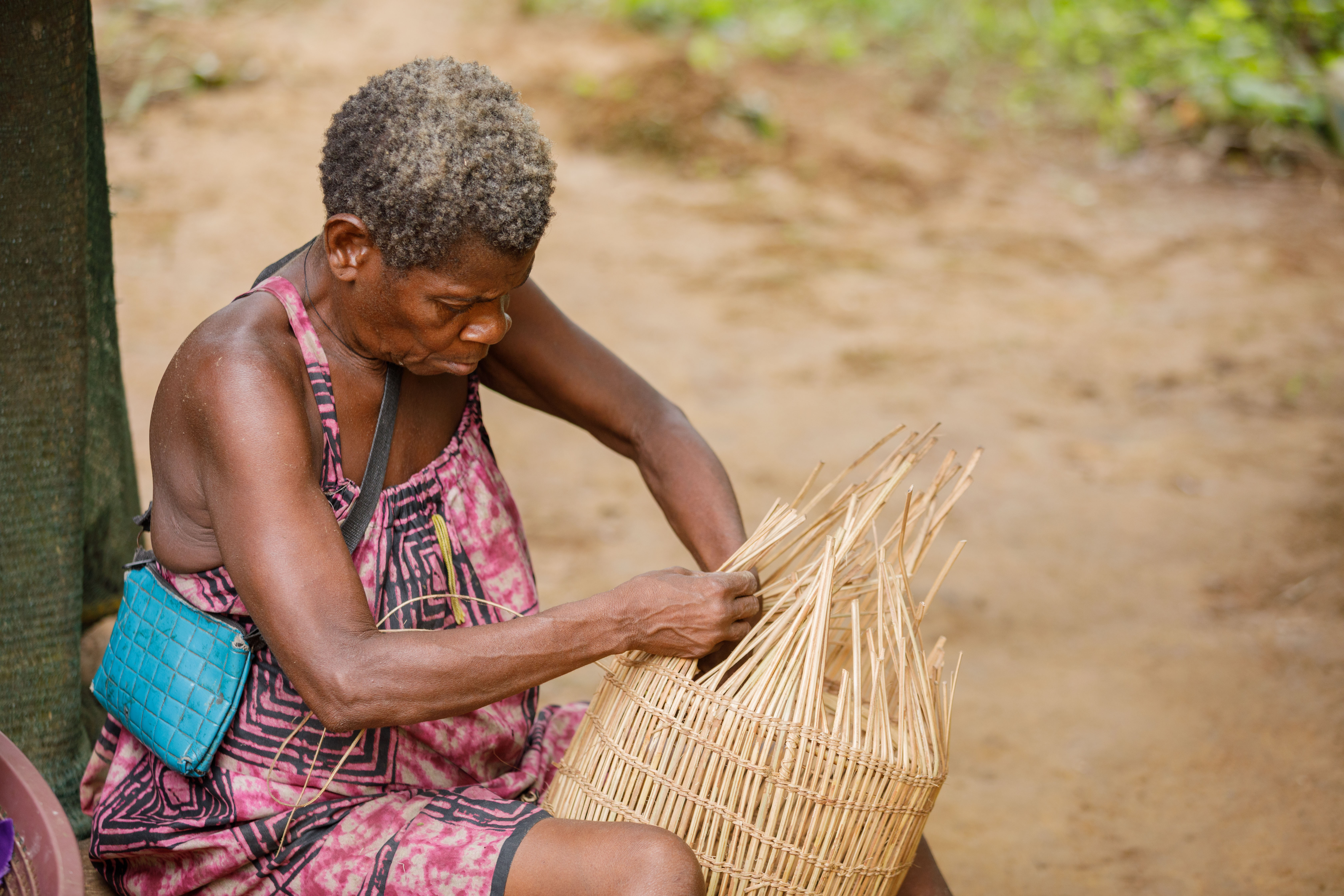
Mama Antoinette sits in front of her home weaving a basket, which will be used for fishing and to transport food. © Vanilla Boi Studios
Passing Knowledge to the Next Generation
Several times each week, Caroline takes young girls from Nyamabande into the forest, introducing them to the plants and resources that have supported their community for generations.
She teaches them how to identify and sustainably harvest njansang, whose kernels are widely used in traditional cooking and sold in local markets. They also learn about the moabi tree, valued for its medicinal properties and oil, and other plants traditionally used to treat common ailments.
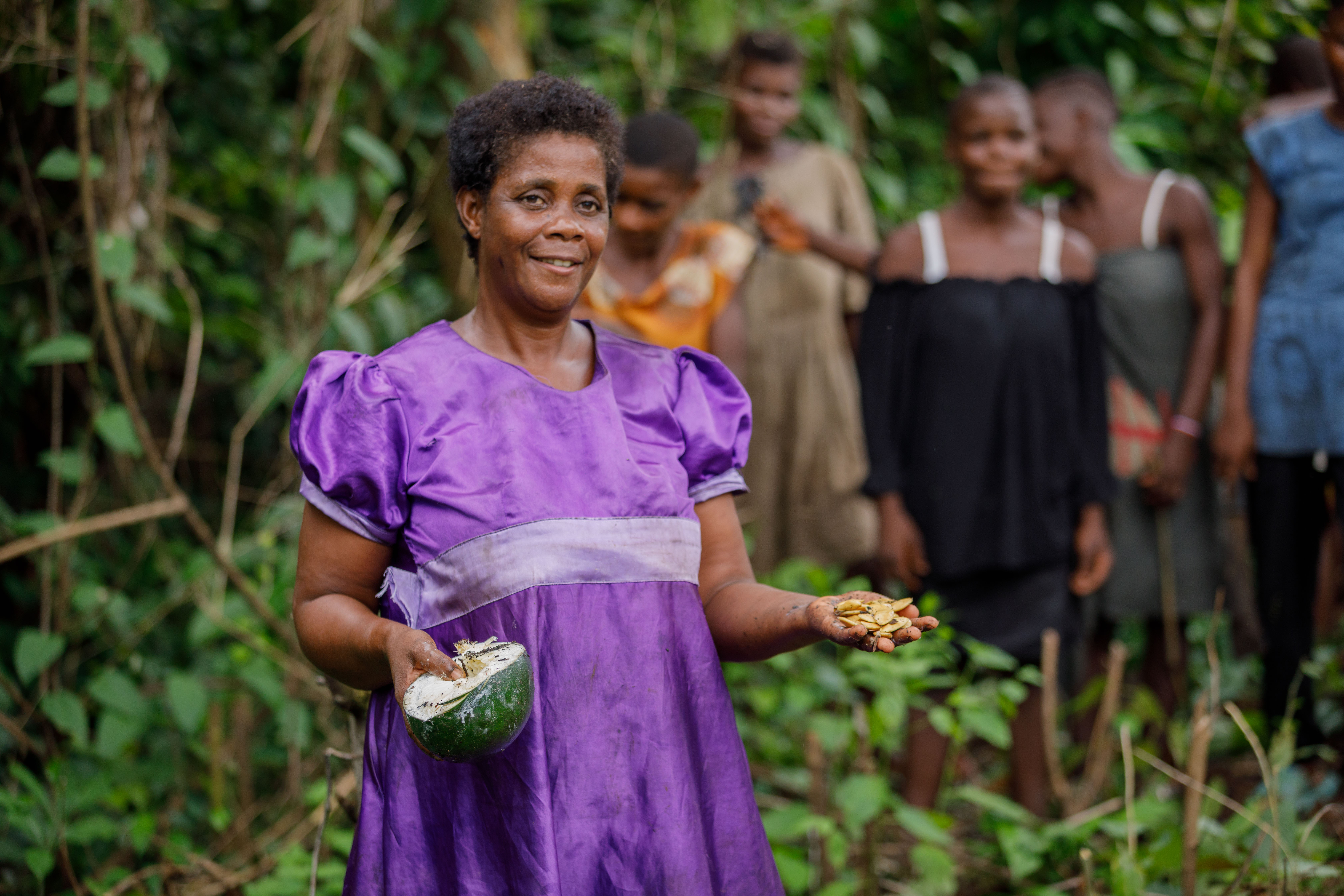
Caroline teaches her local community about sustainable harvesting. © Vanilla Boi Studios
"If our children don't learn this now, who will teach the next generation?" Caroline asks.
Each lesson goes beyond identifying species. Caroline explains when resources should be harvested, how to collect them without damaging the forest, and why protecting these ecosystems is essential for future generations.
For her, passing on this knowledge is as important as the knowledge itself.
Strengthening Traditional Knowledge
In 2019, AWF supported communities across the Campo Ma'an landscape, including Nyamabande, with training on the sustainable harvesting, processing, and commercialization of non-timber forest products (NTFPs).
For Caroline and other women, the training complemented traditional knowledge with practical techniques that improved product quality and strengthened sustainable forest management. Participants learned improved methods for processing njansang, extracting moabi oil, and handling materials such as rattan and raffia to reduce waste while increasing their value.
"The training helped us improve what we already knew," Caroline explains.
Today, those skills continue to support household livelihoods, with families processing forest products for home use and local markets while ensuring resources are harvested responsibly.
Conservation Begins with Communities
Across communities surrounding Campo Ma'an National Park, non-timber forest products remain essential for food security, traditional medicine, and household income. Forest materials are transformed into products families use every day, while medicinal plants continue to support community healthcare.
"The forest has always taken care of us, so we must also take care of it," Caroline says.
Yet this knowledge is becoming increasingly vulnerable. Changing land use, restricted access to ancestral forests, and the gradual loss of intergenerational learning threaten practices that have sustained Indigenous communities for generations.
Through its work in Campo Ma'an, AWF is helping strengthen community capacity to sustainably manage forest resources while recognizing Indigenous knowledge as an essential part of conservation. By supporting both traditional practices and improved livelihood opportunities, the organization is helping communities to continue protecting the ecosystems they have long depended on.
A Vision for the Future
For Mama Antoinette, Caroline, and Caroline's daughter, Marie, learning is a continuous journey that spans generations.
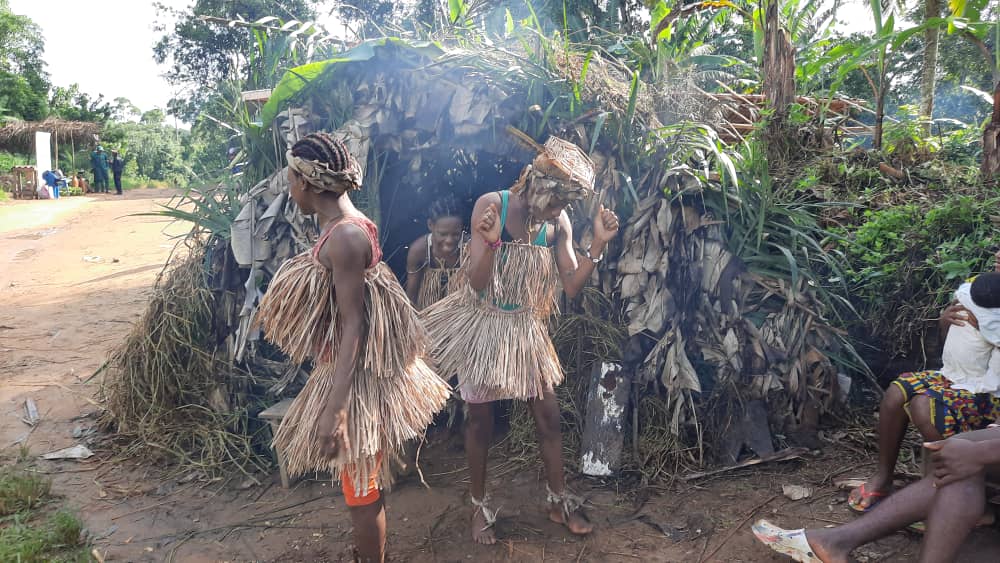
For the Nyamabande Indigenous community, the forest is a lifeline that keeps their customs and traditions alive. © AWF
During one of their visits to the forest, Marie asked her mother how she had learned so much about the plants around them.
"Someone showed me," Caroline replied. "Your grandmother taught me, and before her, someone taught your grandmother."
She smiled before adding, "And AWF showed me some things too. Now I'm showing you."
That simple exchange captures the importance of preserving Indigenous knowledge alongside conservation efforts.
Across the Campo Ma'an landscape, women like Mama Antoinette and Caroline are doing more than passing down practical skills. They are ensuring that the knowledge connecting communities to their forests continues to thrive, helping protect both cultural heritage and one of Cameroon's most important forest ecosystems for generations to come.