Partner Spotlight: AWF and KKAKKA Community Wildlife Association in Kidepo, Uganda
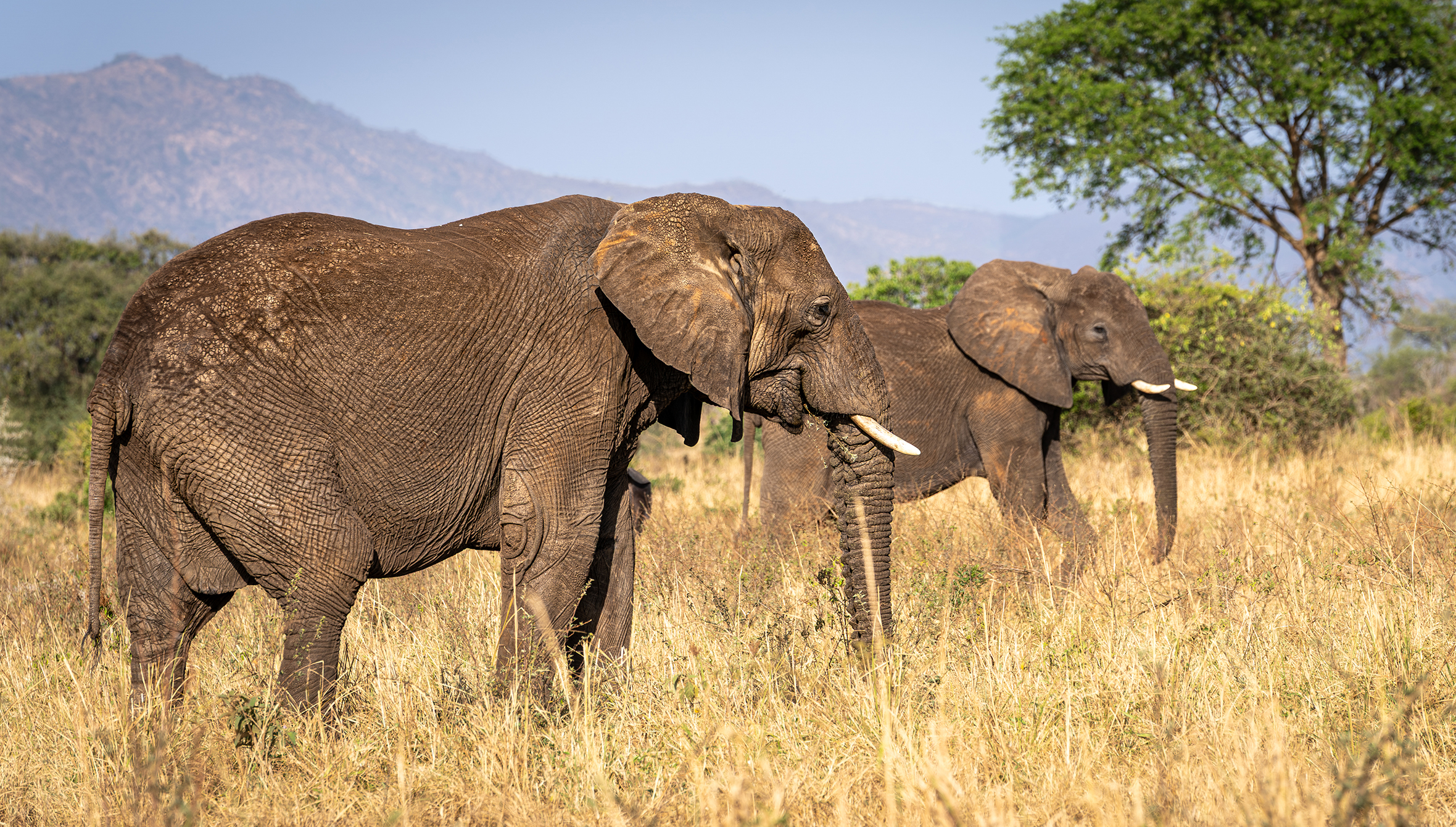
A pair of elephants roam the Kidepo Valley.
Across Africa, the Africa Wildlife Foundation (AWF) works with local partners to advance conservation that is locally led, inclusive and responsive to community priorities. In Kidepo, these partnerships strengthen community participation, livelihoods, and coexistence between people and wildlife.
AWF recognises that conservation success is built through meaningful partnerships and empowered communities. Local organisations bring a deep understanding of community needs, priorities, and local realities, helping to shape conservation approaches that are practical and responsive.
In the Kidepo Valley Conservation Area of northeastern Uganda, this is reflected in AWF’s longstanding partnership with the Karenga Kaabong Abim Kotido Kitgum Agago (KKAKKA) Community Wildlife Association (CWA). Working across six districts, KKAKKA CWA brings extensive local knowledge, strong community connections, and trust, complementing AWF’s extensive technical expertise. Together, the two organisations are strengthening community-led conservation and supporting practical approaches to human-wildlife coexistence.
In this Q&A, Abach Peter, administrator of KKAKKA CWA, shares his perspective on the AWF-KKAKKA partnership: its role in strengthening community-led conservation and human-wildlife coexistence, and how these efforts are contributing to the well-being of communities across the Kidepo landscape, and the lessons emerging from this work.
1. How does KKAKKA CWA work with communities to strengthen conservation across the Kidepo landscape?
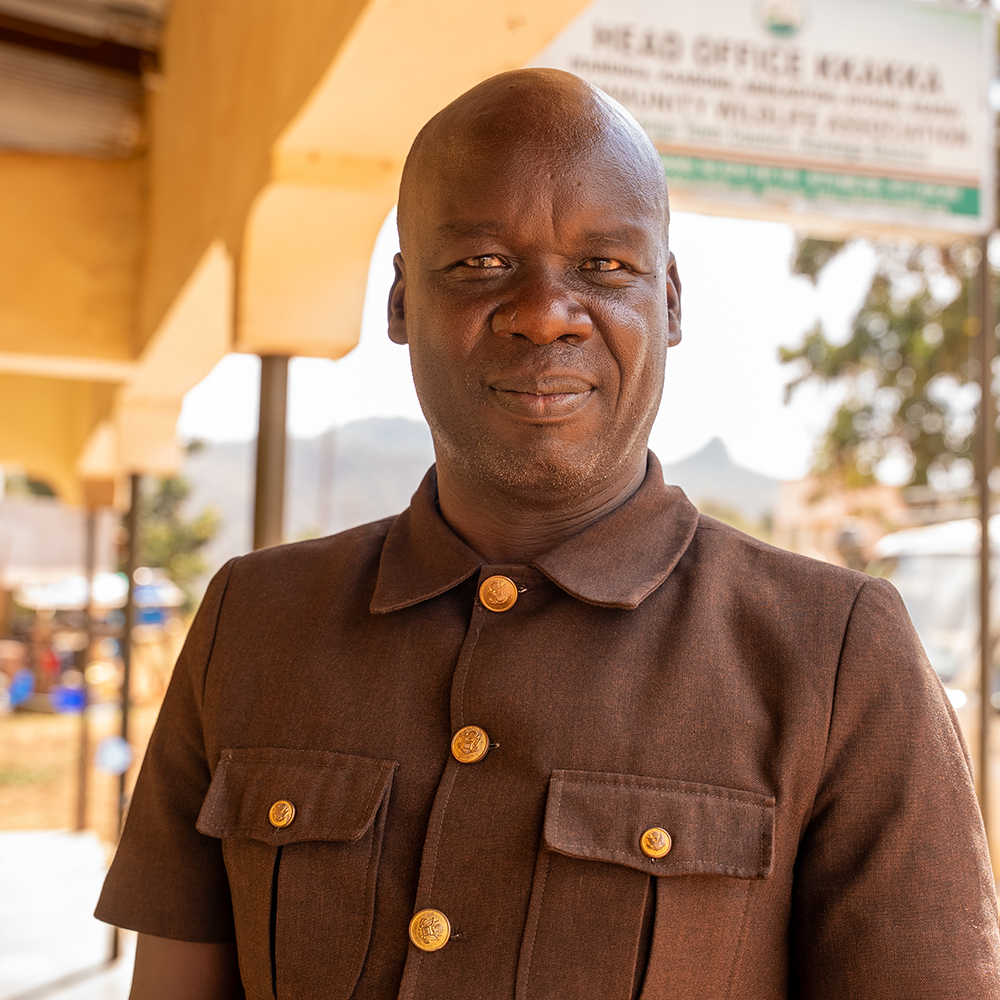
Abach Peter, Administrator of the KKAKKA Community Wildlife Association, poses for a photo in the Kidepo Landscape.
KKAKKA CWA is a community-led conservation organisation that brings together conservation promoters and community members across six districts in Uganda: Karenga, Kaabong, Abim, Kotido, Kitgum and Agago in Uganda. Our mandate is to ensure that conservation benefits people, and that people support conservation.
Established in 2009, KKAKKA CWA became a not-for-profit organisation in 2021, driven by communities seeking a stronger voice in decisions affecting their lives and the wildlife they live alongside. We, the community, were tired of being neighbours to Kidepo Valley National Park and other key protected areas yet invisible in decisions about it.
We receive funding through the Sport Hunting Program in the Karenga Community Wildlife Management Area. The portion allocated to communities is channeled to KKAKKA CWA to implement agreed community priorities. With technical support from AWF, KKAKKA CWA consults communities, develops project plans and budgets, and submits them through the required governance structures for approval.
Since 2019, KKAKKA CWA and AWF have worked together in the Kidepo Valley Conservation Area, focused on strengthening community-led conservation and promoting coexistence. This collaboration has managed more than UGX 1.9 billion in community investments in partnership with the Government of Uganda, including the Ministry of Tourism, Wildlife and Antiquities and Uganda Wildlife Authority (UWA)- as well as the private sector through Uganda Wildlife Safaris under the Sport Hunting Program.
Through this work, we ensure that wildlife contributes to community well-being through initiatives that strengthen livelihoods, education, health, food security, culture, tourism, and community representation. For us, conservation must improve human life, because when communities benefit from conservation, they have a stronger stake in protecting it.
2. How has the AWF-KKAKKA partnership strengthened community-led conservation in the Kidepo landscape and institutional capacity?
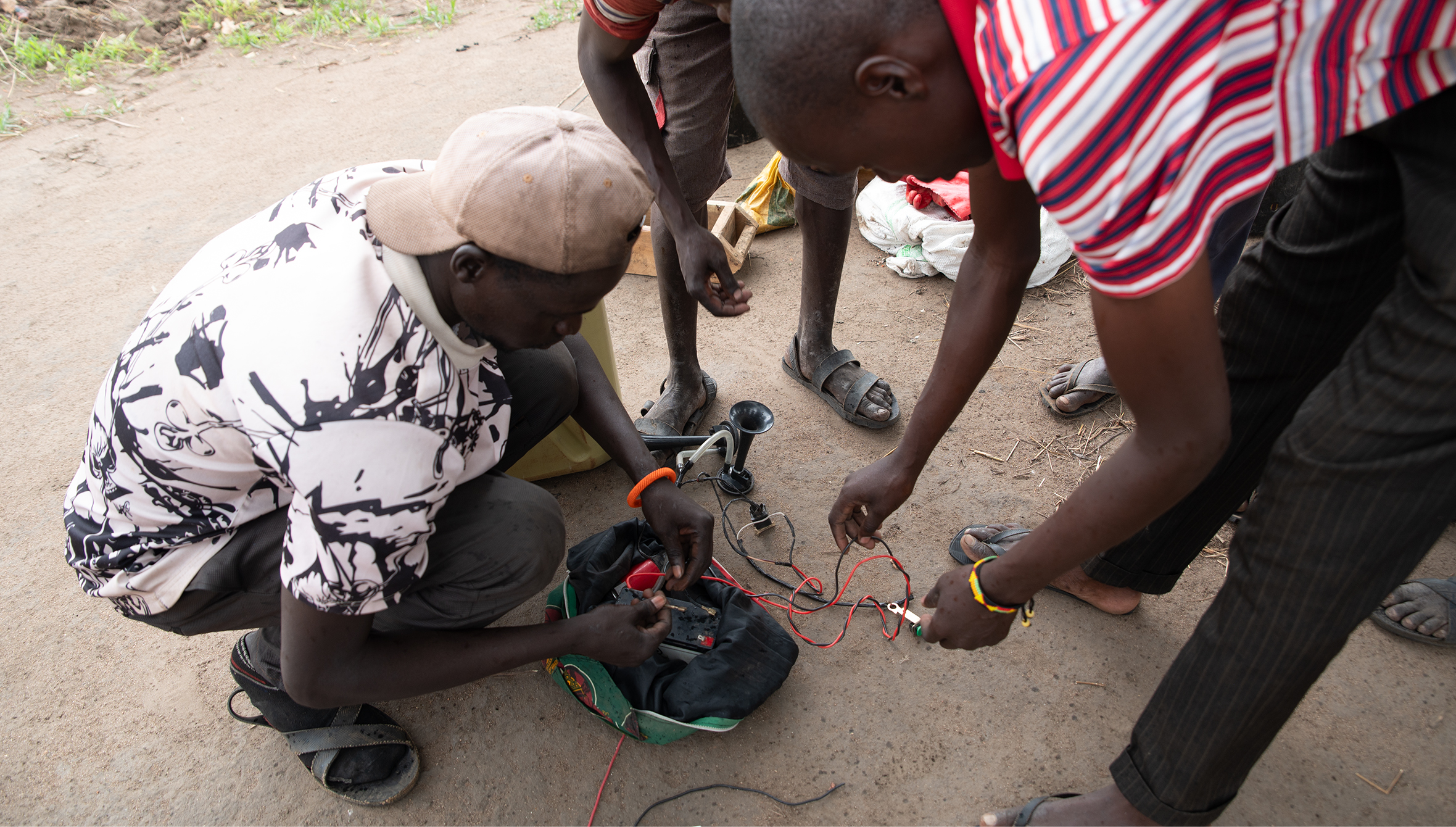
Community wildlife scouts assemble a portable electric horn used to produce loud sounds which deter elephants from entering nearby farms.
KKAKKA CWA works with a network of more than 550 community wildlife scouts across the landscape. Through donor-funded projects, including support from the Canning Foundation, AWF and KKAKKA CWA have trained and equipped 80 of these scouts in the Lobalangit and Lokori, sub-counties of Karenga District. The scouts monitor wildlife movements and alert communities when wildlife approaches farms or other areas where people may be at risk.
The collaboration has also provided non-lethal human-wildlife conflict mitigation tools, including Roman candles, chilli fences, and electric horns, which scouts use alongside UWA rangers to help reduce crop damage. In addition, the partnership has supported scouts to grow chilli and facilitated the purchase of their harvest, providing both a crop deterrent and an income opportunity.
The partnership has also enabled learning and exchange visits to community conservancies in Kenya and Uganda, giving KKAKKA CWA members exposure to approaches in tourism, governance and benefit sharing. Lessons from these exchanges are now helping to inform the work within the Kidepo landscape.
At the institutional level, AWF has supported KKAKKA CWA to strengthen its governance, financial management, proposal development, and strategic planning. AWF has also supported the rehabilitation of boreholes in selected communities, improving access to safe and clean water while reducing pressure on water resources shared by people and wildlife.
For us, AWF has treated KKAKKA CWA as a partner, not simply as a recipient. They invested in our people, our habitats, and our institutional systems.
3. What results and lessons have emerged from the AWF-KKAKKA efforts to strengthen human-wildlife coexistence?
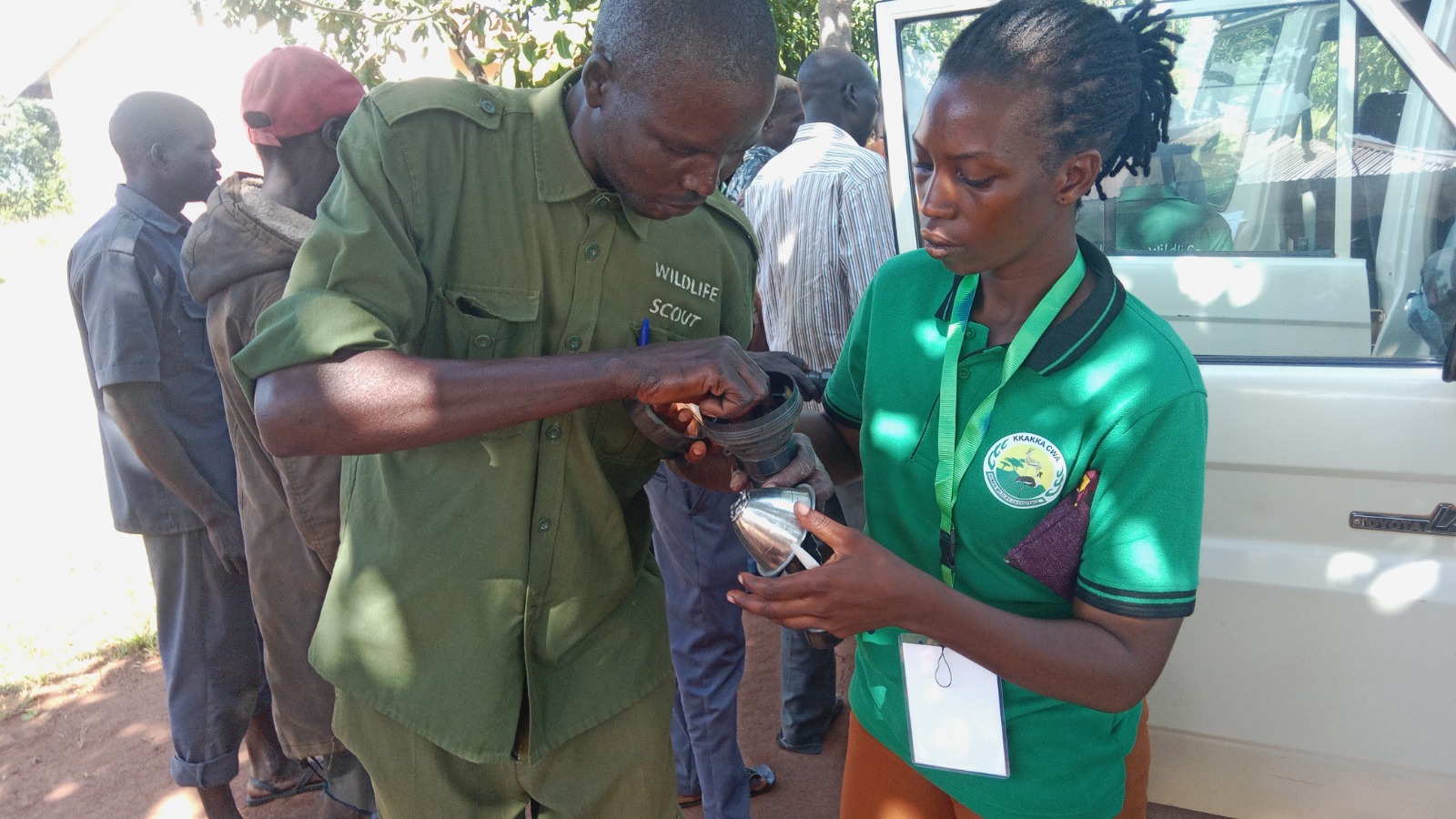
KKAKKA Community Wildlife Association Programmes Manager Maraika Amabile inspects equipment used by community wildlife scouts.
Human-wildlife conflict remains a serious challenge across the Kidepo landscape, with elephants and buffaloes responsible for most crop raids. Crop raiding affects communities in all six districts, with hundreds of gardens destroyed by wildlife and human injuries recorded every month.
Through the partnership with AWF, communities now have greater capacity to monitor wildlife movements, receive early warnings, and respond to incidents through community wildlife scouts. This is complemented by chilli fences, watchtowers, group guarding and a 24-hour reporting system with the UWA.
We are seeing progress where these measures are in place. Losses have gone down, and communities are reporting incidents rather than suffering in silence. However, we are covering only a portion of the conflict hotspots, and the scale of the challenge still exceeds our current resources.
4. What new approaches are you exploring to help communities protect their farms while maintaining wildlife movement?
We are empowering communities to explore different options for protecting their farms. One approach is mobile fencing, where farmers can fence their gardens during the farming season and remove the fencing afterwards.
Another method is block farming, where farmers with land close together bring their gardens into one defined area. Instead of having many scattered gardens, 100 or 200 farmers can farm within a consolidated area that can then be fenced collectively. We are also looking at fencing identified human-wildlife conflict hotspots.
The idea is to protect gardens rather than fence wildlife into protected areas or corridors. Communities need to farm and earn a living, while wildlife also needs space to move. We are working with communities to find solutions that protect their crops while keeping the landscape open for wildlife movement.
5. Looking ahead, how does KKAKKA CWA see its role evolving in strengthening community conservation across the Kidepo landscape?
Looking ahead, we want to strengthen KKAKKA CWA so that we can reach more communities and sustain our work across the landscape. This means strengthening our systems, organisational capacity, and governance, while diversifying our revenue streams as funding sources change.
Through our ongoing work with AWF in ecotourism and livelihood development, we also see opportunities to demonstrate how conservation can contribute to community well-being and create more opportunities for communities to benefit from conservation.
For us, the future of conservation in Kidepo must be one where communities are not on the margins of conservation but are shaping it from shared benefit. We want to see communities taking greater ownership of the landscape, protecting their livelihoods, and creating space for wildlife to thrive. When people benefit, people protect.