Rebecca Lokuli: Teaching for the Forest and the Future in Ilima, DRC
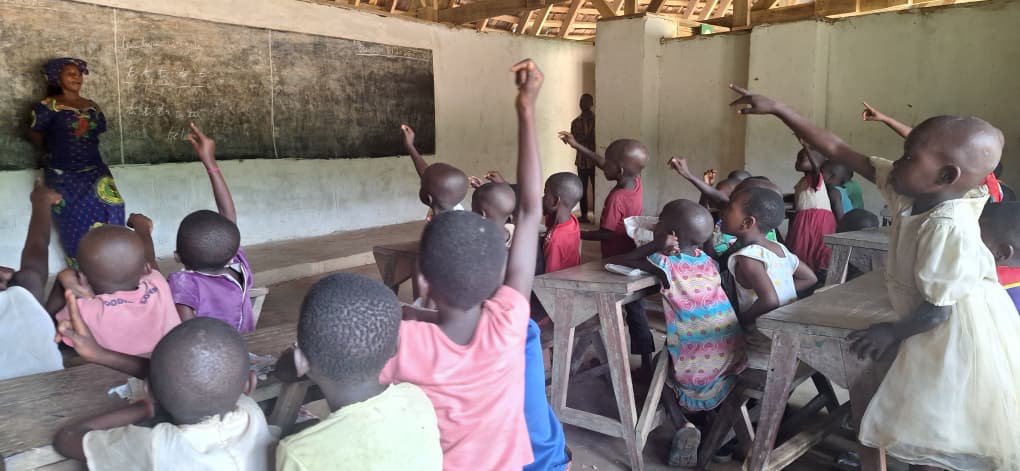
Rebecca Lokuli leads her classroom in the northern DRC.
In Ilima, a remote village in the Democratic Republic of the Congo’s Maringa-Lopori-Wamba landscape, life is shaped by farming, fishing, and the forest that surrounds the community. Many children aspire to become nurses in a region where medical services are scarce. Rebecca chose teaching, and she insists it was a choice, not a constraint.
“My grandparents never had the chance to study. My parents didn’t either. But I must be the one to change things. I must be the one to lift my family out of illiteracy,” Rebecca says.
A School Built with the Community
Rebecca was six years old in 2013 when the African Wildlife Foundation (AWF) partnered with the Ilima community to build Ilima Primary School—expanding access to education while introducing environmental learning.
She first understood what the school could mean at home, listening as her older sister, Niclette Lokuli, told their mother, Anna Itombo, that she had been hired as a teacher there. From behind the house, Rebecca made a vow: “This is my chance. I will study. I will make my family visible,” she vowed.
Niclette enrolled her soon after. Rebecca did well in class, and during school holidays she worked with her mother in the fields and at the market, saving what she could for fees. The plan was simple: stay in school.
Returning to the Classroom—This Time as a Teacher
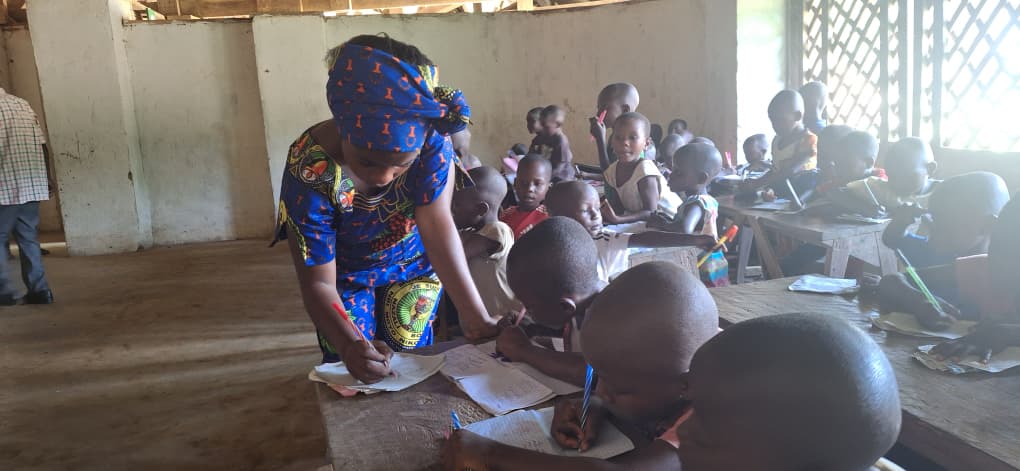
Rebecca Lokuli helping her students.
After completing primary school in Ilima, Rebecca pursued secondary studies at Guide de Likunduamba and earned her state diploma. As she prepared to continue, Niclette, her mentor and support, died.
“I felt as though everything collapsed,” Rebecca recalls. “My dream felt suddenly out of reach.”
Ilima School later opened recruitment after losing a teacher. Six candidates applied—four young men and two young women. Rebecca, then only 20 years old, was selected. She became the youngest teacher in the school’s history and was posted to the same classroom where she once sat as a second grader.
“My first day in that classroom was overwhelming,” she says with a nostalgic smile. “I could see myself again—small, restless, distracted and suddenly, I was the one standing at the front of the room.”
She now saves toward a goal of enrolling at Mbandaka University in four years, while paying for her younger sister’s schooling.
The “five-year break” she experienced—the years she could not continue her studies without Niclette’s financial support—she no longer describes as wasted time. “It was an opportunity,” she says, “to invest in the children of my community until it is my turn to sit on the university benches.”
Lessons That Strengthen Conservation
Ilima School is a conservation school, where environmental clubs teach older pupils about bonobos, forests, and sustainable living. Rebecca has added her own weekly practice—every Monday, she gathers the youngest children, those too little to join the official clubs, for simple conversations about nature. She explains how fallen leaves protect soil, how cutting a tree can destroy a hidden home, and how rivers reflect what people do to them.
The children carry these lessons home. In the courtyard, they call her “Miss Who Explains Everything.” She laughs, leans forward, and repeats the instruction they know by heart: “Go further than me.”
Rebecca sees her work as part of a broader, community-led conservation effort. In Ilima and the broader Maringa-Lopori-Wamba (MLW) landscape, AWF—supported by the Segré Foundation—is working with communities to protect bonobos, a species found only in the Democratic Republic of the Congo.
The project sits within a wildlife corridor linking the Lomako-Yokokala Faunal Reserve and nearby community forests to the larger Luo-Iyondji and Koko-Lopori protected-area complex. In this corridor, AWF previously supported the establishment of community-managed forest concessions, built on shared rules for sustainable resource use.
Today, the Segré Foundation’s support strengthens biodiversity monitoring and reinforces community-based environmental law enforcement.
Rebecca teaches with that same sense of stewardship—education as a pathway to opportunity and responsibility. “My grandparents didn’t study. My parents didn’t study. But I choose teaching so that the children of Ilima never have to choose between the forest and their future. I want them to understand both.”
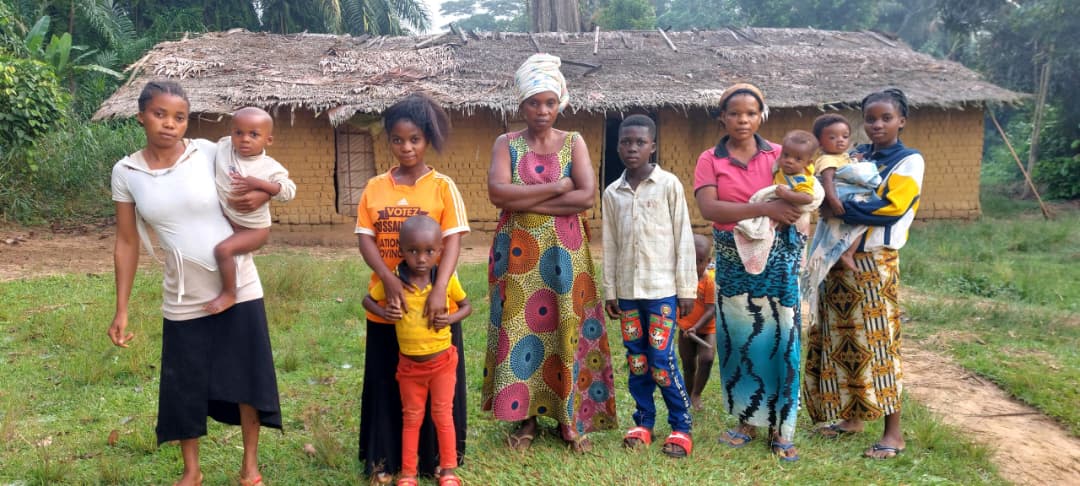
Rebecca Lokuli with her family.
And when she describes the bond between community and place, she keeps it grounded in ownership: “The children belong to the school, and the school belongs to them. The village belongs to the forest, and the forest belongs to the village”, she likes to say.
In a village where opportunity has often felt distant, Rebecca has made it local. One class at a time.