Reconnecting Pathways, Restoring Trust, and Preparing for the Future in the DRC
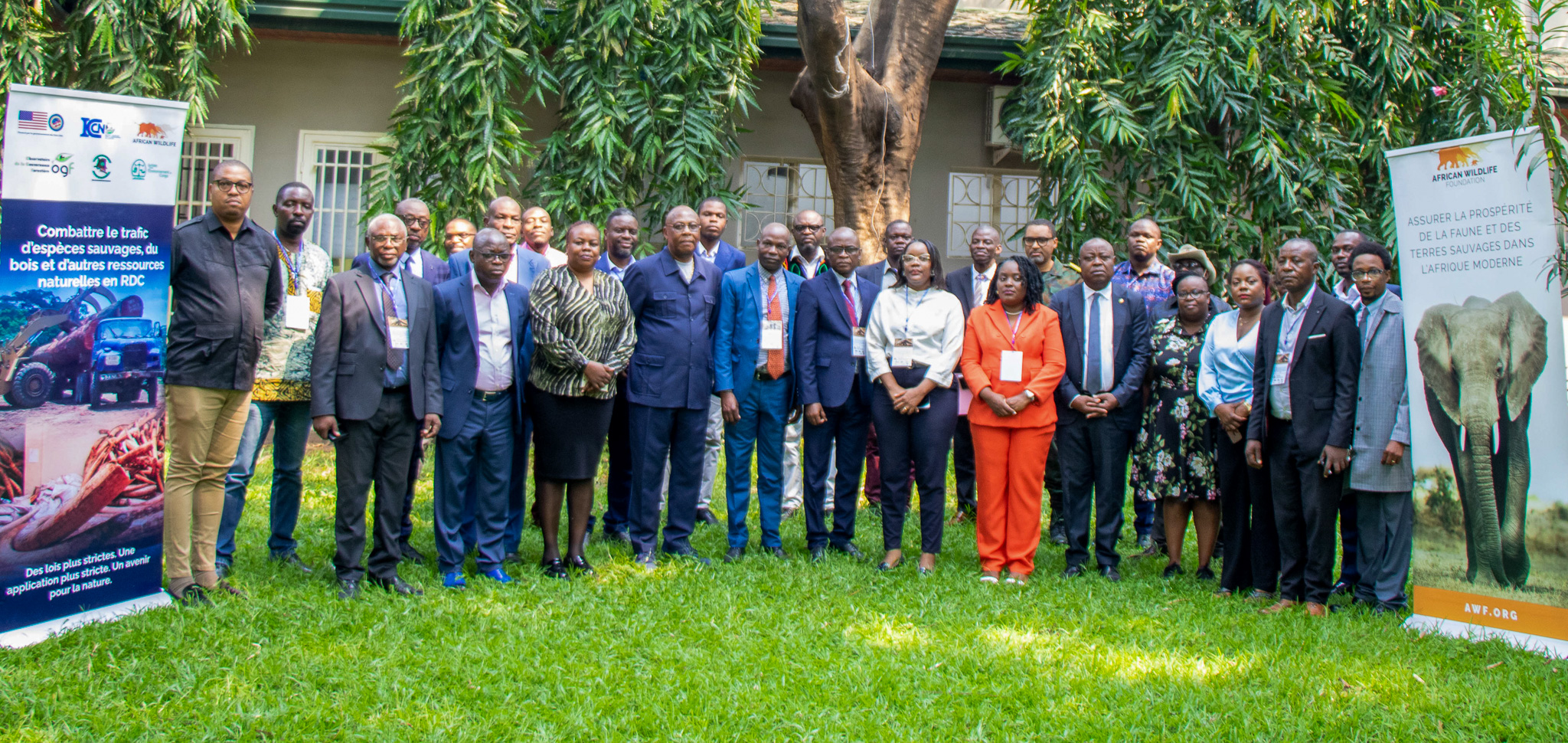
Group Photo during the High-Level Workshop on Transboundary Response to Wildlife and Resource Trafficking in the DRC and Angola.
Bili-Uélé, a protected area complex spanning over 78,000 square kilometers and hosting significant populations of Eastern chimpanzees and forest elephants, makes up part of the Congo Basin Rainforest. Because of this, it remains critical for conservation.
But the DRC’s wildlife authority has struggled to effectively protect and manage Bili-Uélé due to a dire lack of resources and the extraordinary remoteness of this landscape.
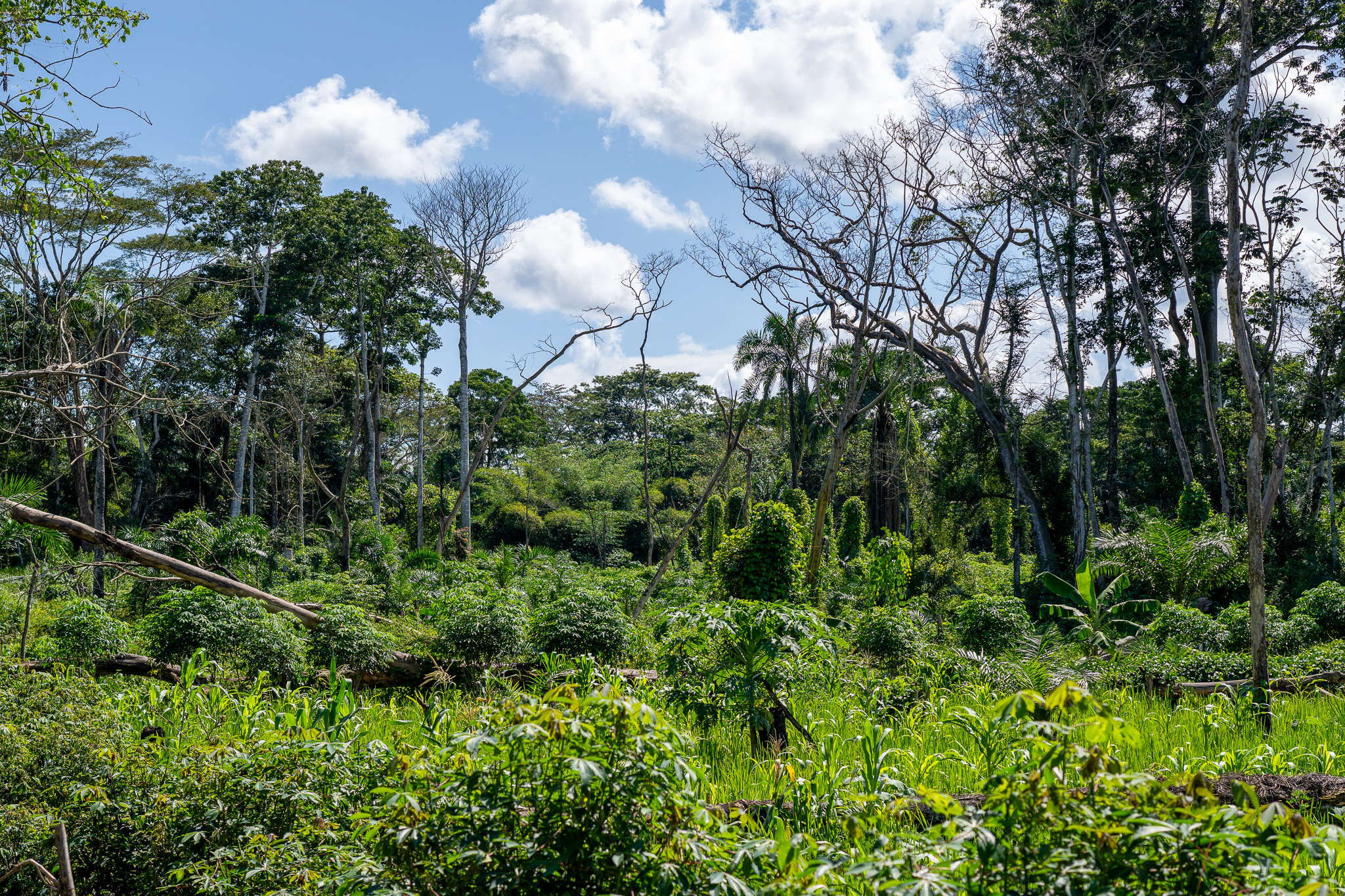
Bili-Uélé Landscape.
In 2025, 15 rehabilitated bridges changed what access looks like in a landscape where distance is often measured in risk. Rangers can now reach sensitive areas in minutes instead of nearly an hour. Children cross rivers safely on their way to school. Villages that were previously cut off regain access to essentials. And women, too often left out of public works, took meaningful roles in the effort.
These bridges capture the story of AWF’s 2025 journey in the Democratic Republic of the Congo: practical, community-centered action that reconnects people and protected areas, rebuilds confidence in how conservation is done, and strengthens the conditions for wildlife and wild lands to thrive.
Since 2022, AWF has been steadily moving from principles into practice across the Maringa-Lopori-Wamba (MLW) and Bili-Uélé landscapes. In 2025, that momentum accelerated. Communities and institutions took daily steps toward stronger governance, safer movement, and more durable cooperation—bridging the literal distance between people and nature.
Reconnecting Bili-Uélé: Infrastructure That Lowers Risk for People and Wildlife
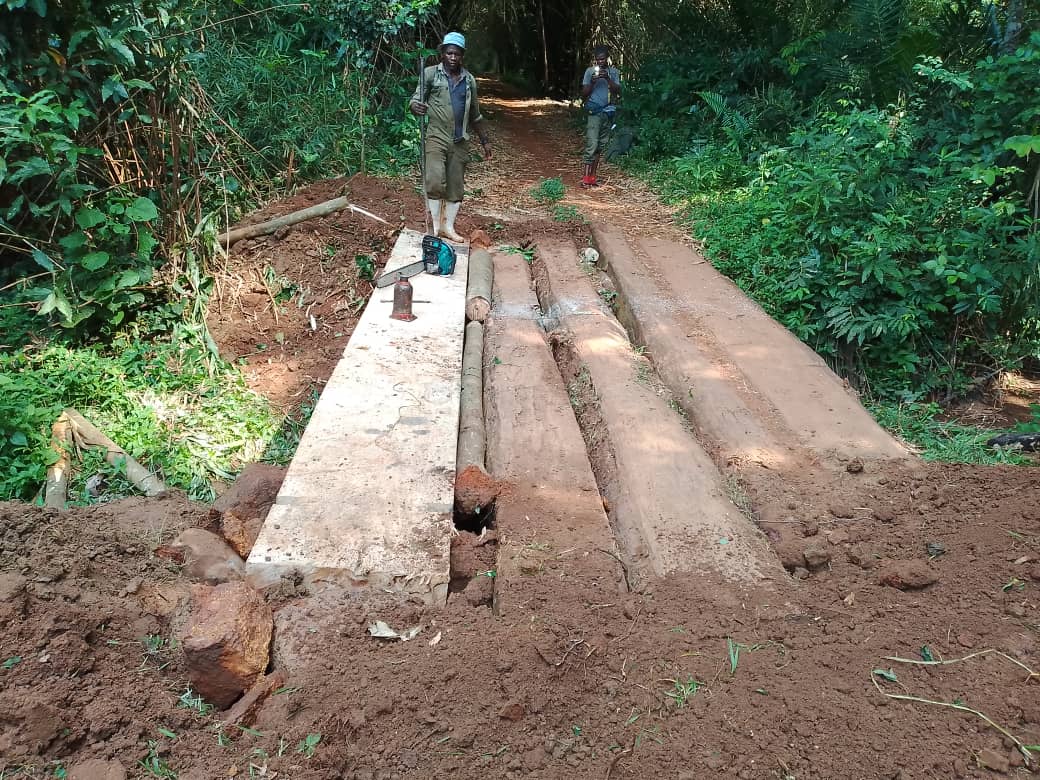
Reconstruction of bridges.
The rehabilitation of 15 bridges did more than reconnect roads; it restitched the social and ecological fabric. With safer crossings and more reliable routes, the landscape became easier to navigate for families seeking services and supplies, and for rangers responsible for sensitive areas.
The lesson is straightforward: Conservation does not succeed in isolation. It takes root where human safety, dignity, and opportunity are protected. When infrastructure reduces risk for people—bringing safer travel, faster response, restored access—it also reduces risk for wildlife.
Fewer bottlenecks mean fewer points of friction. More reliable movement supports better monitoring and management. And when women have meaningful roles in public works and local solutions, conservation becomes more representative of the communities it depends on.
A Rights-Based Conservation Model Built With Communities and ICCN
In 2025, AWF and the Institut Congolais pour la Conservation de la Nature (ICCN) further embedded a rights-based conservation model in MLW and Bili-Uélé.
Communities were not merely consulted; they were included. Customary land and tenure were recognized—not as an abstract principle, but through governance that treated local knowledge as central to decision-making.
New leaders and monitors received targeted training, and accessible grievance and mediation mechanisms helped address tensions around resource use. The outcome was a clearer social contract: Communities felt seen and respected, and in turn, they chose to protect the forests, rivers, and wildlife that anchor their lives.
This is AWF’s Theory of Change in motion. When people have real ownership, fair process, and credible avenues to resolve disputes, protection becomes a shared norm—not a rule imposed from the outside.
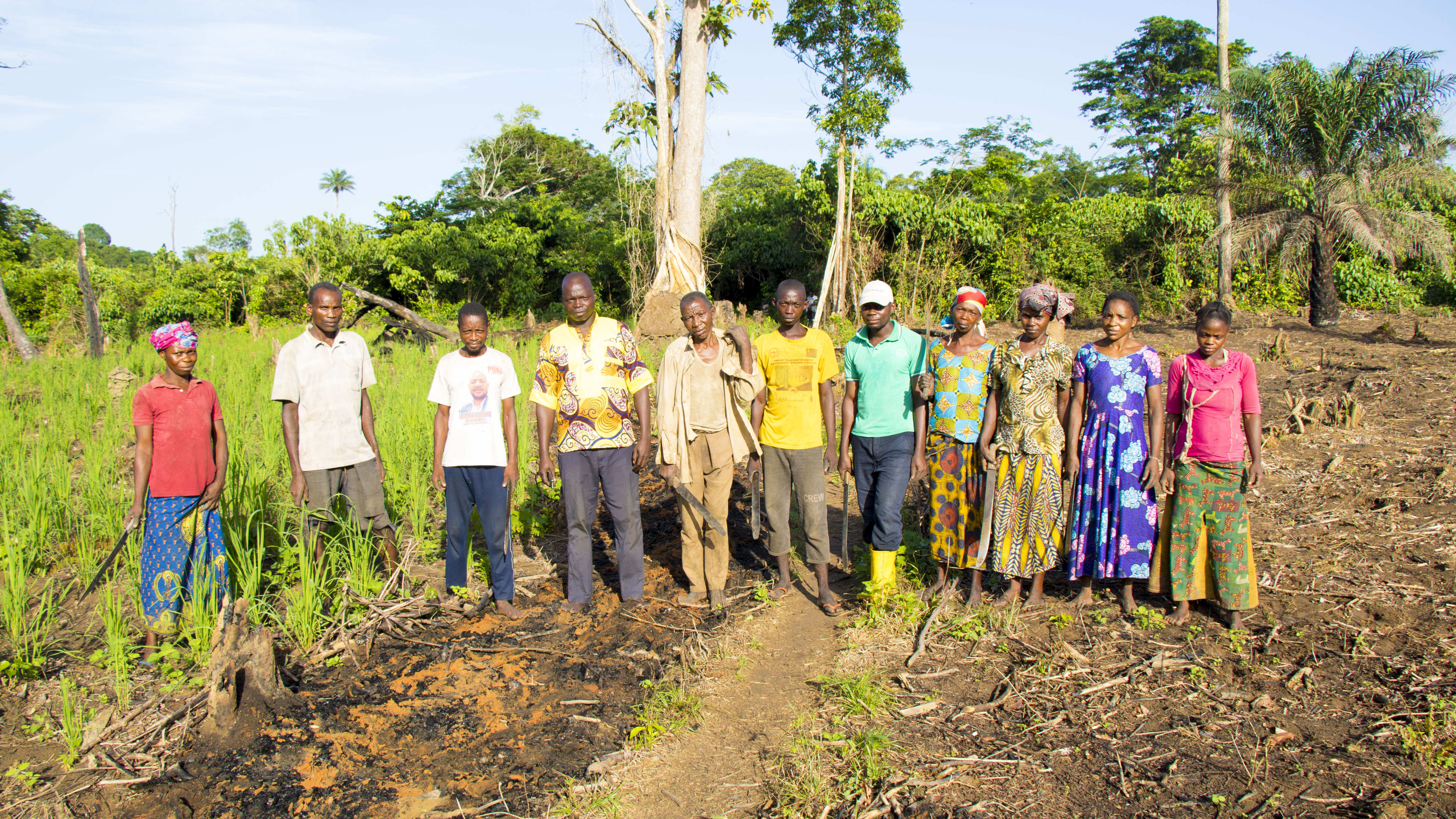
Farmers trained in sustainable agriculture within their association in Maringa-Lopori-Wamba, DRC.
Leadership You Can See: The People and Skills Carrying Change Forward
The year’s progress can also be read in the faces and choices of the people carrying it forward. Emancie Ekofo Bafalanga discovered conservation as a child through a simple message on a wall. That early spark grew into a vocation. Today, as an eco-guard in the Lomako-Yokokala reserve, she blends scientific rigor—biomonitoring, data collection, and analysis—with outreach that is patient and persuasive. Her work makes a larger point: Wildlife prosperity is inseparable from women’s leadership, agency, and pride.
Jean Ayolo’s story reflects a different, equally powerful arc. Once a hunter, he now leads a community patrol. His transformation is measured in transparency: open briefings, meticulous patrol logs, and a consistent practice of sharing plans and results. In that accountability, elders began to trust, and the next generation found a model worth following.
2025 also strengthened the role of youth. Through AWF’s youth leadership and negotiation programs, young Congolese entered major biodiversity arenas, building skills, networks, and experience that they now bring back home. Their participation is not symbolic—it changes the texture of policy conversations, widens the circle of stakeholders, and anchors international commitments in local realities.
Securing Landscapes at Scale: Transboundary Cooperation, Transhumance Solutions, and the Road to 2026

ICCN Director General Yves Milan Ngangay shakes hands with AWF DRC Country Coordinator Antoine Tabu.
Regionally, 2025 marked a decisive step in countering wildlife, timber, and broader natural resource trafficking. AWF facilitated stronger cross-border cooperation—most visibly between the DRC and Angola—by convening enforcement agencies, environmental authorities, and border communities to share intelligence, harmonize protocols, and respond together. In an era of porous boundaries and sophisticated criminal networks, this coordination is becoming a linchpin of environmental security and smarter, fairer management.
In Bili-Uélé, a longstanding source of conflict—the seasonal movement of livestock, known as transhumance—also began to shift. The introduction of a dedicated transhumance agent changed both tone and pace: dialogue replaced confrontation. Mbororo pastoral leaders joined local committees, acknowledging protected boundaries and identifying safer passages for livestock.
Mixed teams, including women from nomadic and sedentary communities, delivered calm, consistent messages built on empathy rather than accusation. Corridors and buffers were mapped with shared input. The results were tangible: fewer clashes, more clarity, and a social environment where coexistence felt less like an ideal and more like daily practice.
Standing at the threshold of 2026, the trajectory is encouraging. Communities move with greater security and landscapes begin to regain ecological function. In well-monitored areas, wildlife indicators show early signs of stabilization. The task ahead is to turn pilots into policy and momentum into systems. AWF will focus on consolidating community-based governance, strengthening legal and institutional recognition of customary rights, and expanding transboundary enforcement against trafficking. Work on transhumance will shift from reactive coordination to proactive planning, with permanent mediation platforms, clearer pastoral infrastructure, and stable agreements that can withstand seasonal pressures.
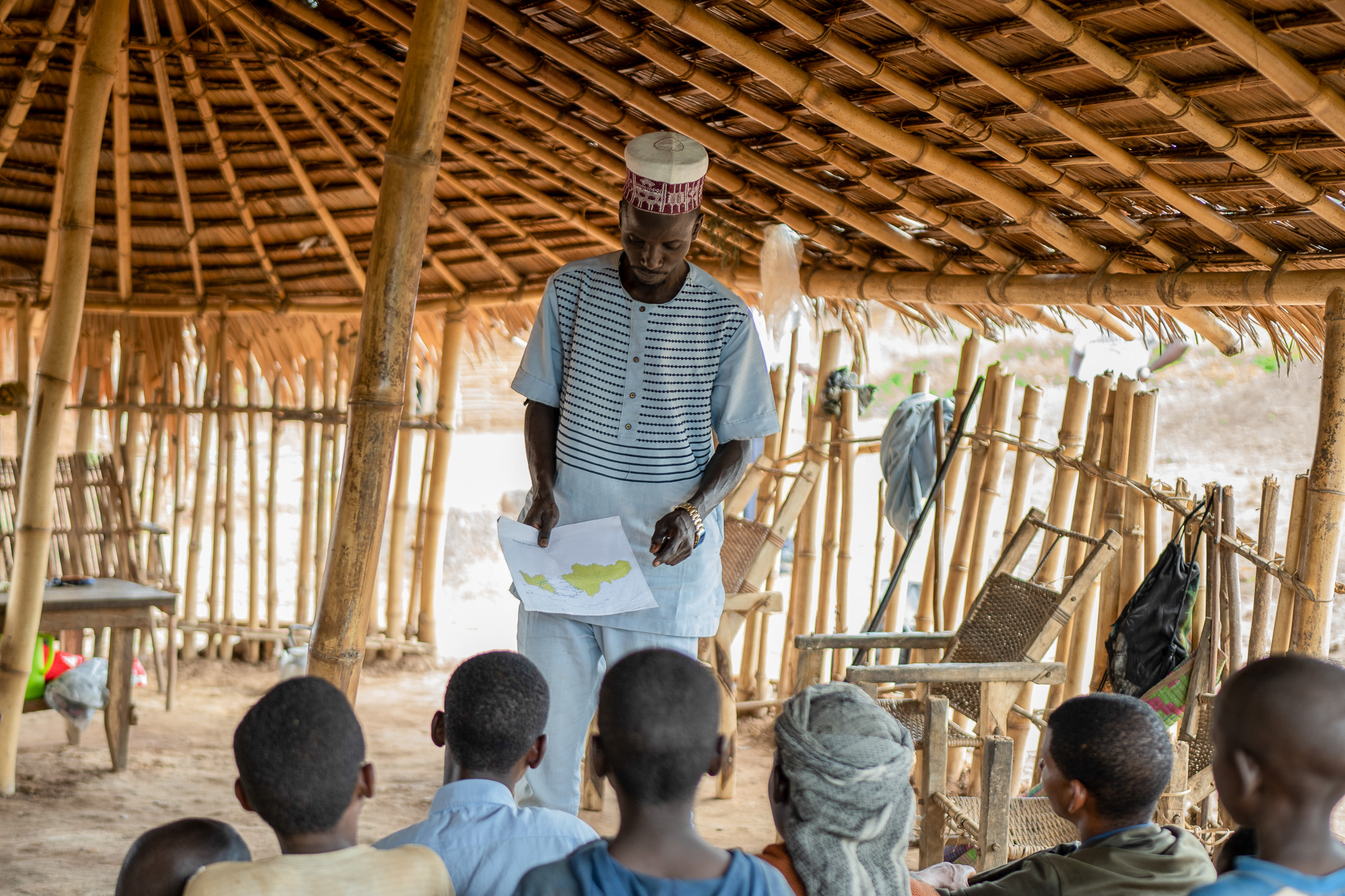
Demonstration of transhumance in Bili-Uélé, DRC.
If people own their natural heritage, they protect it. If people benefit from safer travel, better services, fair governance, new skills, and dignified work, they choose sustainability. That choice, made village by village and border by border, strengthens governance and improves management of wildlife and natural resources. Over time, this governance helps reverse biodiversity loss and builds ecosystem resilience in the face of climate, conflict, and economic shocks—supporting healthy wildlife populations and functional landscapes that sustain livelihoods, nurture culture, and build the economic base of future generations.
2025 was, in every sense, a year of bridges—between communities and protected areas, between institutions and households, between the remembered past and the imagined future. In 2026, the priority will be to cross those bridges at scale—consolidating what works, strengthening what is fragile, and ensuring that in the DRC, sustainable development includes the prosperity of wildlife and wild lands as cultural and economic assets for generations to come.