Reflections on AWF’s Achievements in 2025
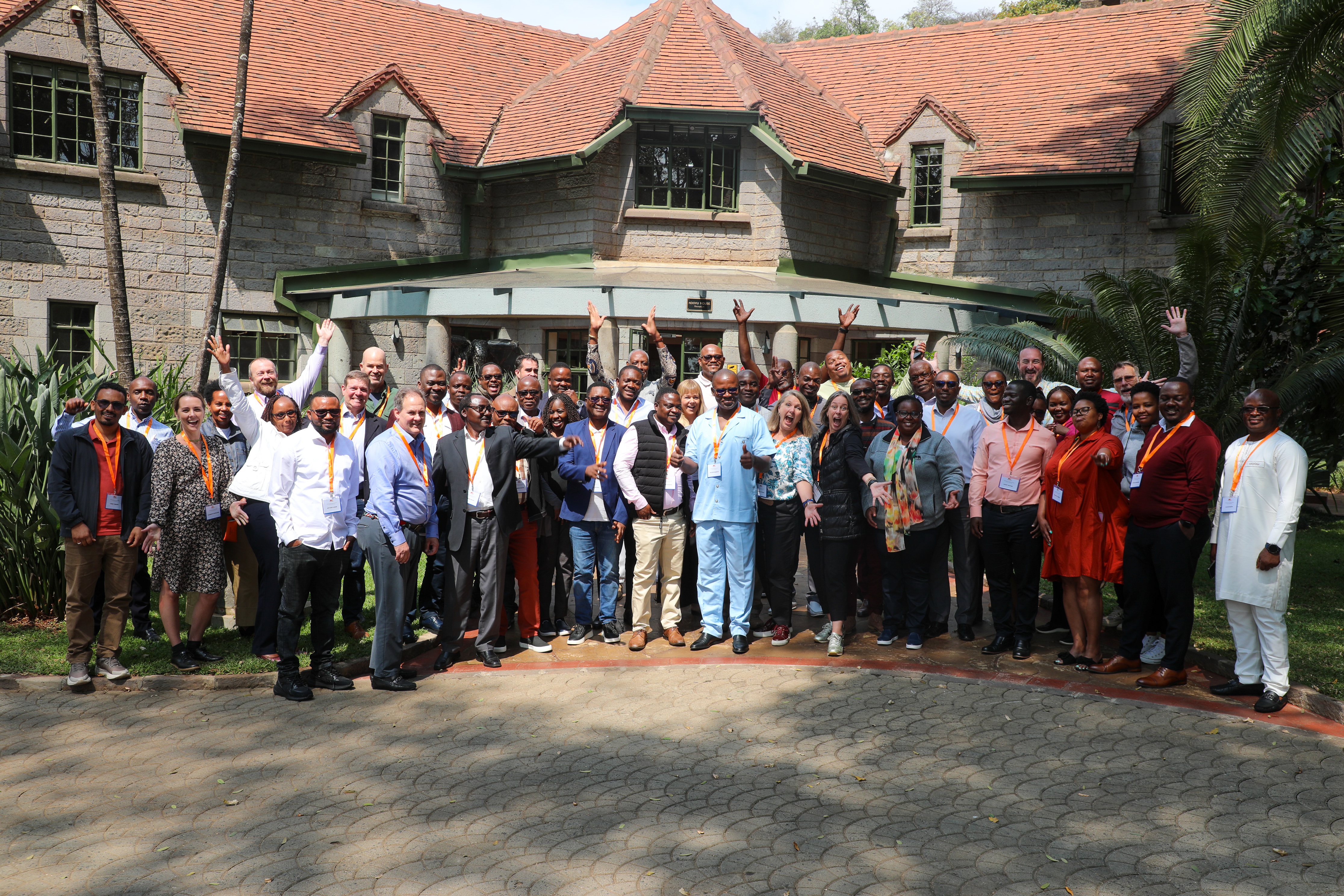
A section of AWF staff during the Conservation Programs Retreat at the AWF Headquarters in Nairobi, Kenya.
2025 was a year of transition for conservation in Africa. Global financing patterns shifted, national development priorities evolved, and countries continued to navigate the complex balance between economic growth and biodiversity stewardship. Throughout these changes, one principle remained constant: African-led conservation—anchored in strong national institutions, empowered communities, and long-term partnerships—is the most reliable path to durable outcomes.
AWF’s work this year reflected that conviction. Our teams advanced policy reforms, strengthened wildlife management systems, expanded community benefits, and developed new opportunities for young professionals and rural youth. Even against broader uncertainty, the progress achieved across our programs demonstrated that when African leadership is equipped, conservation reinforces both national prosperity and community resilience.
A United Continental Voice

H.E. Duma Boko, President of the Republic of Botswana (center) with dignitaries from various African countries during the closing ceremony of the Africa Biodiversity Summit.
Africa’s leadership at global platforms—including the Africa Biodiversity Summit and the climate and biodiversity COPs—showcased a continent prepared to articulate a clear, unified agenda for managing its natural heritage. AWF supported this work by helping countries strengthen institutional capacity, develop biodiversity investment plans, and integrate conservation into national economic strategies.
Our partnership with PeaceNexus promoted approaches that respect community rights and consider conflicts, making sure that conservation decisions take into account the needs of the community. Through the Africa Protected Areas Directors (APAD) network, AWF helped shape coordinated African positions on protected area management, sustainable financing, and coexistence. These collaborations strengthened Africa’s influence in global conservation processes and provided a platform for collective action.
Across our country and landscape-level programs, AWF’s approach combines leadership development, partnership with local institutions, and the creation of economic opportunities rooted in biodiversity.
Looking Forward
Africa’s natural capital is immense, and so is the depth of scientific, technical, and traditional knowledge across the continent. What is needed now is continued investment in governance, sustainable financing, and partnerships that translate Africa’s biodiversity into long-term prosperity.

A section of AWF staff during the Conservation Programs Retreat at the AWF Headquarters in Nairobi, Kenya.
As I reflect on 2025, I am grateful for the dedication of our teams, partners, governments, and the communities we work with. Together, we continue building a future in which conservation is recognized not as an external obligation but as a cornerstone of Africa’s stability and economic opportunity.
AWF remains committed to supporting African governments and institutions as they shape this future—one rooted in leadership, partnership, and a shared responsibility for the continent’s people and wildlife.

Kaddu Sebunya
CEO, African Wildlife Foundation
Examples from the Year of Putting Strategy into Practice
Cameroon
AWF strengthened governance in the Campo Ma’an landscape by improving community participation, updating protected area management plans, and operationalizing a community grievance mechanism to support the accountability of wildlife authorities. Expanded ecological monitoring covered elephants, gorillas, chimpanzees, and other species. Livelihood initiatives—such as sustainable cocoa, rubber, and plantain production—reduced pressure on forests. In the Dja and Faro landscapes, AWF strengthened protected area management, reinforced anti-poaching efforts, supported rights-based training, and promoted alternative livelihoods.
Democratic Republic of the Congo
In Bili-Uélé, AWF improved security and territorial control through strengthened wildlife patrols and upgraded field bases. Expanded ecological monitoring included 51 camera traps and a new research camp at Baday. Community governance was strengthened through a grievance mechanism, human-rights training for ecoguards, and infrastructure improvements benefiting nearly 36,000 people.
In Maringa–Lopori–Wamba, AWF advanced integrated conservation and development, including environmental education at the renovated Ilima school, governance training for local leaders, and new women and youth enterprise incubation centres. We also continued to support national authorities in species monitoring and counter-trafficking initiatives.
Ethiopia
Despite disruptions caused by regional insecurity, AWF supported the Ethiopian Wildlife Conservation Authority (EWCA) in completing the Walia Ibex National Strategy and Action Plan and building stronger institutional coordination for data-driven wildlife management. In the Simien Mountains, AWF advanced landscape restoration, strengthened school infrastructure, and worked with community leaders to promote coexistence.
Kenya
AWF continued to support rangeland restoration and coexistence programs, alongside implementation of the Giraffe Species Recovery Plan. In the Tsavo–Mkomazi landscape, we partnered with communities to restore water catchments and improve access to fresh water for people and wildlife. Through a new partnership with the Wildlife Clubs of Kenya, AWF expanded conservation education for schoolchildren across the country. A milestone this year was the handover of Amboseli National Park to county leadership—a major step in devolved conservation. AWF contributed by supporting Kajiado County to develop a sustainable investment strategy that aligns tourism, community benefits, and long-term conservation.
Rwanda
AWF supported the government’s vision for expanding Volcanoes National Park through a community-endorsed compensation and land valuation framework developed using AWF’s FPIC processes. We also invested in women-led agriculture, nature-based enterprises, and planning for smart green villages that integrate conservation with economic development.
Tanzania
AWF played an active role in national policy dialogues on conservation, tourism, and rural development. In Kilombero, we supported community land-use planning, strengthened natural resource agreements, and expanded local conservation leadership through natural resource committees. Efforts to scale sustainable agriculture and conservation enterprises continued alongside improved landscape governance structures.
Uganda
AWF’s Counter Wildlife Trafficking program supported authorities in conducting nearly one million searches across key enforcement points, contributing to the disruption of illegal wildlife trade. Work in the Kidepo and Murchison Falls landscapes advanced coexistence, strengthened governance, and improved accountability. Preparations for rhino reintroduction at Ajai Wildlife Reserve progressed through enhanced ranger training and community engagement.
Zimbabwe
In the Mid-Zambezi region, AWF concluded its long-standing program after strengthening national capacity, securing wildlife corridors, and establishing local governance systems that now enable national partners to lead independently.