Rukanga Community Water Project Restored to Improve Water Access for Communities and Wildlife in Kasigau, Kenya
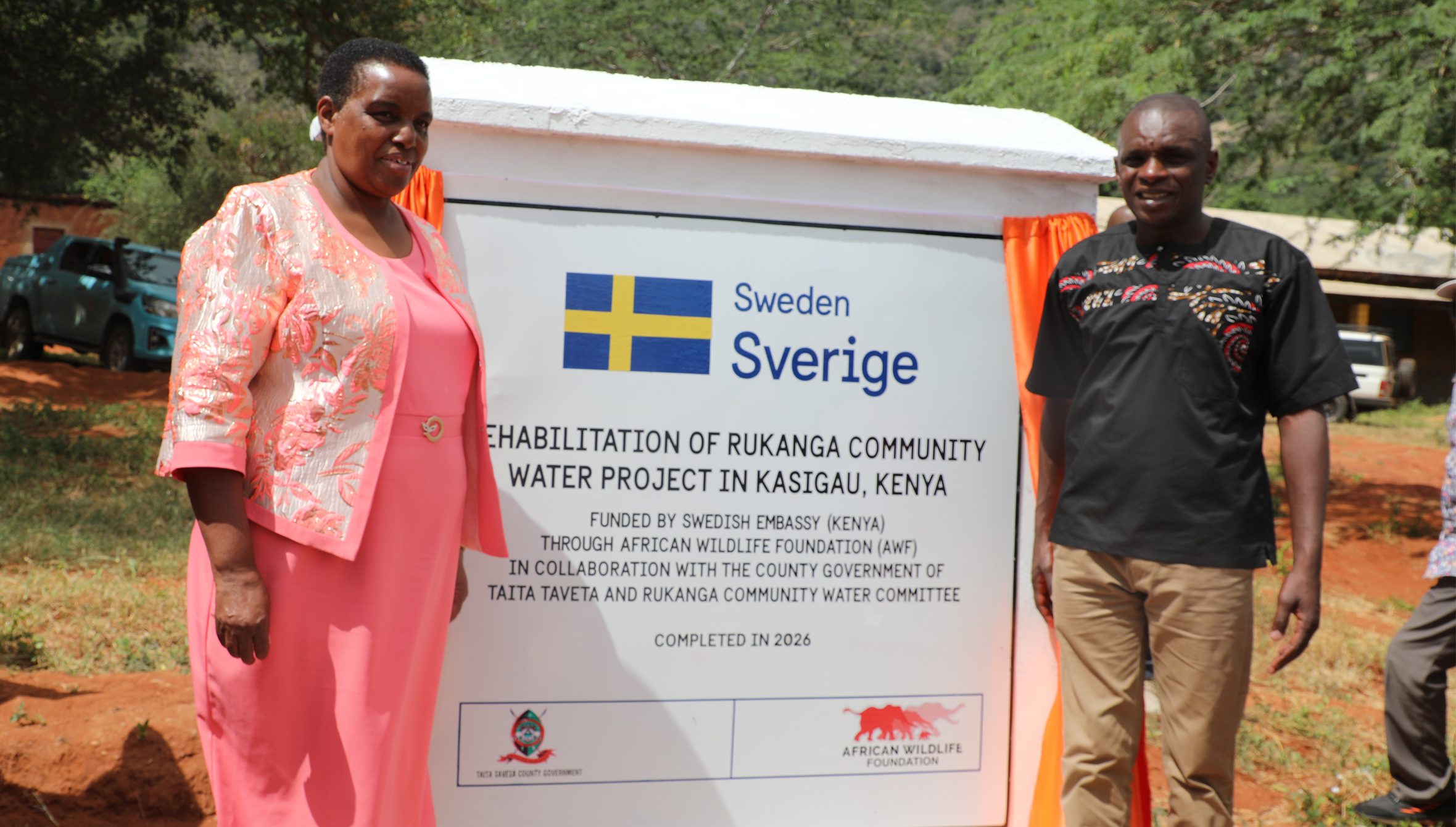
H.E. Christine Saru Kilalo, Deputy Governor of Taita-Taveta County, together with Martin Muriithi of the Embassy of Sweden, officiates the commissioning of the Rukanga Community Water Project.
More than 800 households across eight villages in Kasigau, Kenya, now have improved access to clean and reliable water following the rehabilitation of the Rukanga Community Water Project by the African Wildlife Foundation, with support from the Embassy of Sweden in Kenya and in partnership with the County Government of Taita Taveta, Kasigau Wildlife Conservancy, and local communities.
The project is helping reduce the long distances residents once travelled in search of water while easing pressure on limited natural resources shared by people and wildlife. In a landscape where water scarcity can deepen human-wildlife conflict, the community-led effort shows how investing in basic services can strengthen livelihoods, improve health and education outcomes, and support conservation.
A Community-Led Approach to Addressing Water Challenges
In May 2024, AWF, working alongside Kasigau Wildlife Conservancy, engaged the Rukanga Water Project Committee to understand community water challenges and identify priority interventions.
An initial meeting and site visit were conducted on May 21, 2024 to assess community needs and evaluate the condition of the existing water infrastructure. Following this engagement, the committee led a public participation process that allowed residents to share their experiences, challenges, and priorities.
Through this process, community members identified three key areas of focus: rehabilitating the main water pipeline, extending the water network, and constructing additional water storage tanks.
By involving communities in identifying solutions, the project was able to respond directly to local needs and ensure that investments addressed the realities faced by residents.
Restored Water Infrastructure Improves Access and Livelihoods
The rehabilitation of the main pipeline and expansion of water storage facilities now benefit more than 800 households across eight villages: Zongwani, Mazola, Mkorongwe, Babani, Maranu, Maranu B, Kitale, and Chovunyi.
The project also supports essential public institutions, including a primary school and junior secondary school, a senior school, a health center, and the local police and chief's stations.
For many residents, improved water infrastructure has significantly reduced the time and effort required to access water, allowing them to dedicate more time to other tasks and pursuits.
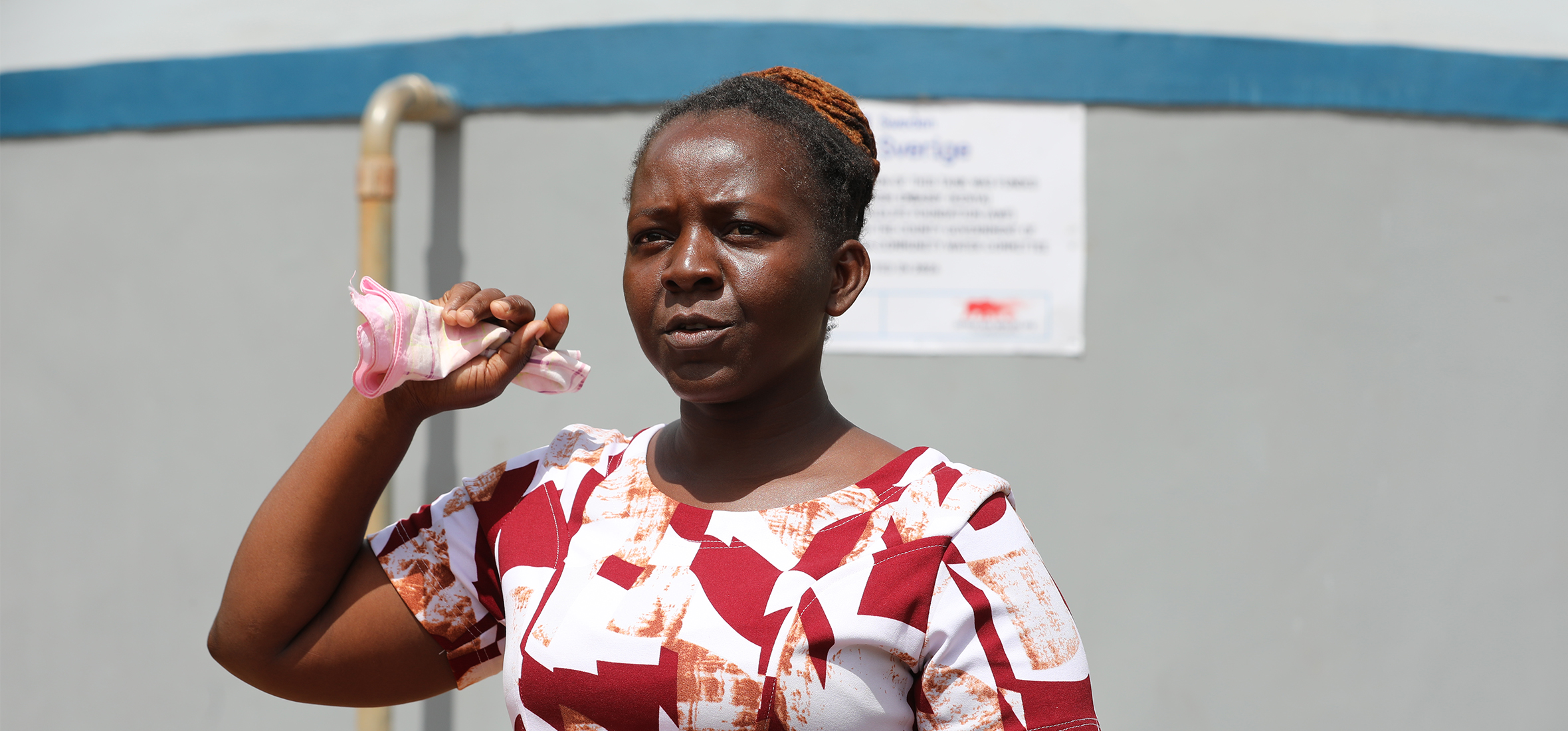
Lillian Chao, a resident of Kasigau, who has seen the positive effects of improved water access.
"Before this project, accessing water was a major challenge. We depended on a water catchment and often spent hours fetching water. Today, water is available much closer to our homes, which has improved my time because I can now access water easily and engage in other livelihood activities," says Lillian Chao, a resident of Kasigau.
The project has also improved learning conditions for children by ensuring schools have more reliable access to water.
"The improved water supply has ensured that our school has enough water for drinking, sanitation, and daily activities. This creates a healthier learning environment and allows learners to focus on their education," says a teacher from one of the beneficiary schools.
Beyond households and schools, the project is contributing to improved health outcomes within the community. With clean and reliable water available closer to homes and health facilities, families are less dependent on unsafe water sources and are better able to maintain proper hygiene practices.
"The project has greatly improved access to clean water in our community. We are seeing fewer cases of water-related diseases because families no longer depend on unsafe water sources," says the area chief.
A Partnership Supporting People and Conservation
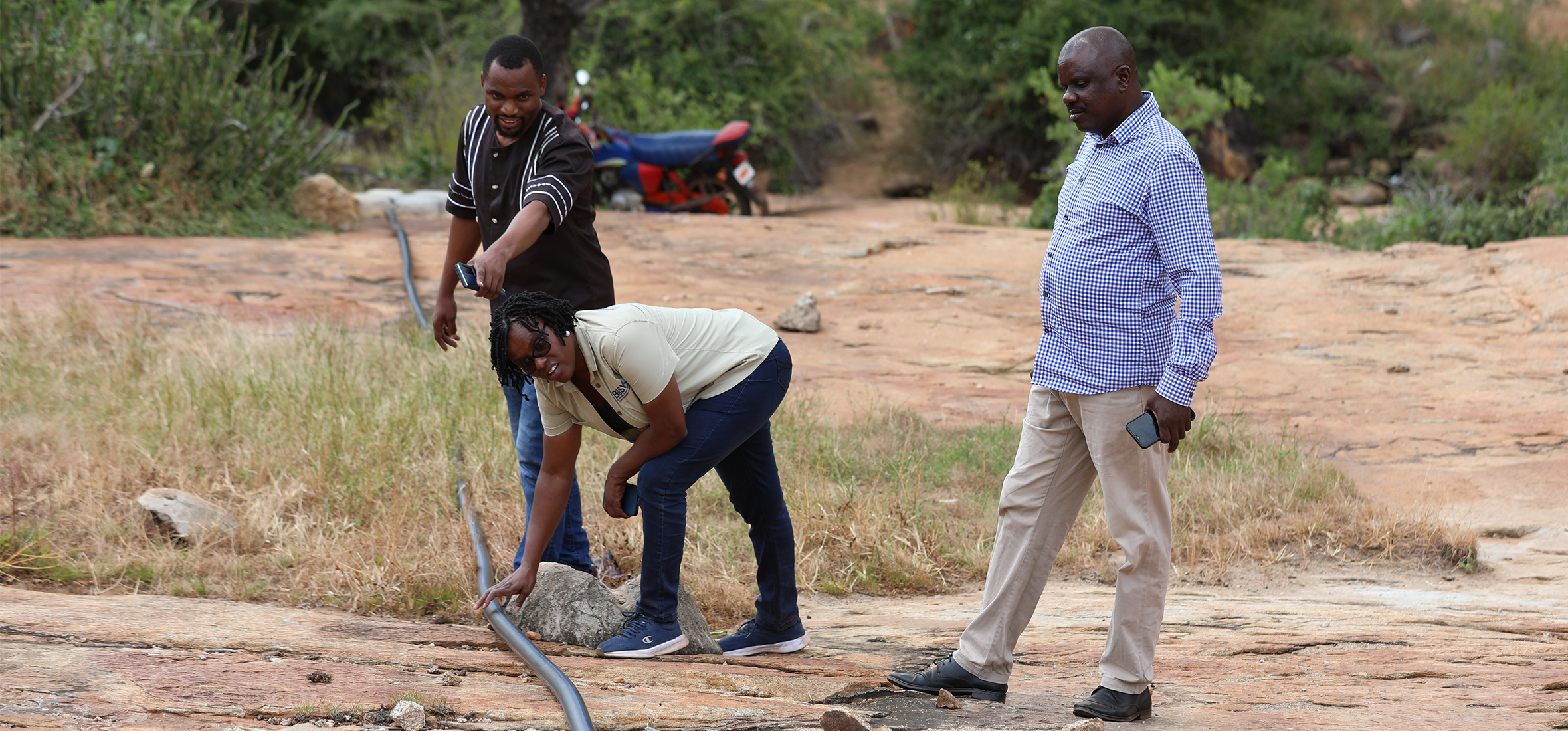
AWF Country Director Nancy Githaiga, together with Taita-Taveta County Executive Committee Member for Water Grantone Mwandawiro, inspects water pipeline infrastructure in Kisagau during the launch of the Rukanga Community Water Project.
The Rukanga Community Water Project demonstrates how strong partnerships can create lasting solutions that benefit both communities and conservation.
By bringing together local communities, the County Government of Taita Taveta, Kasigau Wildlife Conservancy, AWF, and the Embassy of Sweden in Kenya, the project is helping address community needs while supporting broader conservation goals.
Reliable access to water strengthens livelihoods, improves health and education outcomes, and enhances community well-being. At the same time, reducing competition over scarce water resources helps minimize human-wildlife conflict and supports coexistence between people and wildlife.
As climate change continues to increase pressure on communities and ecosystems across Africa, investing in community-led solutions remains essential. The success of the Rukanga Community Water Project shows that when communities are involved and supported, conservation and development can work together to create a future where both people and wildlife thrive.