Solar Power and Clean Water Transform an Off-Grid School in Tsavo
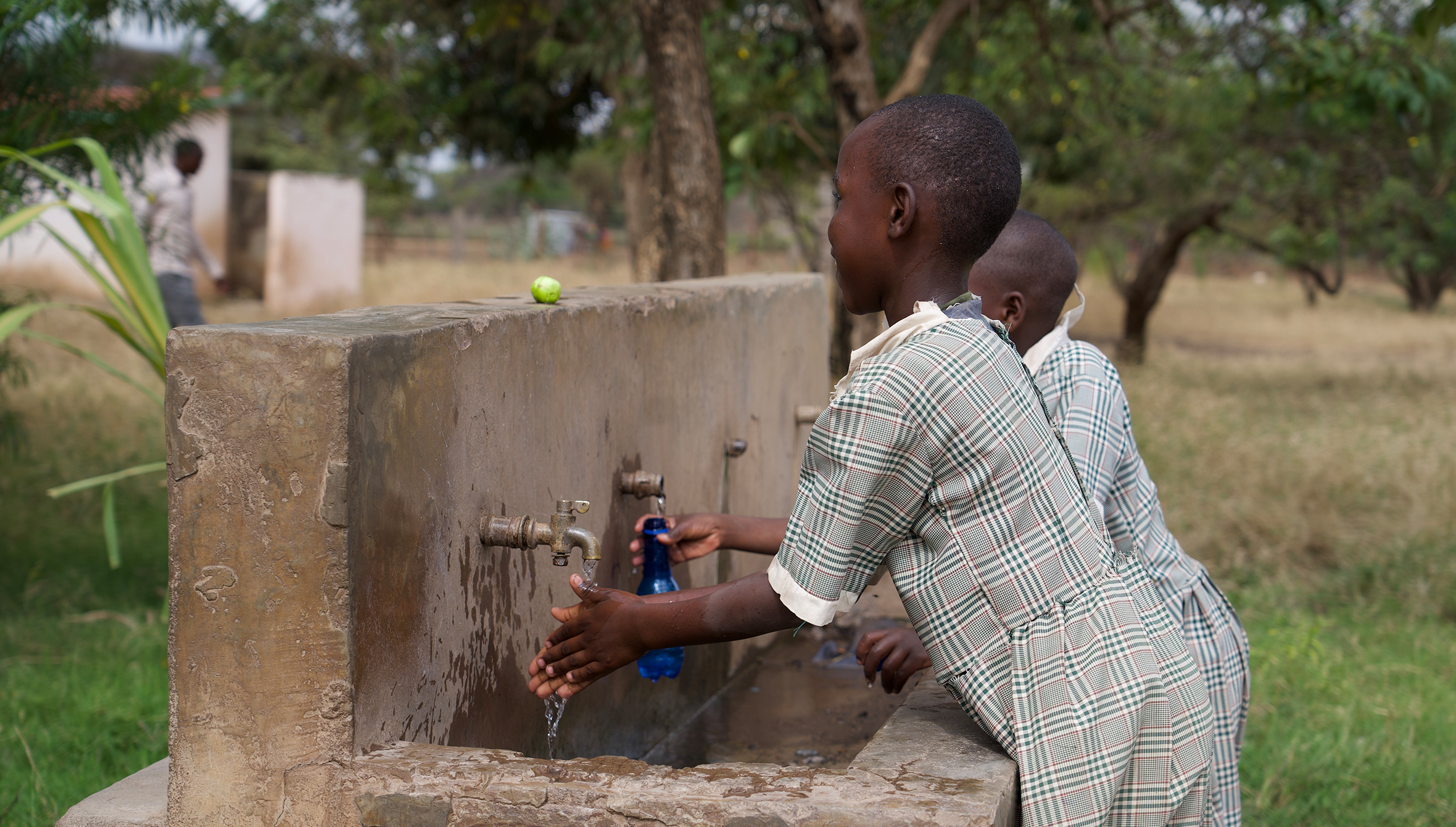
Students at Oloibor Soit Comprehensive School wash their hands and collect drinking water at the school’s water point, made accessible through the rehabilitation and solarisation of the borehole. © AWF
In Kenya’s Tsavo landscape, reliable access to water, firewood, and other natural resources shapes both community well-being and the health of the surrounding ecosystem. At the African Wildlife Foundation, we recognise that conservation cannot be pursued in isolation from the needs of the people who share these landscapes. Our work therefore supports approaches that address essential community needs while reducing pressure on natural resources and strengthening the long-term resilience of the ecosystem.
Oloibor Soit Comprehensive School, in Kajiado County about a kilometre from Tsavo West National Park, serves around 600 learners. Until recently, a piece of firewood and a jerrycan, a large container, of water were part of every child’s school day essentials, helping to meet the school kitchen’s fuel needs and top up a limited water supply.
With support from the Embassy of Sweden in Kenya, AWF has invested in water access, clean cooking methods, and the school’s solar energy system. Together, these changes are transforming daily life at the school for hundreds of children.
The school’s solar-powered borehole served it from 2002 until it broke in 2022. Repairs only yielded about 200 litres a day, so water was rationed for drinking. Moreover, toilets were cleaned once a week, handwashing routines were skipped, and newly planted trees struggled to survive.
In 2026, AWF supported the rehabilitation and solarisation of the borehole, installing a new pump and three solar panels.
“Before the rehabilitation and solarisation of our borehole, we were getting only about 200 litres of water a day. Today, the upgraded system can fill our three tanks, with a combined capacity of 30,000 litres, within approximately two days, and the water even flows in the dry season. We are very happy with this improvement because it means we can maintain better hygiene and sanitation, provide a cleaner learning environment.” Daniel Kilasi, Deputy Head Teacher, Oloibor Soit Comprehensive School
The benefits reach beyond the school gate. Around 16 households collect water from the source and a pipeline now serves Njukini Health Centre. The school also plans to set up a tree nursery and an expanded kitchen garden.
“Before the borehole was rehabilitated and water piped to the health centre, we had to fetch water in jerrycans to meet the facility’s needs. Now that water is readily available, we can better meet our patients’ needs and provide care in a more dignified environment.” Siyaiyia Koitumet, Community Health Promoter, Njukini Health Centre
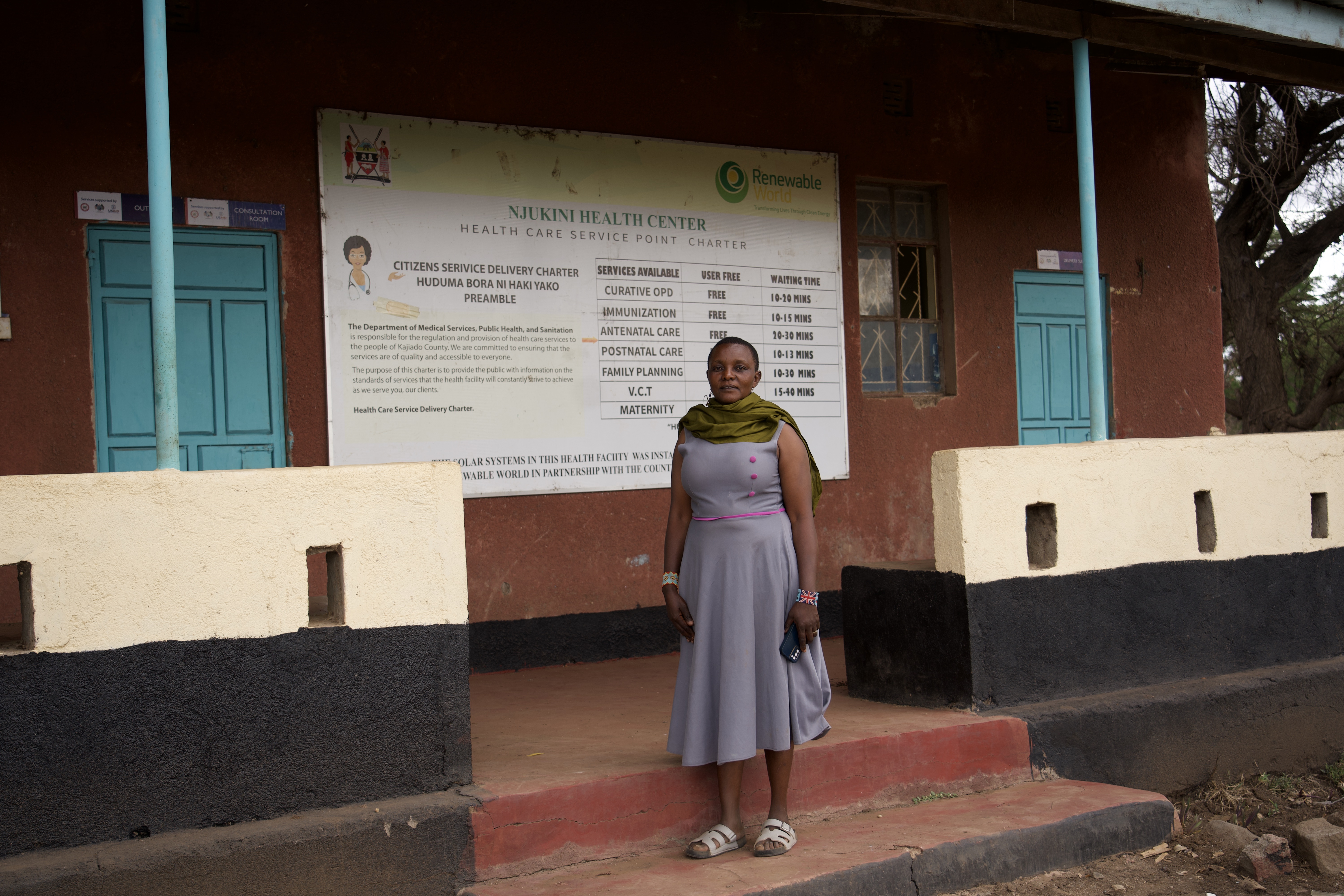
Siyaiyia Koitumet, Community Health Promoter at Njukini Health Centre, Kajiado County, Kenya. © AWF
Reducing the Burden of Firewood
Cooking for hundreds of students takes considerable time, energy, and fuel. Since the school received climate-smart cookstoves through the project, the children bring firewood once a week rather than every day, and one cook can manage work that once needed two.
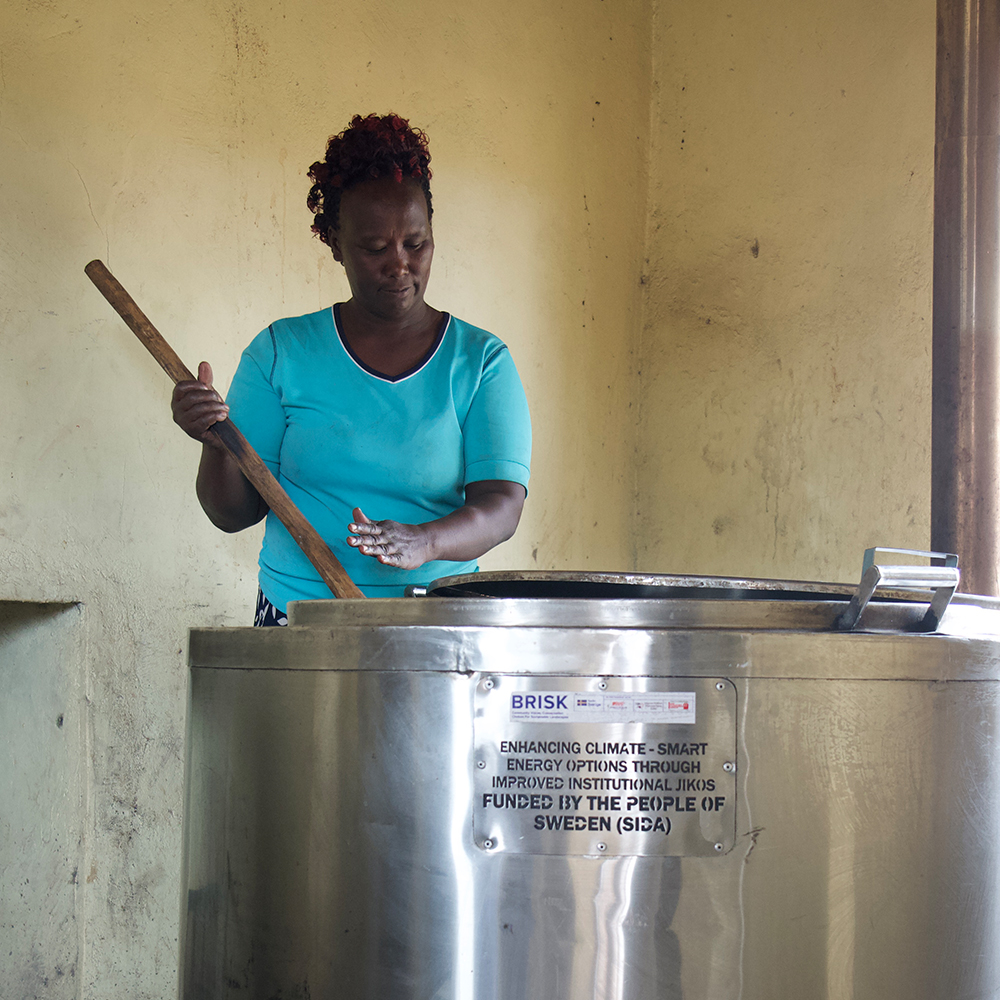
Sarah Nayianoi, School Chef at Oloibor Soit Comprehensive School, sets down an energy-saving cookstove after preparing a meal for learners. © AWF
“Now the new stoves produce less smoke, use less firewood, and cook food much faster. This means learners get their meals on time and cooking is much easier for me.” Sarah Nayianoi, School Chef, Oloibor Soit Comprehensive School.
The savings have had a wider effect: they contributed towards employing an additional teacher, who joined the school in September 2026. With Swedish support, AWF has provided energy-saving cookstoves to 26 schools across Kajiado and Taita Taveta counties, easing pressure on nearby trees where schools border forested landscapes.
Although an electricity line runs about two kilometres away, the school remains off the national grid. Solar panels installed in 2016 became partly non-functional because of recurring faults and hired generators for school events proved costly and unsustainable.
In 2026, AWF, upgraded the solar system, giving the school dependable power. The school has since installed Wi-Fi, allowing teachers to use online materials, projectors and videos to improve the learning experience, and to print examination papers on site rather than travelling to town.
With support from the Embassy of Sweden in Kenya, AWF and Indigenous Livelihood Enhancement Partners (ILEPA) have provided solar energy systems to eight off-grid schools across Kajiado, Taita Taveta and Narok counties.
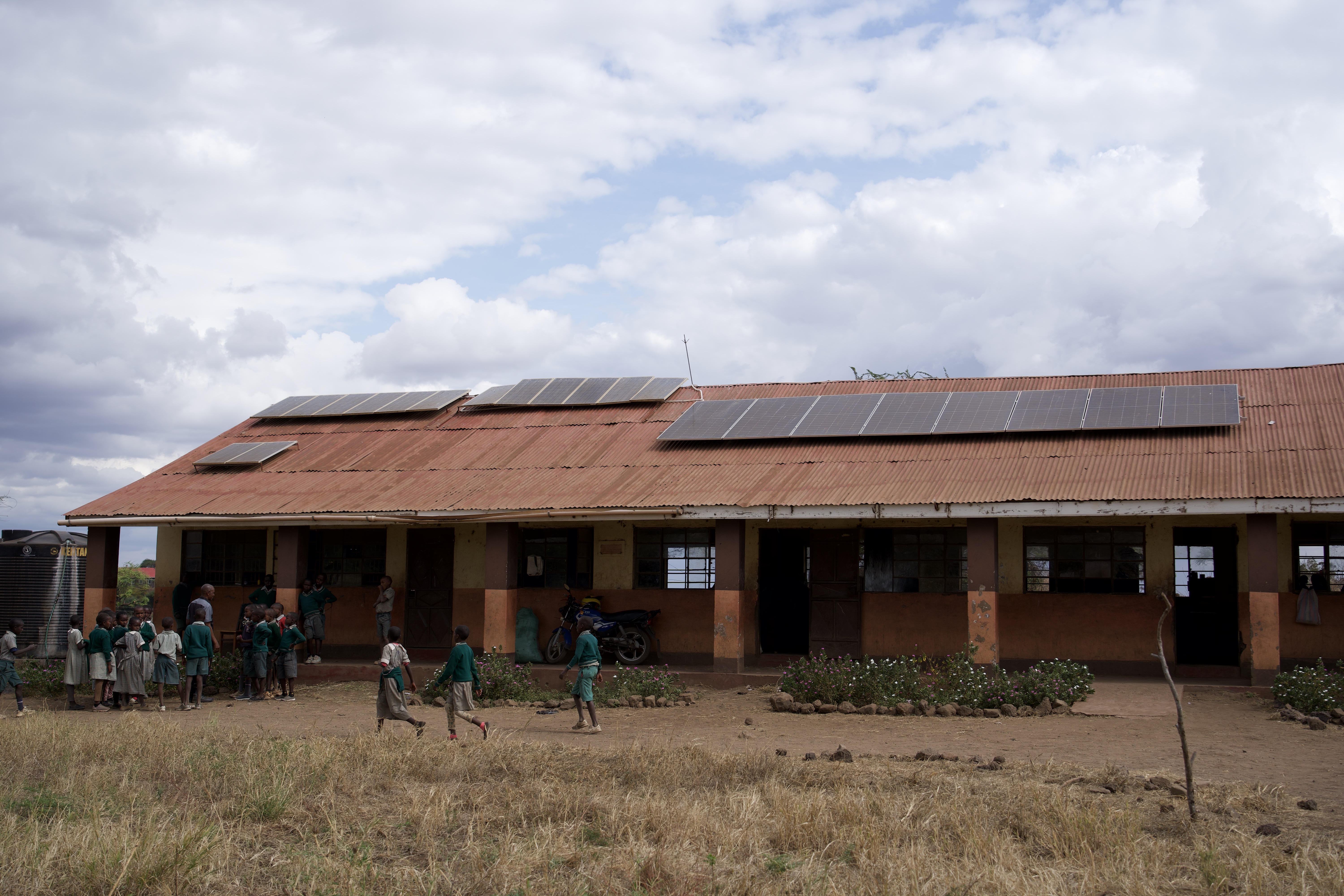
Oloibor Soit Comprehensive School’s newly upgraded solar energy system, improving the learning environment and promoting human-wildlife coexistence. © AWF
Reliable lighting also matters in a landscape shared with wildlife. At night, particularly in boarding schools, solar-powered lighting can deter wildlife from approaching compounds, reducing encounters and making life safer for learners, staff, and wildlife alike
Renewable Energy Where It Matters Most
As world leaders, climate negotiators and stakeholders convene for COP31, Oloibor Soit offers a practical picture of what climate action looks like on the ground. Renewable energy runs through every part of this story. Solar power lifts water from boreholes, runs the classrooms, and lights the compound at night, while energy-efficient cookstoves reduce reliance on wood fuel.
This matters because global ambitions, such as the pledge made at COP28 to triple renewable energy capacity by 2030, will ultimately be judged by who benefits. Many schools, clinics, and households in dryland Africa sit beyond the reach of the grid. For them, decentralised renewables are often the fastest and most practical route to reliable energy. Those benefits extend well beyond electricity: better conditions for learning, safer communities, improved health, and less pressure on ecosystems.
Across the three counties, solar systems now serve eight off-grid schools, and energy saving cookstoves now reach 26 schools. Each installation is modest on its own, yet together they show that renewable energy can be delivered quickly, close to the people who need it, and in ways that communities can own and maintain. Linking such projects to national and global energy plans would help to turn pledges into lasting local benefits.
The school’s experience also shows how climate action can build resilience and protect wildlife. Dependable water, even in the dry season, helps communities adapt to climate pressures. Less firewood means fewer trees cut. Reliable lighting supports coexistence with wildlife.
As negotiators discuss finance, adaptation, and energy transitions, we urge them to ensure that investment reaches communities like Oloibor Soit, and that renewable energy is planned around the interconnected needs of people, livelihoods, and ecosystems. Small, well-targeted investments can change the story of a whole landscape. For the learners of Oloibor Soit, that story now includes clean water, warm meals cooked with safer methods, lit classrooms, and a safer journey through each school day. The global energy transition is often discussed in terms of targets and megawatts, but its real measure is in communities.