Tanzania’s 2025 Conservation Journey: When Communities Lead, Landscapes Recover
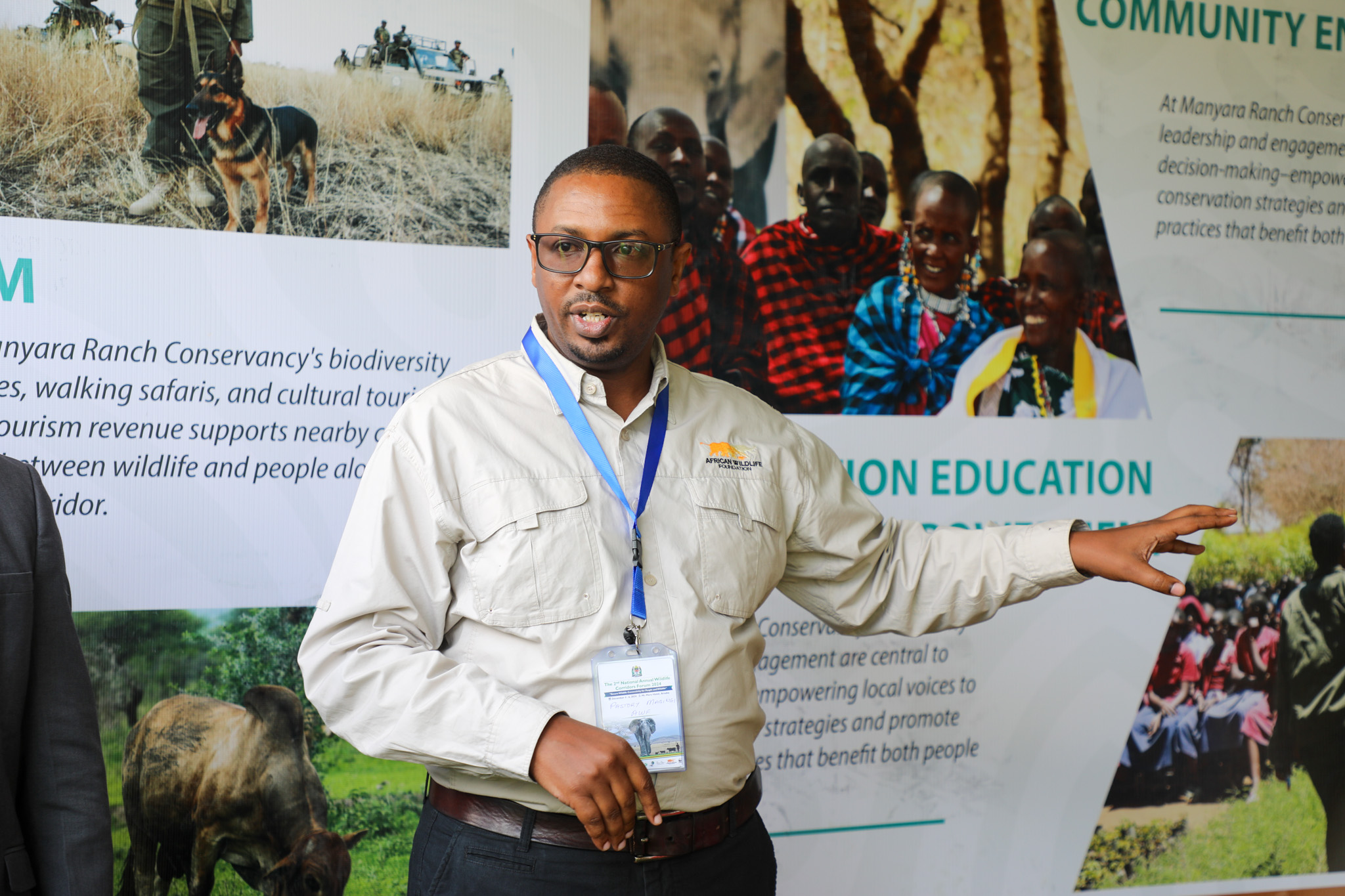
Pastor Magingi, AWF Tanzania Country Coordinator, during one of his presentations.
In Tanzania, 2025 highlighted a simple but powerful truth:conservation success begins in villages, farms, and water user meetings, where daily decisions determine whether land and rivers are depleted or stewarded for the long term.
Across the biodiverse Kilombero Valley, the transboundary Mkomazi ecosystem, and the wildlife-rich Maasai Steppe, the African Wildlife Foundation (AWF) worked alongside communities and government partners to turn that truth into practice. The year’s progress was not one big project; it was a series of practical decisions about land use, water, farming, enforcement, and finance; that together strengthened ecological integrity and human prosperity
Land and Governance: Scale Only Matters When It Is Locally Owned
In the Kilombero Landscape alone, we engaged 6,000+ community members in governance forums and trained 6,137 farmers and leaders in sustainable land and water management practices. This grassroots work translated into measurable outcomes: 70,731 hectares of land were placed under sustainable community-based management—representing one of the largest community-governed conservation areas in Tanzania.
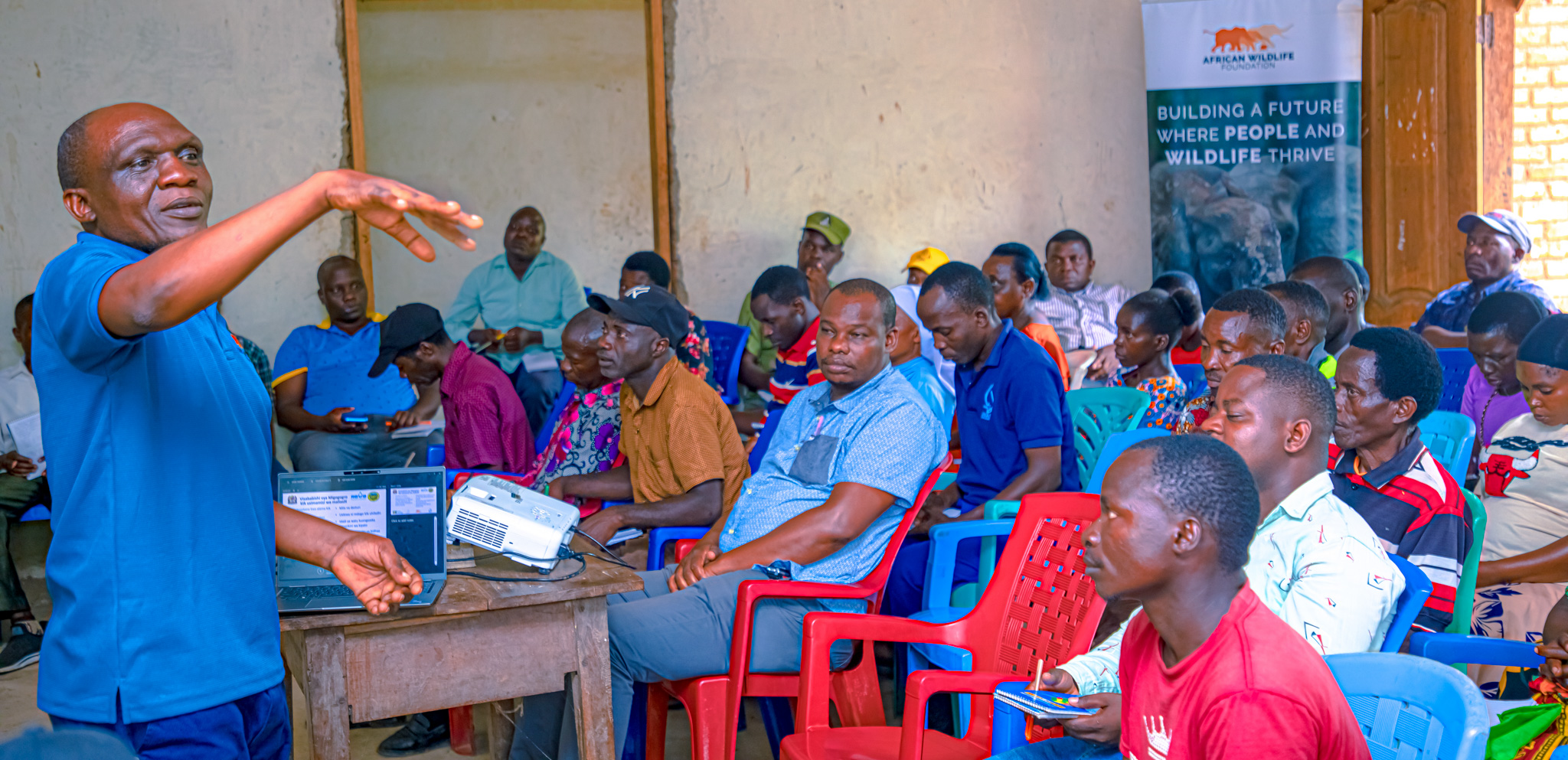
AWF Tanzania Agriculture Officer Alexander Mpwaga leads a community validation and training session in Tanzania’s Kilombero Landscape.
That scale was possible because local institutions were strengthened, not bypassed. In 2025, we supported 37 Village Natural Resource Committees (VNRCs), 37 Village Land Use Management Committees (VLUMs), three Water User Associations (WUAs), and one Wildlife Management Area (WMA). These structures have helped reverse encroachment into key habitats and brought clearer rules to the everyday choices that determine whether corridors remain open.
Restoration That People Can See and Use
Restoration is not a slogan if it does not change what communities experience on the ground. In 2025, we supported the raising of 325,958 seedlings, restoring 150+ hectares of degraded areas in forests and riparian ecosystems.
We also worked with local stakeholders to restore the Ikwambi River—a lifeline for wildlife that starts in Udzungwa Mountains National Park and flows toward Nyerere National Park. On its path, the river now sustains 500 acres of irrigation scheme, linking ecosystem health directly to food production and household income.
Climate-Smart Agriculture That Sticks
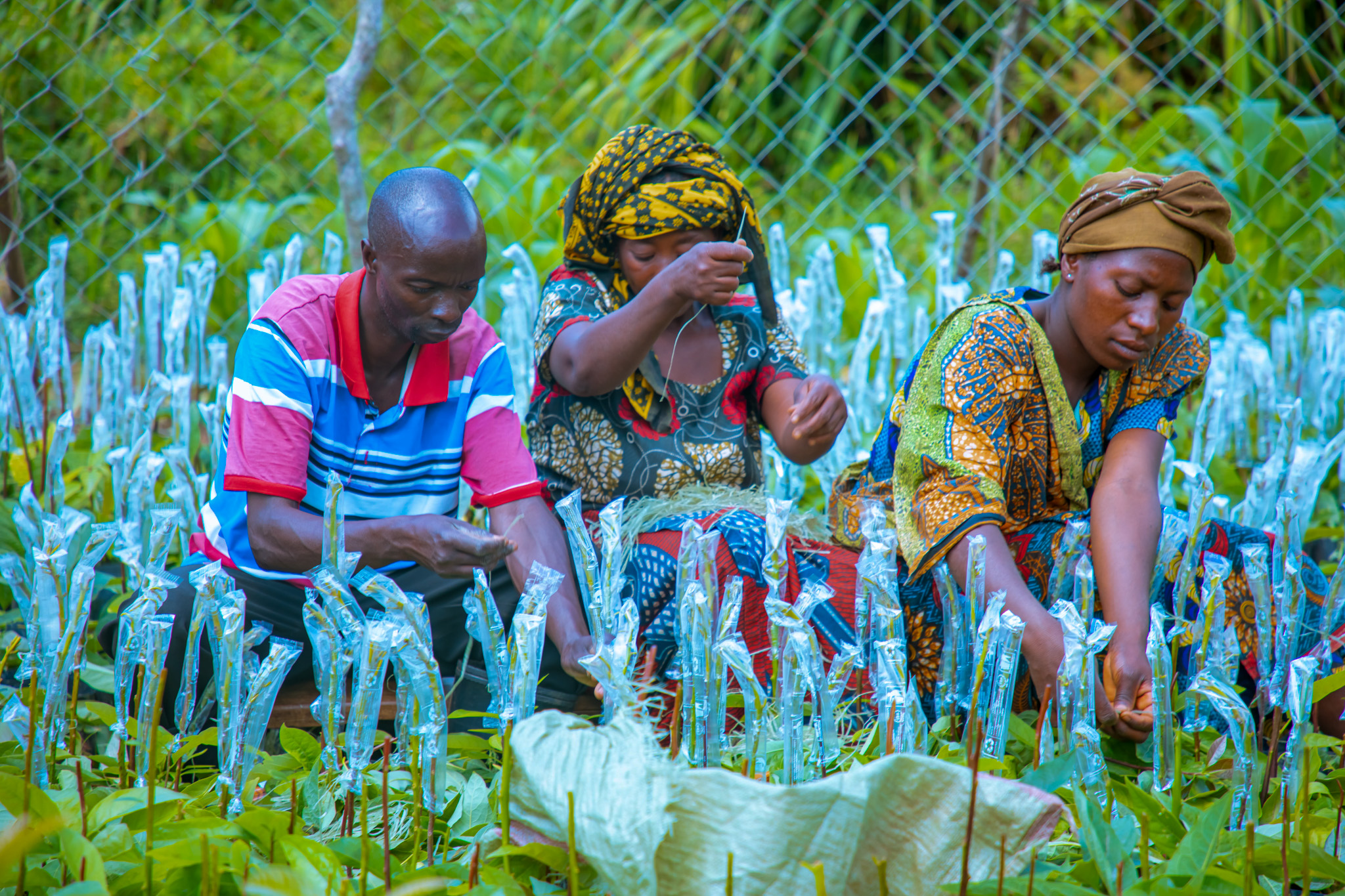
Community members in Tanzania’s Vidunda Sub-Catchment tend grafted avocado seedlings in an AWF-supported nursery, showcasing how modern agroforestry techniques are strengthening climate-resilient, sustainable livelihoods.
We engaged and equipped more than 4,000 farmers through 18 acres of demonstration plots for climate-smart interventions, including agroforestry, crop rotation, and conservation agriculture, achieving a 96% adoption rate. When farmers adopt practices because they work, conservation stops being a trade-off and becomes a pathway to resilience.
Moreover, to curb organized wildlife crime, in 2025 we supported the Tanzania Wildlife Authority (TAWA) in screening flights, cargo, and luggage across major ports
In Mkomazi, we supported the monitoring of 86 wildlife crime cases, achieving a 100% conviction rate on concluded cases. This resulted in the arrests of suspects and the recovery of wildlife products valued at $46,000 USD.
At Manyara Ranch, we supported 250+ patrols covering 5,300+ km, helping protect the vital wildlife corridor between Tarangire and Lake Manyara National Parks.
Conservation Finance: Moving From Dependence to Durability
One of the clearest lessons of 2025 is that conservation cannot rely on goodwill alone; it needs bankable, transparent systems that reward stewardship. We completed one Payment for Ecosystem Services (PES) feasibility assessment and engaged key stakeholders—the Rufiji Basin Water Board (RBWB), Tanzania National Electric Supply Company (TANESCO), Rural Water Supply and Sanitation Agency (RUWASA), and Kilombero Sugar Company Limited (KSCL)—to build a credible pathway for ecosystem investment in the Vidunda sub-catchment.
We also supported the ILUMA Wildlife Management Area to develop a conservation business plan that later attracted investment from Ratanakiri Safaris Ltd, Six Rivers Africa, and Carbon Business, opening doors for climate finance and diversified revenue. And at Manyara Ranch, we facilitated a tourism investment and successfully transferred management to the Manyara Ranch Management Trust—an important step for long-term sustainability and community ownership of this critical corridor.
Evidence and Learning: Conservation Decisions Grounded in Data
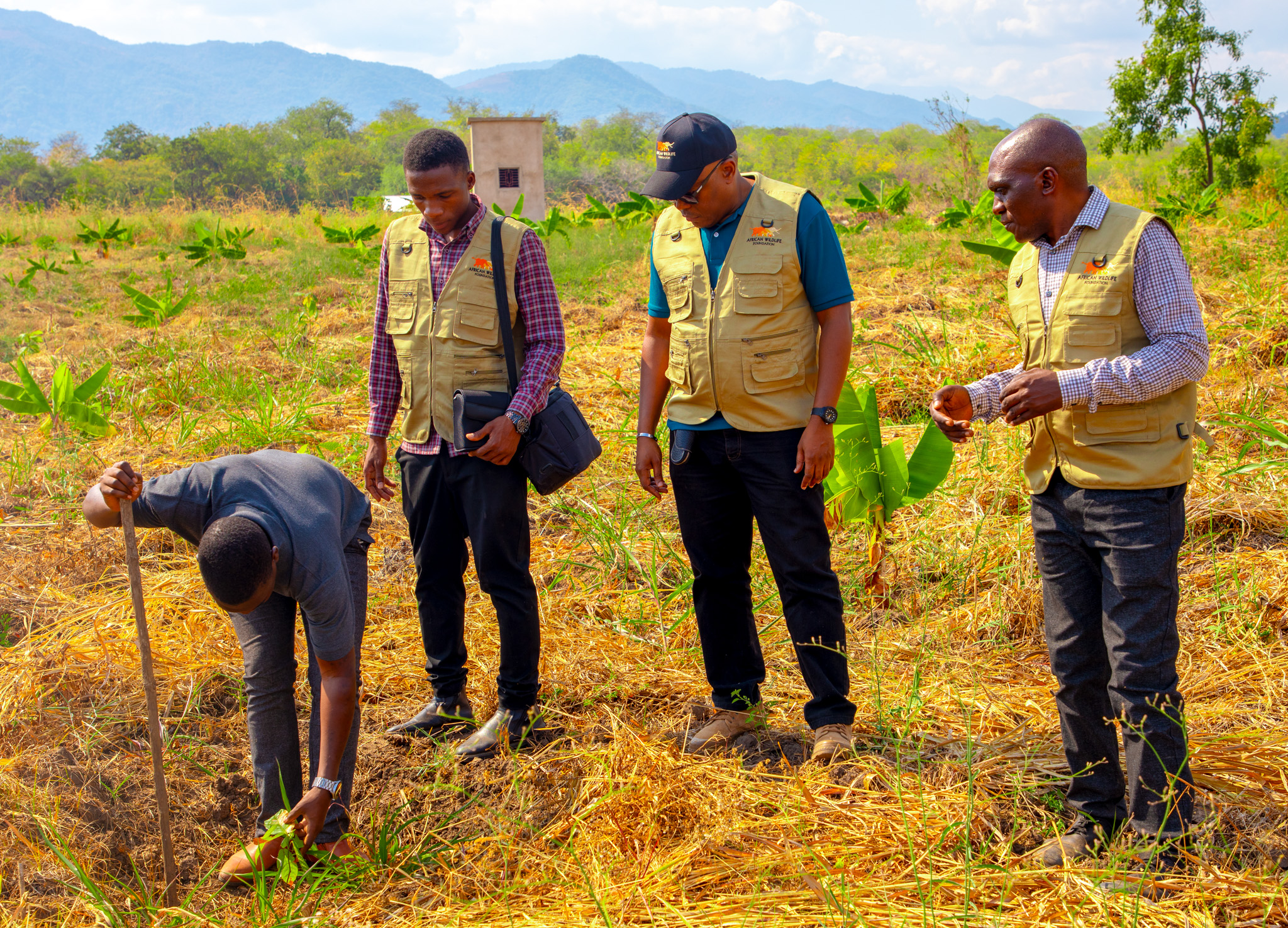
AWF and TARI teams review cocoa field trials at TARI–Ifakara, where research is being turned into practical, sustainable farming solutions for communities in the Kilombero Landscape.
Good intentions are not enough; conservation must be informed by evidence. In 2025, our engagement with the Tanzania Agricultural Research Institute (TARI) was formalized through a country-level Memorandum of Understanding to strengthen collaboration on a cocoa research and learning site at TARI–Ifakara. The aim is straightforward: connect farmers to research so conservation-compatible agriculture supports wildlife conservation, ecosystem health, and local livelihoods.
We also used river health assessments with TARIS Sfupi technology to inform decisions in the Kilombero Catchment, and trained three Water User Associations in biomonitoring methodologies, including the application of the tools, and provided bioassessment kits. These are the kinds of practical innovations that improve accountability and strengthen management over time.
Livelihoods: Conservation Works When Households Can Plan and Prosper
Conservation succeeds when communities thrive, when income options reduce pressure on forests and wildlife, and when financial tools help households absorb shocks.
In 2025, we invested in livelihood diversification by establishing two fish ponds, providing 11,000 fingerlings and a feed processor, and strengthening 15 beekeeping groups with improved hive management, honey harvesting, and processing facilities. We also supported one honey processing and storage center in Kilombero in collaboration with a local NGO.
On the livestock side, we conducted artificial insemination for 400 cows, achieving a 77% conception rate, and established four Village Savings and Loan Associations (VSLAs) with TZS 4.8 million in seed capital, enabling communities to acquire 25 livestock for income generation. These are not side activities; they are how conservation becomes economically feasible.
Policy Tailwinds: Land Use Planning and Inclusive Water Governance
Tanzania’s enhanced focus on integrated land use planning in 2025 created a practical opening for securing wildlife corridors while balancing competing land uses. AWF contributed to national discourse by supporting approaches in the Kilombero Landscape that can be replicated elsewhere, where corridor integrity depends on local clarity about boundaries and benefits.
We also supported integrated water governance. The operationalization of the Rufiji Basin Integrated Water Resources Management Plan gained momentum in 2025, with AWF strengthening Water User Associations and supporting community participation in basin-level planning. One WUA member was selected to serve on the Rufiji Basin Water Board—a meaningful step toward ensuring community voices shape water governance at the highest level.
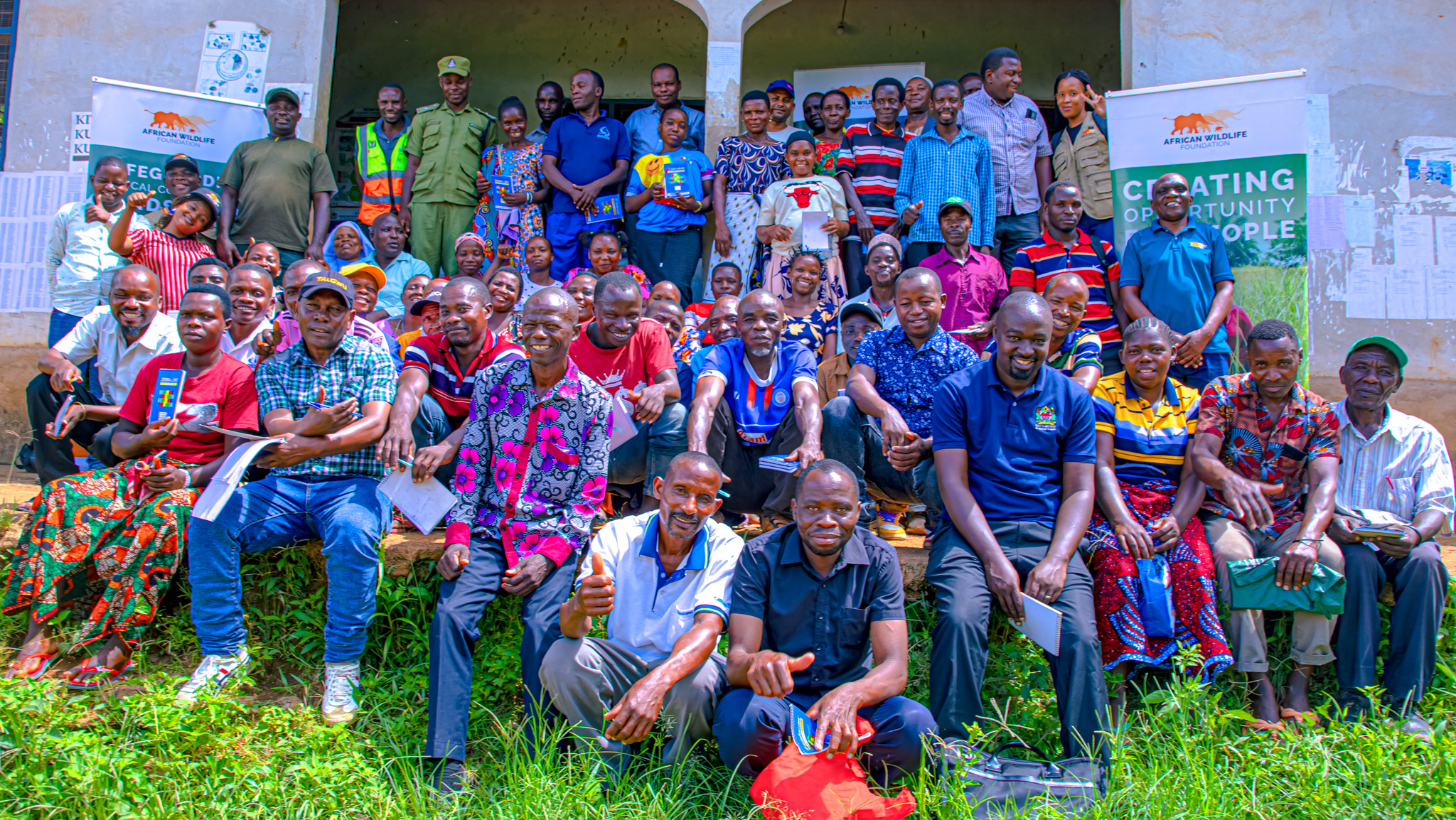
Community leaders and partners in Kilombero gather with AWF to advance ILUMA WMA reforms that link wildlife conservation with sustainable livelihoods and local economic benefits.
Closer to the ground, we strengthened three WUAs in Kilombero and addressed overlap among village-level committees by capacitating WUAs, VNRCs, VLUMs, and the WMA to work together. Joint training manuals were developed and distributed to 49 villages. In the Vidunda sub-catchment, one joint natural resources management plan was developed—a concrete tool for aligning water and land stewardship in practice.
Looking to 2026: Scale What Works, Finance What Lasts
The achievements of 2025 should be treated as starting points, not endpoints. In 2026, we will step up to piloting and operationalizing a community-led PES scheme in the Vidunda sub-catchment. With a 96% adoption rate among trained farmers, we will scale climate-smart agriculture training to reach 10,000+ farmers across Kilombero and surrounding landscapes, using peer mentorship to spread practices that deliver results.
We will also deepen community conservation finance, supporting ILUMA WMA and other community conservancies to diversify revenue streams through ecotourism, carbon credits, and strengthened governance. Our target is clear: by end of 2026, reduce the WMA’s dependence on external funding while increasing local conservation budgets.
At Manyara Ranch—now managed by the Manyara Ranch Management Trust—2026 will focus on consolidating governance systems, optimizing livestock–wildlife integration, and maximizing tourism revenue while maintaining ecological integrity. We will also expand technology adoption, from CyberTracker for patrol monitoring to TARISSfupi for river health assessment, and make these tools more accessible to communities tracking land use change and restoration progress.
Finally, we will keep investing in people. Our 2025 engagement of communities in conservation sports and students in restoration activities revealed strong appetite among youth for conservation action. In 2026, we will strengthen school-based engagement and mentorship pathways, and provide targeted support to women’s groups in conservation business sectors where they can lead, generate income, and champion stewardship.
As we close 2025 and look toward 2026, one truth crystallizes: conservation succeeds when people lead. The communities protecting Kilombero’s watersheds, the scouts patrolling Mkomazi’s wilderness, the farmers adopting climate-smart practices, and the youth planting seedlings are Tanzania’s conservation heroes. AWF’s role is to back that leadership—by strengthening institutions, mobilizing financing, and ensuring Tanzania’s conservation agenda is shaped by the people who live with the land every day.