World Lion Day: Protecting Tsavo's Lions Through Science and Community Action
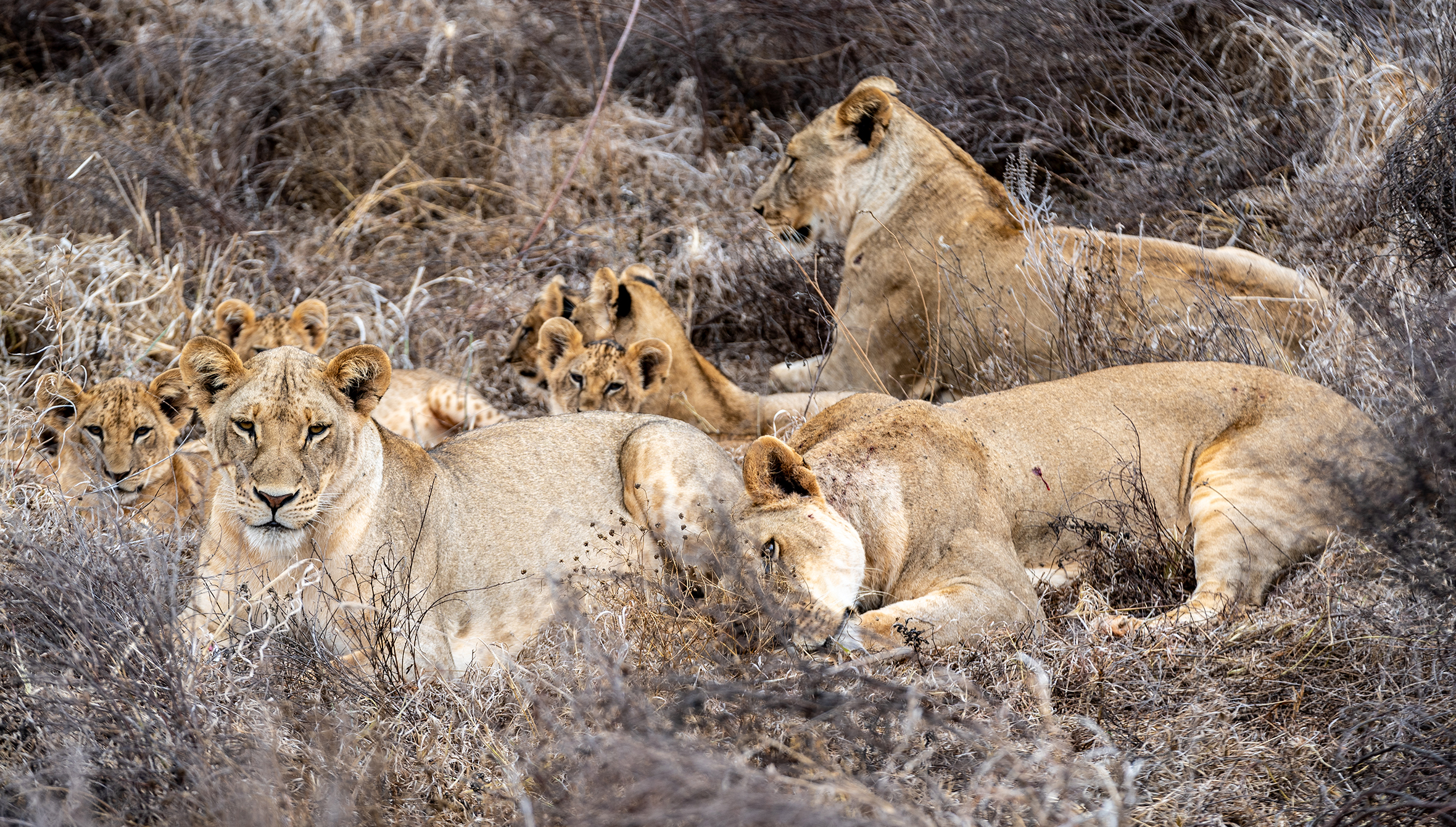
A pride of lions in Kenya's Tsavo landscape. © AWF
The African lion, one of Africa's iconic Big Five species, is a conservation priority for the African Wildlife Foundation across key landscapes, including Tsavo in Kenya, Kidepo in Uganda, and Kilombero in Tanzania. Through the Tsavo Lion Project, supported by Simply Southern, AWF is combining science, GPS collar technology, real-time monitoring, and community partnerships to reduce human-lion conflict, protect lion populations, and strengthen coexistence between people and wildlife.
Every lion saved is a step toward protecting one of Africa's most iconic species.
As the world marks World Lion Day, conservation efforts across Kenya's Tsavo landscape are giving lions a better chance of survival through an innovative combination of science, technology, and community partnerships. Supported by Simply Southern, the African Wildlife Foundation's (AWF) Tsavo Lion Project helps safeguard lion populations while reducing conflict between people and wildlife.
For lions in Tsavo, survival is becoming increasingly challenging. As wild prey declines and human activities expand across the landscape, lions are travelling farther in search of food, bringing them into closer contact with livestock and communities. These encounters often place both people and lions at risk, making human-lion conflict one of the greatest threats to the species' long-term survival.
To address this challenge, AWF Charlotte Fellow and University of Wyoming Ph.D. candidate Douglas Kamaru has been monitoring collared lion prides through the Tsavo Lion Project since September 2024 as the project has expanded from four collared prides to five, with plans to collar a sixth pride by the end of August 2026.
The GPS collars help conservationists understand how lions move across Tsavo's vast landscape. Transmitting location data every two hours, they reveal where prides establish their home ranges, where they hunt, and when they begin moving toward nearby communities—information that has proven invaluable in protecting both lions and livelihoods.
"Lions live in family groups, much like people do," says Kamaru. "By collaring the lead female, we are able to understand the movements of the entire pride." The collars provide valuable data for monitoring their behavior and movement across the vast landscape, with batteries lasting approximately two years before they are replaced.
The data is already revealing important insights. Some prides occupy home ranges of nearly 400 square kilometers much larger than those in many other protected areas. Researchers believe declining prey availability may be driving these extensive movements, increasing the likelihood that lions encounter livestock as they search for food.
Keeping Lions Safe Through Early Action
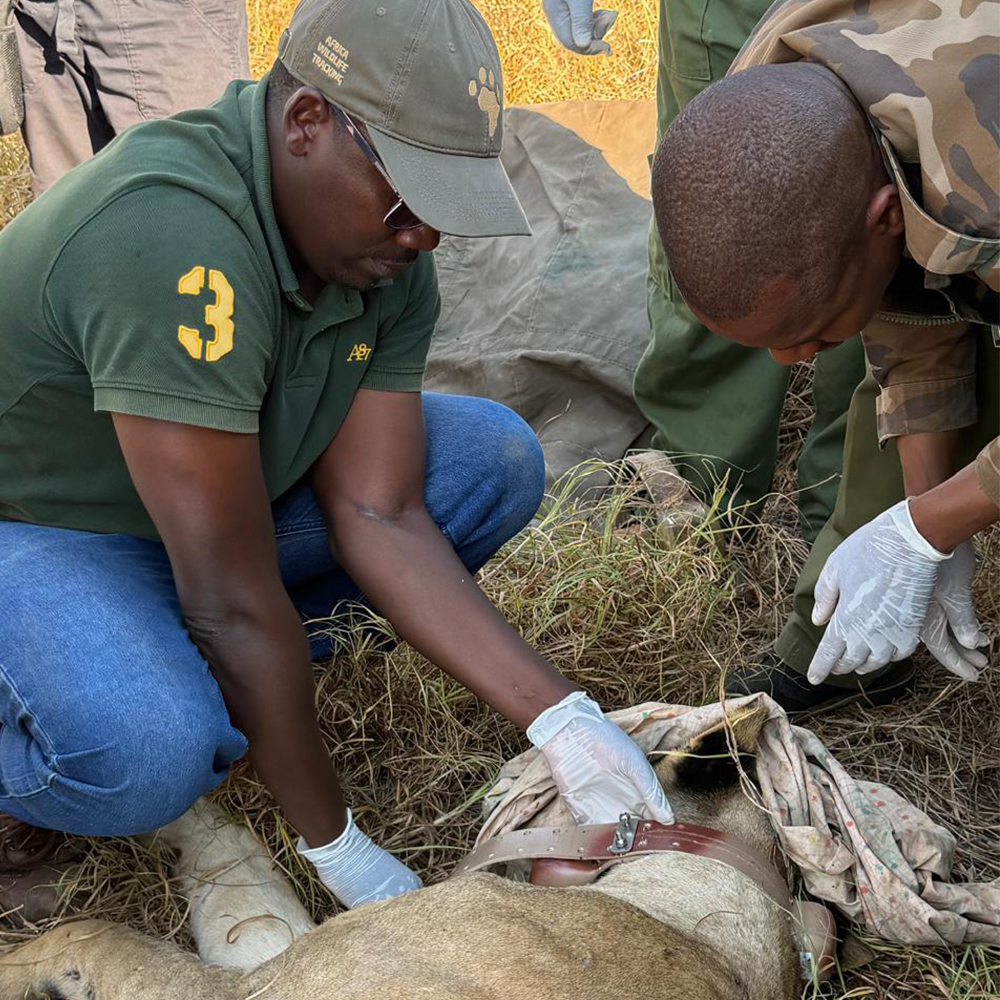
Douglas Kamaru collaring a lion in the Tsavo landscape. © Peter Mwiwa
Human-lion conflict remains one of the greatest conservation challenges across the Tsavo landscape, particularly in areas where community grazing lands border wildlife habitats. To address this, Douglas combined GPS collar technology with an innovative virtual geofencing system that provides communities with early warnings before conflict occurs.
Working alongside the Kenya Wildlife Service and neighboring conservancies, he has combined GPS collar technology with a virtual geofencing system, using EarthRanger technology, virtual boundaries have been established around mapped bomas across the landscape. Whenever a collared lion comes within 500 meters of a livestock enclosure, the system automatically sends SMS and WhatsApp alerts to herders and conservancy teams, giving them time to safely move livestock or discourage lions from approaching.
The Lumo Community Conservancy security team responds to these alerts, helping guide lions away from livestock while keeping both people and wildlife safe. When lions move beyond conservancy boundaries into neighboring community areas, the system also alerts conservation teams, allowing for faster and more coordinated rapid responses.
Since introducing the geofencing system, the project has prevented more than 30 potential livestock attacks through early warning alerts. Every incident avoided represent livestock protected, livelihoods secured and most importantly, lions spared from possible retaliatory killing.
For Douglas, technology is only part of the solution. Lasting lion conservation depends on earning and maintaining the trust of local communities.
"Trust is critical," he says. "If you assure communities that you will help when lions approach their livestock, you have to be there." Protecting lions, he explains, means working alongside the people who live with them every day. "We want to protect lions, but we also want to protect people's livelihoods."
As monitoring expands, the project aims to collar more prides and build an even clearer picture of how lions use the Tsavo landscape, strengthening efforts to ensure long-term survival.
"Hope can only be sustained by continuing to invest in science, expanding our monitoring efforts, and strengthening partnerships with communities," says Douglas. "The more we understand how lions move across the landscape, the better equipped we are to protect both the lions and the people who share the landscape with them." On this World Lion Day, the Tsavo Lion Project demonstrates what is possible when science, innovation, and community partnerships come together. Sustained investment in this work will help secure a future where Africa's iconic lions and people can thrive together.