World Water Day 2026: Why Water Security Is the Foundation of Africa’s Future
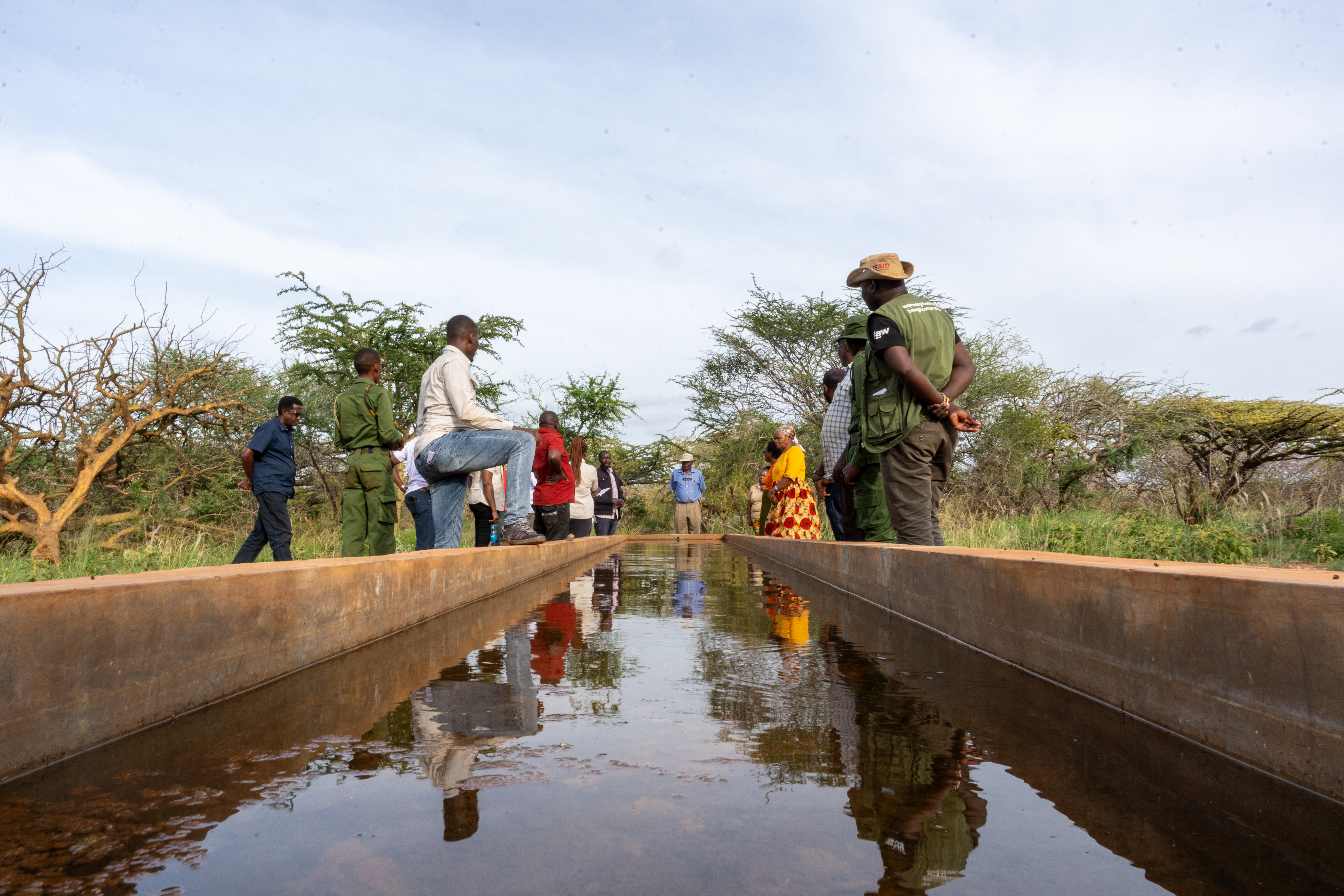
Water provided by a borehole pump in Tsavo landscape, kenya.
Across Africa’s vast and diverse landscapes, water is life. It sustains communities, supports wildlife, and underpins the ecosystems that drive economies and livelihoods. Yet for millions of people, access to safe, reliable water remains uncertain—increasingly strained by climate change, population growth, and environmental degradation.
Today, an estimated over 400 million people in sub-Saharan Africa lack access to basic drinking water services, while climate change is projected to reduce water availability in some regions by up to 20–30% by 2050. These trends are not distant risks—they are already shaping lives and landscapes across the continent.
This World Water Day 2026, the urgency is clear: Securing water is no longer just a development priority; it is central to conservation, climate resilience, and Africa’s long-term prosperity.
Why Water Is Also a Gender Issue
Water scarcity is not experienced equally. Across many rural communities, women and girls bear the primary responsibility for collecting water. In sub-Saharan Africa, women and girls spend an estimated 40 billion hours each year collecting water—time that could otherwise be invested in education, livelihoods, or leadership. The burden of water collection reinforces existing inequalities, limiting opportunities and affecting health and well-being.
Yet despite their central role, women are often underrepresented in decision-making processes related to water and natural resource management. Their knowledge and lived experiences are critical to designing effective, sustainable solutions.
Addressing water insecurity therefore requires inclusive approaches that:
- Recognize and elevate women’s roles and expertise
- Expand participation in governance and leadership
- Ensure equitable access to resources and opportunities
Water in Action: AWF’s Landscape Solutions
Across Africa, the challenge of water is not abstract—it is deeply local. In the landscapes where we work, water interventions are designed not only to meet immediate needs, but to reduce pressure on ecosystems and create long-term resilience for both people and wildlife.
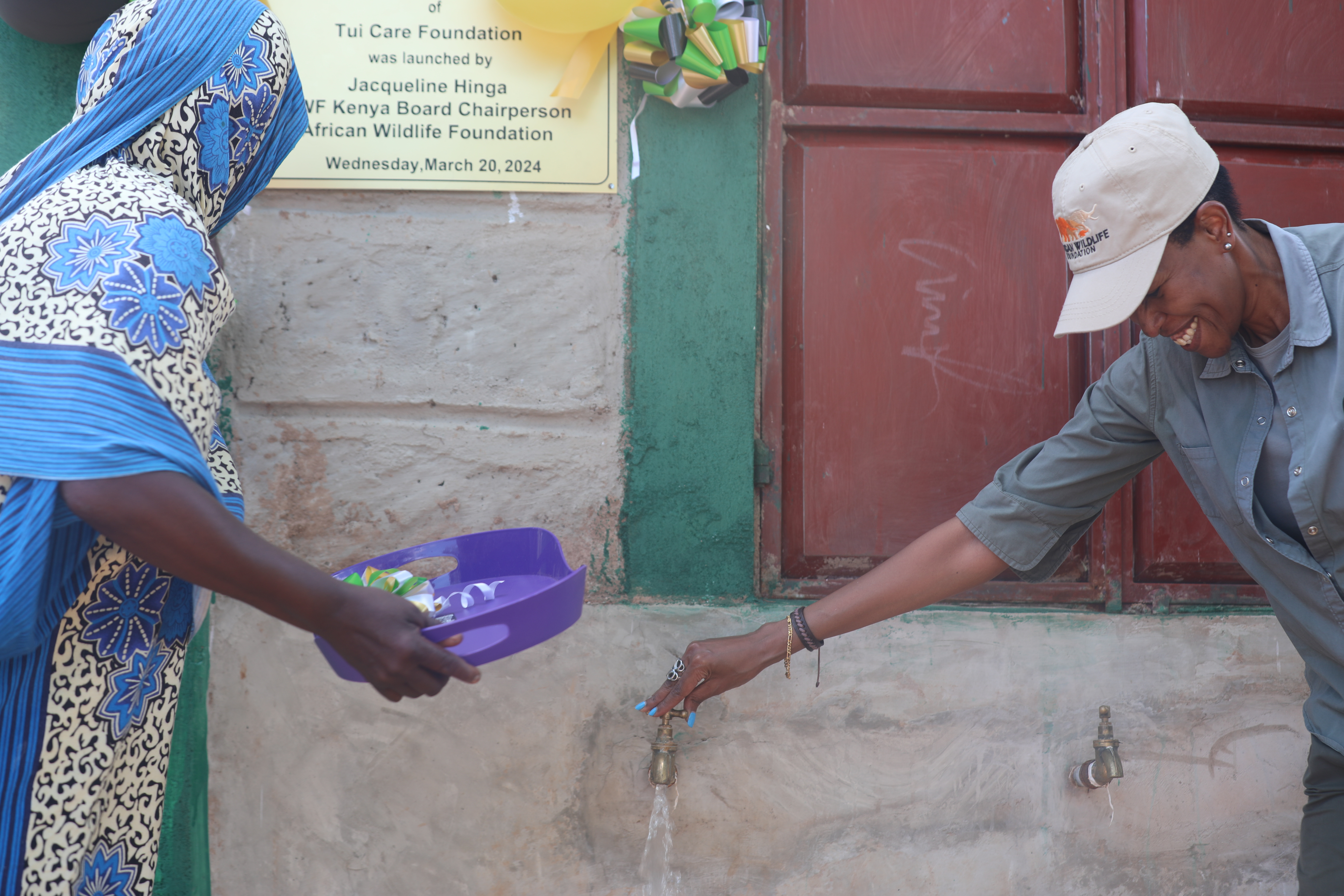
AWF Kenya Board Chair Jacqueline Hinga officially launches the Diwadane Borehole in Taita Taveta County.
In the Tsavo landscape, for example, access to water has been a persistent source of tension between communities, livestock, and wildlife. Through partnerships, AWF supported the development of critical water infrastructure, including a solar-powered borehole pump that now provides reliable water to more than 20,000 people. This has significantly reduced the need for communities to rely on shared and often contested natural water sources, easing pressure on wildlife habitats while improving livelihoods.
Beyond access, these interventions are designed to be sustainable. By integrating solar power, storage systems, and community management structures, projects can demonstrate how water solutions are able to strengthen both resilience and coexistence.
A similar transformation is underway in the Faro landscape in Cameroon, where water scarcity has historically driven communities into protected areas in search of water—increasing risks of habitat degradation, seasonal livestock movement, and even poaching.
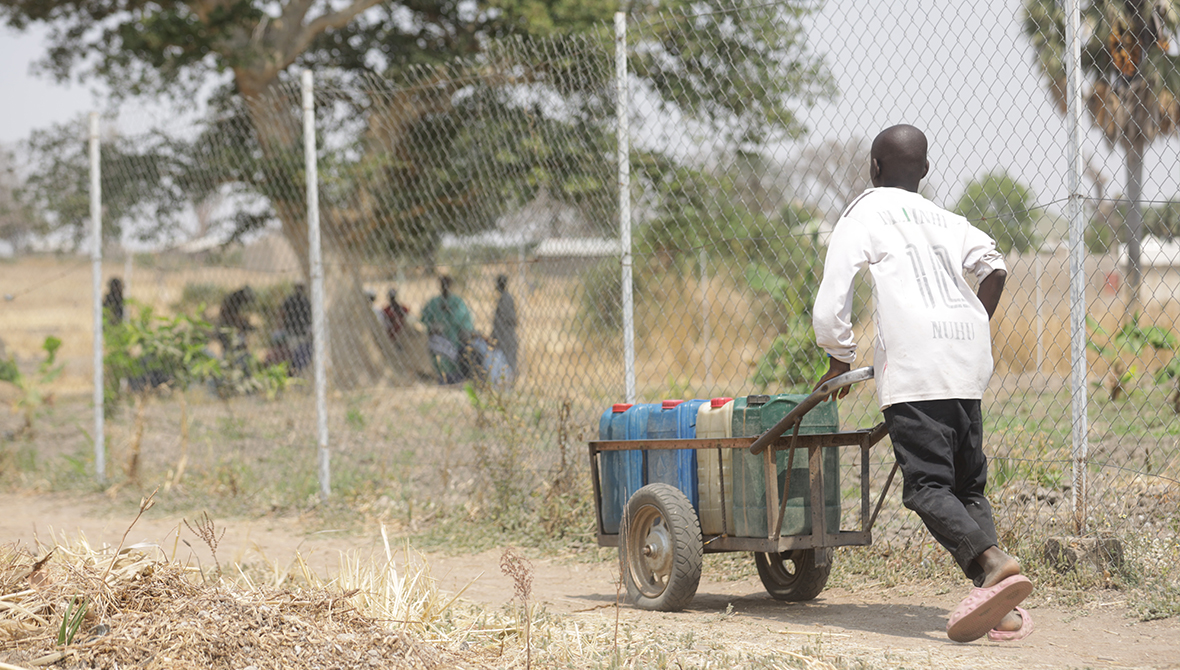
A young boy pushing a barrel of water from the Rural Resource Center in Tchamba, Cameroon.
AWF’s response has been to address water access as both a conservation and development priority. In communities surrounding Faro National Park, the organization supported the establishment of solar-powered borehole pumps and water storage systems serving over 1,100 residents. This has reduced the need for long-distance water collection and decreased pressure on the park’s fragile ecosystems.
The impact goes beyond access. Reliable water has improved health outcomes, enabled small-scale businesses, and created new livelihood opportunities, from food production to water vending. Just as importantly, it has helped shift community behavior—reducing the need to enter protected areas in search of water and fostering more sustainable relationships with the landscape.
In the Kidepo landscape, where water scarcity shapes seasonal movement and vulnerability, AWF’s work focuses on strengthening the systems that underpin long-term water availability. Here, conservation efforts are closely tied to protecting rangelands, restoring ecosystems, and supporting community-led resource management.
By improving how land and water are managed, these interventions help stabilize water availability across seasons, reducing competition among people, livestock, and wildlife. This is particularly critical in arid and semi-arid regions, where water scarcity can quickly escalate into conflict and displacement.
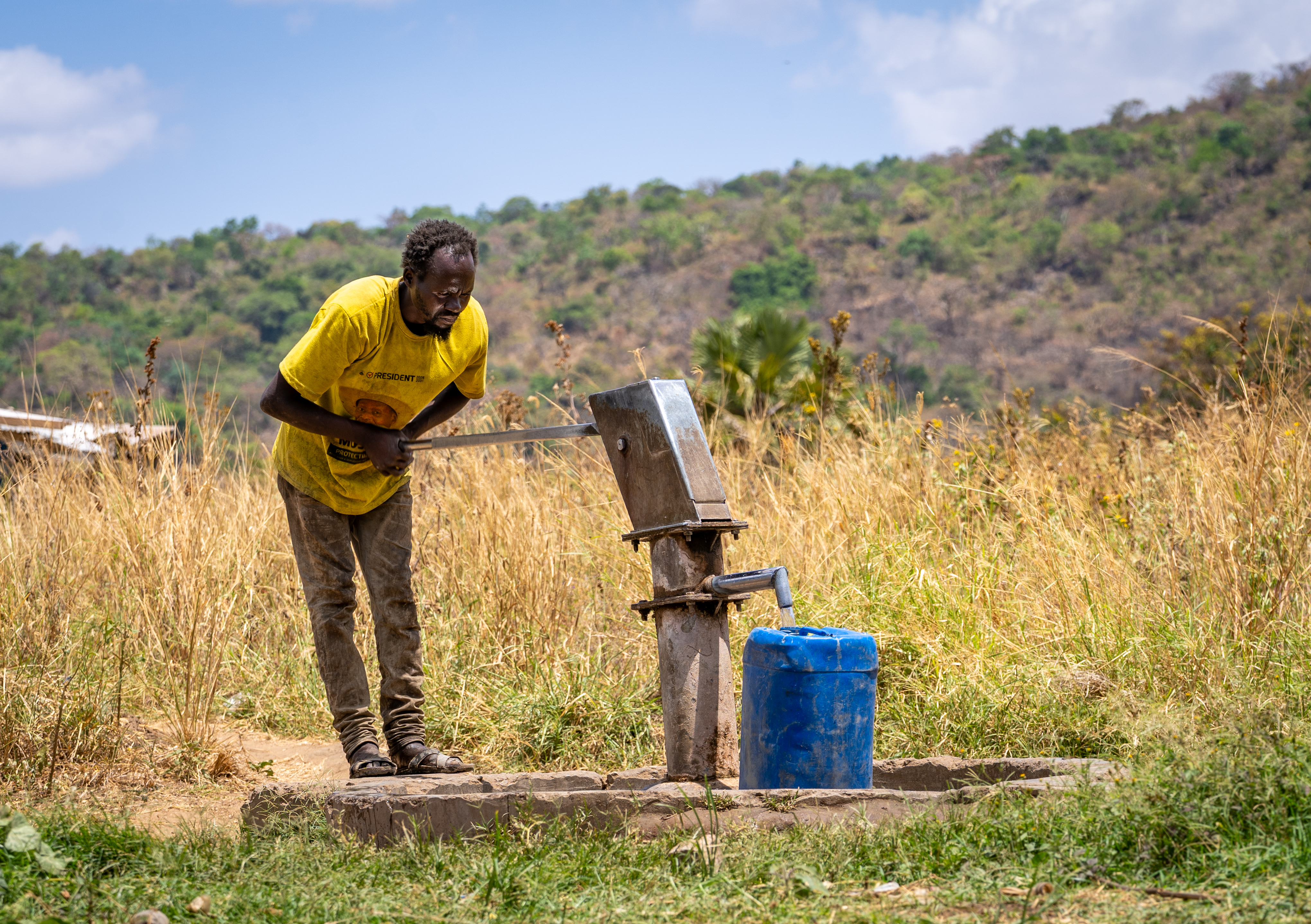
A community member retrieves water from a borehole pump in Kidepo landscape, Uganda.
Connecting Water, Women, and Wildlife
Across all these landscapes, a consistent pattern emerges: when water access improves, the burden on women is reduced, ecosystems begin to recover, and communities are better able to coexist with wildlife.
In places where women once spent hours each day walking for water, closer and more reliable access creates time for education, livelihoods, and leadership. At the same time, reducing dependence on shared natural water sources lowers the risk of human-wildlife conflict—a benefit that extends across entire ecosystems.
These are not isolated outcomes. They are the result of a deliberate approach—one that recognizes water as a connector between people and nature.
A Model for Africa’s Future
Across the landscape, AWF’s work shows that water solutions are most effective when they are integrated—when they address community needs, protect ecosystems, and strengthen governance at the same time.
This is the model that will be needed across Africa as water pressures continue to grow.
Securing water is not just about meeting today’s needs; it is about shaping a future where communities are resilient, ecosystems are intact, and wildlife and people can thrive together.