The River That Holds a Community Together
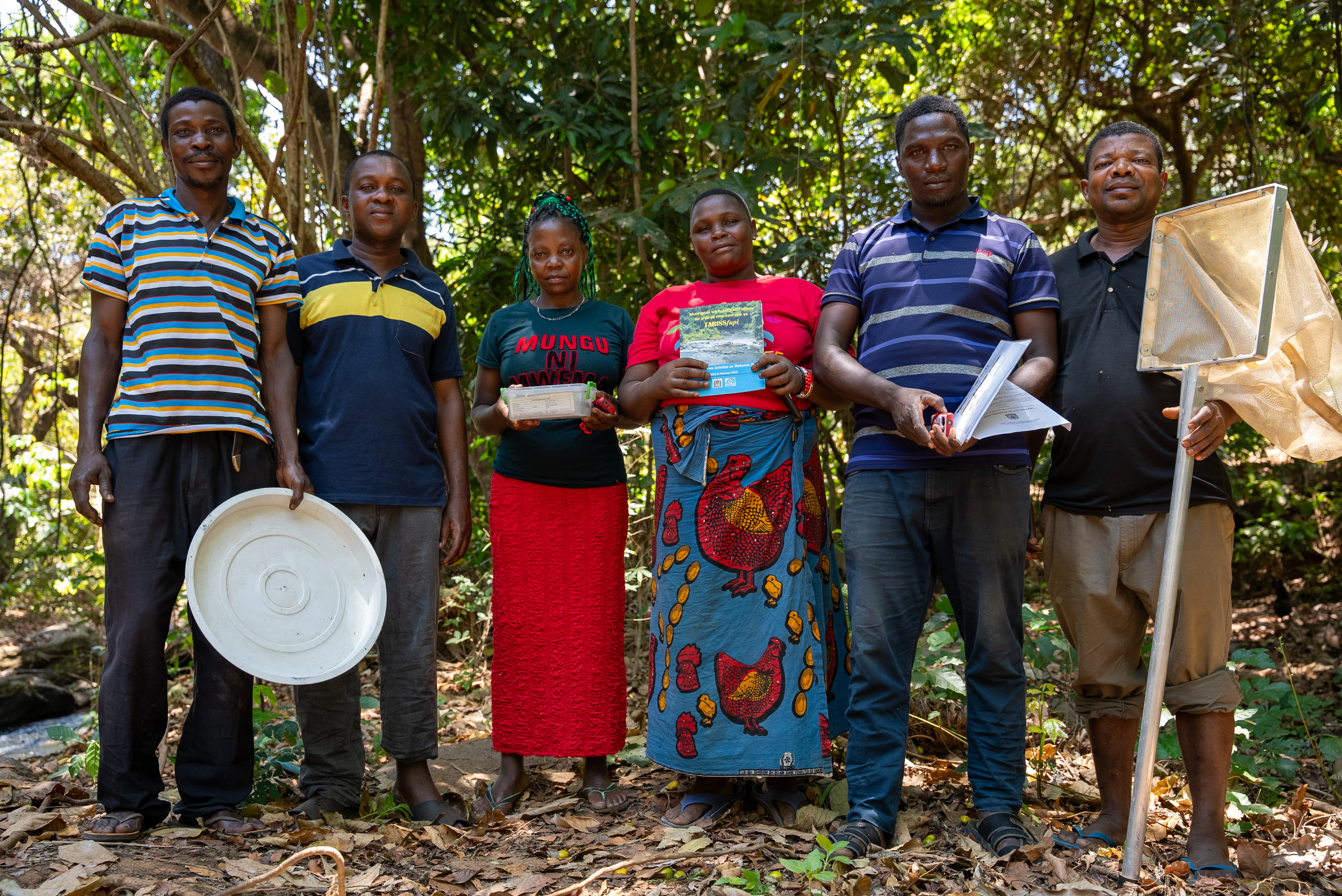
Naomi Kassim Mayowera, center right, with other members of a local water users association in the Kilombero Valley.
This story is drawn from AWF's 2025 Annual Report—Seizing the Moment—which chronicles a year of transformative conservation action across Africa. From watershed restoration in Tanzania to community-led economic growth in Rwanda, the report shows how AWF's model of African-owned conservation is delivering durable results. Read the full report at annualreport.awf.org
For Naomi Kassim Mayowera, the Mchombe River isn’t just another river; it’s survival. Her farm sits along its banks in the Kilombero Valley in south-central Tanzania—one of the most ecologically important and agriculturally productive regions on the continent.
Mayowera, who has been a member of the Village Natural Resources Committee since 2021, is part of AWF's watershed health and recovery strategy in the Kilombero Valley. The association's 30 members share a single mission: protecting the Mchombe river. They track pollution indicators and monitor the abundance of aquatic macroinvertebrates as early warning signs of ecological stress. Together, they have planted more than 1,400 indigenous trees along the riverbank to prevent erosion and protect the water from surrounding land use pressure.
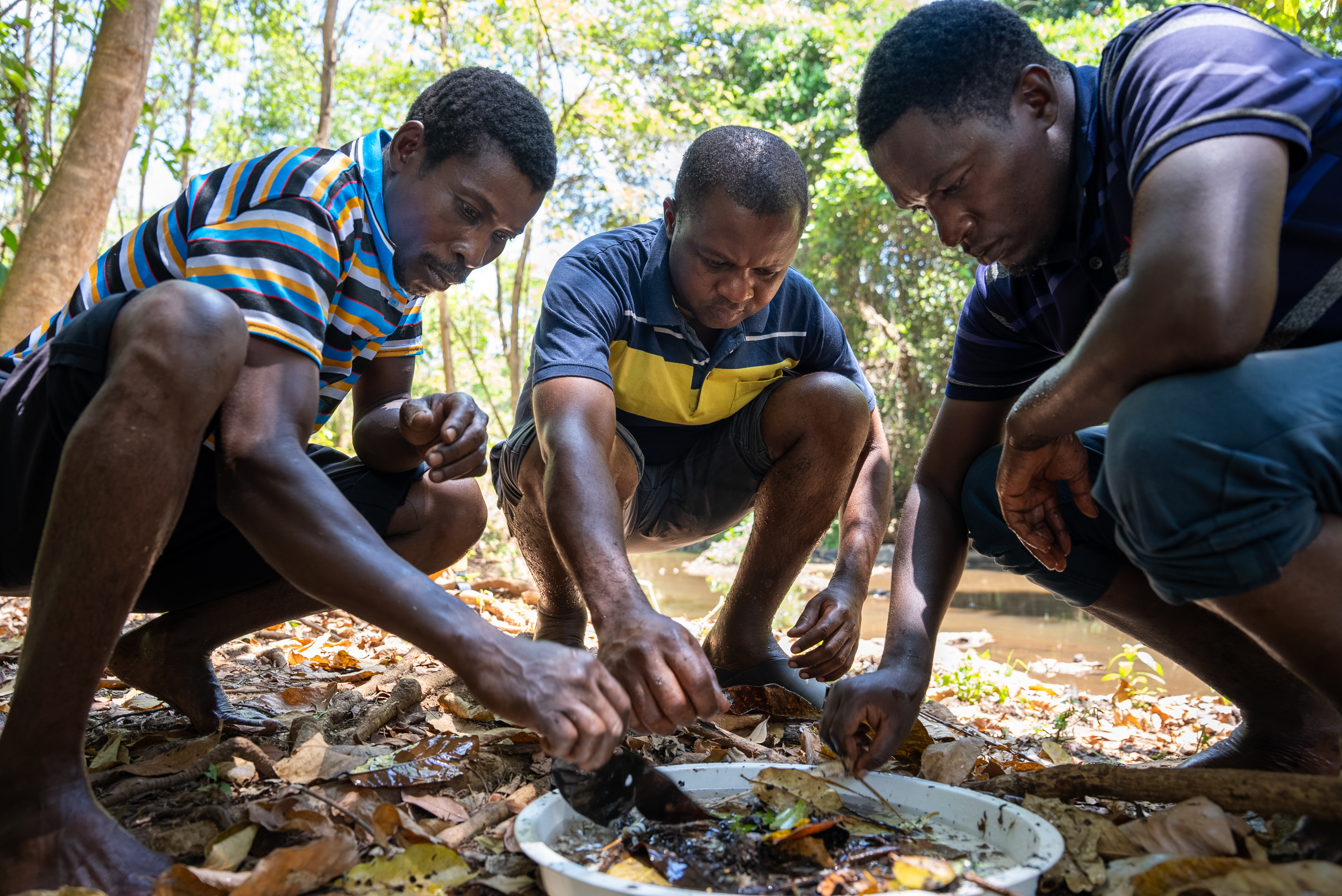
Members of the Village Natural Resources Committee assessing the river's health.
The Kilombero Valley is both a wetland of international importance and a critical wildlife corridor for elephants. It is a reminder that conservation and agriculture are not competing interests here; they are the same interest, expressed differently.
AWF has worked in the valley for more than a decade, building partnerships that link sustainable land use, wildlife corridors, and community livelihoods into a coherent strategy. In 2025, that work deepened through a new agreement with the Tanzania Agricultural Research Institute focused on improving farmer access to research and markets in sustainable cocoa production—expanding options for smallholder farmers while reducing pressure on sensitive ecosystems.
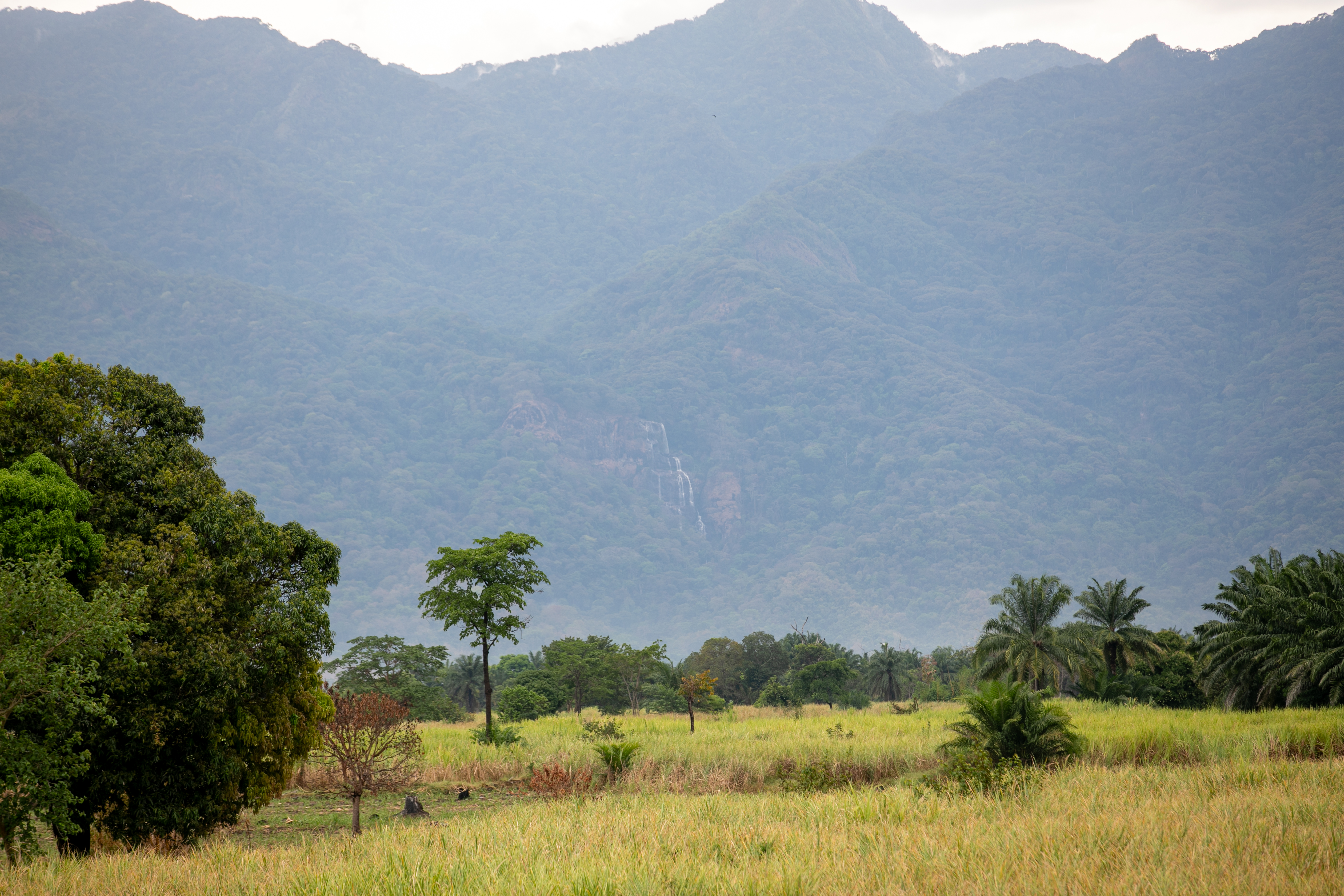
Ifakara, Kilombero Landscape, Tanzania.
The scale of the valley's agricultural economy gives this work considerable consequence. The Kilombero Sugar Company, AWF's partner since 2015, produces around 40 percent of Tanzania's sugar. Smallholder farmers, supported through cooperatives that AWF has helped strengthen, contributed 53 percent of the company's total cane supply in 2024. More than 11,000 farmers were engaged in sustainable agrochemical waste management practices through construction of waste collection centers in each of the cooperatives in 2025.
Further north, in the Maasai Steppe, AWF completed the handover of day-to-day management of Manyara Ranch to the community-led Manyara Ranch Management Trust—a milestone that reflects AWF's core commitment: building African leadership that outlasts external support. The goal is for the ranch to become fully self-sustaining within the next two to three years, a model for conservation financing grounded in local ownership.
Across Tanzania, the lesson is the same: When communities are equipped and trusted to lead, conservation and livelihoods move forward together.