Bonobo Protection in the DRC Shows Results
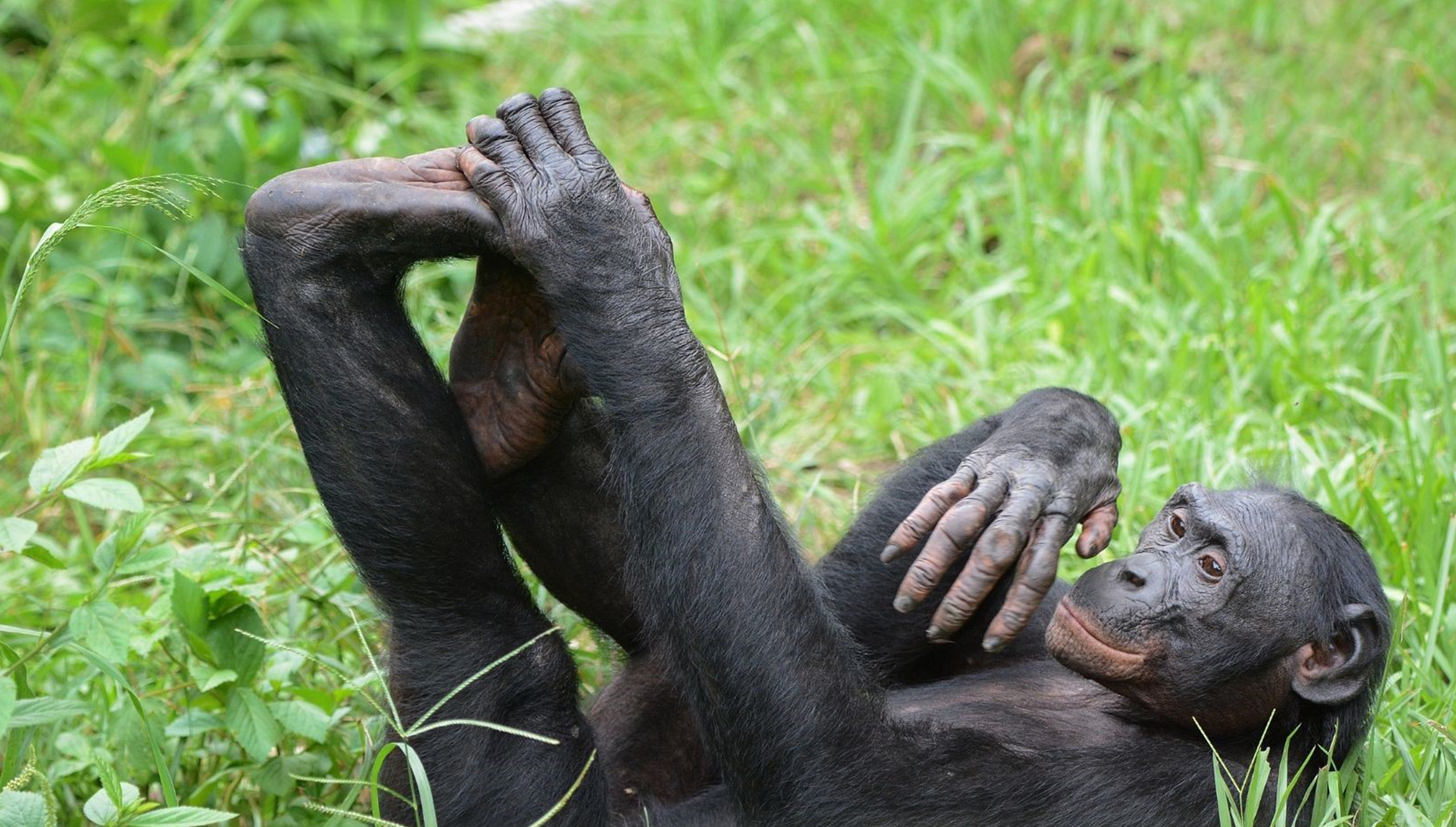
A bonobo resting in the grass of the Lomako-Yokokala Wildlife Reserve.
Bonobos are among the world’s most threatened great apes, and they exist only in the Democratic Republic of the Congo (DRC). Currently, just about 10,000 to 20,000 remain, while only 28 percent of their range is still suitable habitat. That makes every stronghold matter.
A decade after an African Wildlife Foundation (AWF) wildlife survey helped establish a baseline in Lomako-Yokokala, new findings from the reserve point to a more hopeful trajectory. Published in PARKS in May 2025, the latest study revisited the reserve in 2023 using the same survey design applied in 2010, making it possible to compare trends over more than a decade in a landscape where bonobo (Pan paniscus) research dates back to 1974 and ranger patrols have been active since 2006.
The results were encouraging. Encounter rates increased for most target mammal species, including one monkey species and four duiker species that rose fourfold or more. Signs of hunting fell sharply, with trap encounters down 82 percent and hunting camps down 40 percent compared with the 2010 survey. Bonobo nests were also recorded on more transects than before, while individual nest encounters rose more than threefold.
Why the Findings Matter for Bonobos
The study’s authors are careful not to overstate every number. They note that changes in detectability, nest age, and group size may have influenced the nest-density estimate. Even with that caution, the broader direction is important—bonobos in Lomako-Yokokala appear to be under less pressure than they were a decade ago.
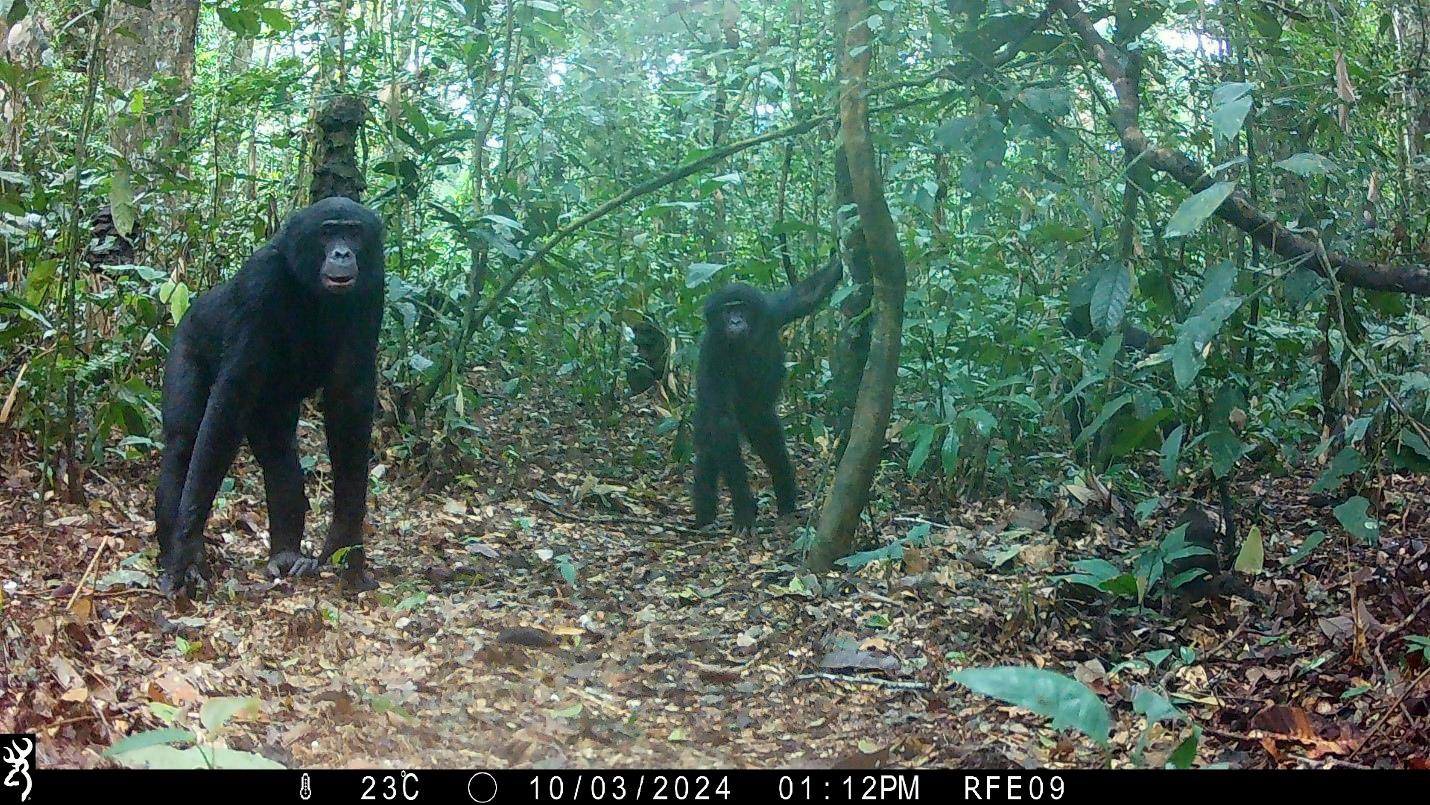
Two bonobos captured by a camera trap in the Lomako-Yokokala Wildlife Reserve.
That matters because bonobo conservation depends on consistency. It depends on protected areas that are managed, patrols that are sustained, and conservation partners that stay with the work long enough for recovery to become measurable. In Lomako-Yokokala, the data suggests that steady protection is helping create that stability.
AWF’s Protection Work in the DRC
For AWF, these findings sit within a longer commitment to bonobo protection in the Maringa-Lopori-Wamba landscape. AWF has helped establish two vital reserves in the Democratic Republic of the Congo and works with local partners to keep bonobo habitat protected and managed. The approach is practical: train rangers, strengthen protected-area management, and support conservation in ways that also create jobs and economic value for local communities.
Key to AWF’s approach is the use of technology to identify critical habitat and working with communities to develop land-use plans that protect wildlife while supporting livelihoods. In Iyondji, eco-guards supported by AWF received an IUCN International Ranger Award in 2022, underscoring what bonobo protection demands on the ground: steady patrols, local leadership, and frontline teams able to hold conservation gains over time.
The Iyondji Community Bonobo Reserve (ICBR) is a 1,030 km² protected area in the Democratic Republic of the Congo announced in 2012 to protect the endangered bonobo. Located in the Maringa-Lopori-Wamba landscape, it is managed through a collaborative partnership with local communities.
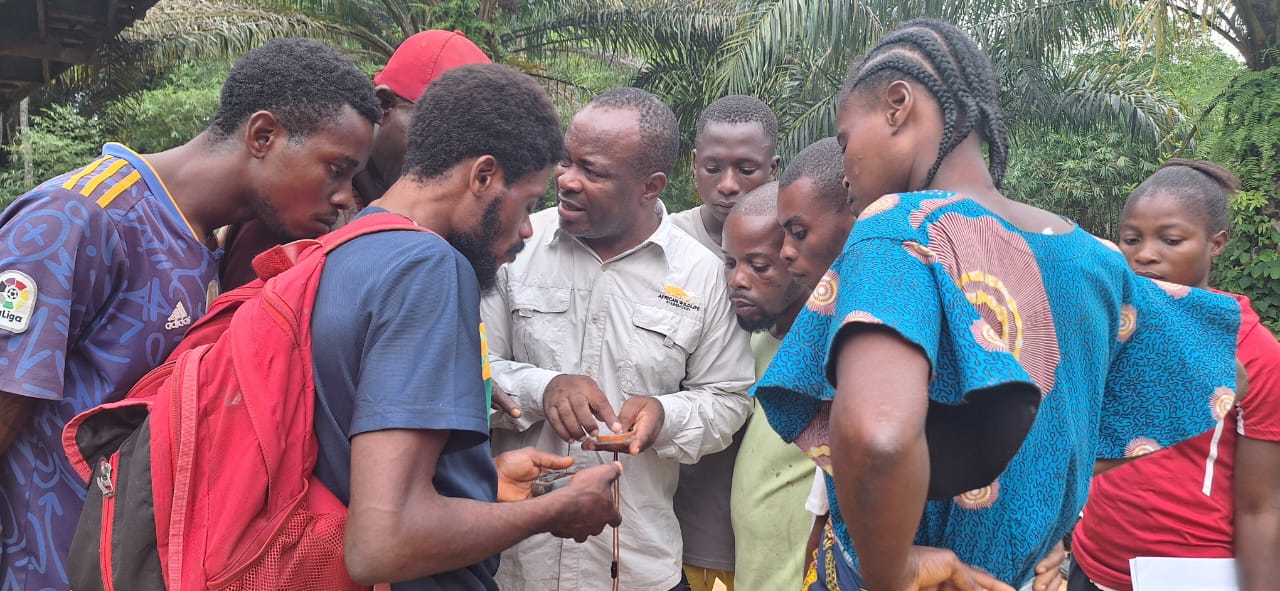
Training of community guards on data collection tools in Likunduamba, Ilima, within the Maringa-Lopori-Wamba Landscape.
Why This Matters Now
Endangered Species Day is often framed through loss. Bonobos are a reminder that the harder question is whether protection is strong enough to change outcomes. In Lomako-Yokokala, the answer appears more encouraging than it was a decade ago.
The work is not finished; Bonobos remain endangered, confined to one country, and vulnerable across much of their range. But the lesson from Lomako-Yokokala is clear: When protected areas are backed by ranger presence, community partnership, and long-term monitoring, endangered species can be given a real chance to recover.