Community-Driven Forest Restoration in Vuria, Kenya for Biodiversity and Ecosystem Recovery
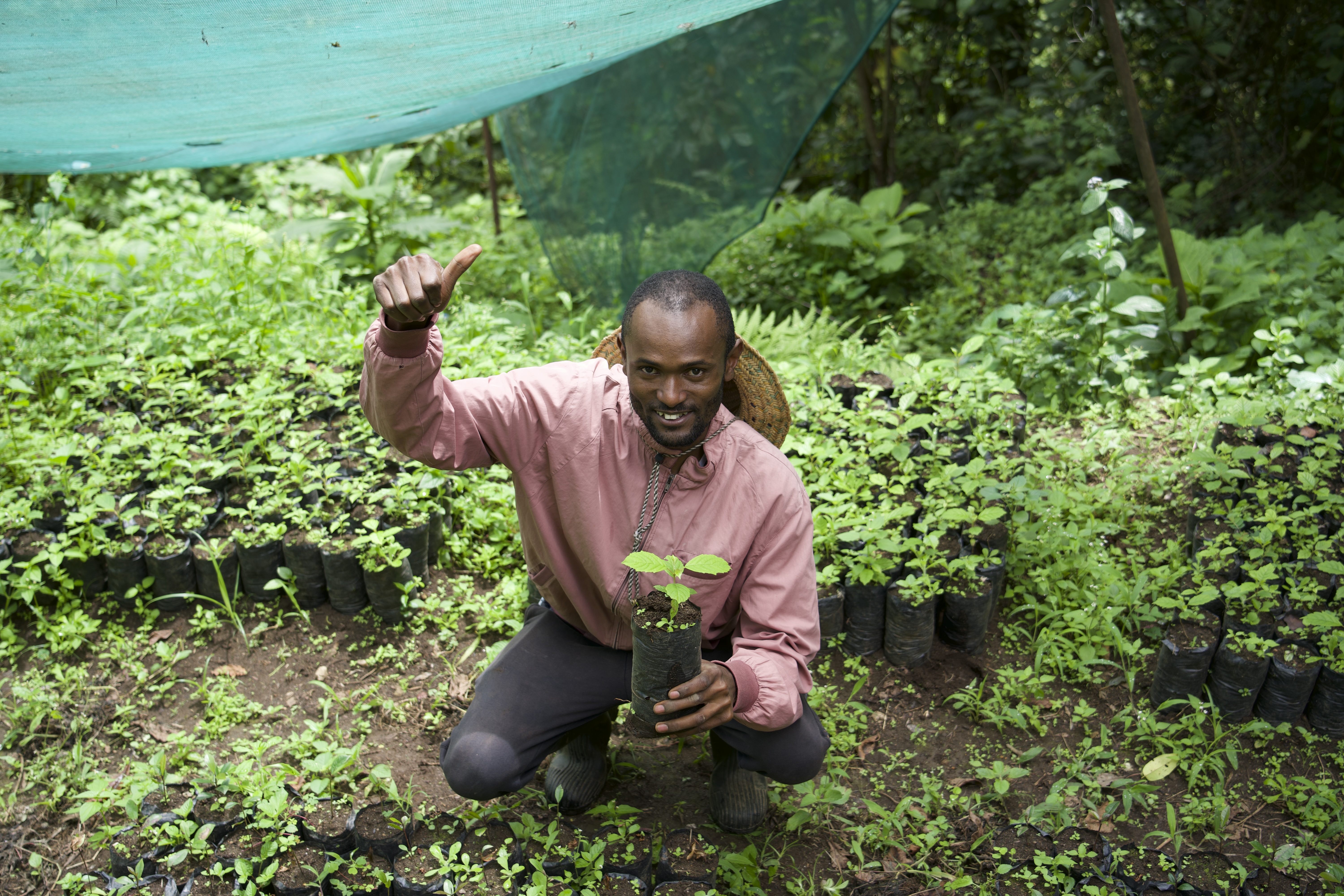
Ernest Maghanga, Chairperson of the Vuria Community Forest Association, at a tree nursery.
In the mist-covered hills of Taita Taveta County, Vuria Forest rises above surrounding communities as both a lifeline and a sanctuary for biodiversity. Its streams and springs sustain thousands of households across Mwanda Mgange Ward in Wundanyi Sub-County, while its indigenous trees shelter rare endemic bird species found nowhere else on Earth, including the endangered Taita apalis and Taita thrush.
For Ernest Maghanga, born and raised in Vuria, the forest is more than a landscape; it is a source of water, livelihoods, identity, and survival. Over the years, he has watched it shape community life while also witnessing growing environmental pressures threatening its future.
Today, Ernest serves as Chairperson of the Vuria Community Forest Association (CFA), leading local efforts to restore degraded forest areas, strengthen climate resilience, and protect one of Kenya’s ecologically significant biodiversity landscapes.
“CFAs in Kenya are community-led organizations that work alongside the government to protect and manage forest resources,” he explains. “My responsibility as Chairperson is to guide CFA activities and support communities in protecting our environment and conserving Vuria Forest.”
At the center of Vuria’s importance is water. More than 20 springs and streams originate from the forest, supplying households, farms, and livestock across surrounding communities. But as climate change intensifies, these systems are becoming increasingly vulnerable.
Longer dry seasons, rising temperatures, illegal logging, and encroachment are placing pressure on the landscape. Water levels drop sharply during droughts, tree regeneration slows in some areas, and fragile ecosystems face rising risks of degradation and fire.
Community Response to Ecosystem Collapse
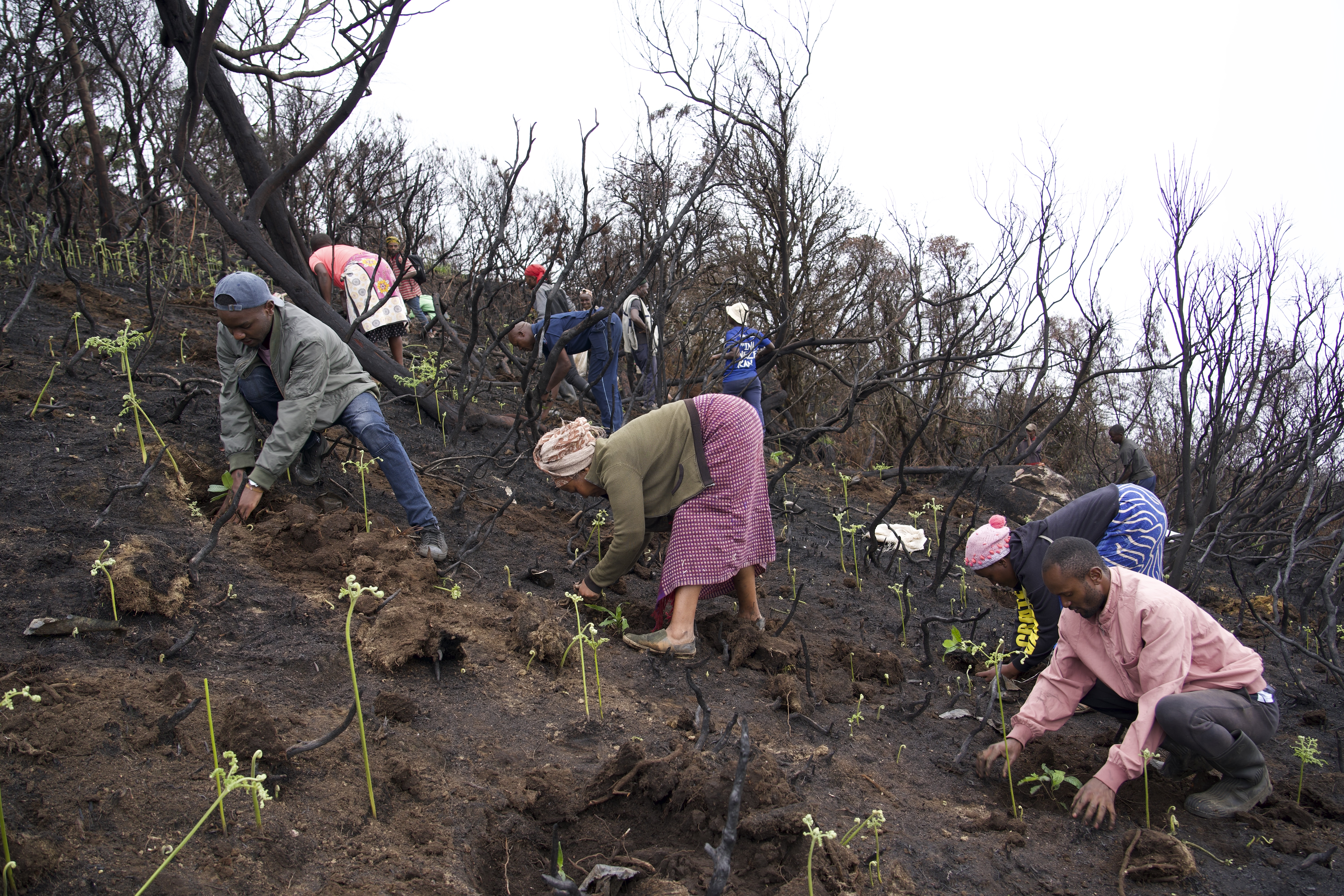
Ernest Maghanga and community members restoring a once-forested area affected by fire.
For Ernest, the impact of climate change became especially clear when a devastating fire swept through part of Vuria Forest. “The fire felt like a nightmare,” he recalls. “Vuria had not experienced such destruction for more than 30 years.”
The blaze affected sections of indigenous forest, including areas inhabited by the endangered Taita apalis. It spread rapidly due to extremely dry vegetation and prolonged drought conditions. As flames advanced, Ernest mobilized neighboring communities to create emergency fire breaks and contain the spread before it reached deeper biodiversity zones. Community members worked together to protect a forest that sustains both people and wildlife.
But response efforts were only in the beginning. Soon after, restoration began with support from the African Wildlife Foundation (AWF) under a project funded by the Embassy of Sweden in Kenya. Together with more than 100 community members, Ernest led the planting of over 2,500 indigenous trees across the burned areas.
The restoration prioritized indigenous species to rebuild habitat, restore ecosystem functions, and strengthen resilience against future climate shocks.
“This forest is the heart of our community,” he says. “Restoring it means protecting our water, our biodiversity, and our future.”
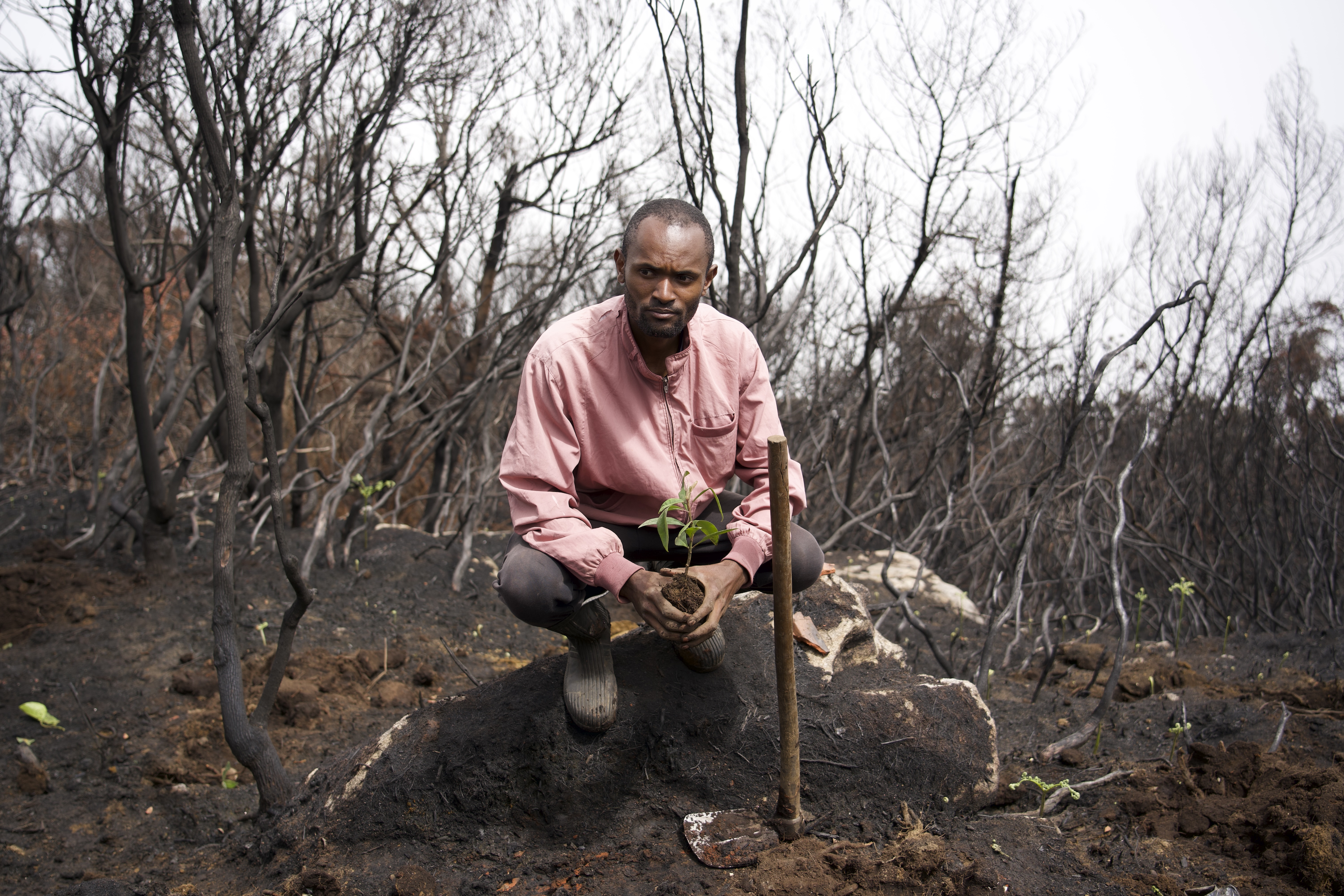
Ernest Maghanga looking at the effects of the forest fire devastation.
Strengthening Community Climate Action Through Partnerships
As climate change continues to reshape ecosystems and livelihoods across Africa, local solutions are increasingly strengthened through partnerships that bring together communities, conservation organizations, and development actors working toward shared climate and biodiversity goals.
Under Ernest’s leadership, the Vuria Community Forest Association has experienced significant growth and stronger community participation. Membership has nearly doubled from just over 200 members in 2024 to almost 400 today, with increasing involvement from youth, women, elders, and persons with disabilities.
A key driver of this transformation has been training on Gender Equity and Social Inclusion (GESI), implemented through AWF and CIFOR-ICRAF under a UK PACT project. The initiative broadened participation in conservation and strengthened local governance structures.
In response, inclusivity has become central to the CFA’s model. Across its five zones, members now manage community and individual tree nurseries supplying seedlings for restoration across the landscape.
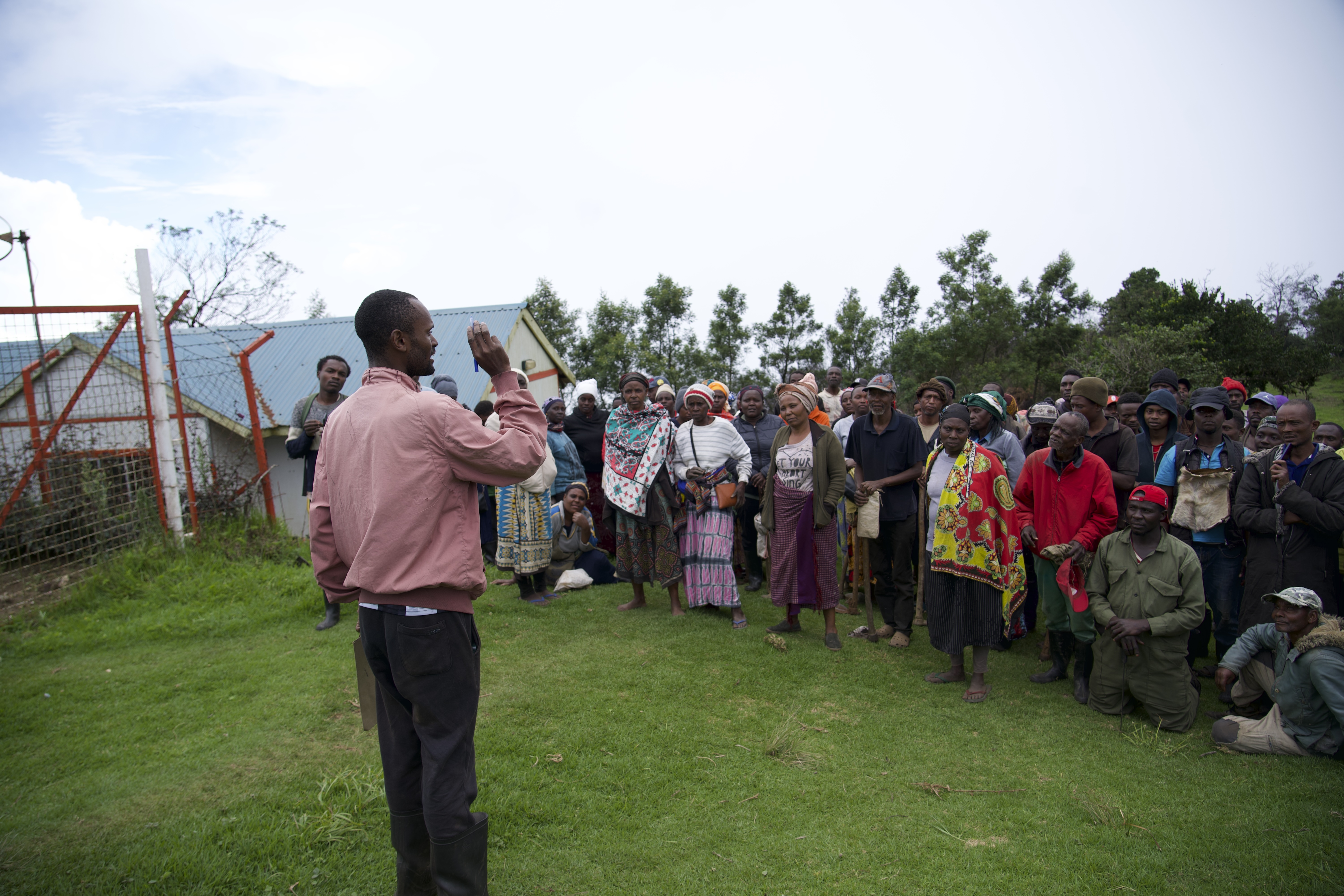
Ernest Maghanga speaking with Vuria CFA members following a successful forest restoration exercise.
More than 150 members have also been trained in agroforestry and are integrating fruit trees, indigenous species, and selected exotic trees into their farms. This is restoring degraded land while improving household incomes, food security, and environmental sustainability. At the same time, the CFA is reducing pressure on the forest through alternative energy solutions. With support from AWF and the Embassy of Sweden in Kenya, marginalized households have gained access to solar power and biogas systems.
These clean energy solutions are reducing dependence on firewood while supporting the transition toward renewable energy systems. In many ways, Vuria demonstrates how community-led climate action already aligns with global climate priorities.
As climate change continues to threaten ecosystems and livelihoods across Africa, stories like Ernest’s highlight the importance of community-led conservation in restoring degraded landscapes and protecting biodiversity.
Communities living closest to threatened ecosystems are already driving restoration and environmental protection. What they need now is sustained investment, stronger partnerships, and continued support to scale solutions that protect both people and nature not just for future generations, but for the world already grappling with these challenges today and for those yet to come.