In DRC’s Bili-Uélé, Women Turn Local Action into Biodiversity Impact
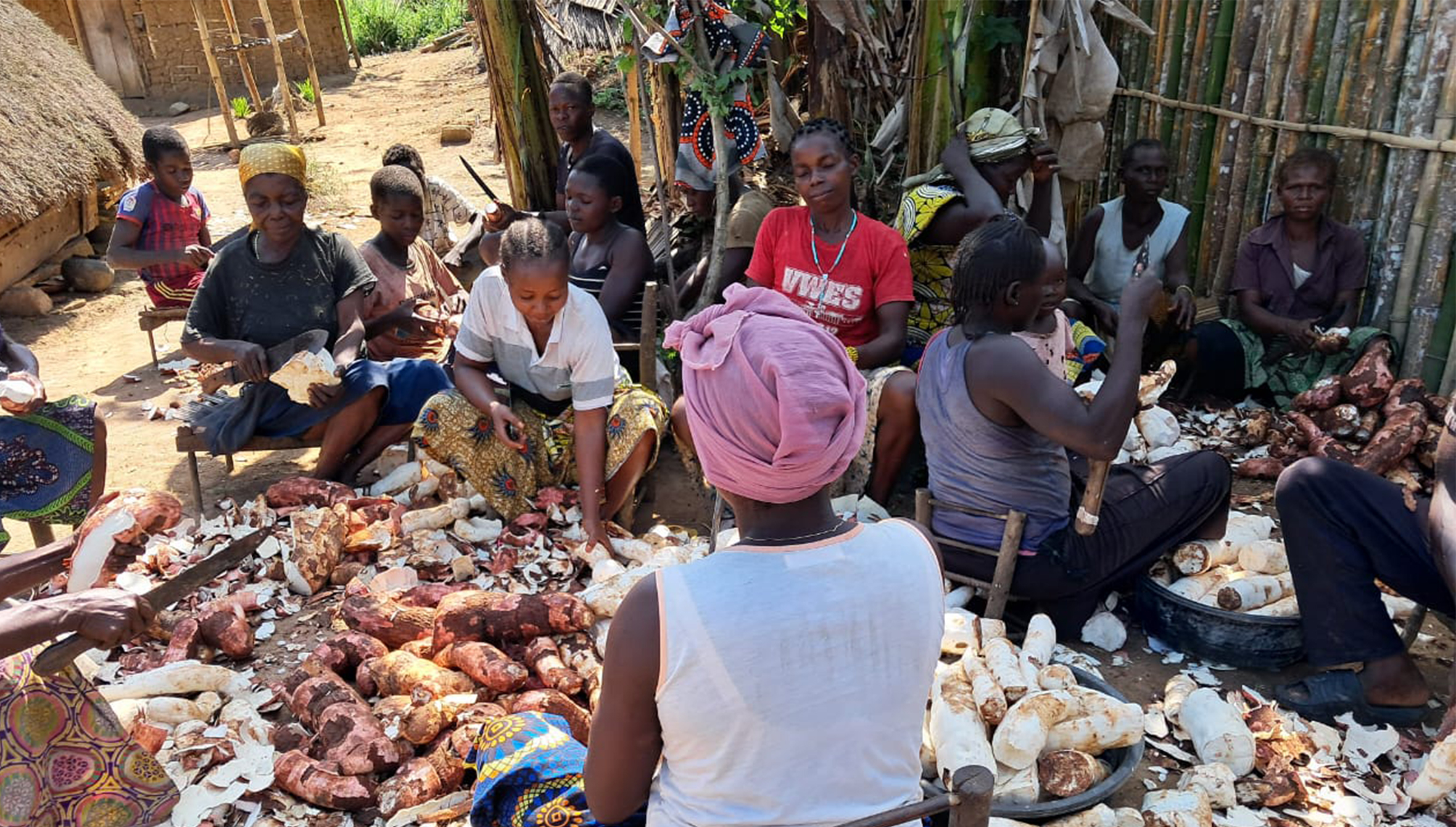
Members of the Lamuka association peel cassava together for flour production in Bili, DRC.
On less than a hectare of land in the Democratic Republic of Congo’s Bili-Uélé, members of the Mamans Lamuka Association are planting beans and soybeans with a clear purpose. Each row of seed carries a practical ambition: to help families rely less on distant markets, improve food security, and reduce the pressure that scarcity can place on nearby forests.
For Julienne Nambaga, head of the Mamans Lamuka Association, this work is already changing how women see their role in conservation and community life. The association brings together 57 members, mostly women, with two men and focuses on promoting women’s entrepreneurship and economic independence. Their activities include agriculture, livestock farming, and small businesses such as bakery, alongside training in basic business skills. Members support each other through contributions, savings schemes, and profit-sharing linked to their collective farming work. The group also mentors other local initiatives.
Membership is open, with free registration and a small initial contribution of 5,000 Congolese Francs (US $2.20) to a shared fund. The association is guided by values of love, hard work, solidarity, and dignity, and aims to strengthen women’s role in both the local economy and the wider community.
“These eggs are not just products to sell; they show that we, the women of Bili, can feed our families and build a sustainable local economy without depending solely on the forest,” she says.
As the world marks World Biodiversity Day 2026 under the theme "Acting locally for global impact," Bili-Uélé offers a grounded example of what local biodiversity action looks like. Here, conservation is not an abstract global commitment. It is taking shape in poultry houses, goat farms, vegetable gardens, and seed fields managed by community associations.
With support from the African Wildlife Foundation, the Congolese Institute for Nature Conservation, and the European Union’s NaturAfrica program, these initiatives are connecting biodiversity protection to daily household needs: food, income, dignity, and choice.
Women-Led Livelihoods Take Root
In Nzokongba, in northern DRC, the Women Leaders of Bili Association have established a community poultry farm. The group began with 50 chicks. After five months, 31 had survived, each gaining an average of 450 grams.
The numbers show progress, but they also reveal the realities of starting new livelihood activities in remote areas. For the women involved, the poultry farm is a source of protein, a product for the local market, and a step away from relying too heavily on forest resources.
Goat farming is also gaining ground. Three women’s associations acquired 39 goats over five months, of which 31 survived. Although losses reached 20.5 percent, the birth of two kids points to the potential for herd growth if veterinary support, technical monitoring, and transport systems are strengthened.
For families that have long depended on hunting for meat, livestock offers a different kind of security.
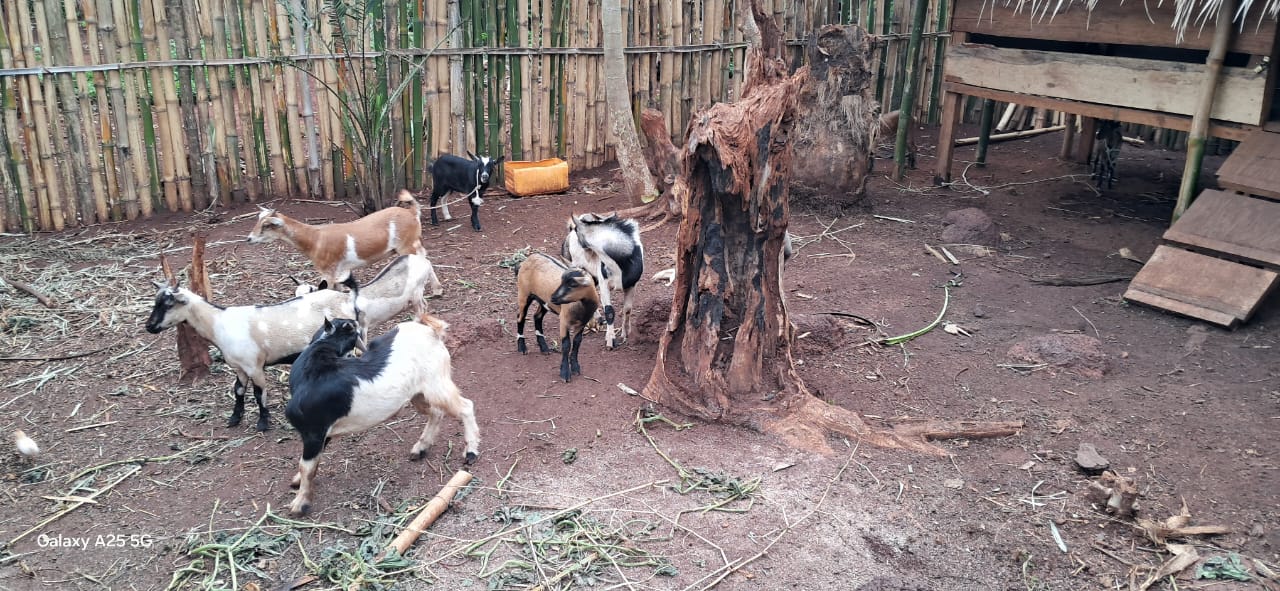
A partner-owned goat shelter in the Bili-Uélé landscape.
“We depended almost entirely on hunting to obtain meat, but that will no longer be the case in a few years,” explains Mamie Mangoyo-Mboli, a breeder from Yanda. “My husband will no longer have to spend weeks in the forest setting traps and leaving me alone, which, I must admit, suits me just fine,” she adds with a smile.
Her words bring the conservation story back to the household. Reducing pressure on wildlife also means providing families with credible alternatives that fit their daily rhythms.
Farming That Supports Families and Forests
In Malu-Malu and Yanda, women’s associations are cultivating tomatoes, okra, peppers, eggplant, and cabbage. Seven types of seeds were introduced, with results varying by location. Tomatoes and okra performed well in Malu-Malu, while peppers and tomatoes did better in Yanda.
The gardens are fertilized with goat manure, creating a direct link between livestock and crop production. This integrated agro-pastoral approach improves soil fertility, supports household nutrition, and creates opportunities for local income.
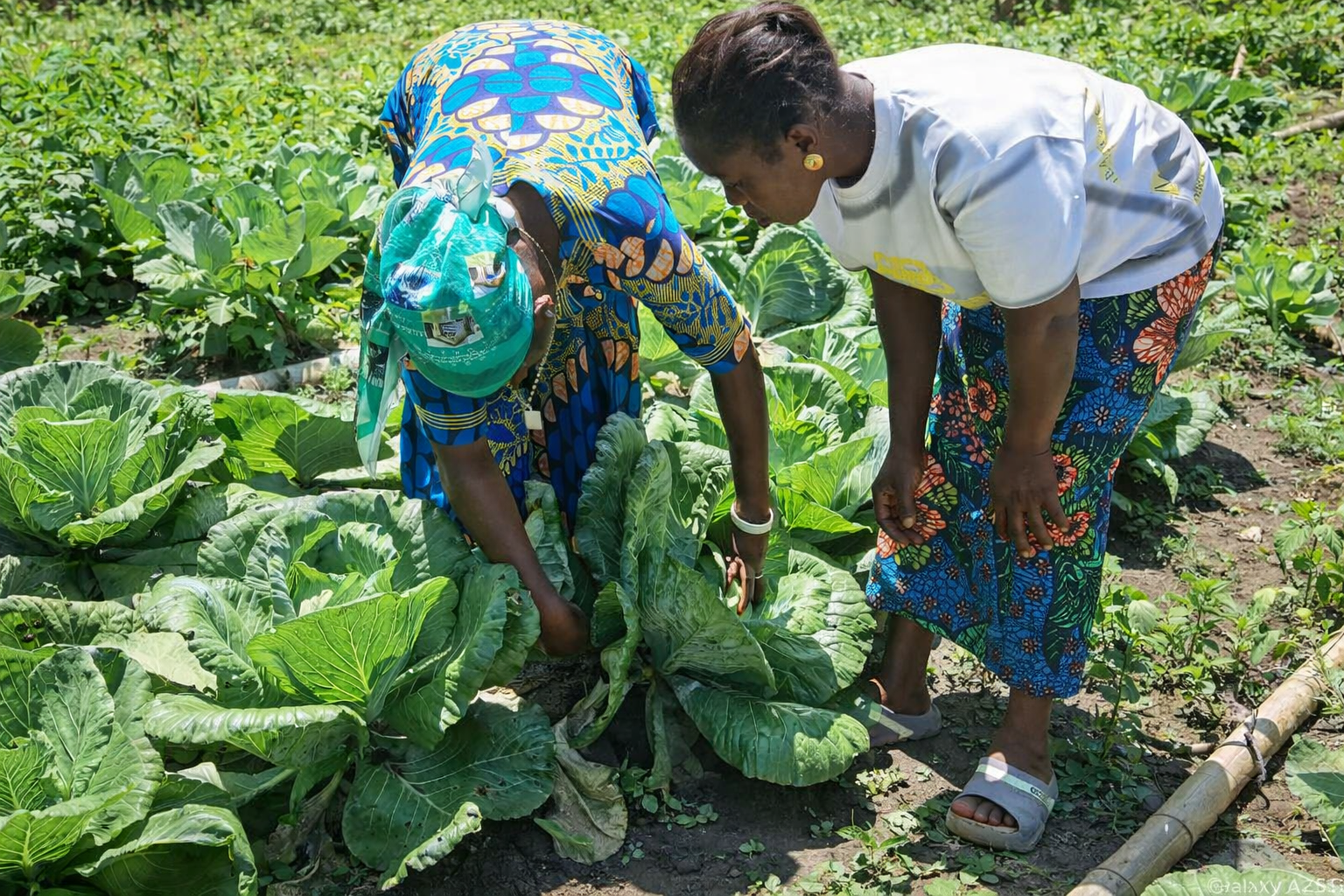
Women eco-guards harvest cabbage from their community field.
“When I harvest eggplants and cabbages that I planted myself, I see beyond the vegetables,” says Atoloba Nkanku Véronique, a farmer from Malu-Malu. “I see a future where my children will no longer have to walk kilometers to find food, because now our sustenance is right before our eyes, grown by our own hands.”
That sense of ownership is central to the work in Bili-Uélé. These are not conservation activities designed far from community life. They are rooted in local associations and led by women who understand what food security means in practical terms.
Mamans Lamuka and the Promise of Local Seeds
The Mamans Lamuka Association’s bean and soybean field adds another important layer to this work. Its purpose is strategic: to multiply quality local seeds, reduce reliance on distant markets, and strengthen long-term food security.
Early yields have been limited, partly because of gaps in regular technical monitoring. Still, the field provides a foundation for a community-led seed system that can be improved over time. For remote communities, this matters. Dependence on distant seed markets in Kisangani and Buta increases costs, delays planting, and makes food production more vulnerable to disruption.
When communities can produce more food locally, forests are less likely to become the first-place families to turn in times of need.
Lessons From the First Phase
The early phase of these agro-pastoral initiatives has revealed important lessons. Transport remains a major challenge, especially over long distances. During a 575-kilometer journey, chick mortality reached 38 percent. Access to veterinary services is limited, leaving livestock vulnerable to disease and preventable losses.
Community participation has also fluctuated, especially during long periods before visible results. In some cases, participation declined by 40-80 percent. This points to the need for incentive mechanisms that keep communities engaged while projects move from setup to harvest, breeding, or market readiness.
The next phase will require stronger technical support, closer collaboration with institutions such as INERA and SENASEM, and more reliable local veterinary services.
“The challenges of farming and livestock production are real,” notes Freddy Bikanza, AWF Bili-Uélé Technical Assistant Agronomist, “but the determination of these communities shows that resilience and hope can nourish the future.”
A Biodiversity Model Built From the Ground Up
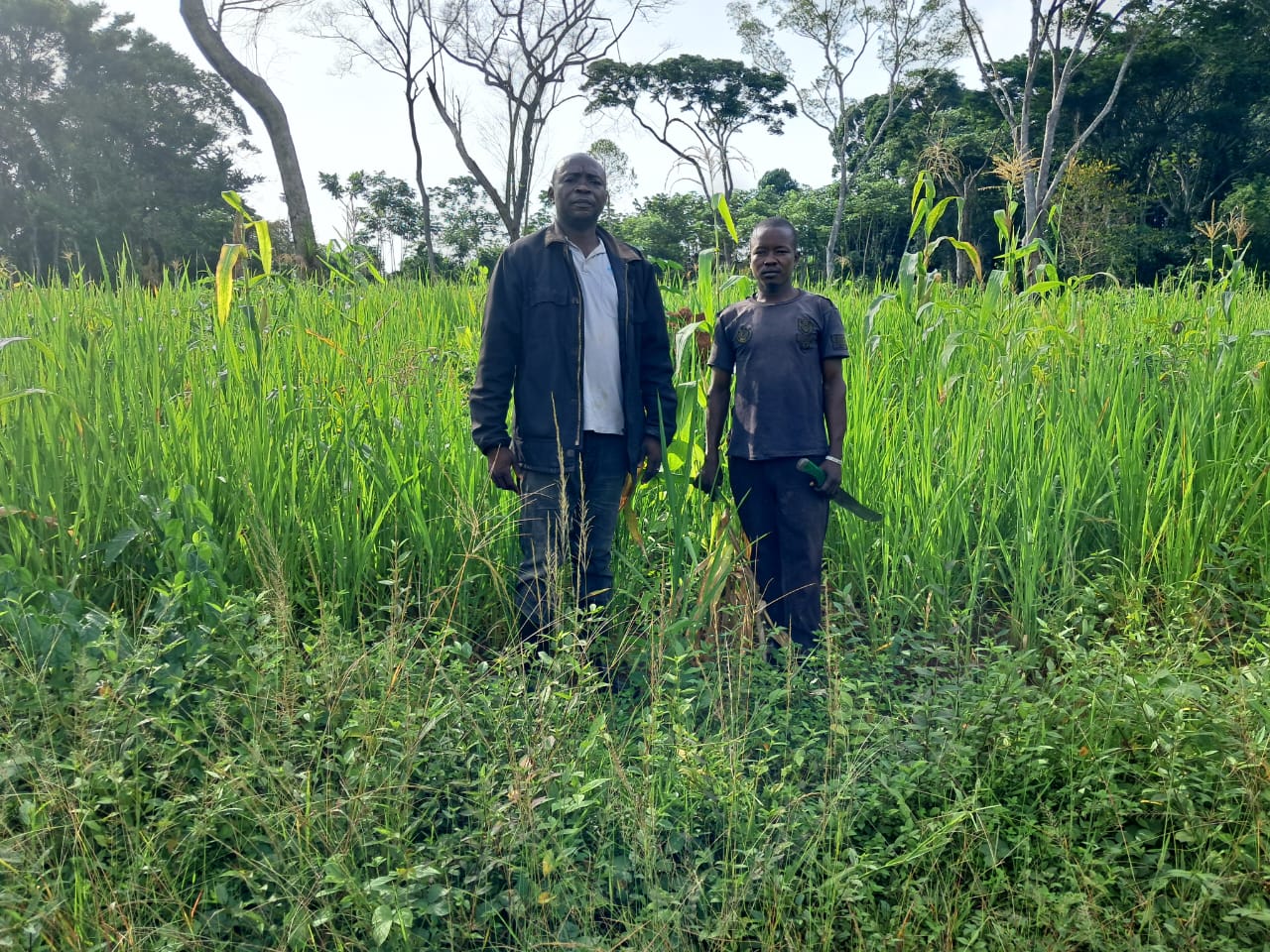
A maize and rice field visited as part of an evaluation in the Bili-Uélé landscape.
The Bili-Uélé initiatives reflect the Democratic Republic of Congo’s broader development priorities by connecting food security, women’s leadership, rural livelihoods, and biodiversity protection.
They also show the value of partnerships between communities, ICCN, AWF, and development actors. Conservation in landscapes such as Bili-Uélé cannot succeed if it is divorced from households' economic realities. It must help communities meet immediate needs while protecting the ecological systems that sustain them.
Antoine Tabu, AWF DRC Country Coordinator, says this is the larger promise of the work. “Bili-Uélé is not only a conservation landscape. It reflects the DRC we want to build: a country where nature is an ally of progress. By aligning conservation with national development goals, we are working to ensure that Bili-Uélé becomes a model of shared prosperity.”
For World Biodiversity Day 2026, the story of Mamans Lamuka and other women-led associations in Bili-Uélé carries a clear message: global biodiversity goals depend on local people having the means to protect the places they call home.
In Bili-Uélé, progress is seen in the sale of locally produced eggs, goats multiplying, vegetables harvested by women who planted them, and seeds being grown closer to home. It is local action with consequences beyond one field, one village, or one season.