Market Gardening Strengthens Food Security Around Faro National Park in Cameroon
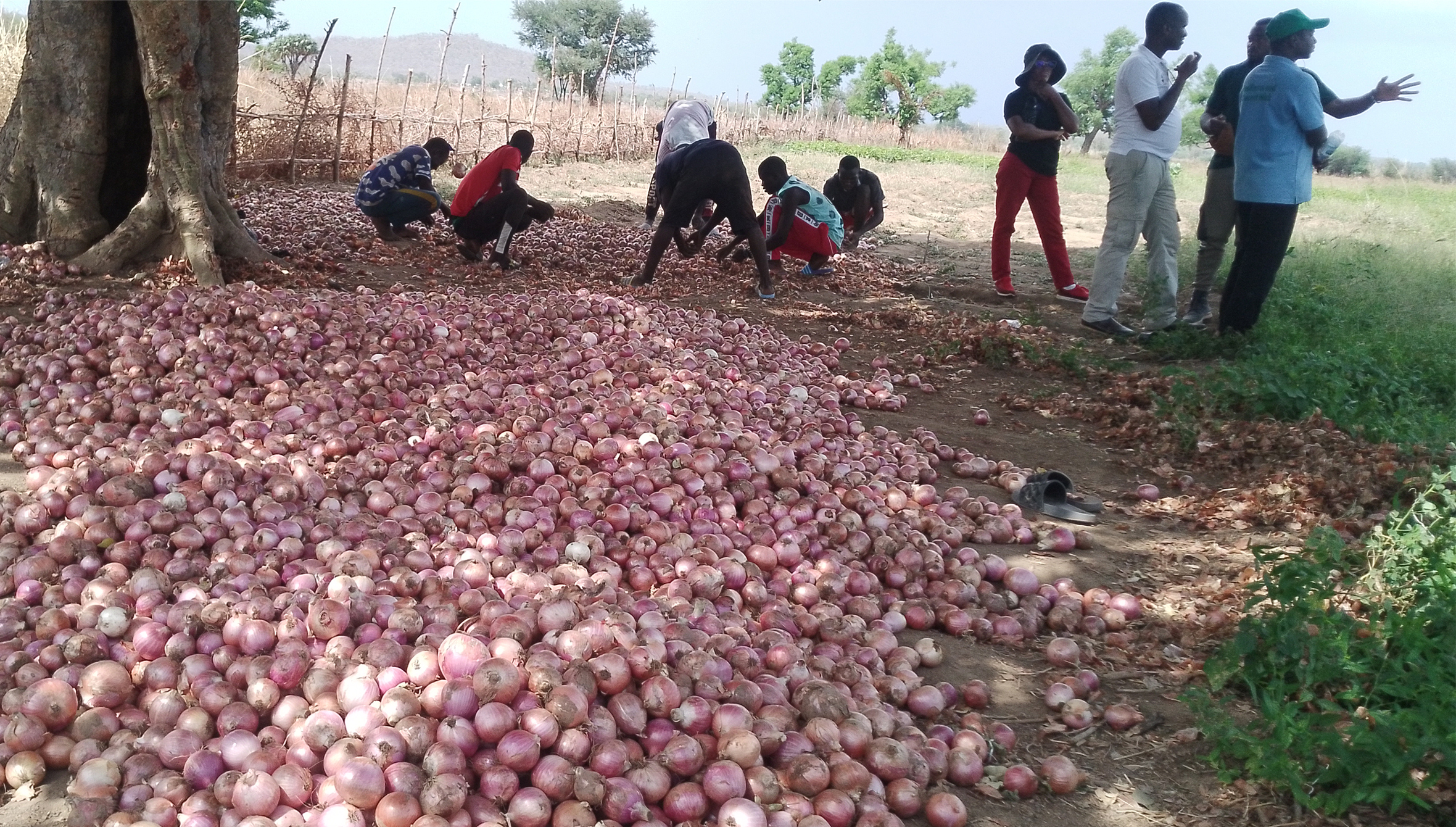
The onion harvest from the community farm in Tchamba, Cameroon.
For Laraba Assi, a 26-year-old mother of two from Faro, nutrition, income, and conservation now meet in the same place: a vegetable garden around Faro National Park. Before the market gardening initiative reached her community, fresh vegetables were often sold at weekly markets largely controlled by traders from neighboring countries.
For families living on fragile incomes, onions, tomatoes, lettuce, or other fresh produce could be difficult to afford. Many households relied on dried baobab leaves and okra, stretching what they had to feed children and meet daily needs.
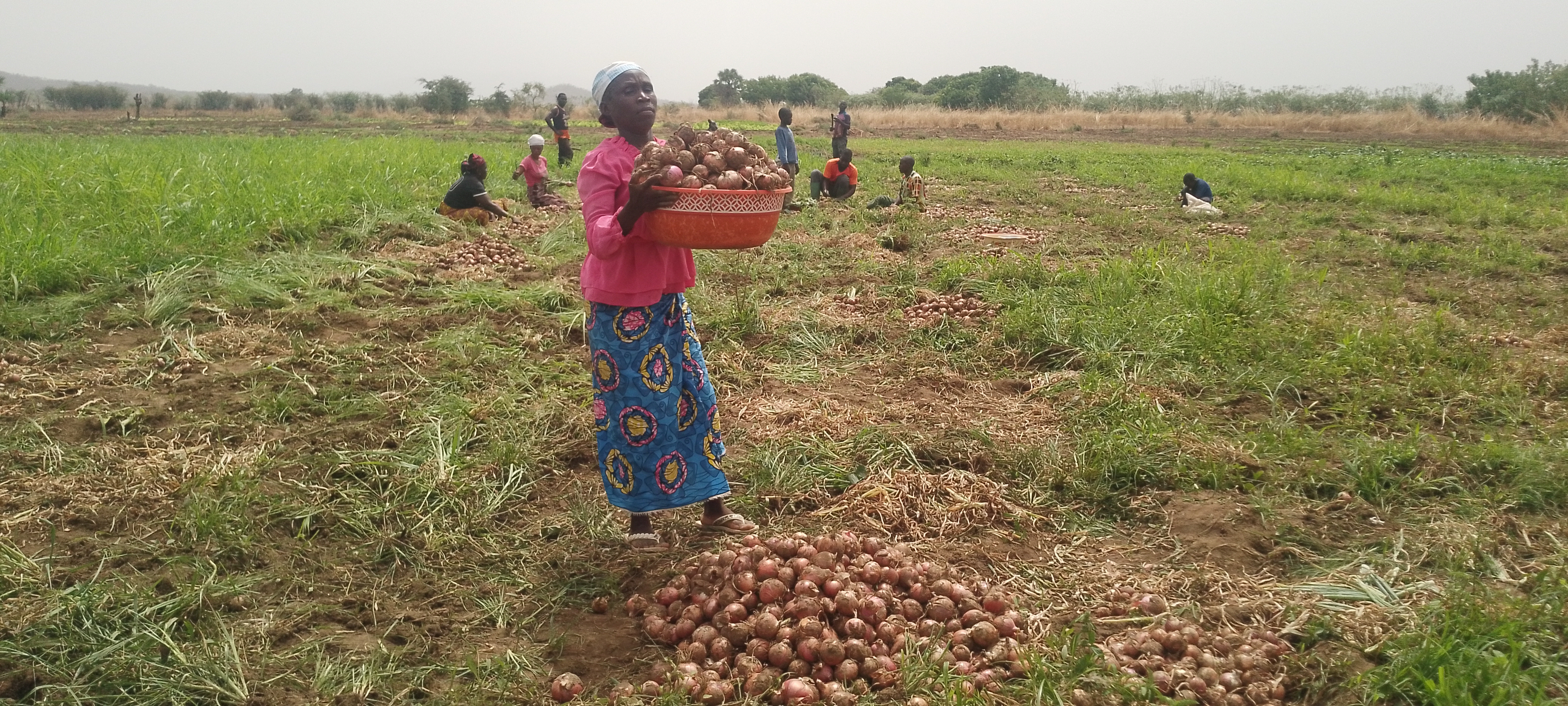
Laraba Assi displays the onion harvest from a vegetable farm established by AWF in Tchamba.
“A week’s vegetables could cost between US $2 and $7, money my family often did not have,” Laraba says.
That pressure sat within a wider reality around the park. In villages surrounding Faro National Park in northern Cameroon, household survival has long been connected to the land and savanna ecosystems. When income is scarce, the pull of artisanal gold mining, bushmeat, plant collection, poaching, or illegal logging becomes harder to resist.
For women, the burden is often felt first at home, where food, school needs, and household stability must be held together.
“Several members of our group would certainly have gone to mine gold in Mayo Djarendji if the African Wildlife Foundation (AWF) did not involve them in this market gardening activity,” Laraba says. Mayo Djarendji is a mining village in north Cameroon.
Growing Food Security Around Faro National Park
With support from the European Union through the CaSeVe program, AWF launched a market gardening initiative, targeting women’s groups in communities adjacent to the Faro National Park boundary. Across five hectares of land, community members now cultivate onions, lettuce, tomatoes, moringa, okra, and other vegetables, with AWF providing technical and financial support, training, seeds, and access to irrigated plots.
The water is drawn from the Faro River using a pump, enabling dry-season farming with a positive direct impact on herding. This has changed what families can grow, eat, and sell throughout the year.
After four months, the first production cycle generated about US $1,215 from vegetable sales. Farmers also developed new skills in onion production, harvesting 51,000 kg of onions from three-quarters of a hectare, which they shared among themselves.
Vegetables that were once scarce during the dry season are now available locally.
Nutrition That Strengthens Families
For Laraba and other women in the group, the change is not only financial. It is also visible in the meals families now cook.
Households now consume fresh vegetables every day, replacing dried leaves and imported produce with locally grown food. Children who once skipped breakfast now have more balanced meals before school.
The nutritional gains are tied directly to resilience. Better food supports better health, more energy for work, and greater household stability. Money from the sale of surplus produce helps families meet basic needs, pay school fees, and reinvest in farming.
Community Livelihoods That Reduce Pressure on Wildlife
The conservation logic is practical: When households have dependable income and food, the pressure to enter the park for illegal activities declines drastically and is thus beneficial to wildlife. Market gardening offers women and their families an alternative livelihood linked to the same landscape they help protect.
“The project keeps their husbands busy and has contributed to keeping them from illegal activities in the park,” Haoua Ousmanou says.
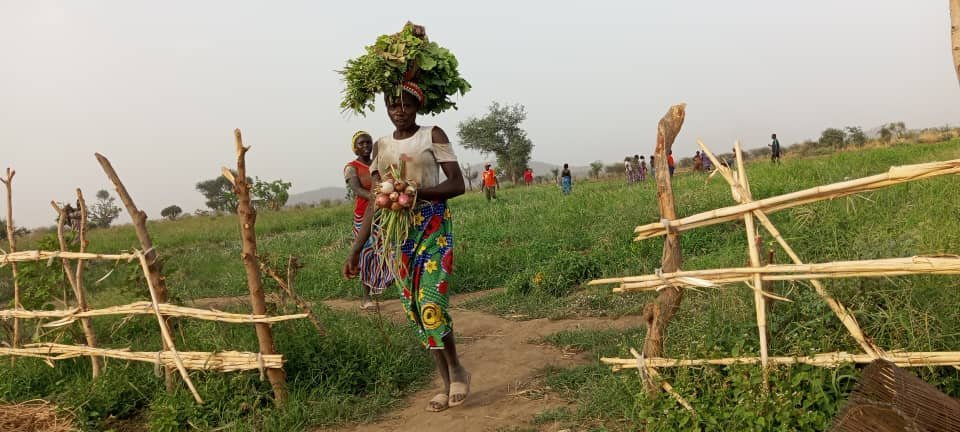
Haoua Ousmanou carries home vegetables which she will use to cook for her children.
The initiative also promotes sustainable farming practices, including agroecology integrated into agroforestry where intercropping, mulching, fish farming and crops recycle nutrients to enhance soil fertility, biodiversity, and farmer livelihoods. These practices support food security while reducing reliance on bushmeat and increasing awareness of the importance of preserving Faro National Park and surrounding protected areas.
To support sustainability, proceeds from sales are shared and reinvested. Half of the revenue is distributed among members, 30 percent is reinvested back onto the market gardening project, and 20 percent is saved for complementary ecological friendly income-generating projects. The onion harvest alone has generated US $995.
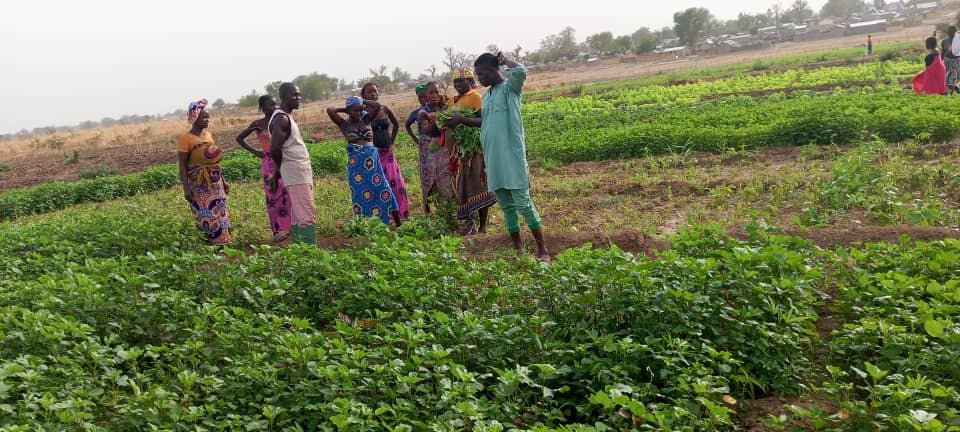
Tchamba community members engage in the harvest and sale of vegetables.
Linking People and Conservation in Faro
For AWF, the work reflects the wider belief that conservation succeeds when communities benefit from the landscapes they help steward. In Faro, market gardening is improving nutrition, advancing women’s livelihoods, reducing pressure on wildlife, and building community ownership of conservation outcomes.
“Our work with women and youth shows that empowering riparian communities is the most practical way to protect biodiversity. Food security and conservation must go hand in hand,” says Blandine Moueni, AWF Community Development Assistant in Faro.
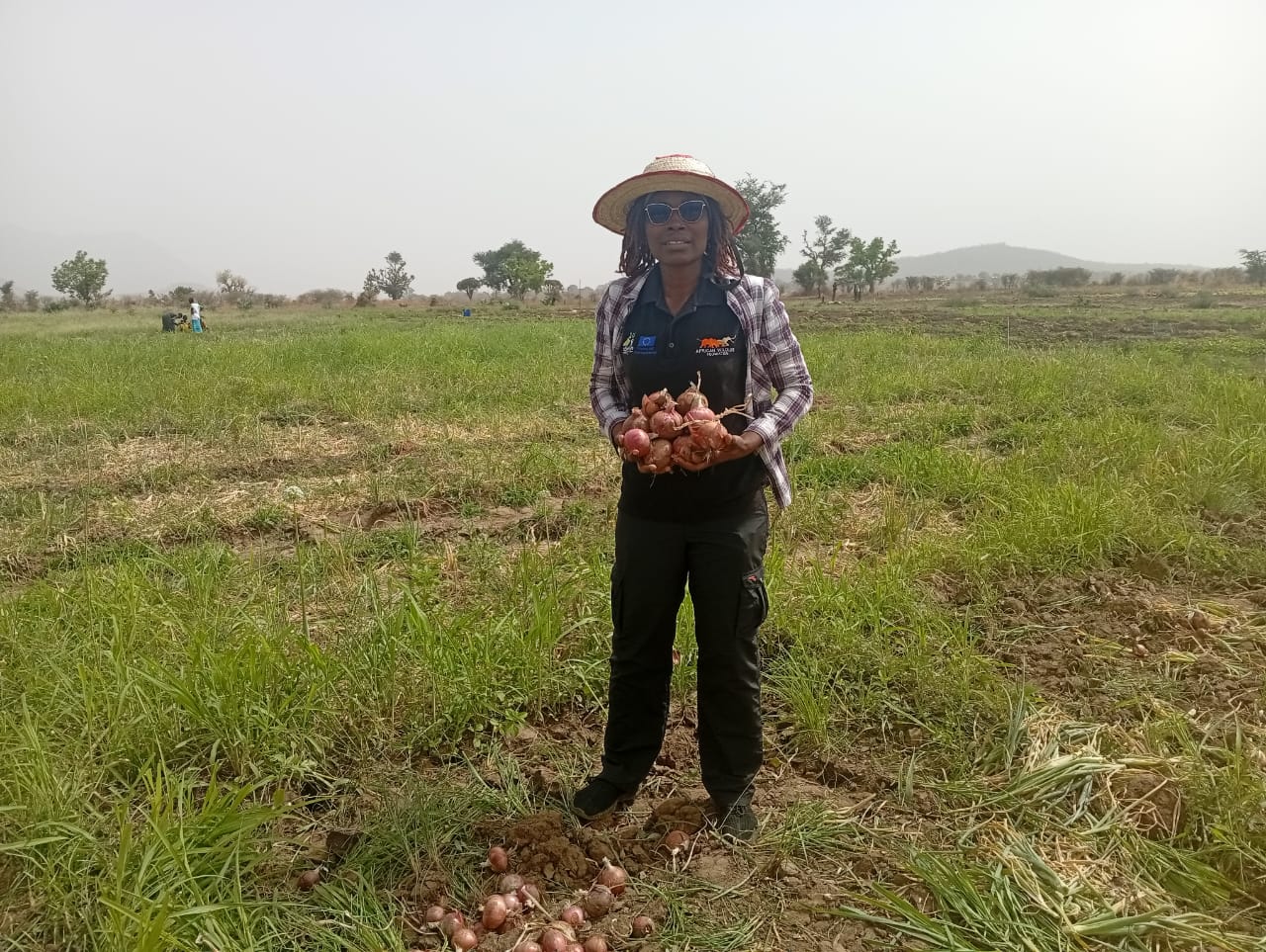
AWF Community Development Assistant Blandine Moueni with the onion harvest of the community farm.
AWF and its European Union partners are working to expand the initiative through more plots, more species, improved market linkages, and stronger producer groups.
“Our vision is not only to feed households in Faro but to connect these gardens to wider markets. By moving produce beyond local and regional buyers, we can expand farms and strengthen community resilience,” says Anthony Agbor, AWF Faro Landscape Director.
For Laraba, that resilience begins with what her family can now grow, eat, and sell. In Faro, a garden is no longer only a source of vegetables. It is a path toward stronger households, more secure livelihoods, and a landscape where people and wildlife have a better chance of thriving together.