AWF Backs Nearly 300 Rwandans to Drive Conservation Enterprise
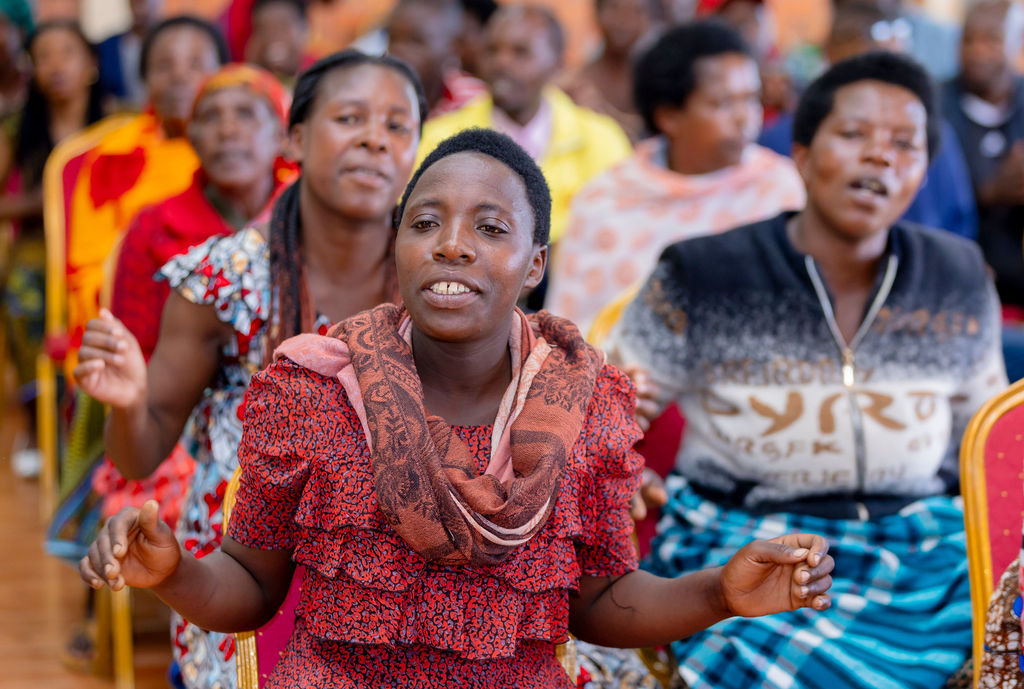
Nyirandayambaje Sifa (center), one of the 58 women entrepreneurs supported through AWF’s six-month Business Incubation Program in 2024. © AWF
General Inquiries
Tel:+254 711 063 000
Ngong Road, Karen, P.O. Box 310
00502 Nairobi, Kenya
New report documents how community businesses and habitat restoration are advancing together around Volcanoes National Park
KIGALI, Rwanda — The African Wildlife Foundation (AWF) has equipped 132 entrepreneurs and 160 farmers around Volcanoes National Park with business and climate-smart agriculture skills, positioning community enterprise as a central pillar of long-term conservation in Rwanda.
The results are detailed in the newly released AWF Rwanda Program Report 2020–2025, which documents AWF’s work with the Government of Rwanda through the Rwanda Development Board to connect stronger local economies with the restoration of critical mountain gorilla habitat.
AWF established an RWF 70 million conservation-compatible enterprise fund, of which RWF 21.14 million has been disbursed to 32 small businesses in agriculture, livestock and retail. Through AWF’s business incubation program with Inkomoko, entrepreneurs have received training, coaching and capital to start and expand enterprises that increase household income while avoiding additional pressure on the park’s natural resources.
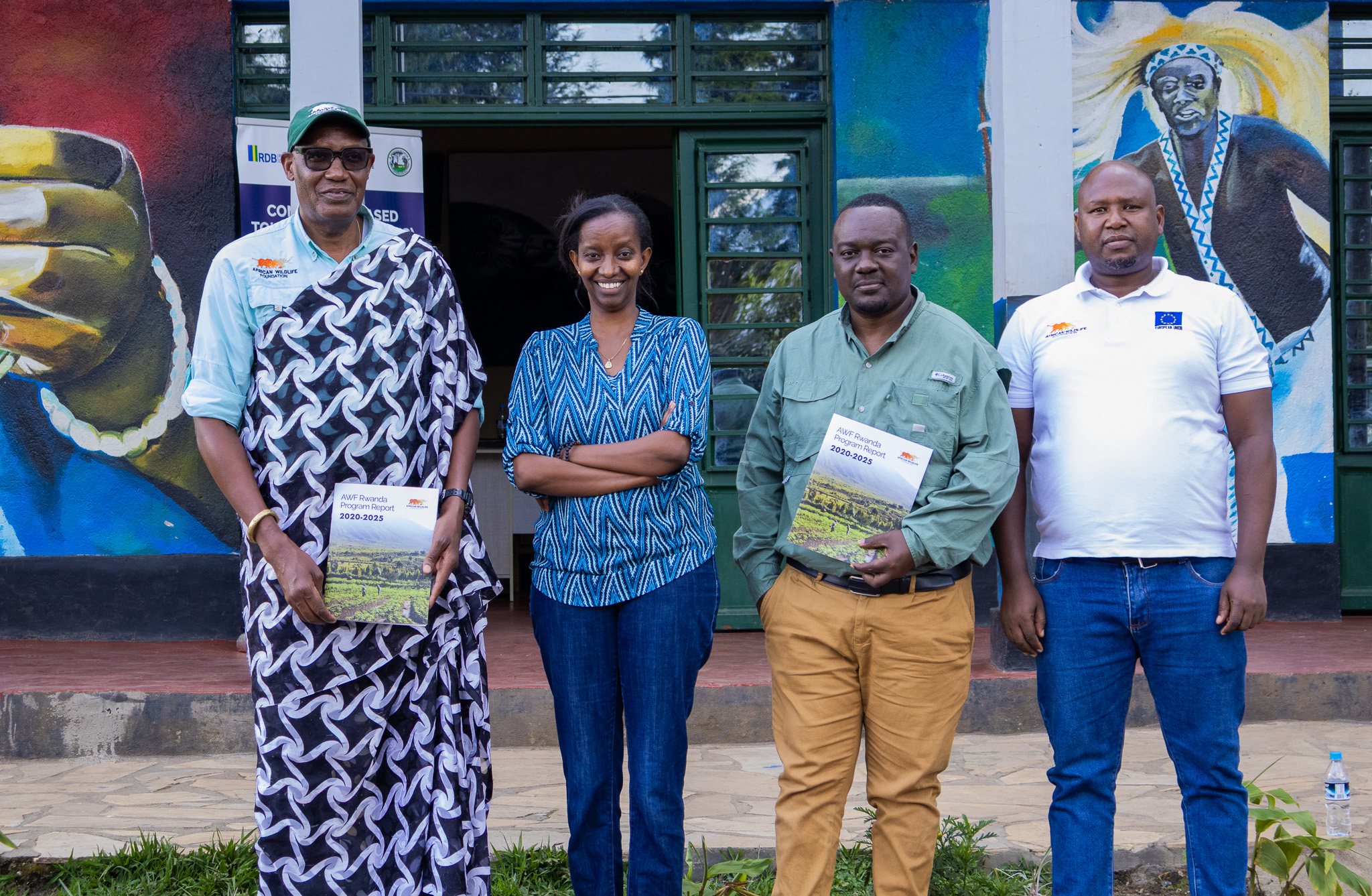
(From left to right) AWF CEO Kaddu Sebunya, AWF Rwanda Senior Campaign Advisor Beatrice Cyiza, AWF Rwanda Country Coordinator Patrick Nsabimana, and AWF Program Manager of Rwanda Jean Luc Rukwaya in Musanze, Rwanda.
Women account for 63 percent of participants in the entrepreneurship program and 72 percent of farmers trained through the horticulture initiative.
“Communities are central to conservation—as entrepreneurs, land stewards and decision-makers shaping the future of this landscape,” said Patrick Nsabimana, AWF Rwanda country coordinator. “Our work with the Government of Rwanda through the Rwanda Development Board shows that investing in local enterprise strengthens household resilience while delivering lasting conservation outcomes.”
The Volcanoes Community Association Horticulture Hub reflects this approach in practice. Its first production cycle generated RWF 5.5 million from nearly seven tones of tomatoes, cucumbers, and sweet peppers.
The hub has trained 160 farmers and created more than 40 farm jobs, along with 15 greenhouses and five packing jobs. It will reinvest 20 percent of its profits in community development, ensuring that value generated in the landscape continues to benefit local communities.
These investments are part of a broader strategy to restore and expand habitat for mountain gorillas and other wildlife. Volcanoes National Park has lost 53 percent of its original area, and the recovering mountain gorilla population has increased the need for suitable habitat.
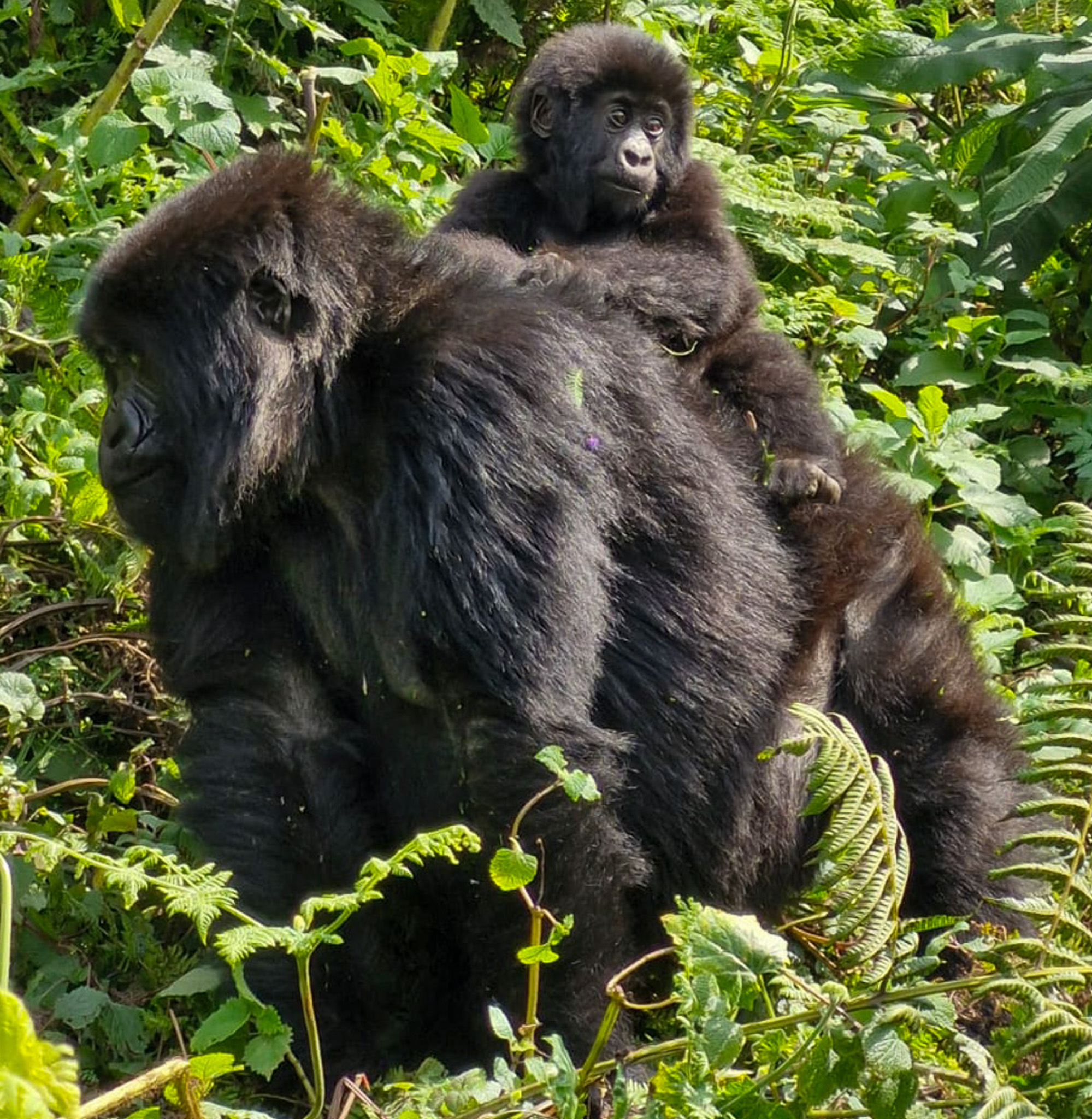
A female mountain gorilla and its young one in Volcanoes National Park, Rwanda.
In partnership with the Rwanda Development Board and EcoPlanet Bamboo Rwanda, AWF has restored 27 hectares with more than 28,000 indigenous plants. Mountain gorillas and other wildlife are already using the restored area, providing clear evidence that habitat recovery and community prosperity can advance together.
“Rwanda is showing that conservation can function as productive economic infrastructure,” said Kaddu Sebunya, Chief Executive Officer of the African Wildlife Foundation. “Our partnership with the Government of Rwanda through the Rwanda Development Board is rooted in a shared belief that Africa’s natural heritage must create value for its people. When communities have access to capital, skills and markets, they can build viable enterprises that make conservation locally owned, economically relevant and built to last.”
The programme is guided by the Volcanoes National Park Conservation and Development Master Plan, which aligns habitat restoration with sustainable agriculture, enterprise development and community priorities across the landscape.
By 2030, AWF aims to empower 500 households to achieve a 30 percent increase in income, restore and effectively manage 1,000 hectares of degraded habitat, and mobilize US$10 million for conservation and community development.
The AWF Rwanda Program Report 2020–2025 provides the full results, community stories and strategic priorities shaping this people-centered conservation model.