Chance Conservationist: An Actuary Finds His Place in Conservation - Isaac Mureithi’s Journey
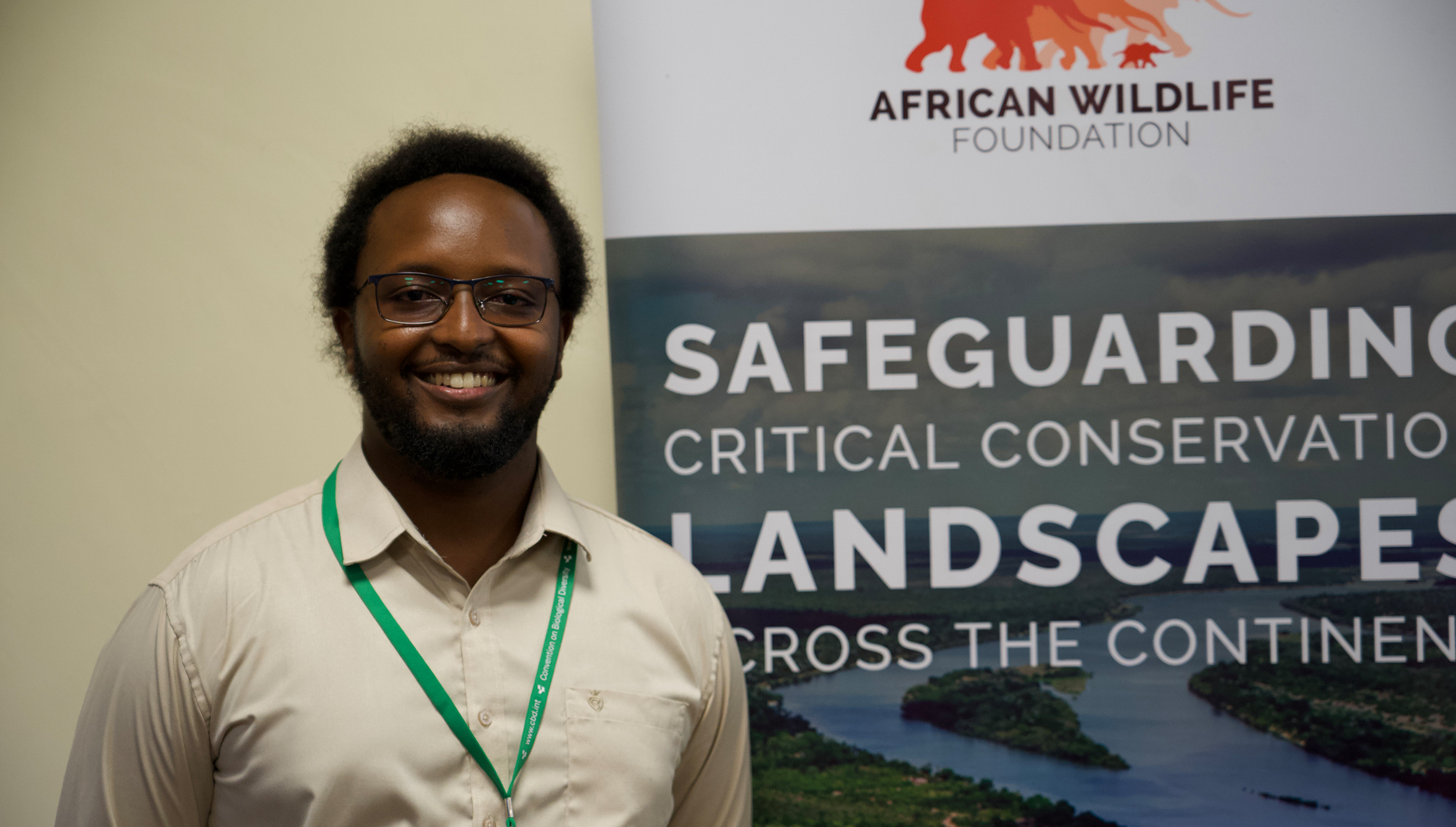
Isaac Mureithi attending a side event at the 28th meeting of the Subsidiary Body on Scientific, Technical and Technological Advice (SBSTTA-28) in Nairobi, Kenya.
Chance conservationists is a series highlighting AWF staff who have embraced people-centered conservation in their professions despite coming from diverse academic fields. These remarkable individuals now espouse conservation values to propel the organization’s vision for sustainable development and biodiversity protection.
Isaac Mureithi never imagined that a degree in actuarial science would lead him to conservation. He had pictured a career in investment banking, analyzing financial markets and managing investment portfolios. Today, however, he spends his days analyzing satellite imagery, applying machine learning for earth observation, and assessing the health of the Tsavo landscape in Kenya, home to the world’s largest population of the endangered Eastern Black Rhinos.
Currently, as a Research Fellow with the African Wildlife Foundation (AWF), Isaac contributes to a habitat intelligence project supported by Nature's Path, which combines geospatial analysis, conservation science, and technology to better understand landscapes and support wildlife management.
"My work sits at the intersection of environmental intelligence and conservation finance," he explains. "As an actuary turned ecologist, I monitor the health of our rangelands and generate insights that guide conservation decisions."
Where Finance and Conservation Began to Connect
Isaac studied actuarial science at KCA University, Kenya, drawn to the profession's focus on numbers, analysis, and understanding risk. However, his interest extended beyond financial markets. During his undergraduate research project, he explored index insurance, an approach that uses weather data to protect farmers from the impacts of drought and floods, and later developed a concept note on parametric insurance, examining how financial tools could help communities prepare for climate shocks. These early experiences helped him see the connection between finance, climate change, and environmental challenges.
After graduating, Isaac began his career in the asset management sector as a research assistant, analyzing financial markets. At the same time, he continued exploring his growing interest in conservation and climate action through volunteer work. Over half a decade, he engaged with organizations including the Kenya Red Cross Society, the International Organization for Migration, and UNEP's Children and Youth Major Group, contributing to discussions on climate and biodiversity.
Through these experiences, Isaac began to recognize that the skills he had developed in assessing risk and analyzing data could also help address environmental challenges. What started as an interest gradually became a pathway into conservation, eventually leading him to AWF.
Turning Uncertainty into Opportunity
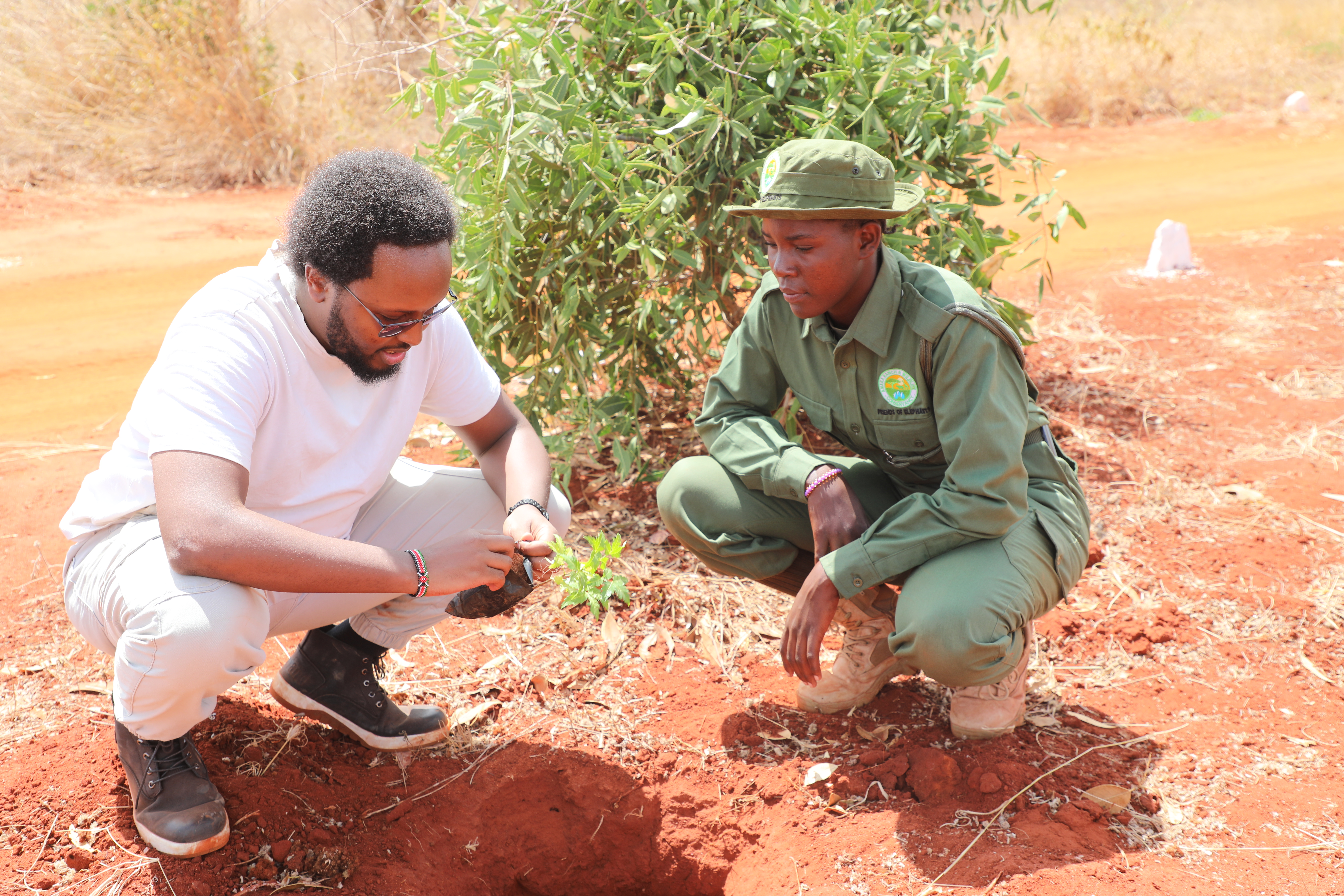
Isaac Mureithi plants a tree with a ranger in Kasigau, Taita Taveta County during a World Ranger Day activity.
Through the years, Isaac found himself struggling to make headway in the finance sector. With opportunities becoming increasingly difficult to find, he faced uncertainty about what would come next. Rather than viewing it as the end of his career, he saw it as an opportunity to pursue a path that had been quietly taking shape through years of volunteer work and his growing interest in climate and biodiversity.
The turning point came when he applied for the Oppenheimer Programme in African Landscape Systems, which welcomes students from diverse academic backgrounds. Selected from a competitive pool of applicants, he earned a scholarship to pursue a Master's in Conservation and Biodiversity at the University of Exeter and was posted at AWF as a Research Fellow.
Today, Isaac leads AWF’s habitat intelligence work in the Tsavo landscape, combining geospatial science, conservation biology, and computer vision, by using Google Earth Engine, R programming, and satellite imagery to analyze more than two decades of vegetation data, building a picture of how habitats are changing over time and whether they can sustainably support the wildlife that depends on them.
“This research provides valuable evidence to inform management decisions by the Kenya Wildlife Service (KWS) and the Wildlife Research and Training Institute (WRTI), ensuring that conservation interventions are guided by reliable data and sound scientific knowledge,” he states.
Beyond the Numbers and Data
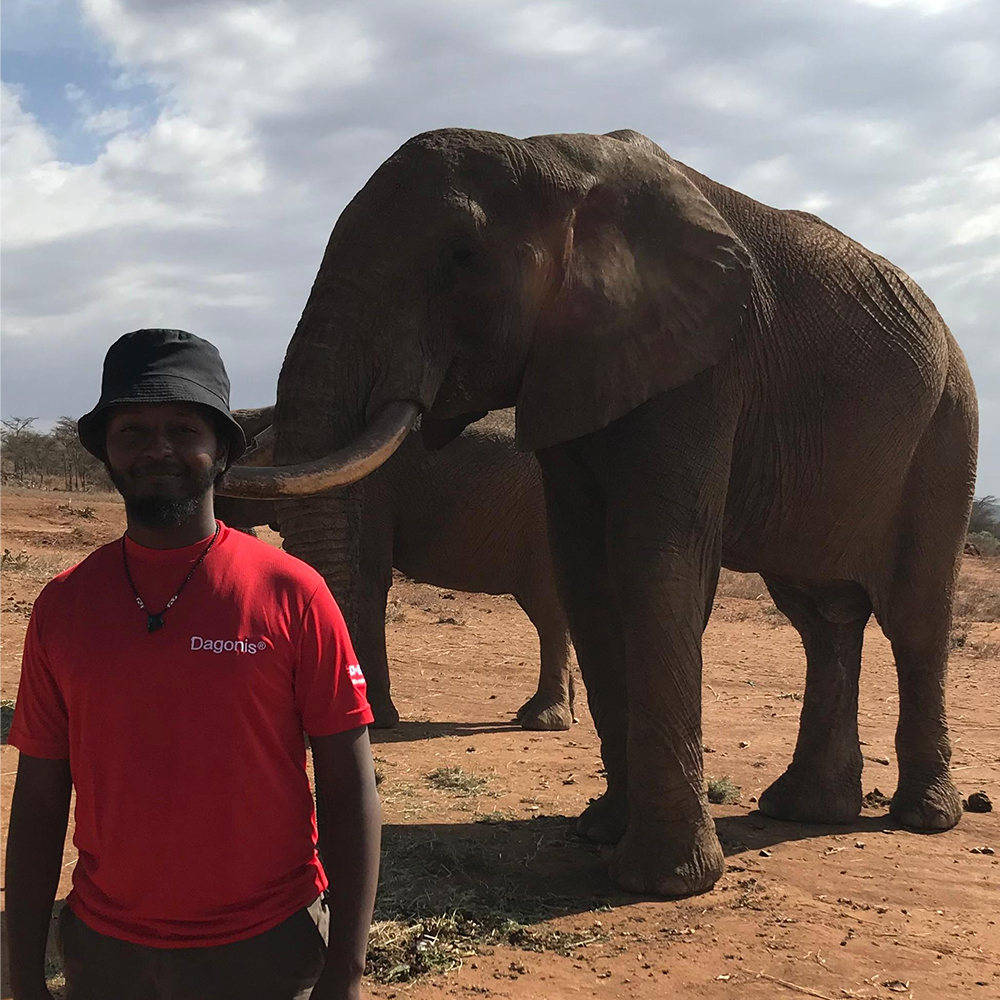
Isaac Mureithi poses in front of an elephant at Ol Jogi Wildlife Conservancy.
For Isaac, however, successful conservation is measured not only by healthier habitats but also by stronger relationships between people and nature. One project that stands out to him is a water initiative in Kasigau Rukanga, within the broader Tsavo landscape, where water from a natural mountain spring was channeled to nearby households.
Before the intervention, families often had to enter conservancies and protected areas in search of water, increasing competition with wildlife and the risk of human-wildlife conflict. By improving access to water within the community, the project has helped reduce this pressure while supporting local livelihoods and creating more space for people and wildlife to coexist.
"If we do conservation the right way, people, livestock and wildlife get to thrive together in their own spaces. This is actually what we call coexistence."
Isaac hopes his own journey encourages others to see conservation differently. He believes the sector needs economists, engineers, data scientists, communicators and financial experts just as much as it needs ecologists.
"It doesn't matter which field you come from or what your interests are," he says. "One way or another, everything relates to nature because we derive almost everything from the environment. If you can find a link between what you are passionate about and the environment, find a platform, even if it is not your main job, and turn it into something real.”
From actuarial science to rangeland conservation, Isaac's story is a reminder that there is no single path into conservation. Sometimes the most valuable perspectives come from those who arrive by chance, bringing new ideas and skills that help shape the future of Africa's wildlife and ecosystems.