Protecting the Congo Basin Through Forest Monitoring and Wildlife Crime Prevention
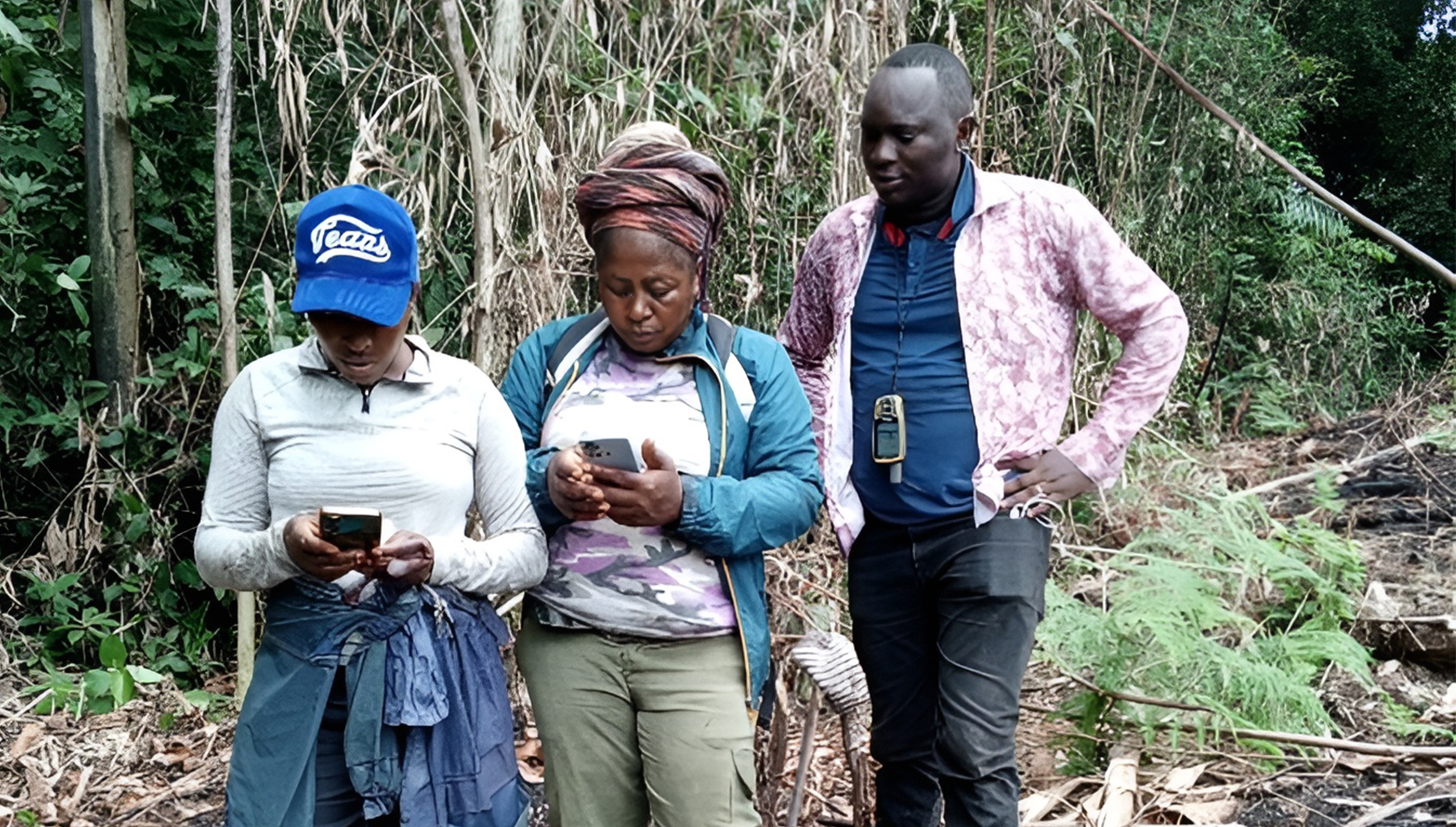
After a training, eco-guards from the Lomako-Yokokala Faunal Reserve verify and analyze deforestation alerts detected through the Global Forest Watch platform. © OGF
Since 2018, through support from the U.S. Department of State's Bureau of International Narcotics and Law Enforcement Affairs, AWF has trained 525 law enforcement and justice sector actors, including judicial police officers, eco-guards, judges, magistrates, customs officers, and other enforcement personnel, strengthening the region's ability to detect, investigate, prosecute, and deter wildlife crime.
In the Democratic Republic of the Congo, the Lobito Corridor crosses some of the most important forest landscapes in the Congo Basin. These forests provide critical habitat for bonobos, forest elephants, and countless other species, while also supporting the livelihoods of communities that depend directly on natural resources.
Yet these landscapes face growing pressure from wildlife crime, illegal logging, and the degradation of natural resources. Protecting them requires reliable data, effective law enforcement, and greater accountability among all stakeholders.
With support from the U.S. Department of State's Bureau of International Narcotics and Law Enforcement Affairs (INL), and in partnership with the Observatoire de la Gouvernance Forestière (OGF), the African Wildlife Foundation (AWF) is transforming data into action across the Lobito Corridor—strengthening forest governance, improving law enforcement, and protecting forests, wildlife, and the communities that depend on them.
The goal is to generate reliable information that helps authorities detect threats, strengthen law enforcement, and support more effective conservation decisions.
Seeing the Forest Before It Disappears
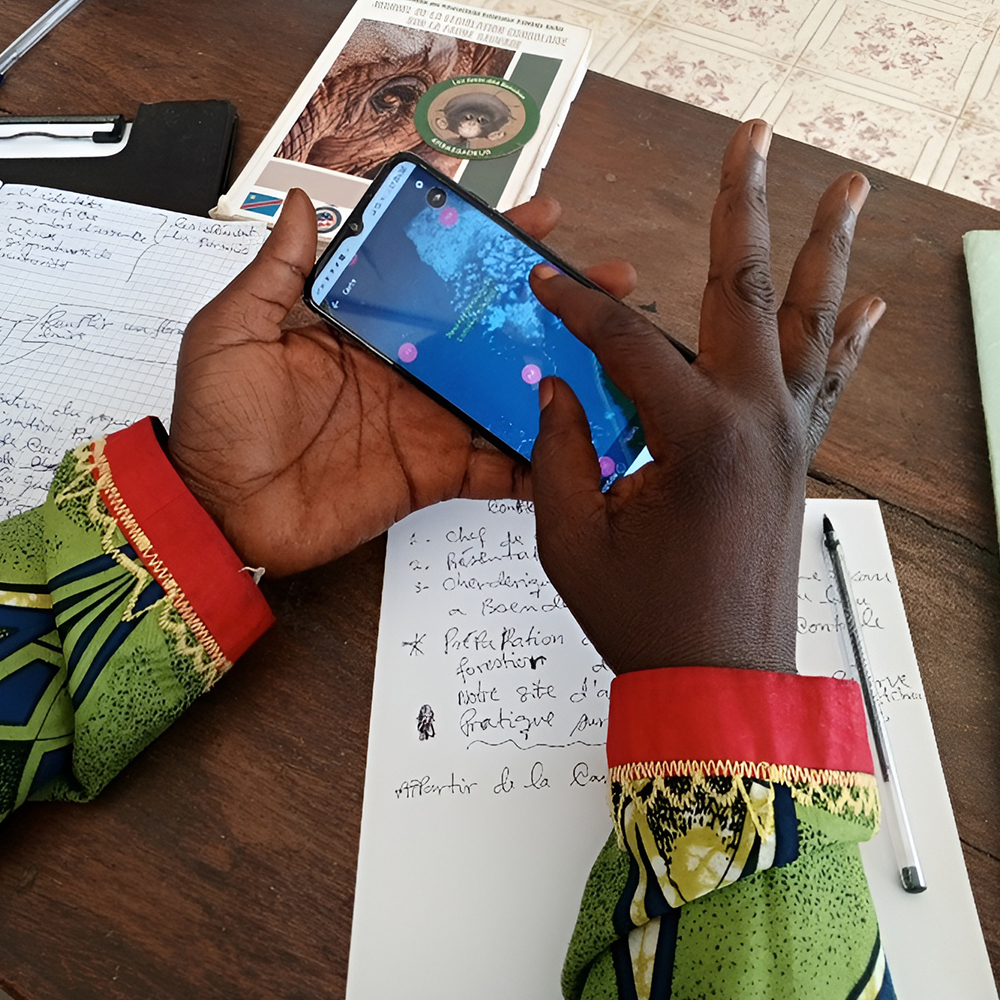
Monitoring forest loss alerts through the Global Forest Watch application. © OGF
Monitoring the vast forest landscapes of the Democratic Republic of the Congo (DRC) has long been a challenge. Illegal logging, wildlife crime, and other natural resource-related crimes often occur in remote areas where limited infrastructure and difficult terrain make effective monitoring and law enforcement difficult.
To strengthen forest conservation and forest governance, the Observatoire de la Gouvernance Forestière uses satellite monitoring tools, including Global Forest Watch and Forest Watcher. These platforms generate near real-time alerts whenever changes in forest cover are detected, enabling independent forest monitors to identify potential cases of deforestation, forest degradation, and other threats across priority landscapes in the Congo Basin.
Technology alone is not enough; effective independent forest monitoring depends on the people protecting these landscapes. Through the project, OGF has trained 19 eco-guards from the Lomako and Iyondji reserves to detect, verify, and document deforestation alerts. At the same time, AWF equips the same eco-guards with training on wildlife crime laws and crime scene management, while providing evidence collection kits.
Together, these efforts have strengthened the fight against illegal forest exploitation and wildlife crime by improving field monitoring and the quality of evidence used to support law enforcement.
What Forest Monitoring Reveals in Lomako
Independent forest monitoring is helping conservation partners better understand the pressures affecting the Lomako-Yokokala Faunal Reserve in the Democratic Republic of the Congo.
Between 2020 and 2024, monitoring recorded the loss of approximately 220 hectares of forest—less than 0.1% of the reserve's total forest cover. Although the reserve remains largely intact, the data highlights localized areas under increasing pressure, with forest loss peaking in 2023.
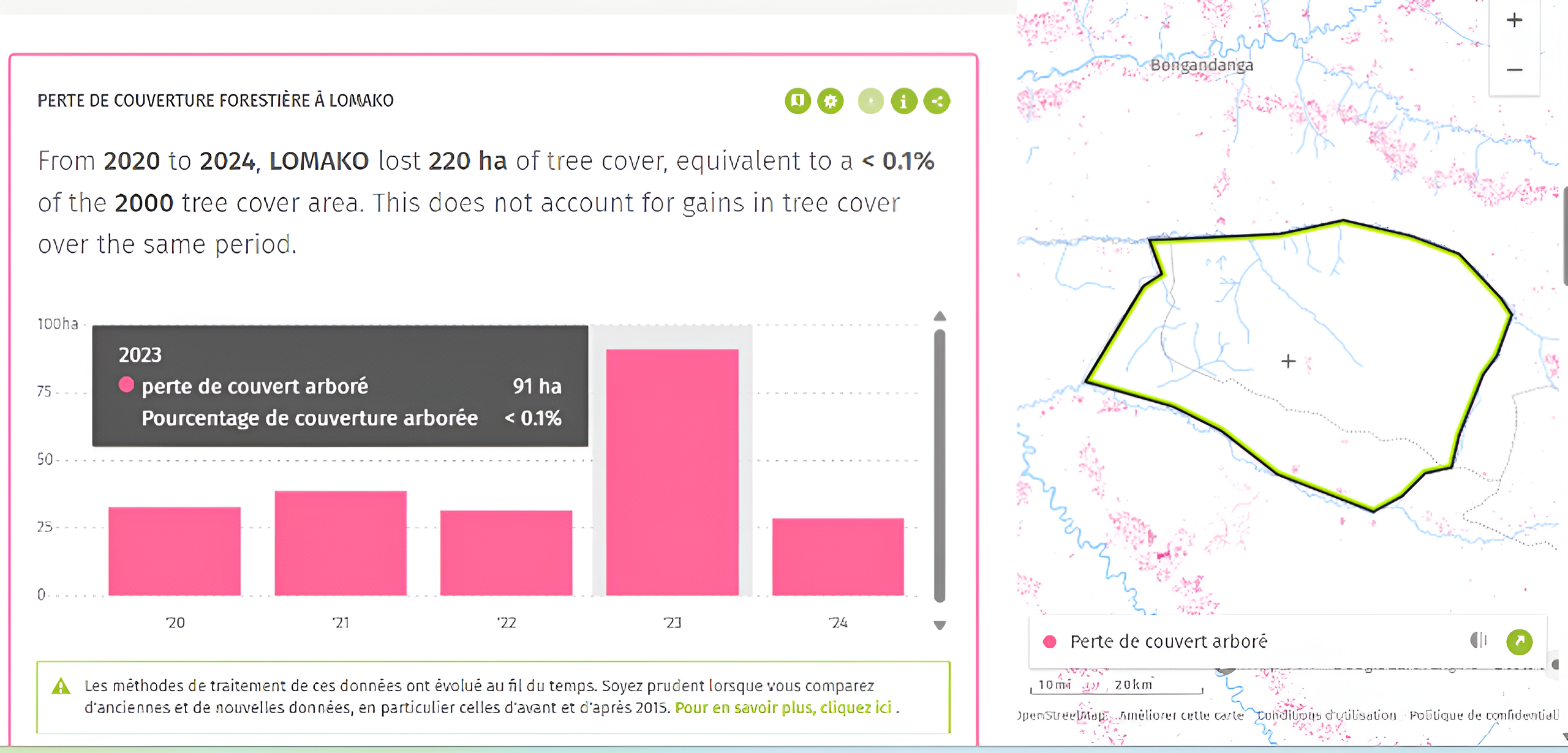
Forest cover loss statistics in the Lomako-Yokokala Faunal Reserve. © OGF
Ground verification also showed that not every forest loss alert was linked to illegal activity. Some resulted from natural events, such as fallen trees and strong winds.
Outside the reserve, however, monitoring identified growing pressure from agricultural expansion, artisanal logging, charcoal production, and land clearing. While these activities occur mainly in surrounding community-managed areas, they underscore the need for continued forest monitoring to safeguard wildlife, biodiversity, and the long-term health of the Congo Basin.
Strengthening Forest Governance
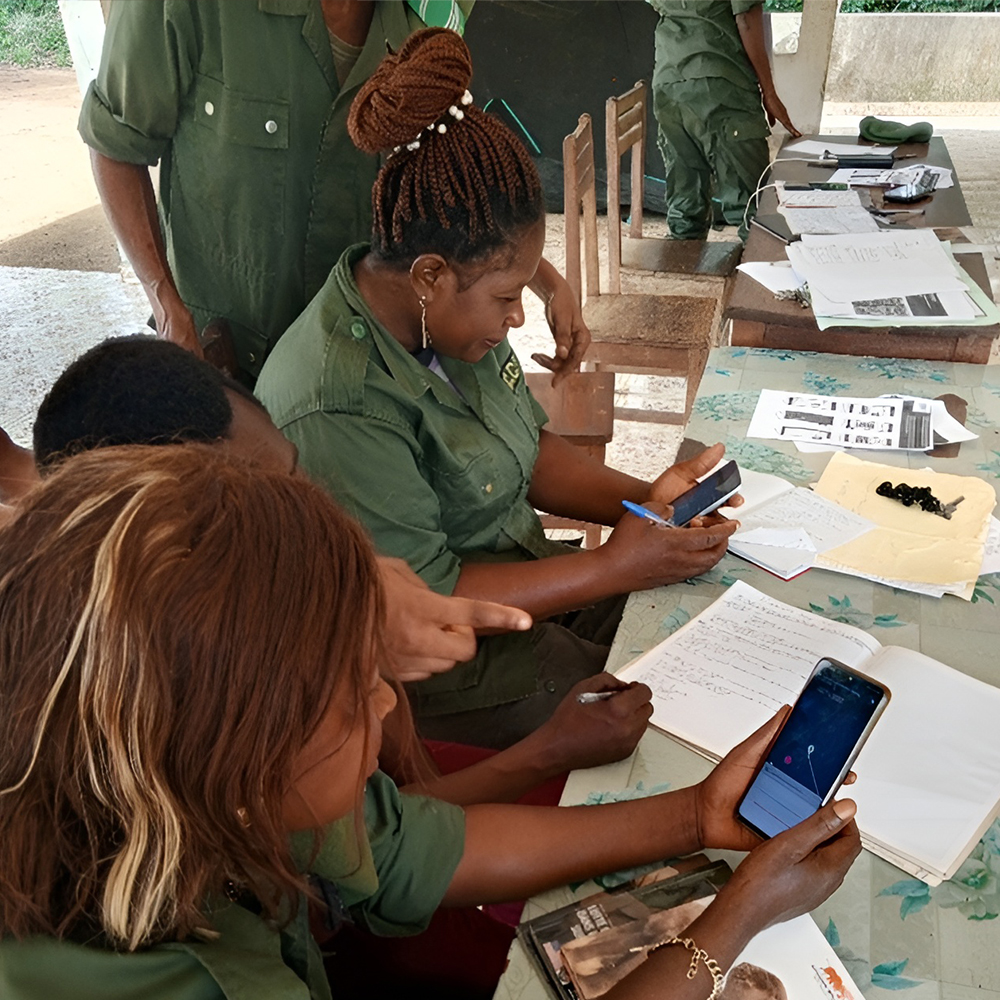
Training of eco-guards on the use of the Global Forest Watch application at the Lomako-Yokokala Faunal Reserve. © OGF
Serge Bondo Kayembe, National Coordinator of OGF emphasizes, "Independent forest monitoring does not stop documenting offenses. It also helps build trust among conservation actors."
The evidence generated through monitoring helps decision-makers identify priority areas for action while improving accountability and supporting stronger environmental law enforcement. The monitoring also reinforces a fundamental lesson: conservation cannot succeed without local communities. Long-term conservation therefore requires more than law enforcement; it also depends on improving livelihoods, strengthening community participation, and ensuring local people benefit from protecting the landscapes they depend on.
Joe Kasongo, AWF Senior Legal Officer, notes, "Effective conservation begins with understanding what is happening on the ground and having the ability to act before temporary pressures become irreversible losses."
In the end, protecting the Lobito Corridor is more than conserving forests; it is about securing a future where wildlife, people, and nature can thrive together for generations to come.
About the Forest Governance Observatory (OGF)
The Forest Governance Observatory (OGF) is a Congolese non-governmental organization dedicated to promoting good forest governance, sustainable natural resource management, and stronger participation of local communities and Indigenous Peoples in decision-making processes. Through independent monitoring, research, advocacy, and capacity building, OGF contributes to transparency, accountability, and the conservation of the Congo Basin forests.