Evidence Rooms Secure Stronger Cases Against Wildlife Crime in Kenya
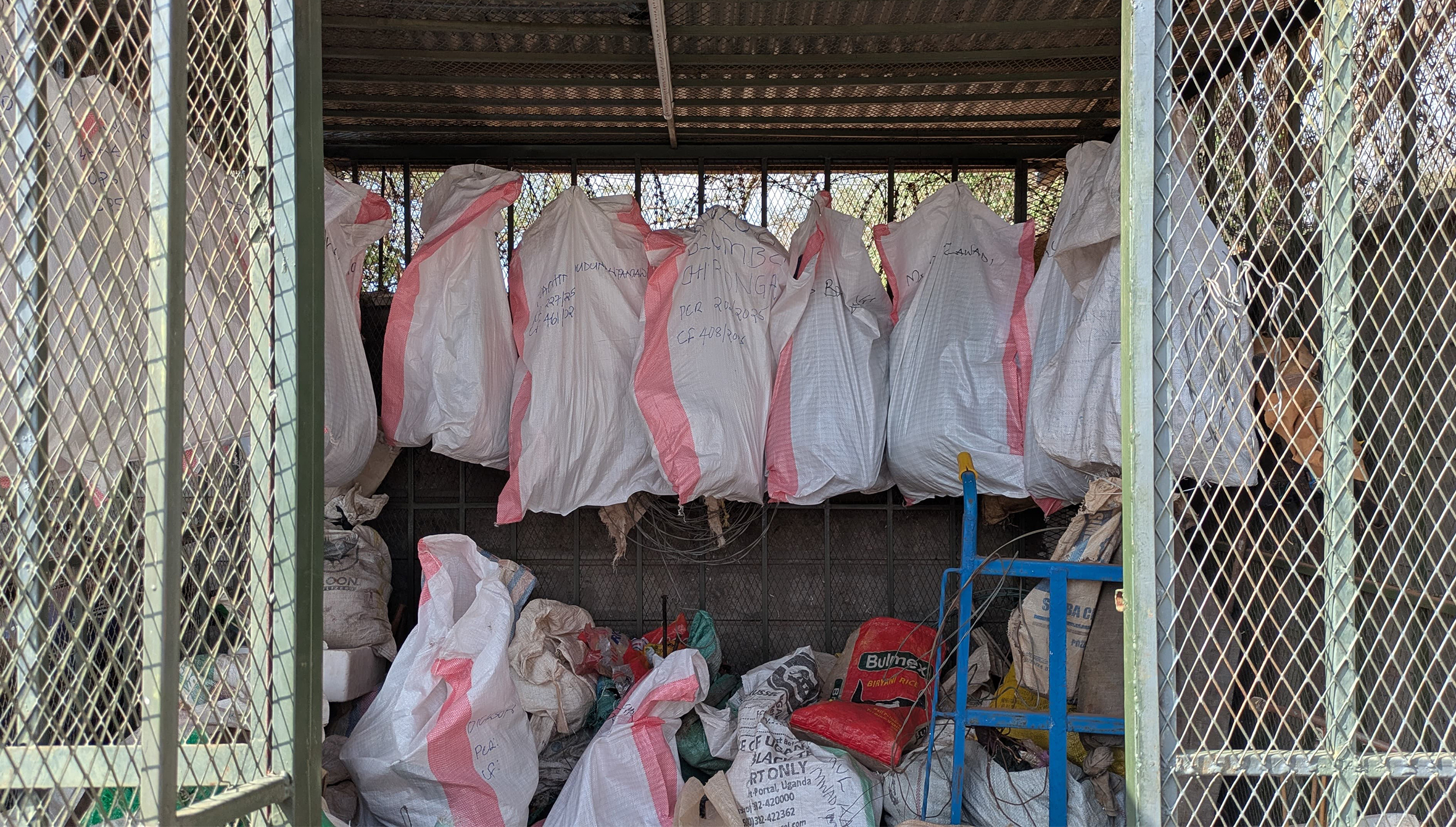
Evidence properly labelled, documented, and securely stored at a Kenya Wildlife Service evidence room in Tsavo, Kenya.
Protecting Africa's wildlife doesn't end with an arrest; it depends on what happens next. As part of its work strengthening wildlife law enforcement systems across the continent, AWF works with institutions like the Kenya Wildlife Service (KWS) to close the gaps between seizure and prosecution, investing in the often-overlooked infrastructure and procedures that turn evidence into accountability. This is the story of one such investment: a network of evidence rooms now reshaping how wildlife crime cases are built and won in Kenya.
Six evidence rooms. Six Kenya Wildlife Service stations. And an intervention that has strengthened one of the most critical and often overlooked links in the wildlife law enforcement chain: What happens to evidence after it is seized?
When a wildlife crime investigation leads to an arrest, the case is far from over. The evidence gathered must remain secure, traceable, and properly accounted for throughout the investigation and prosecution. The strength of a case can depend not only on the work of rangers and investigators in the field but also on the systems that safeguard the evidence collected.
Several years after dedicated evidence rooms were established at six KWS stations, an assessment by AWF and KWS found that these facilities had built strong foundational systems for evidence management, reinforcing accountability, and procedural integrity across the network.
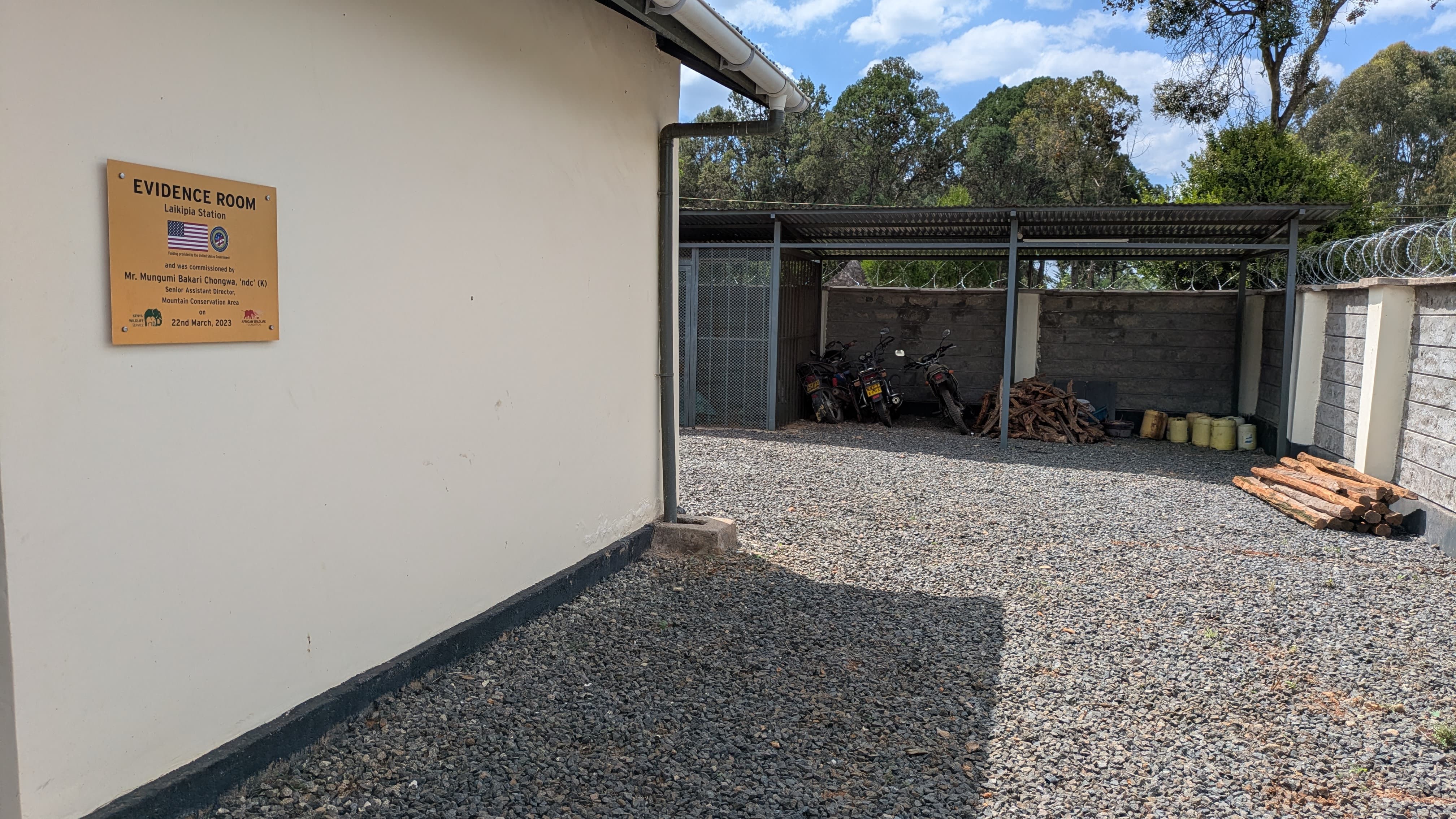
Exterior view of the Laikipia Evidence Room.
Exhibit labelling, controlled access, structured storage, strengthened chain of custody, regular inventories, and designated evidence custodians have helped reinforce accountability and procedural integrity.
There have also been tangible gains for KWS, including increasing conviction rates and growing confidence among judicial officers in the institution’s evidence management practices. The improvements have also strengthened collaboration with other enforcement agencies, including the Kenya Forest Service and the National Police Service, and KWS has become a benchmark for evidence management.
These results point to a broader lesson: The most important investments in wildlife protection don't always happen on patrol or even at an arrest. Strengthening the systems behind enforcement can determine whether a case moves from seizure to prosecution and ultimately whether wildlife criminals are held accountable.
From a Pilot to a Six-Room Network
The story began with a simple but critical question: What happens to the evidence after a wildlife crime investigation leads to a seizure?
An arrest may be the most visible moment in a wildlife crime case, but it marks the beginning of another critical phase. For evidence to support a successful prosecution, it must be properly collected, documented, secured, and accounted for from the moment it enters custody until it is presented in court.
If that chain is broken, even a strong investigation can be weakened. Evidence can be misplaced, damaged, compromised, or challenged, creating opportunities for cases to falter and perpetrators to escape accountability.
Recognizing this gap, AWF, KWS, and the Bureau of International Narcotics and Law Enforcement Affairs (INL) came together to strengthen evidence management within Kenya’s wildlife law enforcement system. The first step was understanding where the greatest needs lay. AWF and KWS conducted a baseline survey of evidence storage facilities across the country, examining existing systems and identifying stations that would benefit most from improved evidence storage.
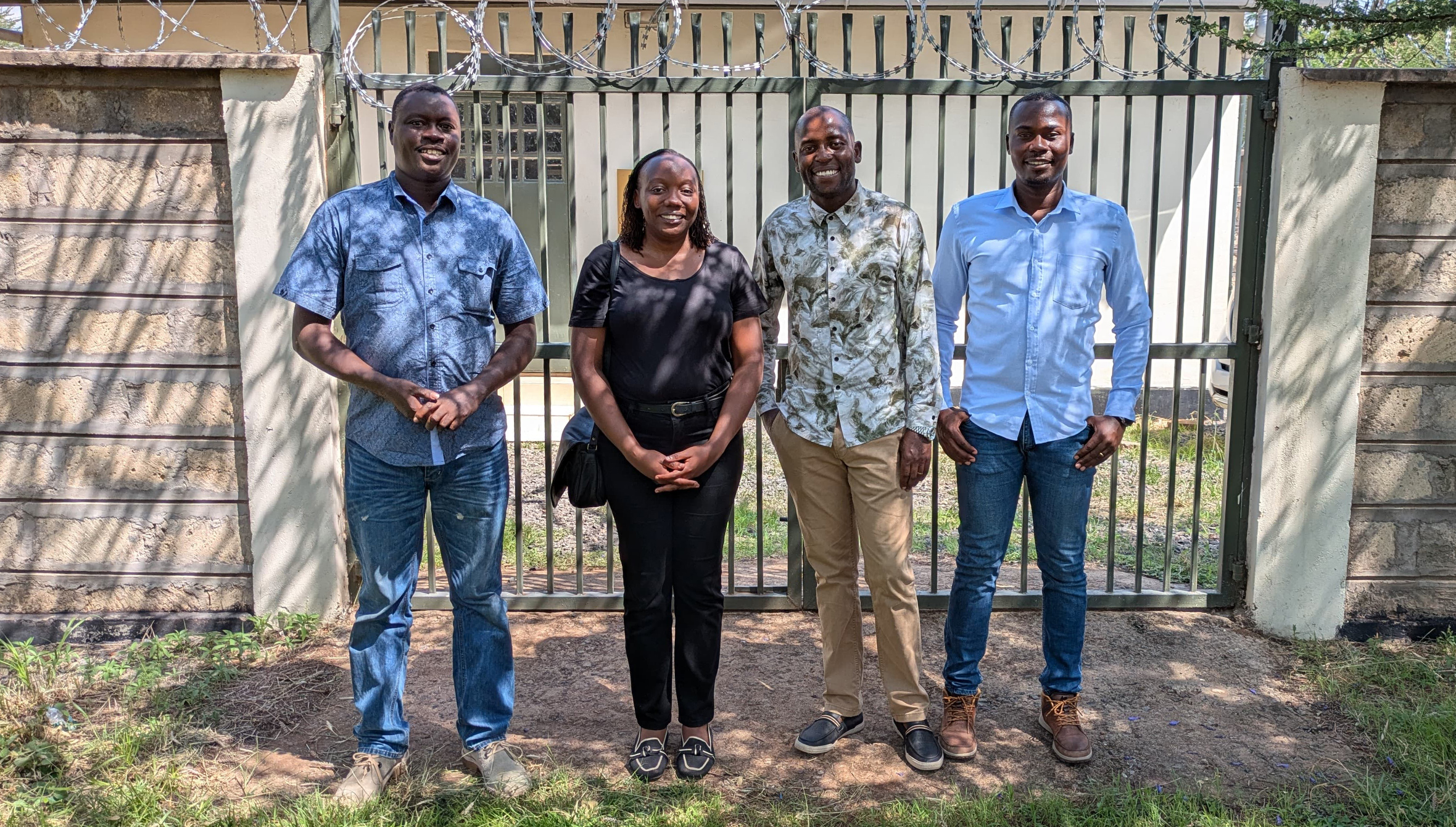
Members of the AWF and KWS teams that conducted the evaluation of the evidence rooms.
The survey identified five KWS stations for investment: Tsavo-East, Isiolo, Nanyuki, Narok, and Kajiado. Before these facilities were constructed, a pilot evidence room was established at KWS Headquarters in Nairobi. The pilot demonstrated that dedicated infrastructure could provide a more structured, secure, and accountable approach to evidence management. It also provided lessons that informed the subsequent construction of five additional evidence rooms, creating a network of facilities across key wildlife landscapes.
But the value of these rooms lies in more than the physical infrastructure itself. They introduced systems and procedures that are designed to make evidence management more consistent, transparent, and accountable, helping strengthen the link between investigation and prosecution.
The Overlooked Piece of Wildlife Law Enforcement
When we think about wildlife conservation, we often picture rangers on patrol, intelligence-led investigations, or the seizure of illegal wildlife products. We usually picture the moment a suspected wildlife trafficker is identified and then arrested.
But that is not where wildlife law enforcement ends.
As wildlife crime becomes increasingly sophisticated in scale, methods, and value, the systems supporting enforcement must evolve alongside it. Organized networks can operate across borders, commodities can move through complex supply chains, and investigations may involve evidence that is sensitive, valuable, hazardous, or difficult to store.
In this environment, evidence management is not an administrative afterthought; it is part of the enforcement chain.
A dedicated evidence room may appear to be a relatively simple piece of infrastructure. But the systems within it can determine whether an exhibit remains secure and traceable throughout an investigation and prosecution. In turn, those systems can influence the ability of investigators and prosecutors to build credible cases and secure justice.
This is why the assessment undertaken several years after the establishment of the six evidence rooms is significant. AWF and KWS examined their functionality, sustainability, and effectiveness, providing an opportunity to understand not only what had changed, but also what was needed to sustain those gains.
The assessment found that the six KWS stations had established strong foundational systems for evidence management. Exhibit labelling, controlled access, structured storage, regular inventories, and designated custodians had strengthened accountability and helped reinforce the chain of custody.
The benefits also extend beyond the evidence rooms themselves. Improved systems have contributed to greater confidence among judicial officers and strengthened collaboration between KWS and other enforcement agencies, including the Kenya Forest Service and the National Police Service.
In this way, an investment in evidence storage has become an investment in the wider wildlife justice system.
Building Systems That Keep Pace With Wildlife Crime
Progress has been significant, but it also highlights where further work is needed. The assessment identified challenges, including the need to streamline evidence disposal processes, provide specialized storage for hazardous exhibits, and address limited capacity for large volumes of bulky evidence.
These are not simply operational details. They reflect a wider reality: Wildlife crime is changing, and the systems used to respond to it must change too.
As investigations become more complex and the volume and variety of seized materials grow, evidence management requires continued investment, specialized infrastructure, clear procedures, and institutional capacity. The objective is not simply to build more evidence rooms, but to build a system capable of supporting wildlife law enforcement from the first seizure to the final outcome in court.
That is where the experience of the six KWS stations offers a broader lesson.
Effective conservation depends on more than protecting wildlife in the field; it also depends on the institutions, people, and systems that make protection possible. An investigation is only as strong as the systems that support it. An arrest only becomes meaningful when the justice system has the evidence and processes needed to pursue accountability.
The collaboration between AWF, KWS, and INL shows what targeted investment in evidence systems can look like in practice. For Kenya, as wildlife crime continues to evolve, the lesson is clear: Protecting wildlife means investing not only in the people who detect and investigate crime but also in the systems that help ensure those cases can stand up in court.
Because justice for wildlife does not begin and end with an arrest, it sometimes begins with something far less visible: a secure room, a documented exhibit, and a chain of evidence that remains intact.