A Book to Remember What We Are Losing: Djai Pascal on Writing Cameroon's Rhino Story
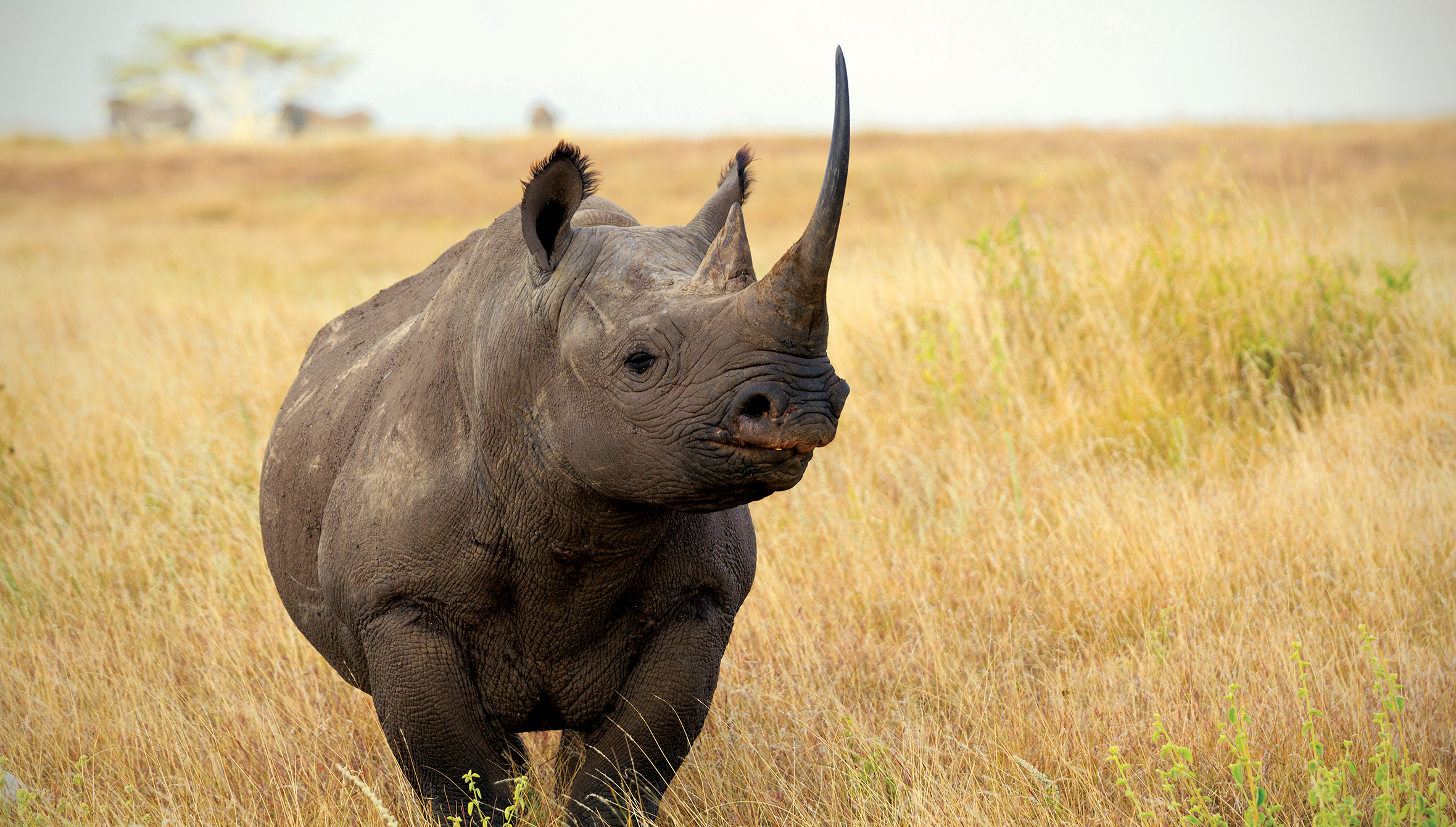
A rhino on the African savanna. © AWF
Rhinos are one of Africa’s most iconic and threatened species, and their survival is closely tied to the protection of the landscapes they call home. AWF works with governments, communities and conservation partners to protect rhinos and their habitats, strengthen conservation efforts and address the threats facing these animals. This work is part of a broader commitment to ensuring that Africa’s remaining rhinos have the space, protection and support they need to survive for generations to come.
There was a time when the western black rhino roamed the landscapes of Cameroon. Today, the species is extinct, and for many young Cameroonians, the animal has become part of a past they have never experienced. They may recognise the distinctive shape of a rhino from a photograph or see one in a documentary, but they will probably never encounter one in the wilds of Cameroon. As the years pass, even the memory that rhinos once roamed the region risks fading.
For Djai Pascal, an AWF Fellow, conservation researcher and community engagement professional, that is the motivation behind his book, Agwakwe West Ne’elemen, meaning “our lost heritage”. Through the book, Pascal documents the story of the rhino’s disappearance from Cameroon and explores what that loss has meant for the country.That journey begins with remembering. He worries that, as time passes, people are forgetting that the rhino was once part of Cameroon’s natural heritage. Once an animal disappears from a landscape, the loss can become less evident with each passing generation, particularly for young people who have never seen the species in person.
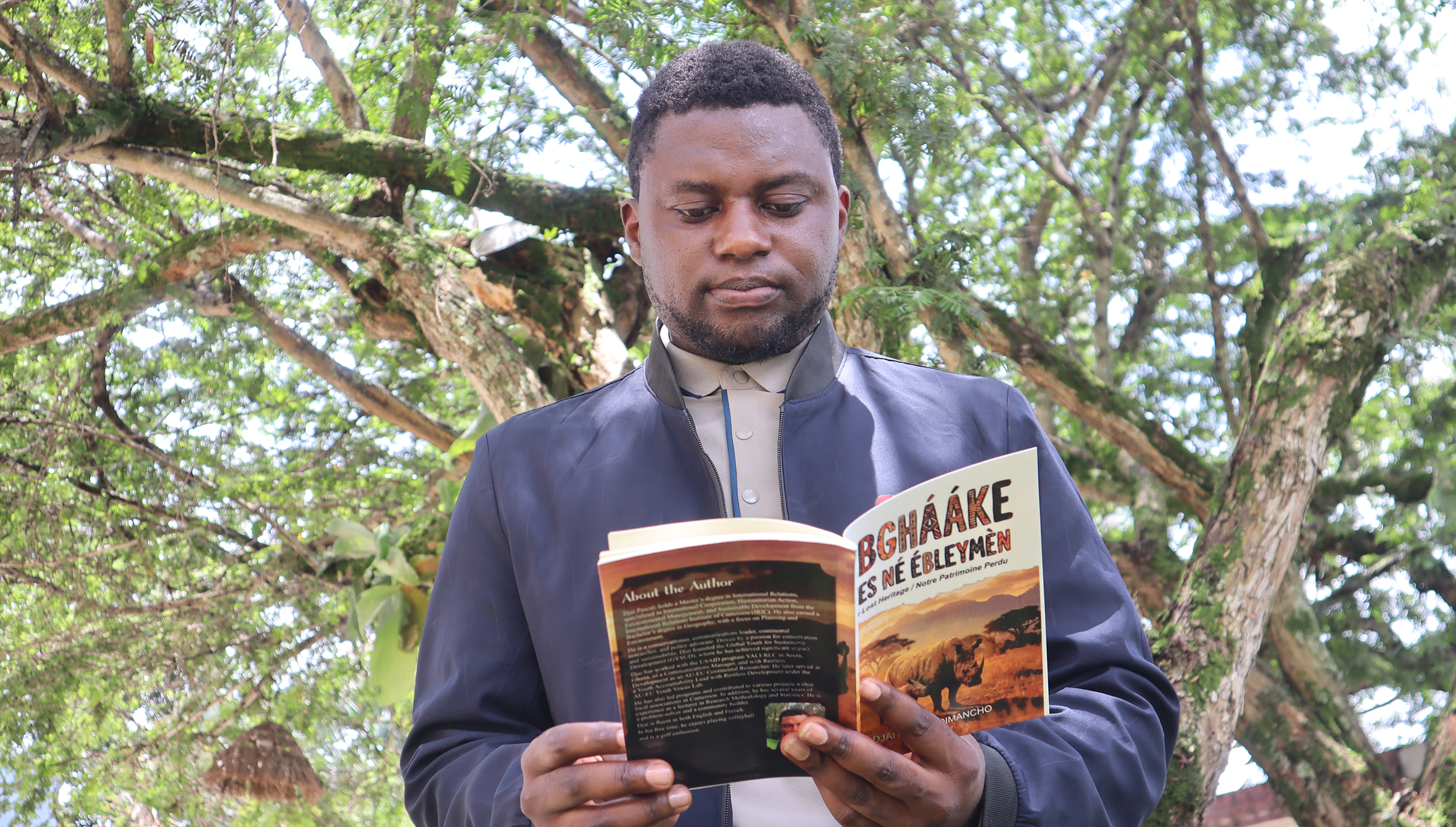
Djai Pascal holding his book Bghááke Es Né Ébleymèn (Our Lost Heritage / Notre Patrimoine Perdu), exploring the tragic history and legacy of Cameroon's extinct black rhinos. © AWF
Pascal’s interest in the subject developed from a long-standing commitment to the environment and wildlife. He initially considered other ways of sharing his findings, including a policy paper and articles that could reach decision makers and the wider public. However, as his research developed, he realised that the story needed more space. A book offered the opportunity to bring those different elements together and create something that could remain available to students, communities, conservation practitioners and policymakers long after the immediate research had been completed.
“The book gave me the space to tell the story, preserve the voices of the people I met during my research, explain what was lost, and show what we can still do to keep what we have.”
Cameroon remains home to species whose survival is still within reach. Landscapes such as Dja, Bouba Ndjida and Waza are home to elephants, gorillas, pangolins, and many other incredible species. Their lives depend on those protected areas, the habitats surrounding them, and the communities who live alongside them. Their survival will also depend on the decisions made today; those cannot wait until another species disappear the way the rhino did.
Pascal is particularly concerned about what that could mean for the next generation. “If something is not done now, the next generation will never believe such a species existed in Cameroon.”
The statement captures the urgency of his work. It is not only about whether a species survives biologically; it is also about whether children will inherit a world in which wildlife is something they can experience, rather than something they have to imagine through stories of the past.
This is why investing in African conservation leaders is an important part of protecting the continent’s wildlife. People with experience of communities and conservation can bring lessons from the field into the institutions and policy processes where decisions about wildlife and natural resources are made. Creating opportunities for conservation professionals to lead research, engage communities and contribute to policy helps build the knowledge, leadership and networks needed to address challenges that cannot be solved quickly.
Pascal’s work illustrates this connection. His book brings together historical evidence, community perspectives and conservation lessons, while his engagement with policy creates an avenue for those findings to inform wider discussions about wildlife protection.
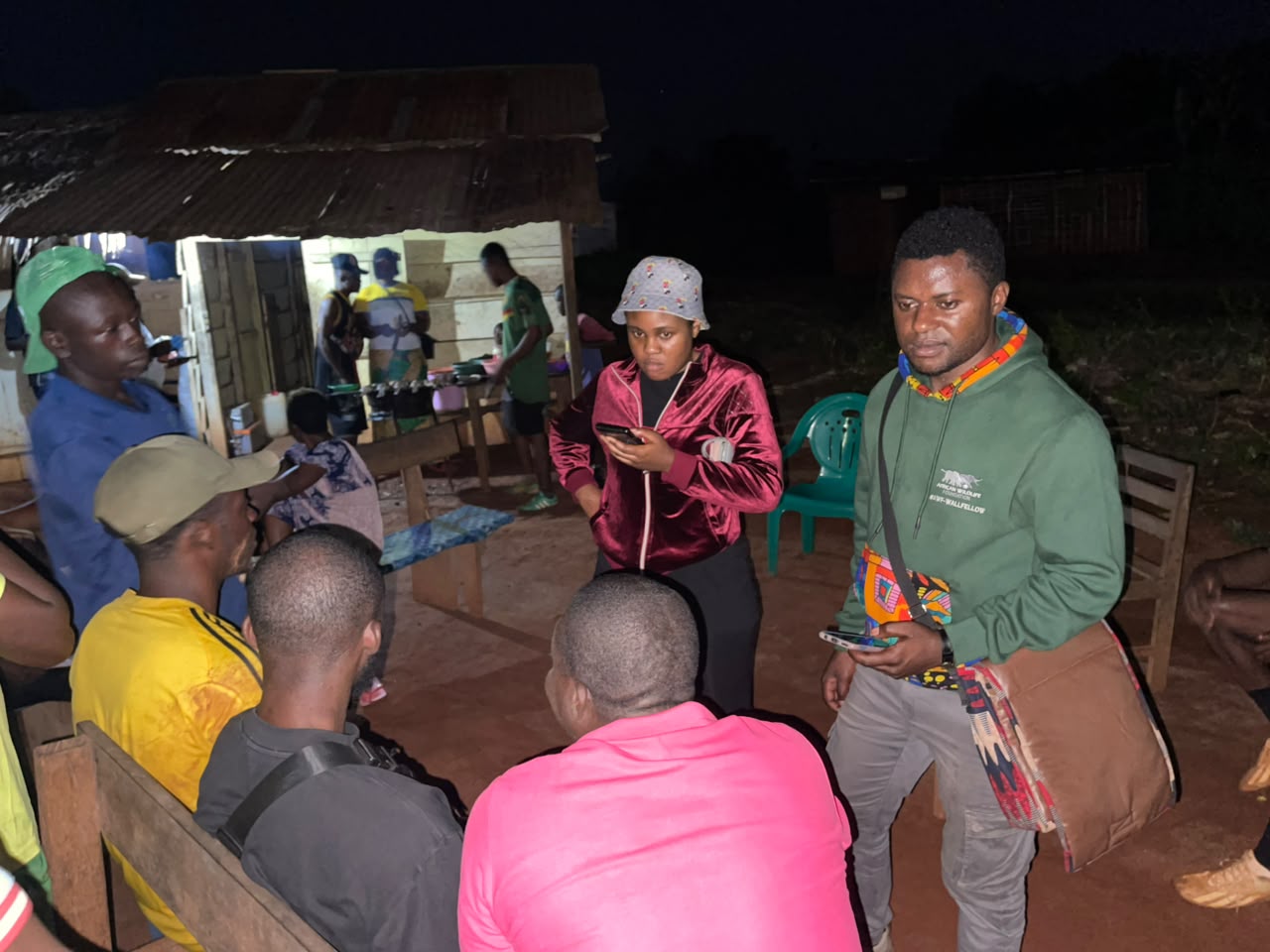
Pascal in Somalomo, East Cameroon doing research with Baka Indigenous people for his book on Rhino extinction. In communities where folklore is still a main storytelling medium, community stakeholders are key to transferring knowledge on history. © Djai Pascal
But Pascal’s work does not leave the reader with loss alone. The purpose of remembering the rhino is to make the memory useful: to encourage young people to value the wildlife around them, communities to remain engaged in conservation, researchers to continue documenting what is happening, and decision-makers and institutions to invest in protecting the species and landscapes that remain.
In that sense, Agwakwe West Ne’elemen is more than a book about a species that disappeared from Cameroon. It is a reminder that natural heritage is not something that can be taken for granted. What exists in a landscape today may not necessarily be there tomorrow, and the choices made by one generation can determine what the next generation inherits.
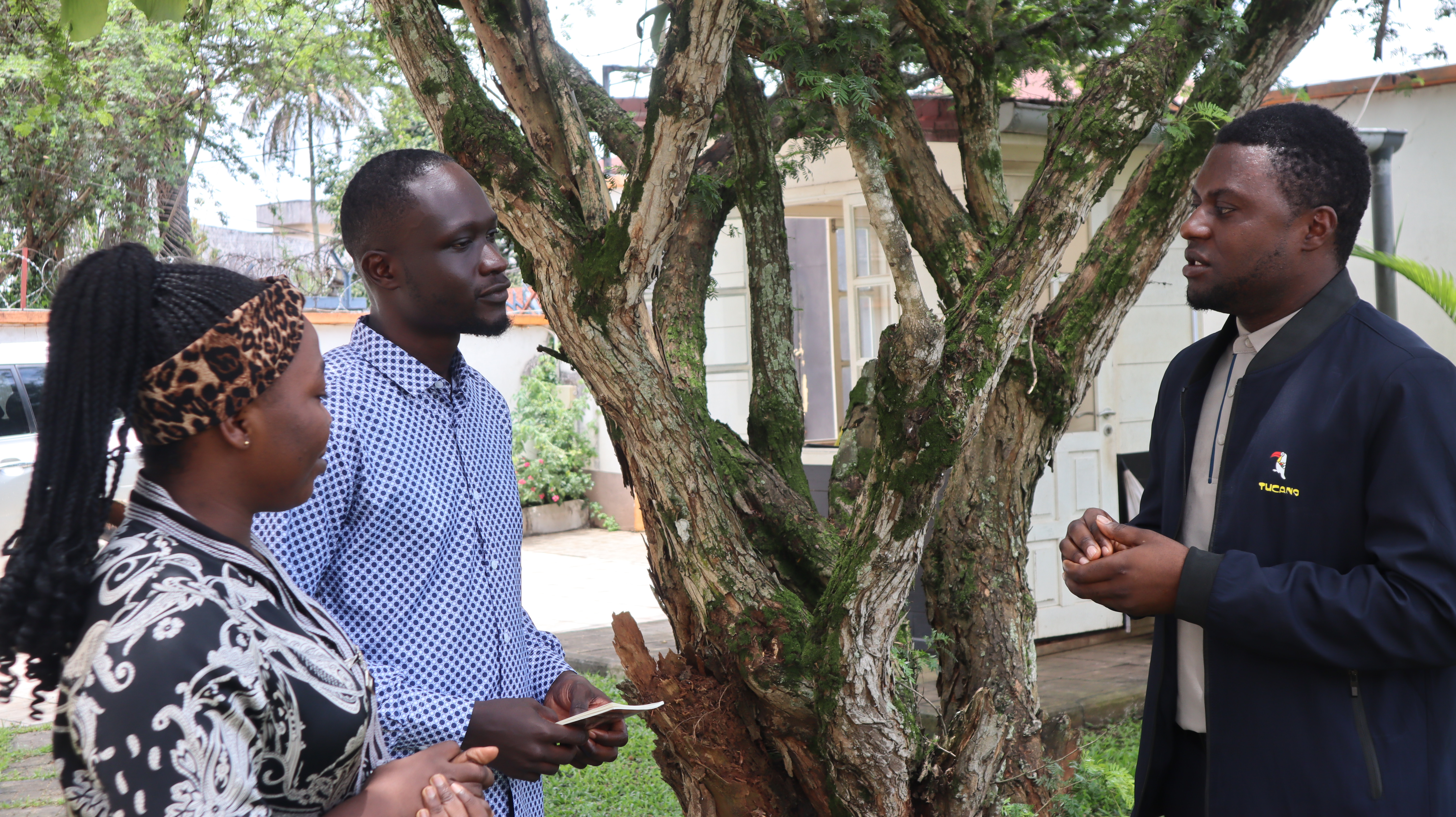
Engaging young voices in conversation to bridge the gap between history, conservation, and youth-led community action. © AWF
On World Rhino Day, we can remember Cameroon’s rhino with sadness, but we can also allow that sadness to sharpen our sense of responsibility. The rhino’s story cannot be rewritten, but the stories of Cameroon’s remaining wildlife are still being written, and there is still time to make sure they are not stories of loss.
That is perhaps the most important message to carry from the rhino’s story this World Rhino Day. Remembering a species that is gone should not make us feel powerless; it should remind us why conservation must continue while there is still something left to protect.
Cameroon’s rhino is part of its lost heritage, but the country’s remaining wildlife does not have to share that fate.